
1-805-484-2992
Quotes - Engineering - SalesA dryer is only as good as what is piped around it
A refrigerated dryer removes water vapor. It does not remove the bulk water that a hot compressor discharge carries, the compressor oil that rides along with it, or the condensate the dryer itself produces. Each of those has its own piece of hardware, and each one is sized by the same flow figure as the dryer.
Ahead of the dryer a centrifugal or impaction separator knocks out the free water from the aftercooler, and a 1 micron coalescing prefilter catches the oil aerosol and rust that would coat the dryer's exchanger. Behind it a 0.01 micron oil-removal filter finishes the job, and an activated carbon stage takes out oil vapor where paint, food or electronics demand it. Every low point that collects liquid - separator, dryer, filter bowls, receiver - needs a drain, and the choice between a timed solenoid and a zero-loss drain is worth several thousand cubic feet of compressed air a day on a busy plant.
Two pieces of hardware make the installation serviceable rather than just functional: a bypass so the dryer can come out without shutting the plant down, and for the small cabinet dryers a wall bracket that keeps them off the floor. A portable dew point monitor closes the loop by measuring what the dryer actually delivers on the hottest afternoon of the year, which is the only test that matters.
Filters, separators and drains are sized from the same delivered SCFM as the dryer; send the compressor data once and every piece comes back matched.
Where each piece goes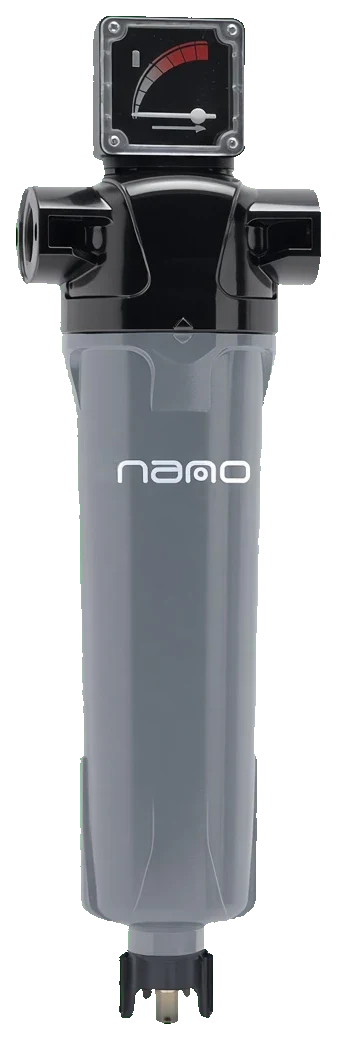
Five accessory groups, one flow figure
Each group is sized by the dryer's delivered SCFM at line pressure; the series pages carry every part number
Accessory series, filters to dew point monitors
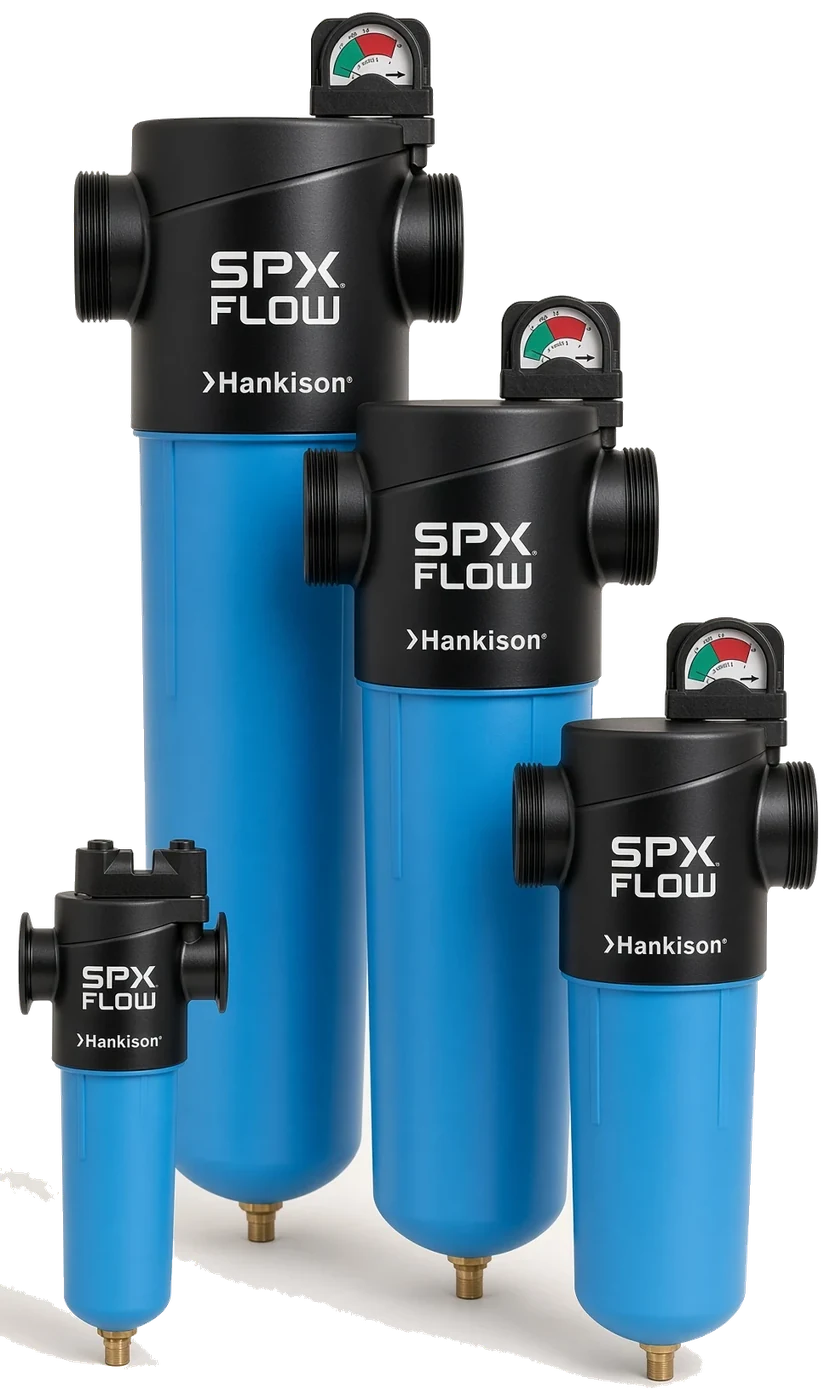
HF Series Filters: Modular inline filter family in 22 housing sizes from 20 to 21,250 SCFM; one housing, seven push-on element grades from bulk-liquid separator to activated carbon.
20 to 21,250 SCFM · 300 psig max · 150°F max · 180 part numbers
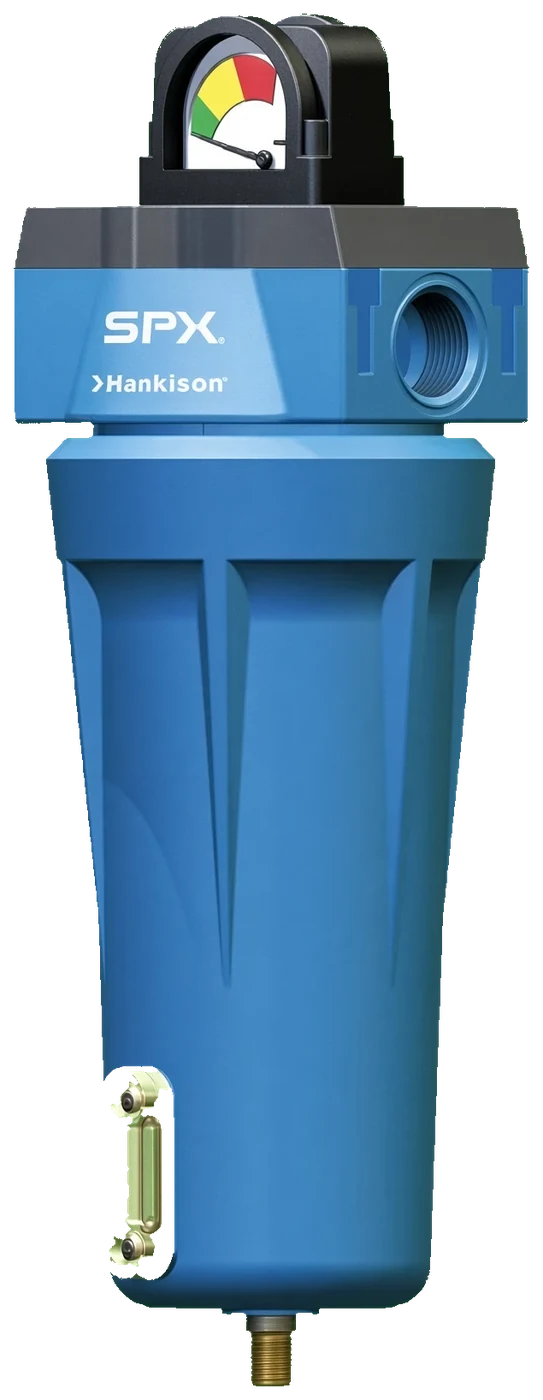
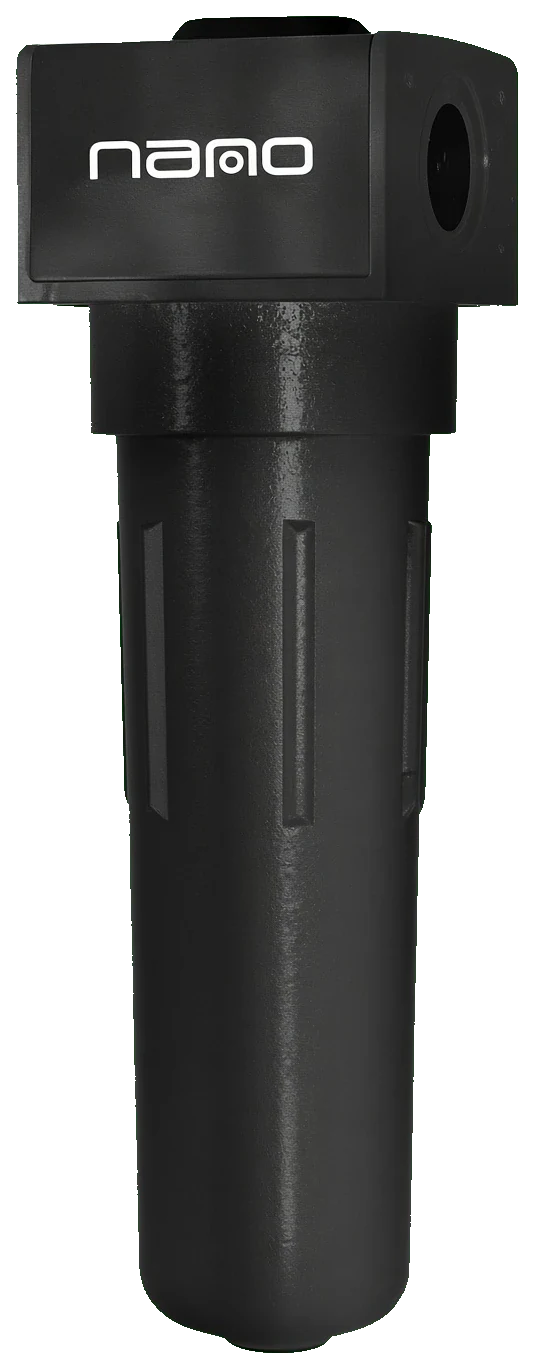
NGF Series Filters: Threaded aluminum inline filter from 20 to 1,500 SCFM with five element grades, the standard prefilter and afterfilter pair for dryers to 1,500 SCFM.
20 to 1,500 SCFM · 250 psig max · 150°F max · 70 part numbers
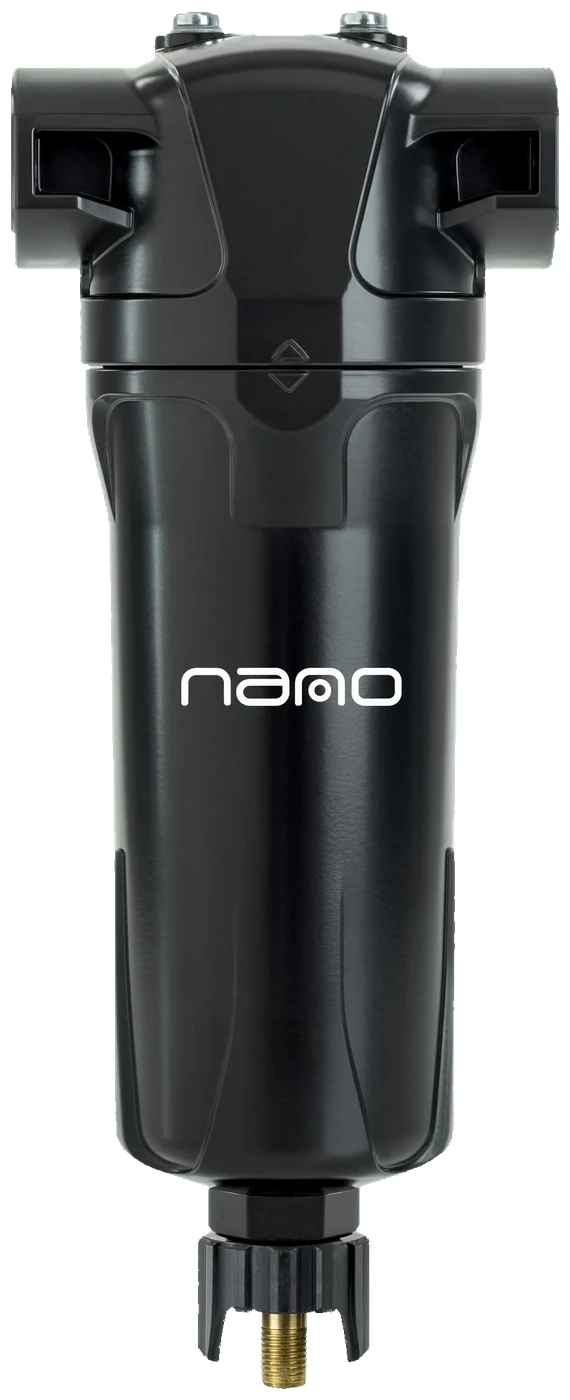
GFN Series Filters: Current general-purpose inline filter, 6 to 1,500 SCFM, in eighteen die-cast housings with 1 micron, 0.01 micron and activated-carbon elements.
6 to 1,500 SCFM · 232 psig max · 176°F max · 18 part numbers
GHTN High-Temperature Filters: High-temperature filter rated 450°F for air straight off a piston compressor, 15 to 1,600 SCFM.
15 to 1,600 SCFM · 150 psig max · 450°F max · 11 part numbers
GF WS Series Separators: Centrifugal water separator from 6 to 3,000 SCFM that spins bulk condensate out ahead of the dryer with no element to change.
6 to 3,000 SCFM · 232 psig max · 176°F max · 14 part numbers
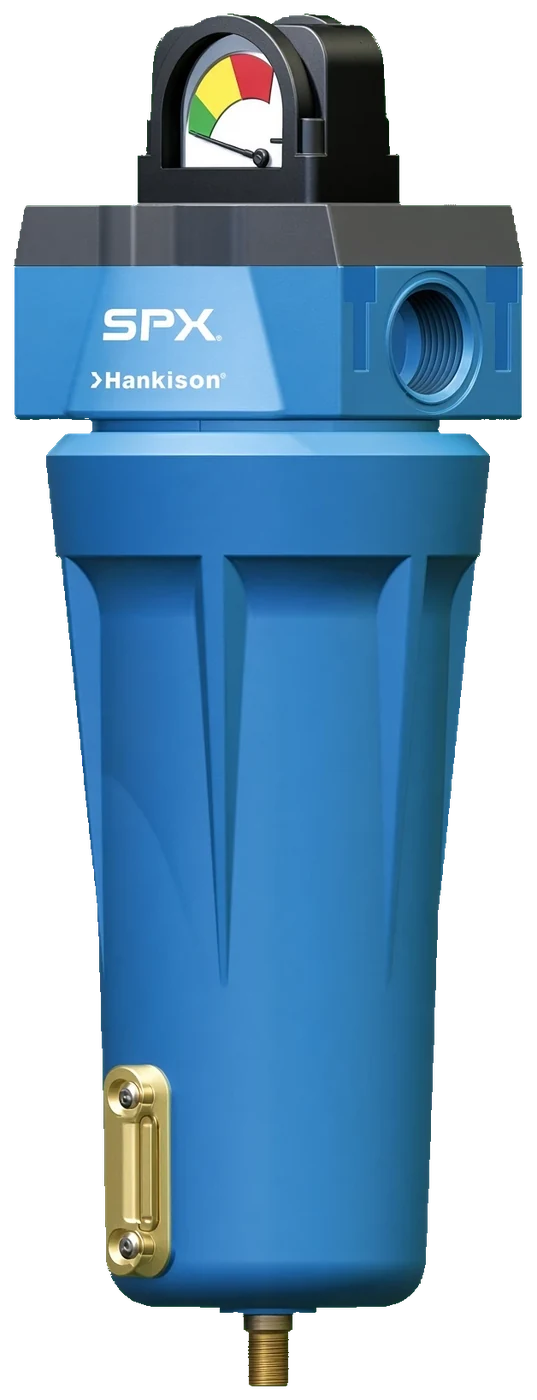
HF Grade 11 Separators: Grade 11 impaction moisture separator in the HF housing family, 20 to 21,250 SCFM, 10 micron mechanical separation of liquid and solids.
20 to 21,250 SCFM · 300 psig max · 150°F max · 29 part numbers
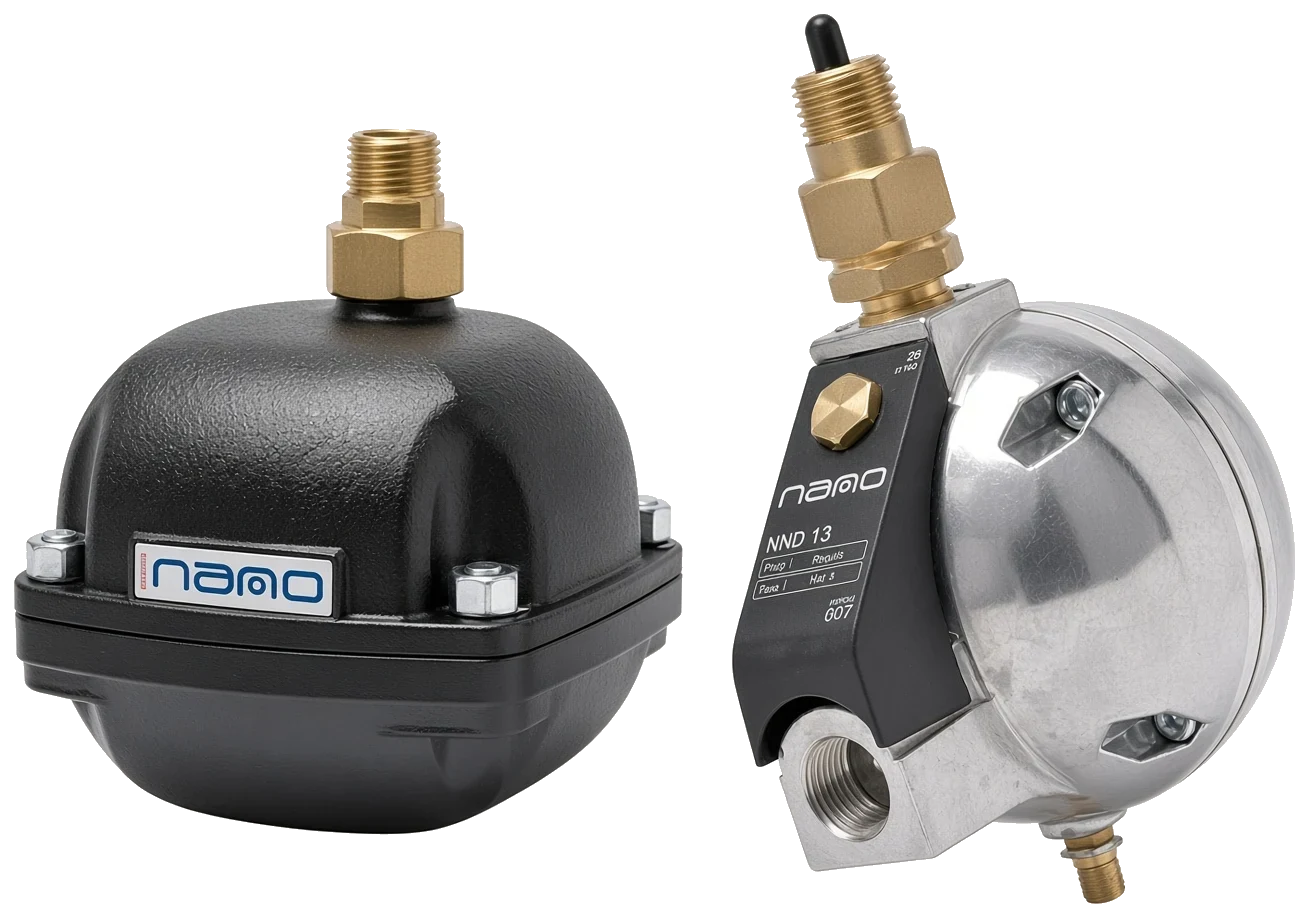
ND Series Zero-Loss Drains: Zero-air-loss and float condensate drains - pneumatic, magnetic and electronic level-controlled - that discharge only when liquid is present.
290 psig max · 12 part numbers
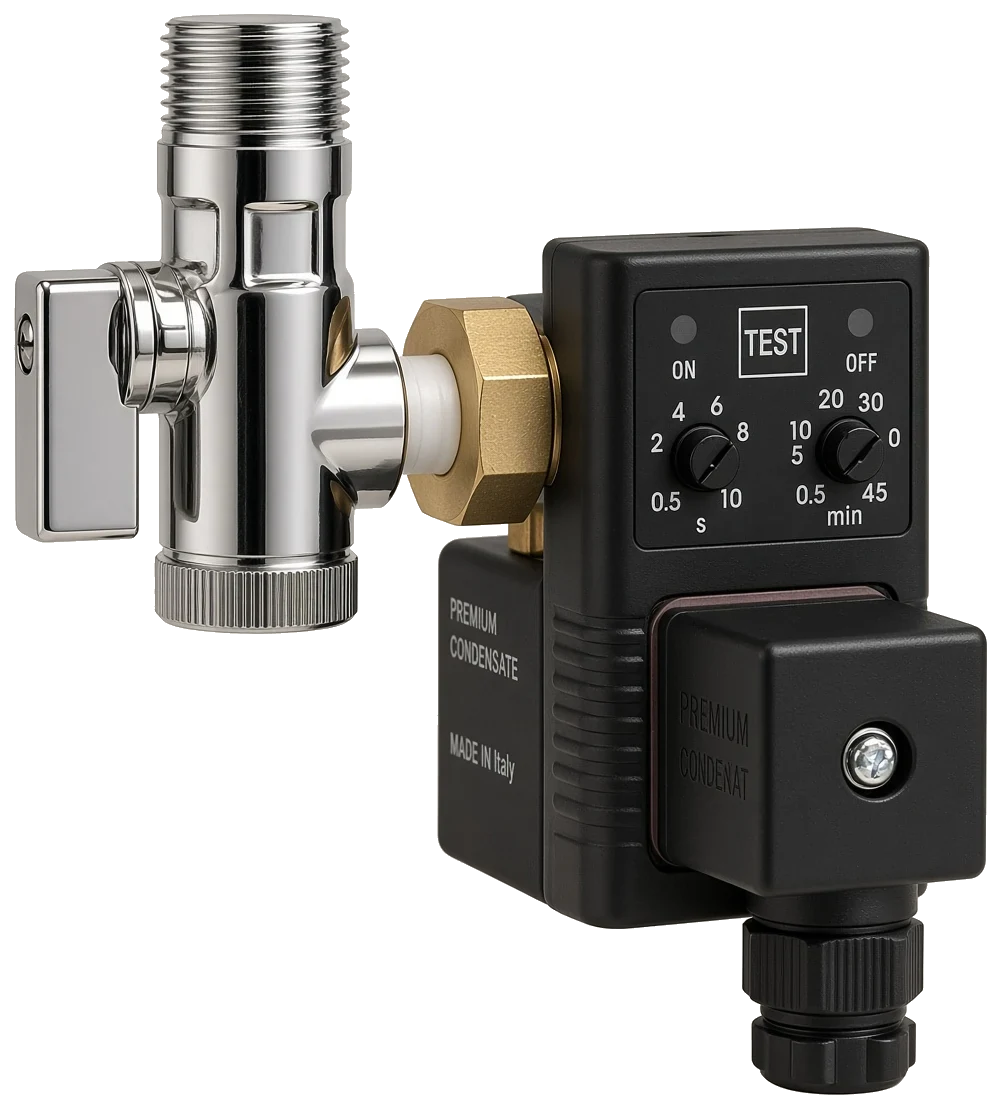
NETD, NPTD & NHPTD Timed Drains: Timed solenoid drains in aluminum, brass and stainless, from 1/4 to 1/2 inch, with high-pressure versions to 6,000 psig.
6,000 psig max · 22 part numbers
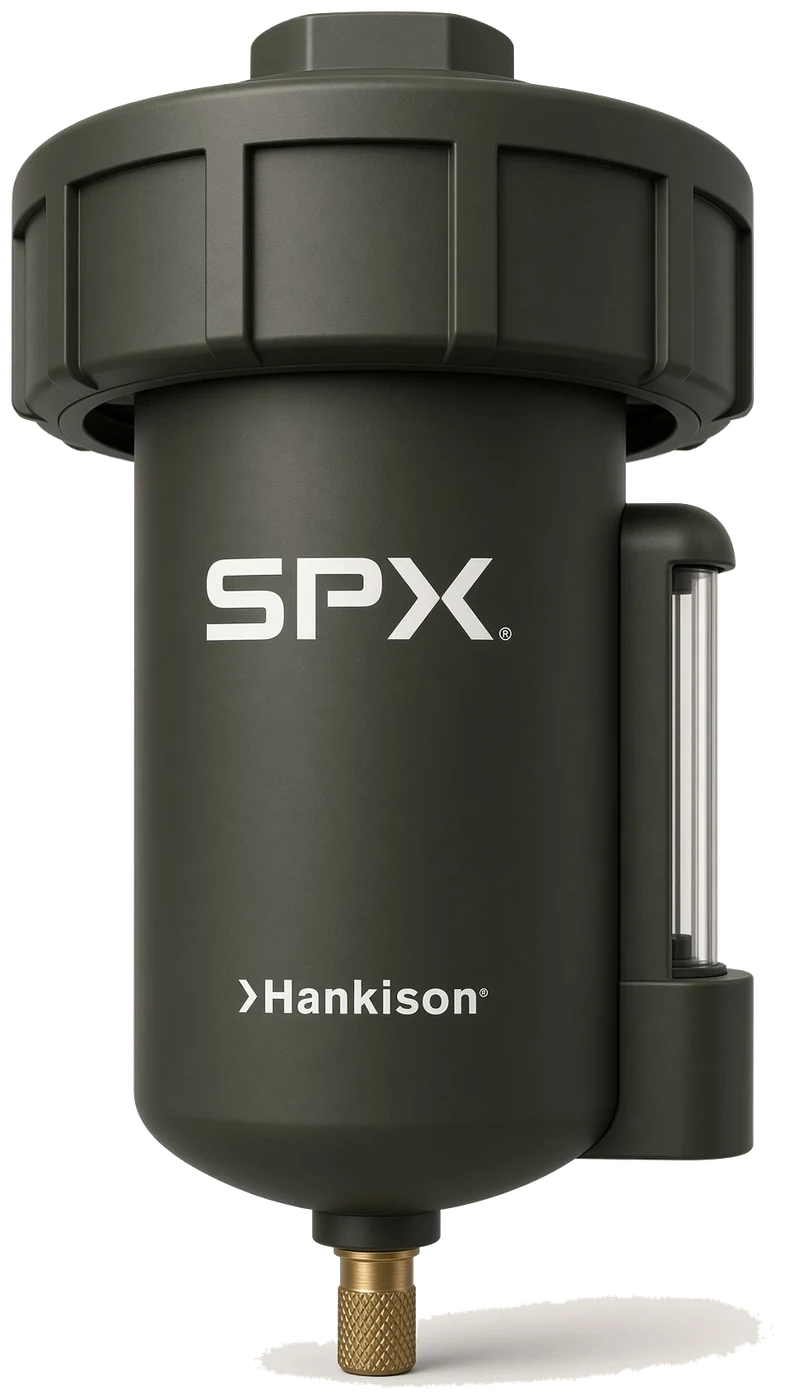
Snap-Trap & Trip-L-Trap Drains: Pneumatic zero-loss drains: the compact Snap-Trap for filters and small dryers and the heavy-duty Trip-L-Trap to 500 psig.
175 psig max · 120°F max · 19 part numbers
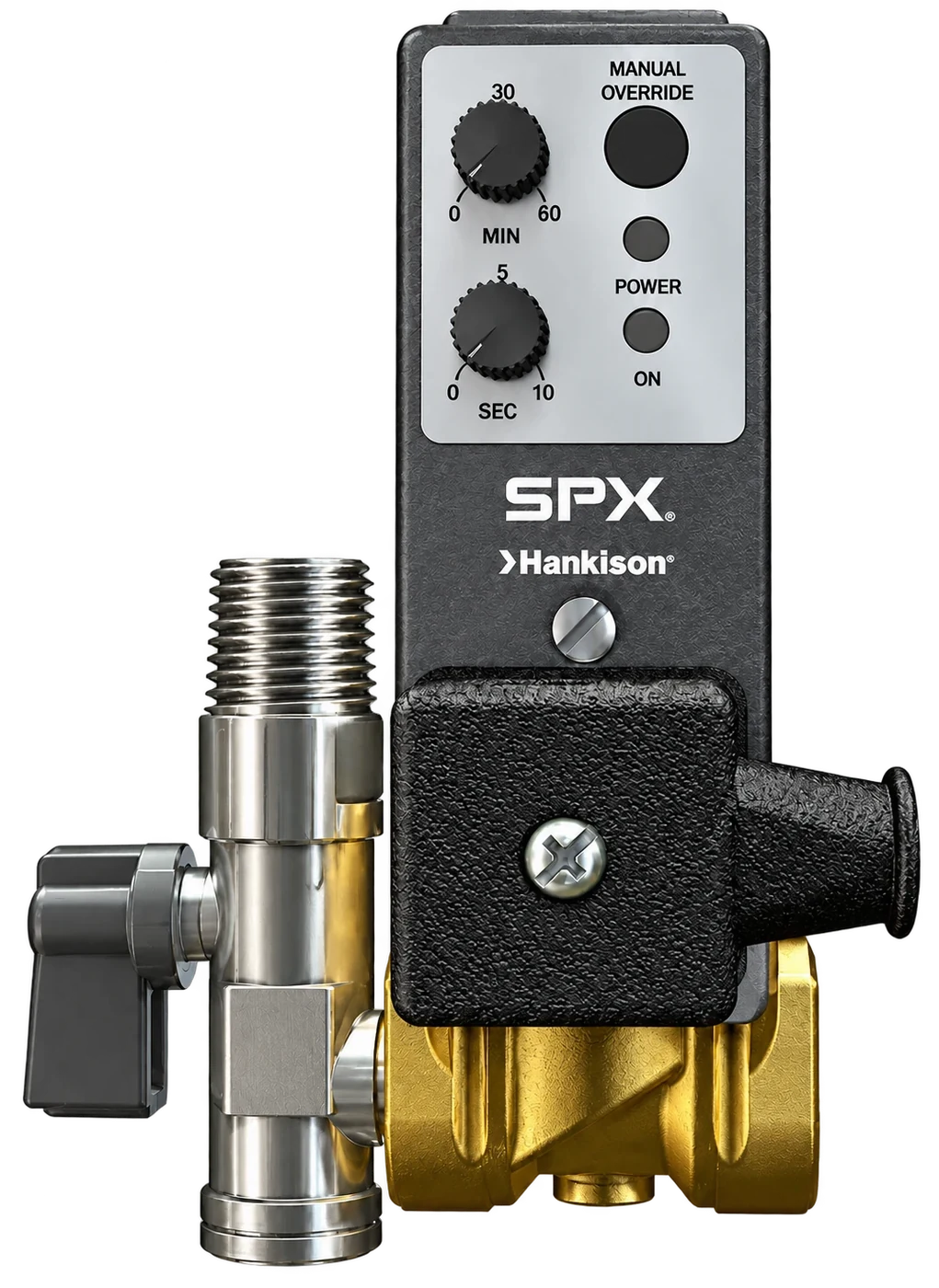
530 & 600 Series Electric Drains: Electric timed drains to 1,500 psig and the 600 series demand drain that opens on condensate level rather than a clock.
1,500 psig max · 280°F max · 7 part numbers
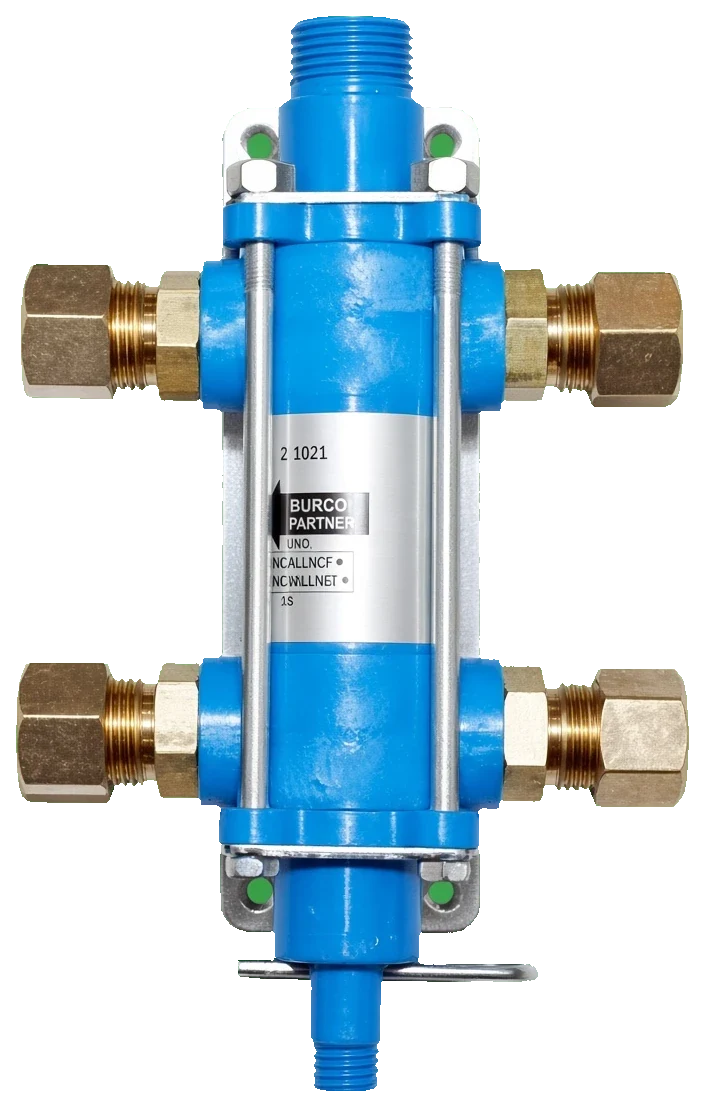
1701 Bypass Valves & Mounting Brackets: Single-body bypass valve for dryers and filters to 35 SCFM, plus wall-mount bracket kits for small dryers and filter housings.
5 to 35 SCFM · 200 psig max · 120°F max · 7 part numbers
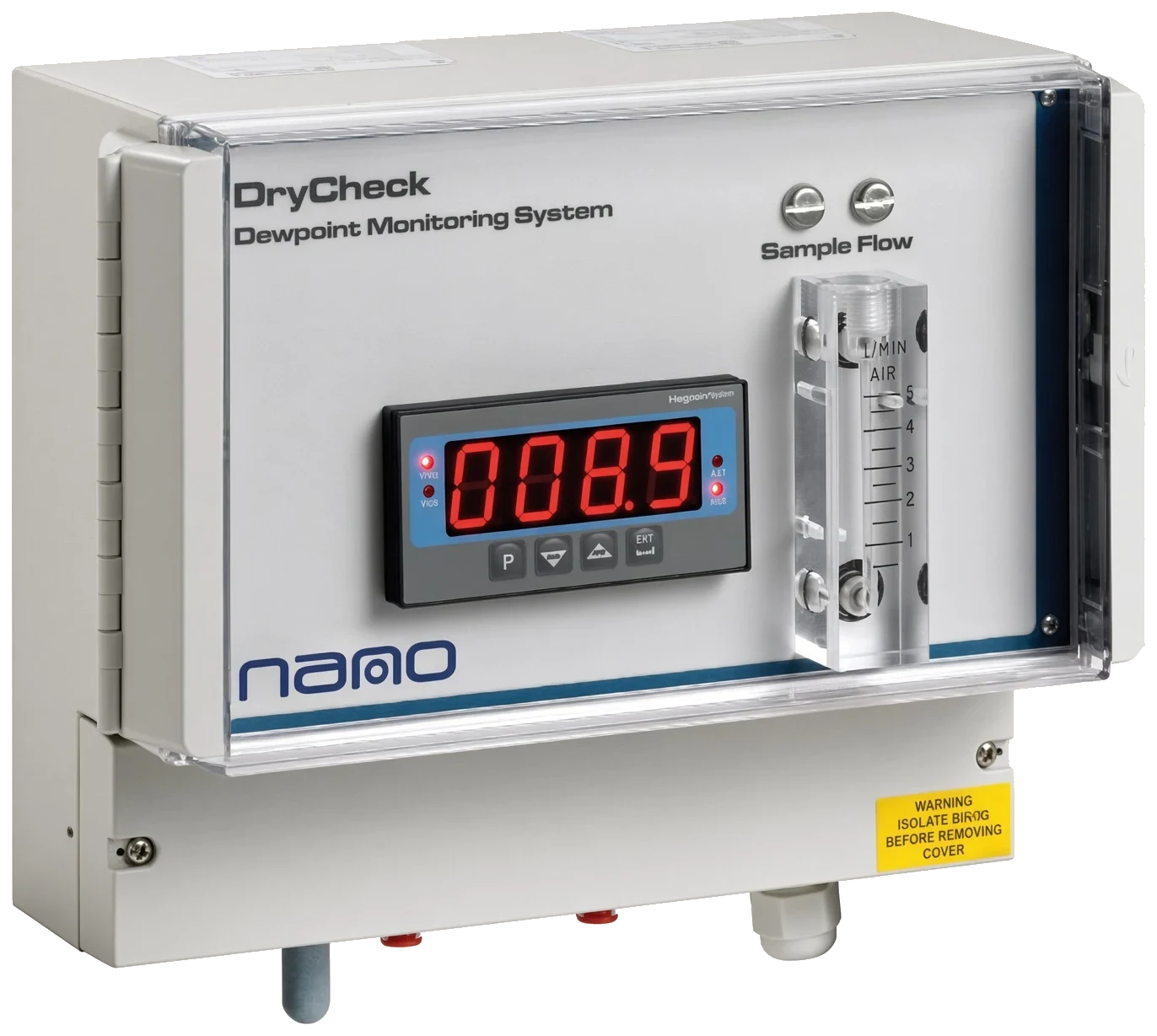
PDM Dew Point Monitor: Portable dew point monitor for checking a dryer's outlet air on site, down to desiccant-dryer dew points.
145 psig max · 122°F max · 1 part numbers
Selection notes
Three rules for the hardware around a refrigerated dryer
1.
Size everything to the dryer
A filter rated below the compressor's delivered flow costs pressure drop every hour the plant runs, and a separator that is too small passes slugs of water into the dryer. Use the same corrected SCFM for every piece.
At line pressures above 100 psig the filters gain capacity the same way the dryer does; below it they lose it faster.
2.
Order matters
Compressor, aftercooler, receiver, separator, prefilter, dryer, afterfilter, carbon filter if needed, then the header. A filter placed before the aftercooler sees hot wet air and fails early; an afterfilter placed before the dryer does nothing for oil vapor.
The bypass goes around the dryer alone, or around the dryer and its filters as a set, never around the receiver.
3.
Drain every low point
Separator, dryer, each filter bowl and the receiver all collect liquid. A timed drain that opens every 30 seconds on a filter bowl wastes air all night; a zero-loss drain opens only when there is condensate to pass.
Pipe the drains to an oil-water separator before the sewer. The condensate carries compressor oil, and most jurisdictions treat it as waste oil.
Accessory questions
Yes. The dryer removes water vapor; it does not remove compressor oil aerosol or rust, and it cannot tolerate slugs of free water. A 1 micron coalescing prefilter protects the dryer and a 0.01 micron oil-removal filter behind it cleans the air the dryer delivers.
The separator. It takes out the bulk water from the aftercooler mechanically, so the prefilter behind it only sees aerosol and fine particles and its element lasts. Both go ahead of the dryer.
On any compressor that runs more than a shift a day, yes. A timed drain on a 100 SCFM system can vent a few percent of the compressor's output around the clock; a zero-loss drain returns that as usable air and pays back in months.
Yes, and above 35 SCFM that is the normal arrangement: a valve on the inlet, one on the outlet and one across the bypass line. For the small cabinet dryers and filters the 1701 single-body valve does the same job in one piece with 3/8 in tube connections.
Measure it at the dryer outlet with a dew point monitor on a hot afternoon at full plant load. A reading near 38°F pressure dew point means the dryer is holding; a reading climbing toward 50°F points at a plugged condenser, a hot inlet or an undersized unit.