
1-805-484-2992
Quotes - Engineering - SalesRefrigerated Air Dryers for Bottling & Canning
A filling hall uses compressed air at every station the container passes: the depalletizer's sweep and grippers, the ionized air rinser that blows the bottle or can clean, the filler's valve actuators, the capper's torque heads and the seamer's lifters, the labeler's vacuum drum and the line-pressure stops on the conveyors, then the case packer and palletizer. Water in the machine air makes filler valves lag and fill levels wander, sticks a capper head so caps cross-thread, and corrodes the carbon steel actuators under the stainless guarding. Water in the rinser air is worse: it goes into the container along with whatever grew in the wet pipe, a moment before the product does.
Machine air is non-contact and takes ISO 8573-1 class 2.4.2, a 38°F pressure dew point from a refrigerated dryer with coalescing filtration. Rinser air, container blow-out and any air that enters an open container is contact air at class 2.2.1: a –40°F dew point from a desiccant stage fed by the refrigerated dryer, oil to 0.01 mg per cubic meter and a sterile filter at the rinser.
A single high-speed line runs on a 50 to 75 hp screw, 220 to 340 SCFM; a hall with three lines and a case packing area on 150 to 300 hp, 650 to 1,250 SCFM. A 100 hp screw at 450 SCFM is the 500 SCFM dryer in a normal compressor room and the 600 size in the 110°F rooms that bottling halls often have beside the blow molder and the pasteurizer. PET blow molding air at 500 to 600 psig is a separate high-pressure system with its own HHPR or APET dryer.
Bottling runs three shifts with the compressor loaded, which is the non-cycling case: a DXR dryer at full load costs no more than a cycling unit at full load. Halls with a seasonal pattern or long changeovers use the FLXA cycling series or, above 600 SCFM, the AES digital-scroll dryers.
Request a bottling hall dryer quote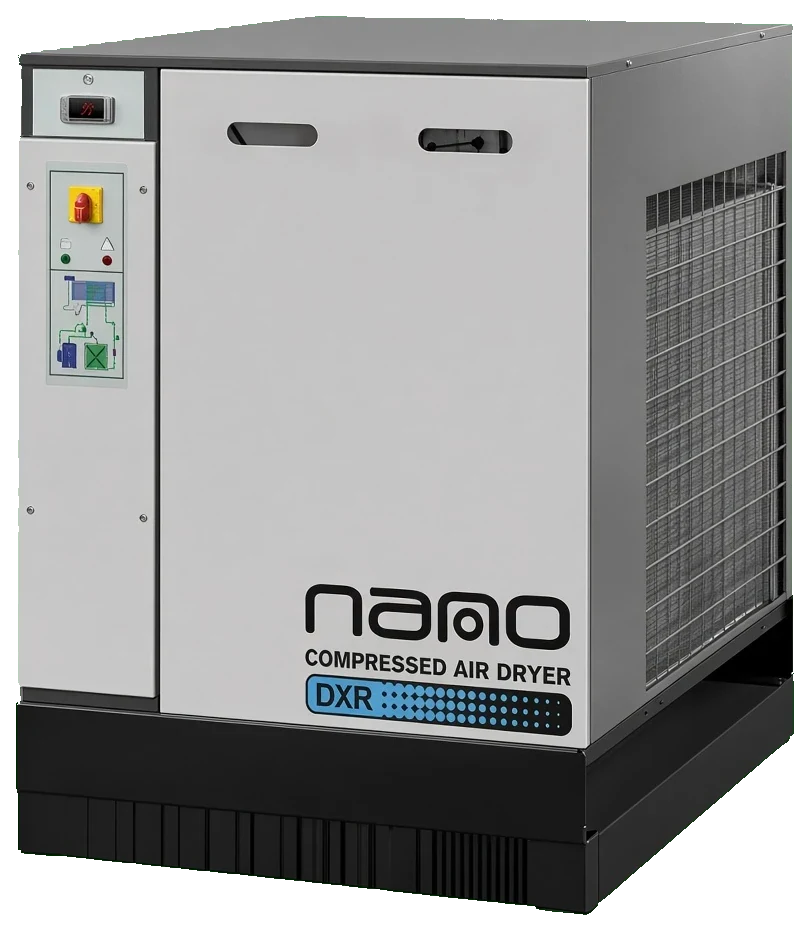
What water does on a filling line
Fill levels, caps and the container itself
- Filler valve actuators lagging as condensate washes out the lubricant, so fill levels wander
- Capper and seamer heads sticking, cross-threading caps and scoring can seams
- Rinser air blowing condensate and the organisms from a wet pipe into the container
- Wet blow-off leaving water spots that stop labels adhering
The air specification for a filling hall
Machine air and rinser air written separately
- Machine air, class 2.4.2: 38°F pressure dew point from a refrigerated dryer sized for the hall's summer temperature
- Rinser and blow-out air, class 2.2.1: desiccant stage fed by the refrigerated dryer, sterile filter at the nozzle
- Water-cooled dryer where the compressor room runs above 105°F beside the blow molder
- Separate high-pressure dryer on the 500 to 600 psig PET blow molding air
Dryers that fit a bottling hall
All flows at the 100 psig, 100°F inlet rating point. A line on a 50 to 100 hp screw uses the 250 to 500 SCFM sizes; a multi-line hall uses 650 to 1,250 SCFM. The HHPR and APET series dry the 500 to 725 psig blow molding air on plants that make their own PET bottles.
| SERIES | TYPE | FLOW RANGE | MAX INLET | MAX PRESSURE |
| DXR Series | Non-Cycling | 10 to 4,200 SCFM | 131°F | 203 psig |
| FLXA Series | Cycling | 75 to 2,000 SCFM | 120°F | — |
| AES Series | Digital Scroll Cycling | 600 to 10,000 SCFM | 120°F | 232 psig |
| HHPR Series | High Pressure | 115 to 2,410 SCFM | 120°F | 680 psig |
| APET Series | High Pressure | 45 to 1,000 SCFM | 120°F | 725 psig |
| HF Series Filters | Compressed Air Filter | 20 to 21,250 SCFM | — | 300 psig |
| ND Series Zero-Loss Drains | Condensate Drain | Call for sizing | — | 290 psig |
| PDM Dew Point Monitor | Dew Point Monitor | Call for sizing | — | 145 psig |
Send the compressor horsepower, the compressor room temperature and whether the plant blow molds its own PET; we size the plant dryer and the high-pressure dryer separately.
The compressor room decides the dryer size
Every dryer on this site is rated at 100°F ambient, and bottling plants build compressor rooms that run hotter than that for months. The compressor's own heat, the blow molder's high-pressure machine and a pasteurizer on the other side of the wall push the room to 110°F by mid-afternoon, and the dryer's condenser has to reject its heat into that air. At 110°F it keeps 88 percent of its rating; at 120°F, 75 percent.
A plant that wants the rating on the data sheet either ventilates the room, sizes the dryer up by the correction, or buys the water-cooled model and connects it to the tower loop. All three work; the one that does not is a nameplate-sized air-cooled dryer in a room nobody measured.
- Measure the compressor room on the hottest afternoon
- Size up by the ambient correction, or ventilate
- Water-cooled dryer where tower water is at hand
Where the dryer goes in a hot hall
Compressor, aftercooler, receiver, prefilter, dryer, coalescer, carbon filter, header. Bottling compressor rooms are hot: a blow molder's high-pressure compressor, a pasteurizer and a boiler share the same wall, and 105 to 115°F on a summer afternoon is common. An air-cooled dryer keeps 88 percent of its rating at 110°F and 75 percent at 120°F, so either the dryer is sized with the ambient correction or the plant chooses a water-cooled model, which the FLXA and AES series offer, and lets the plant's tower water carry the heat. The air-cooled versus water-cooled page compares the two.
Rinser air
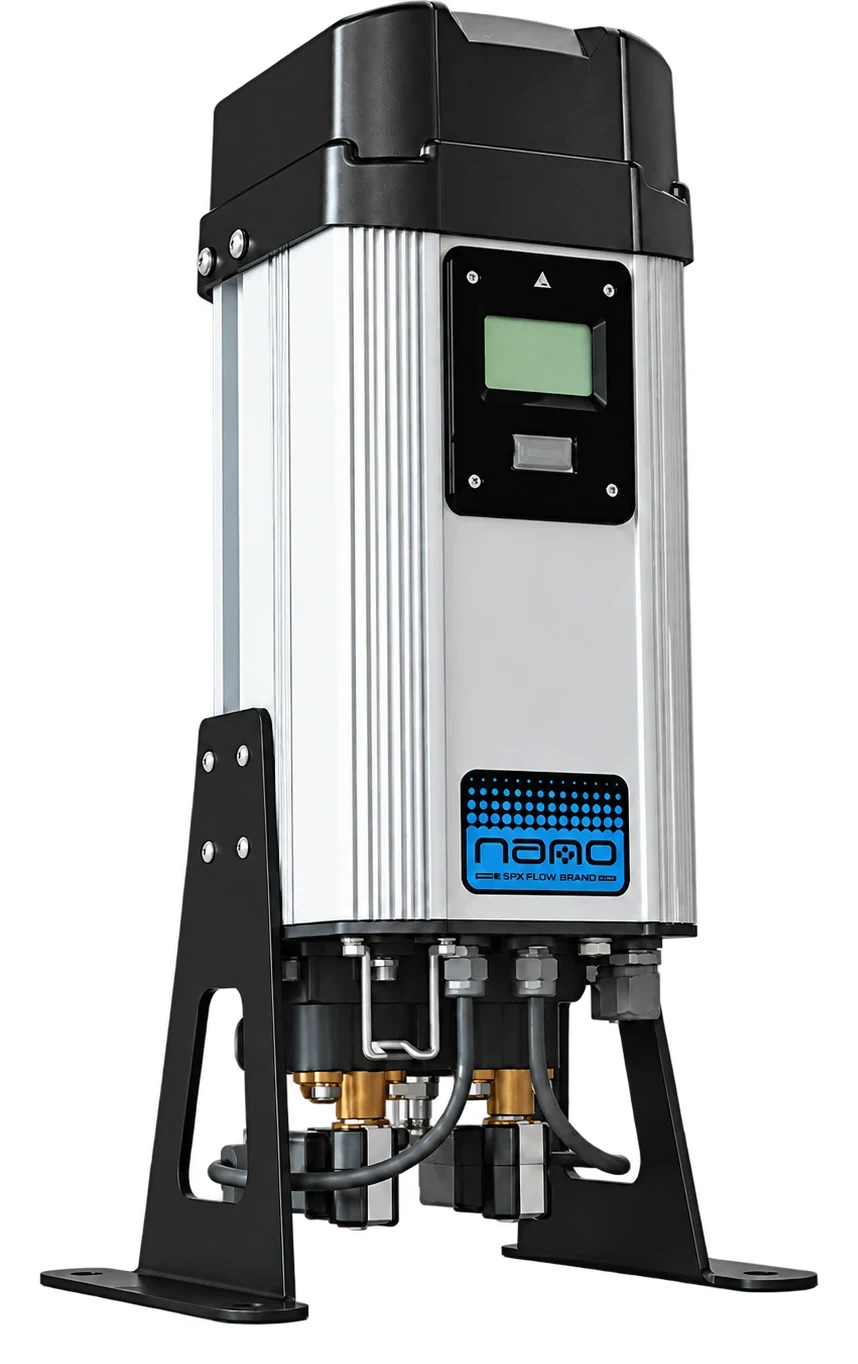
The rinser is the one station that puts air inside the container, so its branch leaves the plant header through a desiccant dryer sized for the rinser's 20 to 60 SCFM, and ends in a sterile filter at the manifold. Feeding that desiccant unit from the refrigerated dryer rather than from raw compressor air cuts its water load by nine tenths and its purge with it.
Cycling or non-cycling for bottling
A bottling hall that runs three shifts with the compressor loaded most of the time is the clearest non-cycling case on this site: the DXR series at full load draws no more than a cycling dryer at full load and has fewer parts. Seasonal plants that run flat out in summer and one shift in winter, and halls with long changeovers between products, spend enough hours at partial load that a cycling dryer pays back; above 600 SCFM the AES digital-scroll series follows the load continuously. The cycling versus non-cycling page has the arithmetic.
PET blow molding air
Plants that blow their own bottles run a second compressed air system at 500 to 600 psig for the stretch-blow machines, and that air needs its own dryer rated for the pressure. The HHPR series to 680 psig and the APET series to 725 psig are built for it; the plant-air dryer never sees that flow. The PET blow molding page covers that system on its own.
Filling hall air questions
It needs a different class. The rinser puts air inside the container, so the food-grade codes treat it as contact air at class 2.2.1, a –40°F dew point with a sterile filter. That branch takes a small desiccant dryer fed by the plant's refrigerated dryer; the filler, capper and conveyors stay on the refrigerated air.
Usually the dryer. A compressor room at 110°F takes an air-cooled dryer to 88 percent of its rating, and a dryer sized without that correction lets warm wet air through at the peak of the day. The filler valve actuators then lag on the condensate. Check the outlet dew point at 3 pm before touching the filler.
Water-cooled where the compressor room runs above about 105°F in summer and the plant has tower water, because the dryer's capacity then no longer depends on the room. Air-cooled with the ambient correction applied where the room is ventilated and stays under 100°F.
No. The blow molder runs on 500 to 600 psig air from its own compressor, and a plant-air dryer is rated for 200 to 232 psig. The high-pressure system gets an HHPR or APET dryer rated for its pressure; the filling hall gets a standard dryer sized for the low-pressure compressors.
A 100 hp screw delivers 430 to 460 SCFM, which is the 500 SCFM dryer at a normal compressor room temperature and the 600 SCFM size at 110°F. If the hall's demand swings with the season, the FLXA cycling series in that size; if it runs loaded all year, the DXR.
More on filling hall air
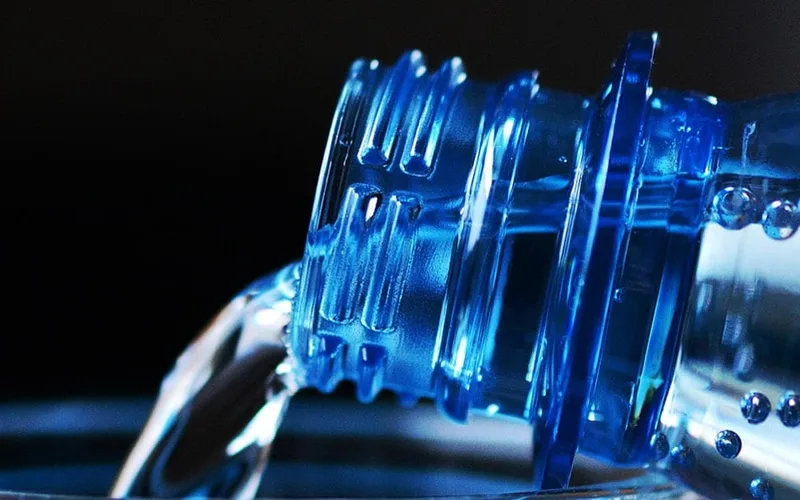
PET blow molding air at 500 to 725 psig
The high-pressure system behind a plant that makes its own bottles, and the HHPR and APET dryers built for it.
Learn More
Food Packaging
Compressed air drying for form-fill-seal, tray sealing and reject blasts: contact and non-contact classes, chilled halls and dryer sizes.
Learn More
Breweries & Wineries
Compressed air drying for brewhouse and cellar valves, keg lines and winery presses: the 38 degree dryer and the cold cellar below it.
Learn More