
1-805-484-2992
Quotes - Engineering - SalesAmbient Temperature and Air-Cooled Dryer Capacity
An air-cooled refrigerated dryer moves heat from the compressed air into the room, and it can only do that when the room is cooler than its condenser. The rating assumes a 100°F room. At 110°F the refrigerant runs at a higher pressure and the dryer carries 88 percent of its nameplate; at 120°F it carries 75 percent, and a few degrees beyond that the high-pressure switch stops the compressor.
The ambient to use is the air temperature at the dryer's condenser intake on a summer afternoon, which in a compressor room is rarely the plant temperature and never the outdoor forecast.
What the room does to the refrigeration circuit
The condenser is a finned coil with a fan blowing room air across it. Heat flows from the hot refrigerant to that air in proportion to the temperature difference between them, so as the room warms the refrigerant has to run hotter, its pressure rises, and the compressor delivers less cooling per kilowatt. Every air-cooled dryer therefore has two ambient numbers: the 100°F rating point, and a maximum of 110 to 122°F depending on the series, at which the unit still runs but at its derated capacity.
Divide the compressor's delivered flow by the ambient factor as well as the inlet and pressure factors. A 220 SCFM compressor in a 110°F room with 120°F inlet air is a 220 / (0.88 x 0.65), or 385 SCFM, duty.
Cold rooms, hot rooms and the way out of both
The low end matters too. Below 34 to 45°F, depending on the series, the condensate inside the exchanger can freeze and the refrigerant pressure falls so low the circuit cannot regulate, so a dryer in an unheated shed or beside an open loading door in January needs the room heated or the dryer moved. Above the maximum ambient the choices are ventilation, relocation or a water-cooled unit.
Ventilation is nearly always the cheapest fix. A compressor room with an exhaust fan sized for the compressor's heat rejection and a louver low on the opposite wall runs within 10°F of outdoor air; without it the same room sits at 115°F, heated by the very machines trying to cool with it. Where the room cannot be cooled, the water-cooled builds of the FLXA, AES, VDR and HES Series carry an 85°F water rating that does not care what the room is doing.
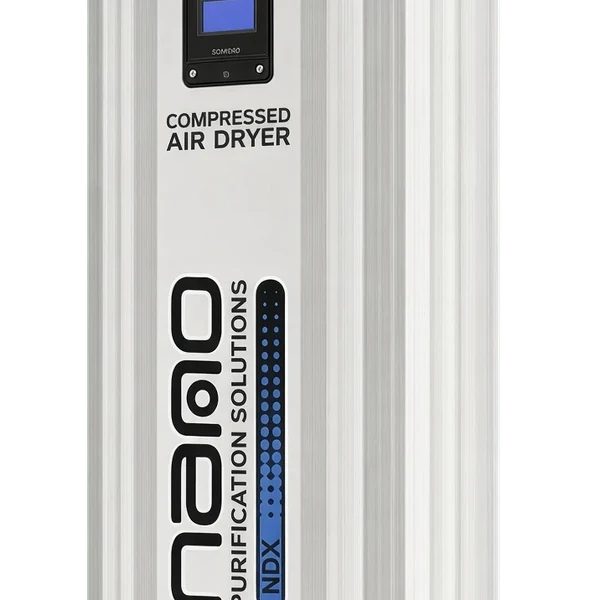
Worked example: 50 hp screw, before and after ventilation
The same compressor, two dryer sizes
- 220 SCFM at 100 psig; unventilated room 110°F, inlet 120°F: factors 0.88 x 0.65
- Duty 220 / 0.572 = 385 SCFM; the 400 SCFM size
- Exhaust fan fitted: room 100°F, inlet 110°F: factors 1.00 x 0.80
- Duty 220 / 0.80 = 275 SCFM; the 300 or 325 SCFM size, one frame smaller
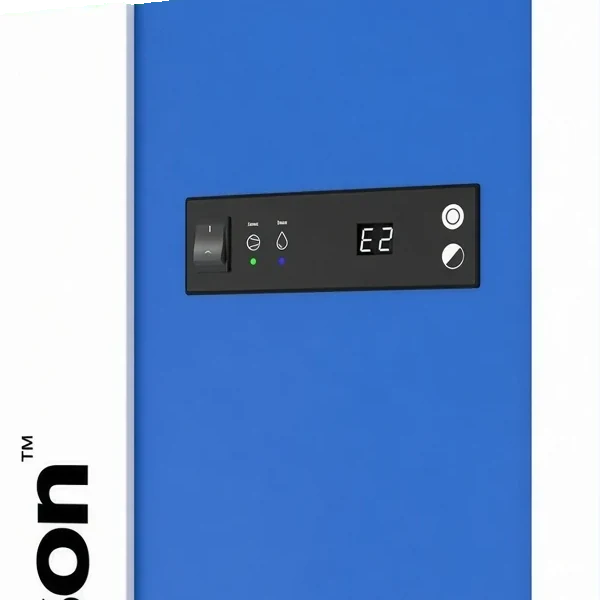
Reading the ambient range on a data sheet
A minimum, a rating point and a maximum
- Minimum ambient 34 to 45°F by series: below it the condensate freezes
- 100°F: the air-cooled rating point
- Maximum ambient 110 to 122°F by series: the dryer runs derated up to it, then trips
- Water-cooled units are rated at 85°F condenser water instead
Ambient factors, worked for a 220 SCFM compressor
Room temperature, the inlet air it produces through a package aftercooler running 10°F above the room, and the rating-point duty at 100 psig.
| COMPRESSOR ROOM | AMBIENT FACTOR | INLET AIR | INLET FACTOR | DUTY FOR 220 SCFM | MODEL EXAMPLES |
| 100°F | 1.00 | 110°F | 0.80 | 275 SCFM | DXR 0325 NA, FLXA3.1-A |
| 110°F | 0.88 | 120°F | 0.65 | 385 SCFM | DXR 0400 NA, TMC 0400 N |
| 120°F | 0.75 | 130°F | 0.55 | 533 SCFM | DXR 0600 NA, FLXA5.5-A |
| Above 120°F | not rated | — | — | water-cooled dryer | FLXA8.1-W, AES-600W, VDR 2600 W |
| Below 34 to 45°F | not rated | — | — | heat the room or relocate | — |
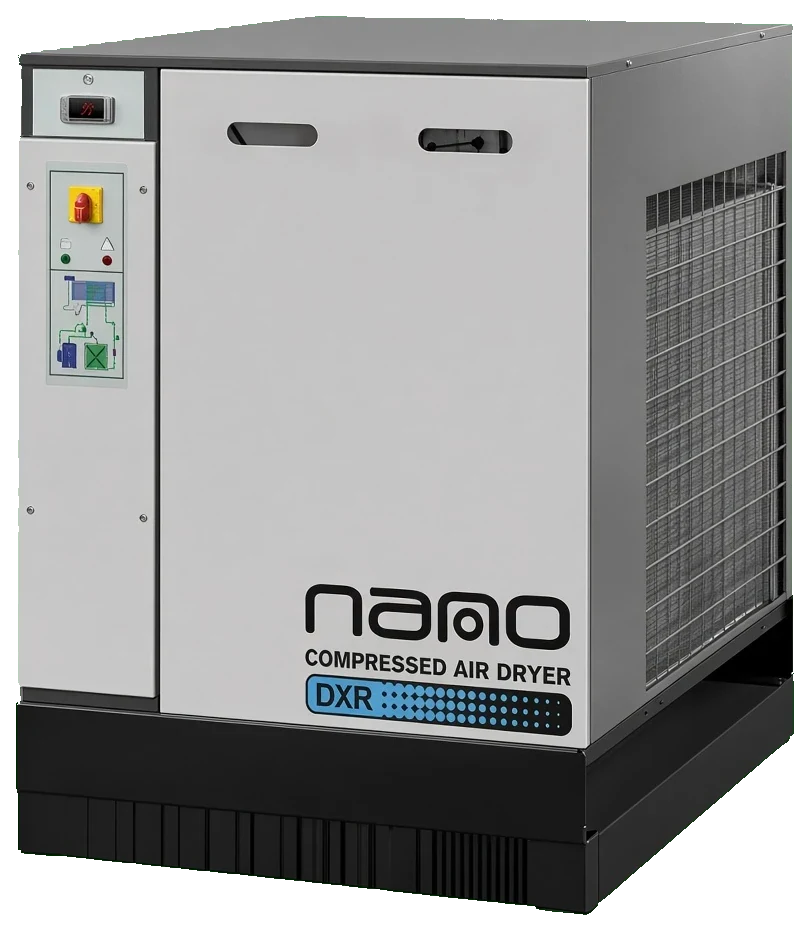
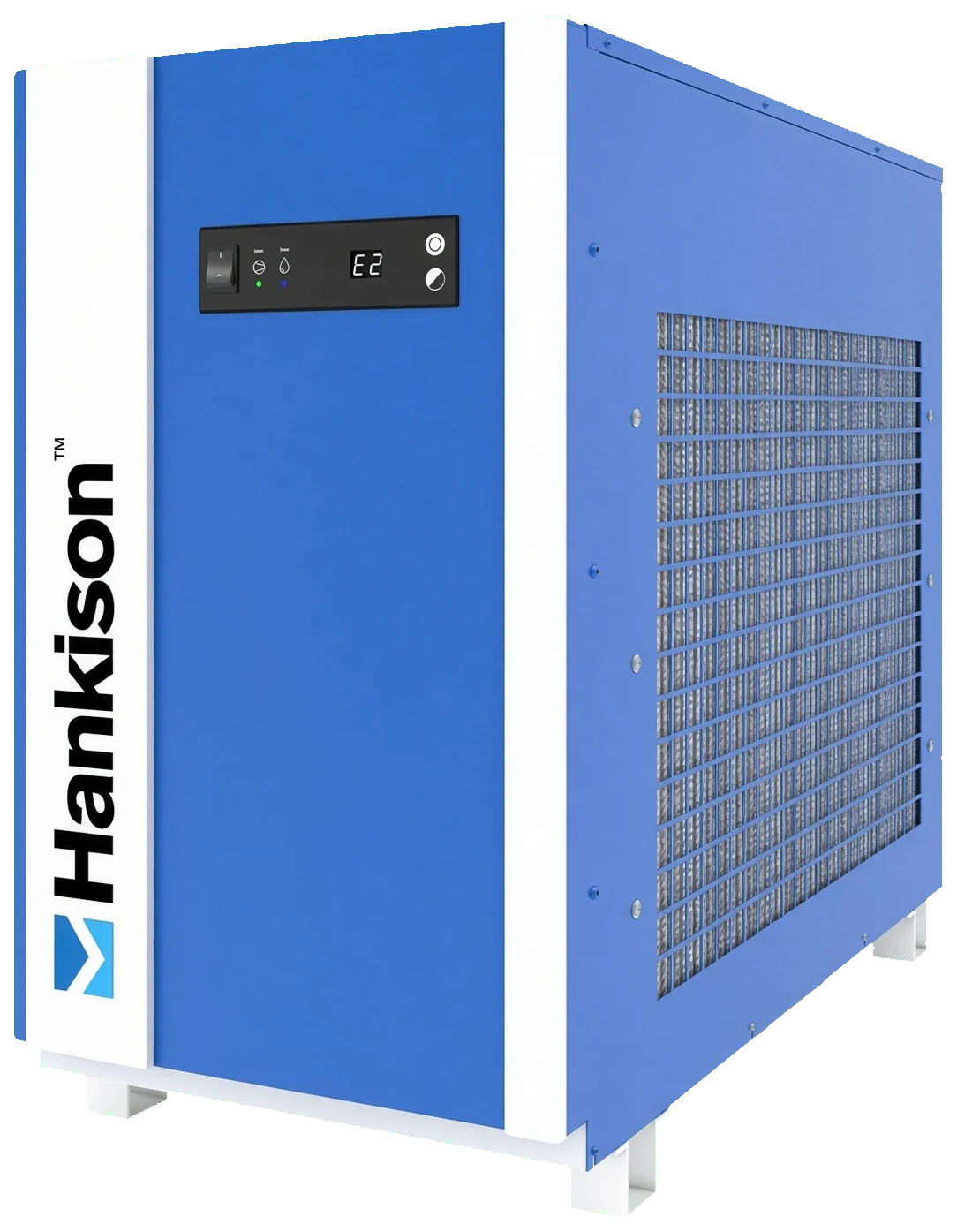
Dryers with air- and water-cooled builds
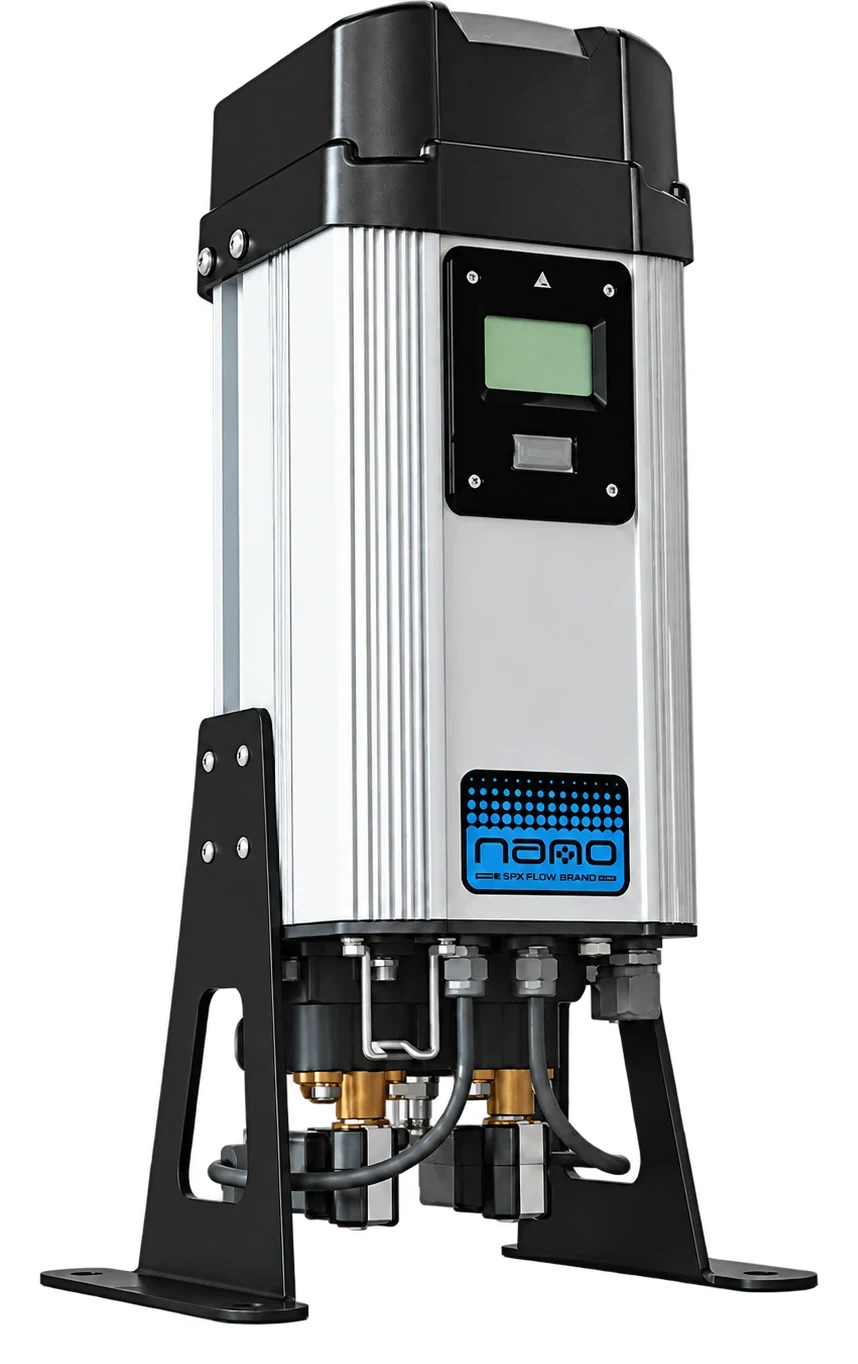
Measuring the ambient that counts
Hang a thermometer at the height of the dryer's condenser intake, on the side the fan draws from, and read it at three in the afternoon in July. If the dryer is to go in a corner, behind the compressor or under a mezzanine, read it there, because the air the condenser draws is what matters and a compressor room can be 20°F warmer in one corner than another. Use 0.88 for anything from 101 to 110°F and 0.75 from 111 to 120°F; there is no credit for a room below 100°F, and no factor above 120°F because most series will not run there.
Placing the dryer
Give the condenser intake and discharge the clearance the installation drawing asks for, keep the discharge from blowing back into the intake, and never stand the dryer where the compressor's hot exhaust lands on it. A correctly sized dryer loses a frame size to nothing more than being parked in that exhaust stream.
Mistakes around ambient
Using the plant floor temperature for a dryer that lives in the compressor room. Sizing in spring. Forgetting that the compressor added last year raised the room by 10°F. Fitting the dryer outdoors under a roof and ignoring both the 120°F afternoons and the 20°F nights. Each ends the same way: a dryer that trips on high refrigerant pressure or passes water on the hottest, most humid days of the year.
Outdoor and unheated installations
A refrigerated dryer belongs indoors. Where it must sit in an unheated building, size for the summer maximum with the factors above and confirm the winter minimum stays above the series' lower limit, 34°F on the DXR Series and 41°F on the TMC Series. If it does not, a small heated enclosure costs less than the dryer it protects, and a drain that carries a heater, such as the heated model in the ND Series, keeps the condensate line from freezing shut.
Ambient condition questions
The shade temperature on the hottest afternoon, plus whatever the roof and any adjacent equipment add, and in most of the country that is 110 to 120°F. Then check the winter low against the series minimum. An outdoor dryer usually ends up one size larger than an indoor one and inside a heated enclosure.
The refrigerant pressure drops too low for the hot-gas bypass or cycling control to hold the evaporator above freezing, and the condensate in the exchanger turns to ice, which blocks the air path and can split the exchanger. The minimum is 34°F on several series and 41 to 45°F on others, so check the data sheet before installing in an unheated space.
Not for the room. A water-cooled condenser is rated at 85°F entering water and is corrected for water temperature instead, so tower water at 95°F in August derates it much as a hot room derates an air-cooled unit. The room still has to stay above the series minimum for the controls and the drain.
Usually, with a duct sized so the fan sees little extra static pressure and a return path for make-up air, otherwise the fan starves and the head pressure rises anyway. Ducting the intake from outside is the better arrangement where outdoor air is cooler than the room. Send the layout and we will confirm it against the series.
Yes, because the condenser and the refrigeration circuit behind it are affected the same way whether the compressor runs continuously or cycles. A cycling dryer in a hot room simply runs its compressor longer to keep the thermal mass cold, which erodes part of the energy saving it was bought for.