
1-805-484-2992
Quotes - Engineering - SalesOperating Pressure and Refrigerated Dryer Sizing
Pressure is the one correction that can work in the buyer's favor. A refrigerated dryer is rated at 100 psig; feed it denser air at 125 or 150 psig and it carries 8 or 15 percent more than its nameplate, feed it 80 or 60 psig air and it carries 8 or 20 percent less. The factors are 0.80 at 60 psig, 0.92 at 80 psig, 1.08 at 125 psig and 1.15 at 150 psig, applied at the pressure the dryer actually sees.
Two limits sit either side of the factor: a minimum working pressure below which the separator stops working, and a maximum above which the standard series give way to the high-pressure dryers.
Why denser air is easier to dry
Compress the same free air to a higher pressure and two things change inside the dryer. The air occupies less volume, so it moves more slowly through the exchanger and spends longer against the cold surface. And saturated air at higher pressure holds less water per pound: at 150 psig the water content of 100°F saturated air is about 30 percent lower than at 100 psig, so there is less latent heat to remove per SCFM. At 60 psig the reverse applies, with half again as much water per pound and a velocity that starts to carry condensate past the separator.
Divide the delivered SCFM by the factor: 175 SCFM at 125 psig is a 162 SCFM duty, and the same 175 SCFM at 60 psig is a 219 SCFM duty.
Which pressure to use, and where the standard series stop
Use the gauge at the dryer inlet on a normal working day. With a receiver ahead of the dryer that is the receiver pressure, which swings between the compressor's load and unload points, so size at the lower of the two. If a regulator sits upstream of the dryer, move it: a regulator belongs after the dryer at the point of use, where dropping the pressure costs nothing in dryer capacity.
The standard series carry a maximum working pressure of 200 to 232 psig, which covers every industrial screw and piston compressor. Above that the high-pressure dryers take over, sized from their own tables rather than the factors here.
Dryers above 232 psig
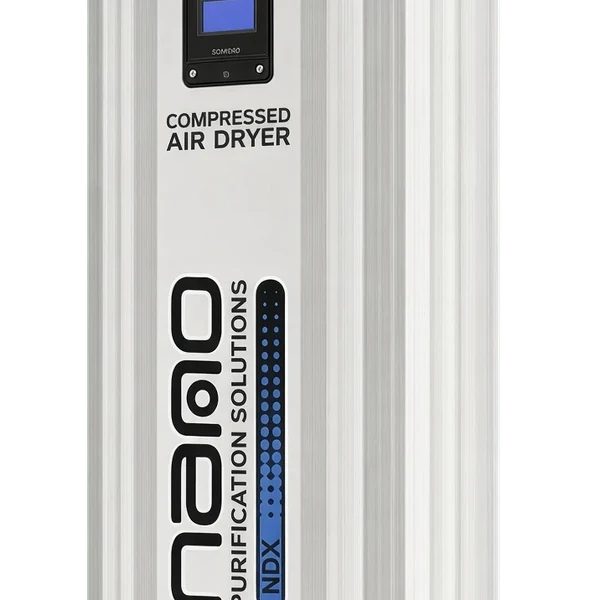
Worked example: 40 hp screw at 125 psig
Pressure gives back some of what the inlet takes
- Compressor delivers 175 SCFM; receiver holds 125 psig at the dryer inlet: factor 1.08
- Inlet air 110°F in a 100°F room: factors 0.80 and 1.00
- Duty 175 / (1.08 x 0.80) = 203 SCFM
- Model chosen: the 230 SCFM size, not the 185
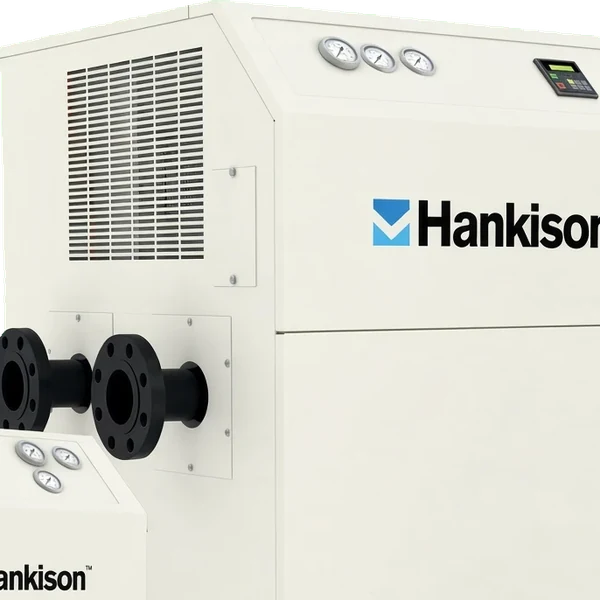
Reading the pressure limits
Three pressures on every data sheet
- Rating pressure, 100 psig: where the nameplate SCFM applies
- Maximum working pressure, 200 to 232 psig on the standard series
- Minimum working pressure, 29 to 75 psig by series; below it the separator lets water through
- Pressure drop through the dryer, typically 2 to 6 psid at rated flow
Pressure factors, worked for a 175 SCFM compressor
Capacity of a dryer rated 250 SCFM at each inlet pressure, and the rating-point duty a 175 SCFM compressor imposes, with inlet air and ambient held at 100°F.
| DRYER INLET PRESSURE | FACTOR | A 250 SCFM DRYER CARRIES | DUTY FOR 175 SCFM | MODEL EXAMPLES |
| 60 psig | 0.80 | 200 SCFM | 219 SCFM | DXR 0230 NA, TMC 0265 N |
| 80 psig | 0.92 | 230 SCFM | 190 SCFM | DXR 0230 NA, FLXA3.1-A |
| 100 psig | 1.00 | 250 SCFM | 175 SCFM | DXR 0185 NA, FLXA2.1-A |
| 125 psig | 1.08 | 270 SCFM | 162 SCFM | DXR 0185 NA, TMC 0170 N |
| 150 psig | 1.15 | 288 SCFM | 152 SCFM | DXR 0185 NA, NXC 0165 |
| 500 to 725 psig | own tables | — | high-pressure dryer | APET-200, HHPR-200 |
| 1,200 to 6,000 psig | own tables | — | ultra-high-pressure dryer | AXHP-200-1200 to AXHP-200-6000 |
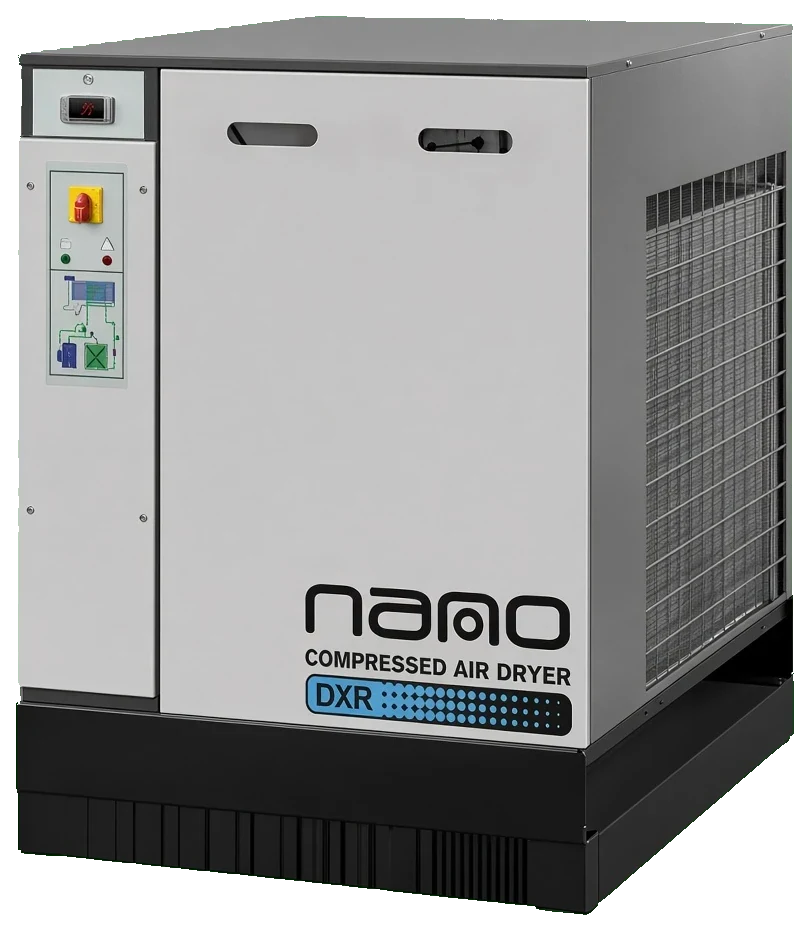
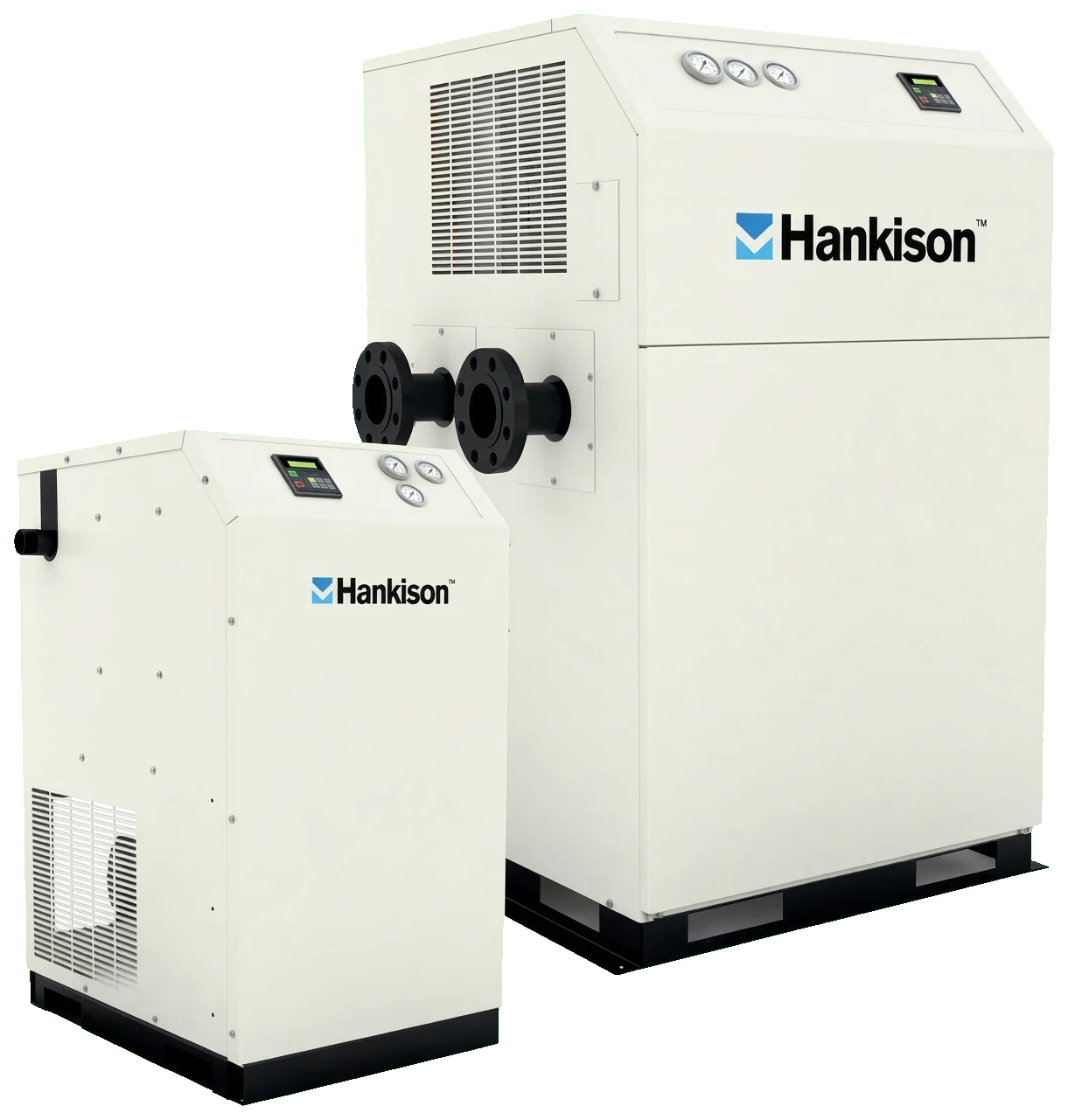
Dryers across the pressure range

Applying the factor
Read the dryer inlet pressure, take the factor for the nearest listed pressure below it, and divide the delivered SCFM by it together with the inlet and ambient factors. A plant at 110 psig uses 1.00, not 1.08; a plant at 90 psig uses 0.92. Then check the answer against the series' working pressure limits: the DXR Series, for instance, is rated 60 to 203 psig on its 50 to 4,200 SCFM sizes.
Do not bank on pressure you may lose
The 150 psig factor is real, but a compressor set to 150 psig today may be turned down to 110 psig next year to save energy, and a dryer sized on 1.15 will then be 15 percent short. Where the setpoint is likely to fall, size at the lower pressure. Where it is fixed by the process, as on a PET line or a test bench, take the credit.
Mistakes around pressure
Sizing at the compressor's unload pressure when the dryer sees the load pressure most of the day. Sizing at 100 psig for a system that runs on 65 psig air, where the dryer has 20 percent less capacity than its nameplate. Piping a regulator ahead of the dryer. Ignoring the dryer's own pressure drop, 2 to 6 psid on the standard series, which costs roughly 1 percent of compressor power for every 2 psi.
Below 60 psig and above 232 psig
Below 60 psig the published factors stop and separator velocity becomes the limit, so send the flow and pressure and we select from the series that carry a low minimum. Above 232 psig the HHPR Series covers 115 to 2,410 SCFM at 680 psig and the APET Series 45 to 1,000 SCFM at 725 psig, both built around stainless exchangers. The AXHP Series goes on to 6,000 psig for breathing-air and test systems at 20 to 275 SCFM.
Operating pressure questions
The gauge at the dryer, and the lower of its readings across a load cycle. The difference is pressure drop through the aftercooler, receiver and prefilter, and it is the dryer's inlet pressure that sets its capacity. At 115 psig use the 100 psig factor of 1.00.
It should not. Regulating from 125 to 80 psig ahead of the dryer cuts the dryer's capacity from 108 to 92 percent of nameplate and raises the water content of every cubic foot it must dry. Put regulators downstream, at the machines that need the lower pressure.
By about 15 percent, yes, provided the setpoint will stay there; every standard series on this site carries 200 psig or more, so the working pressure is not the constraint. The risk is a future setpoint reduction, which is why we ask how firm the pressure is before taking the credit.
It loses more capacity than the factors show, because the velocity through the exchanger and separator rises as pressure falls and condensate begins to carry over. The DXR sizes above 30 SCFM specify 60 psig as their minimum for that reason. Send us the flow and pressure and we select from the series with a lower minimum.
No. The HHPR, APET and AXHP Series are rated at their own pressures, and the APET Series publishes separate capacities at 500 and 725 psig. Size those from the series tables, still correcting for inlet and ambient temperature.