
1-805-484-2992
Quotes - Engineering - SalesCycling Refrigerated Air Dryers, 300 to 1,250 SCFM
Load-following dryers for 60 to 250 hp compressors and plants with idle hours
From 60 hp to 250 hp the compressor is a plant asset, and so is the electricity that dries its air: a non-cycling dryer at 600 SCFM absorbs about 4 kW every hour it is powered. This band is for the plant whose compressor unloads at night, stops at weekends or feeds a process that runs in batches, where a dryer that follows the load returns that power to the bill.
Four current series cover the band with three technologies. The thermal-mass and dry thermal-mass dryers store cold and stop their refrigeration compressor; the phase-change dryer does the same with a freezing medium around a brazed-plate exchanger; and from 600 SCFM the digital-scroll dryer modulates its compressor from zero to full capacity instead of stopping it, so the dew point never moves.
Thirty-two current models span 265 to 1,250 SCFM, nearly all on 460 V three phase, with 1-1/2 in to 3 in threaded connections and 3 in and 4 in flanges on the largest. Water-cooled versions of the phase-change and digital-scroll dryers are listed from 600 and 800 SCFM. The previous generation is in the table with its successor.
- Rated 300 to 1,250 SCFM at 100 psig, 100°F inlet and 100°F ambient
- Thermal-mass, phase-change and digital-scroll capacity control
- Air-cooled throughout, water-cooled options from 600 SCFM
- 1.4 to 9.5 kW at full load, 460/3/60 on all but the smallest sizes
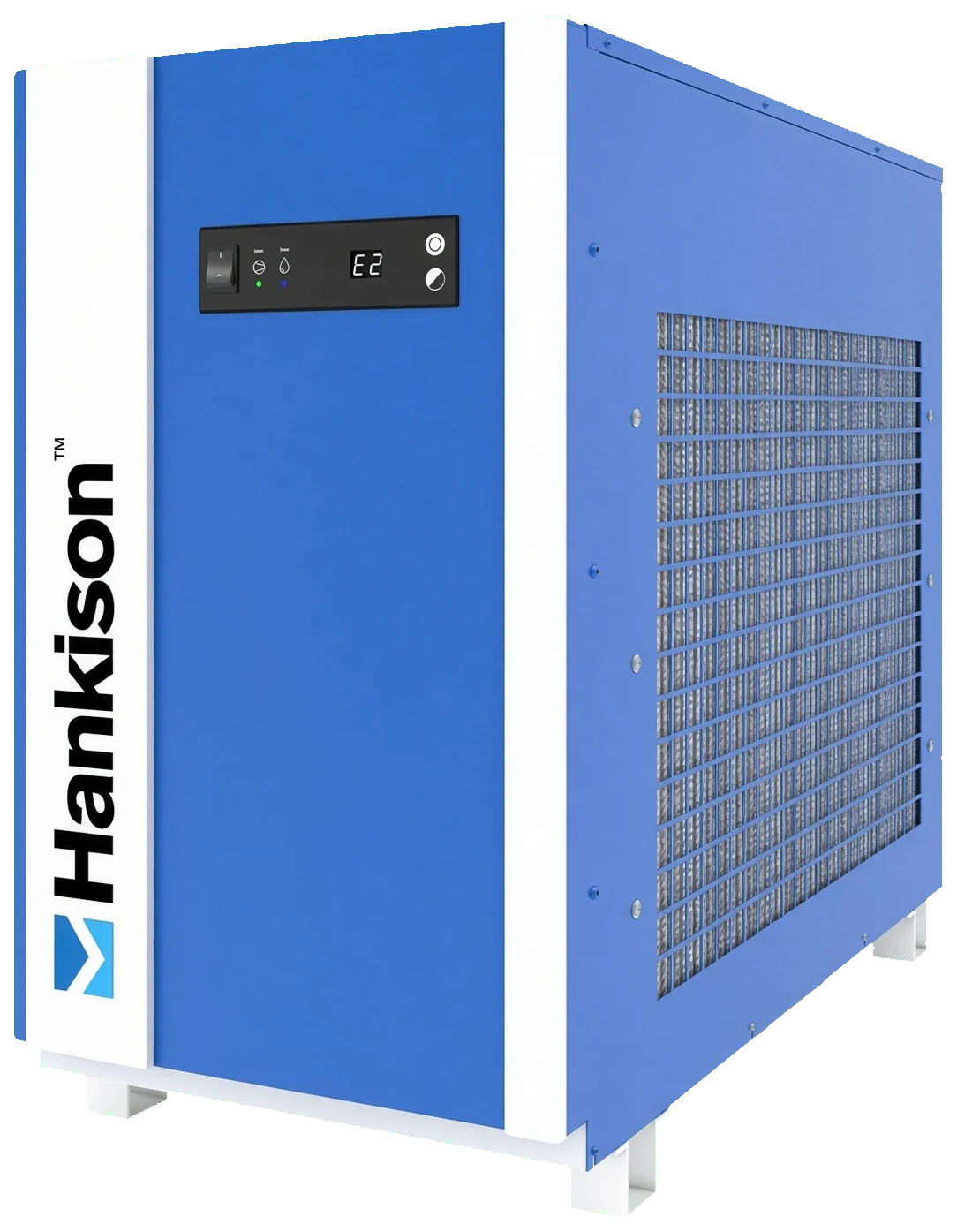
Every 300 to 1,250 SCFM cycling model
Rated at 100 psig, 100°F inlet and 100°F ambient; water-cooled units carry a W in the part number. Current models come first, sorted by series and flow, with the previous generation and its replacement at the end.
| PART NUMBER | SERIES | SCFM | CONNECTION | VOLTAGE | STATUS |
| AES-600A | AES Series | 600 | 3 in NPT | 460/3/60 | Current |
| AES-600W | AES Series | 600 | 3 in NPT | 460/3/60 | Current |
| AES-800A | AES Series | 800 | 3 in NPT | 460/3/60 | Current |
| AES-800W | AES Series | 800 | 3 in NPT | 460/3/60 | Current |
| AES-1000A | AES Series | 1,000 | 3 in NPT | 460/3/60 | Current |
| AES-1000W | AES Series | 1,000 | 3 in NPT | 460/3/60 | Current |
| AES-1250A | AES Series | 1,250 | 3 in NPT | 460/3/60 | Current |
| AES-1250W | AES Series | 1,250 | 3 in NPT | 460/3/60 | Current |
| FLXA3.1-A | FLXA Series | 300 | 2 in NPT | 460/3/60 | Current |
| FLXA4.5-A | FLXA Series | 450 | 2 in NPT | 460/3/60 | Current |
| FLXA5.5-A | FLXA Series | 550 | 2 in NPT | 460/3/60 | Current |
| FLXA8.1-A | FLXA Series | 800 | 3 in flange | 460/3/60 | Current |
| FLXA8.1-W | FLXA Series | 800 | 3 in flange | 460/3/60 | Current |
| FLXA10.1-A | FLXA Series | 1,000 | 3 in flange | 460/3/60 | Current |
| FLXA10.1-W | FLXA Series | 1,000 | 3 in flange | 460/3/60 | Current |
| FLXA12.5-A | FLXA Series | 1,250 | 4 in flange | 460/3/60 | Current |
| FLXA12.5-W | FLXA Series | 1,250 | 4 in flange | 460/3/60 | Current |
| NXC 0265 (230 V) | NXC Series | 265 | 2 in NPT | 230/1/60 | Current |
| NXC 0265 (460 V) | NXC Series | 265 | 2 in NPT | 460/3/60 | Current |
| NXC 0325 (230 V) | NXC Series | 325 | 2 in NPT | 230/1/60 | Current |
| NXC 0325 (460 V) | NXC Series | 325 | 2 in NPT | 460/3/60 | Current |
| NXC 0400 (230 V) | NXC Series | 400 | 2 in NPT | 230/1/60 | Current |
| NXC 0400 (460 V) | NXC Series | 400 | 2 in NPT | 460/3/60 | Current |
| NXC 0500 | NXC Series | 500 | 2-1/2 in NPT | 460/3/60 | Current |
| NXC 0650 | NXC Series | 650 | 3 in NPT | 460/3/60 | Current |
| NXC 0850 | NXC Series | 850 | 3 in NPT | 460/3/60 | Current |
| NXC 1050 | NXC Series | 1,050 | 3 in NPT | 460/3/60 | Current |
| TMC 0265 N | TMC Series | 265 | 1-1/2 in FNPT | 230/1/60 | Current |
| TMC 0320 N | TMC Series | 320 | 2 in FNPT | 460/3/60 | Current |
| TMC 0400 N | TMC Series | 400 | 2 in FNPT | 460/3/60 | Current |
| TMC 0510 N | TMC Series | 510 | 2-1/2 in FNPT | 460/3/60 | Current |
| TMC 0635 N | TMC Series | 635 | 2-1/2 in FNPT | 460/3/60 | Current |
| FLX3.1 | FLEX Series | 300 | 2 in NPT | 460/3/60 | Replaced by FLXA |
| FLX4.5 | FLEX Series | 450 | 2 in NPT | 460/3/60 | Replaced by FLXA |
| FLX5.5 | FLEX Series | 550 | 2 in NPT | 460/3/60 | Replaced by FLXA |
| FLX8.1 | FLEX Series | 800 | 3 in flange | 460/3/60 | Replaced by FLXA |
| FLX8.1-W | FLEX Series | 800 | 3 in flange | 460/3/60 | Replaced by FLXA |
| FLX10.1 | FLEX Series | 1,000 | 3 in flange | 460/3/60 | Replaced by FLXA |
| FLX10.1-W | FLEX Series | 1,000 | 3 in flange | 460/3/60 | Replaced by FLXA |
| FLX12.5 | FLEX Series | 1,250 | 4 in flange | 460/3/60 | Replaced by FLXA |
| FLX12.5-W | FLEX Series | 1,250 | 4 in flange | 460/3/60 | Replaced by FLXA |
Five series with models in this band
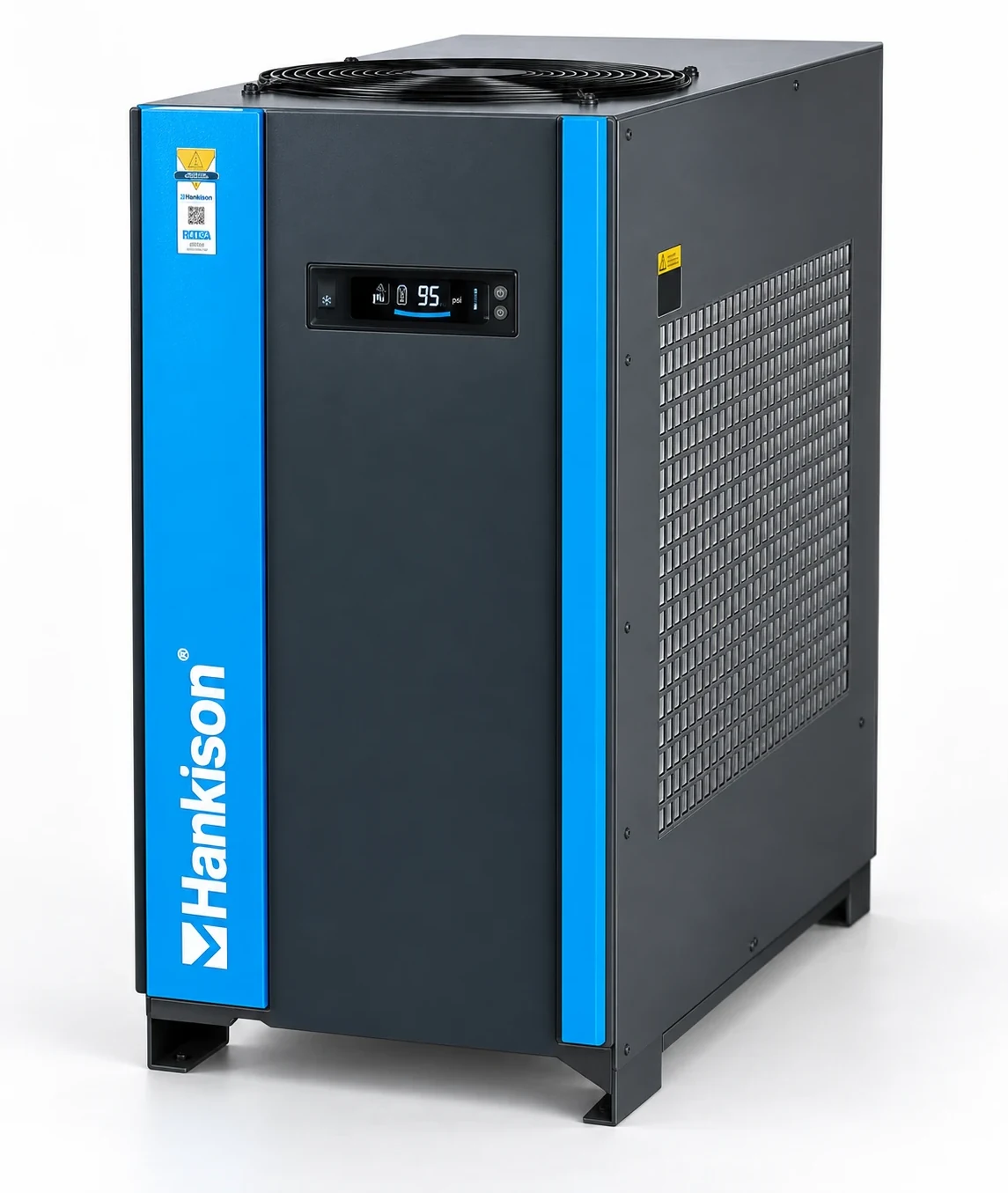
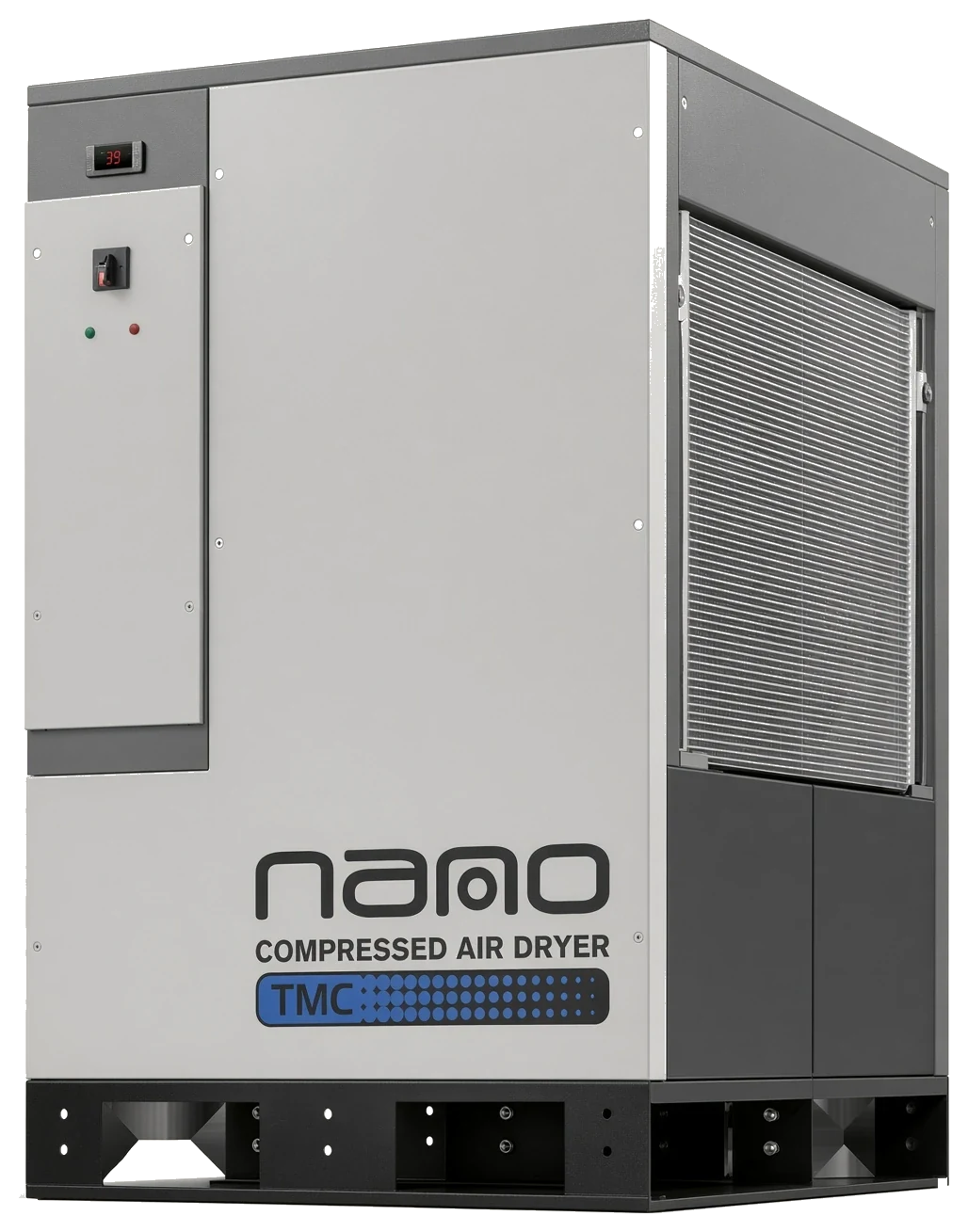
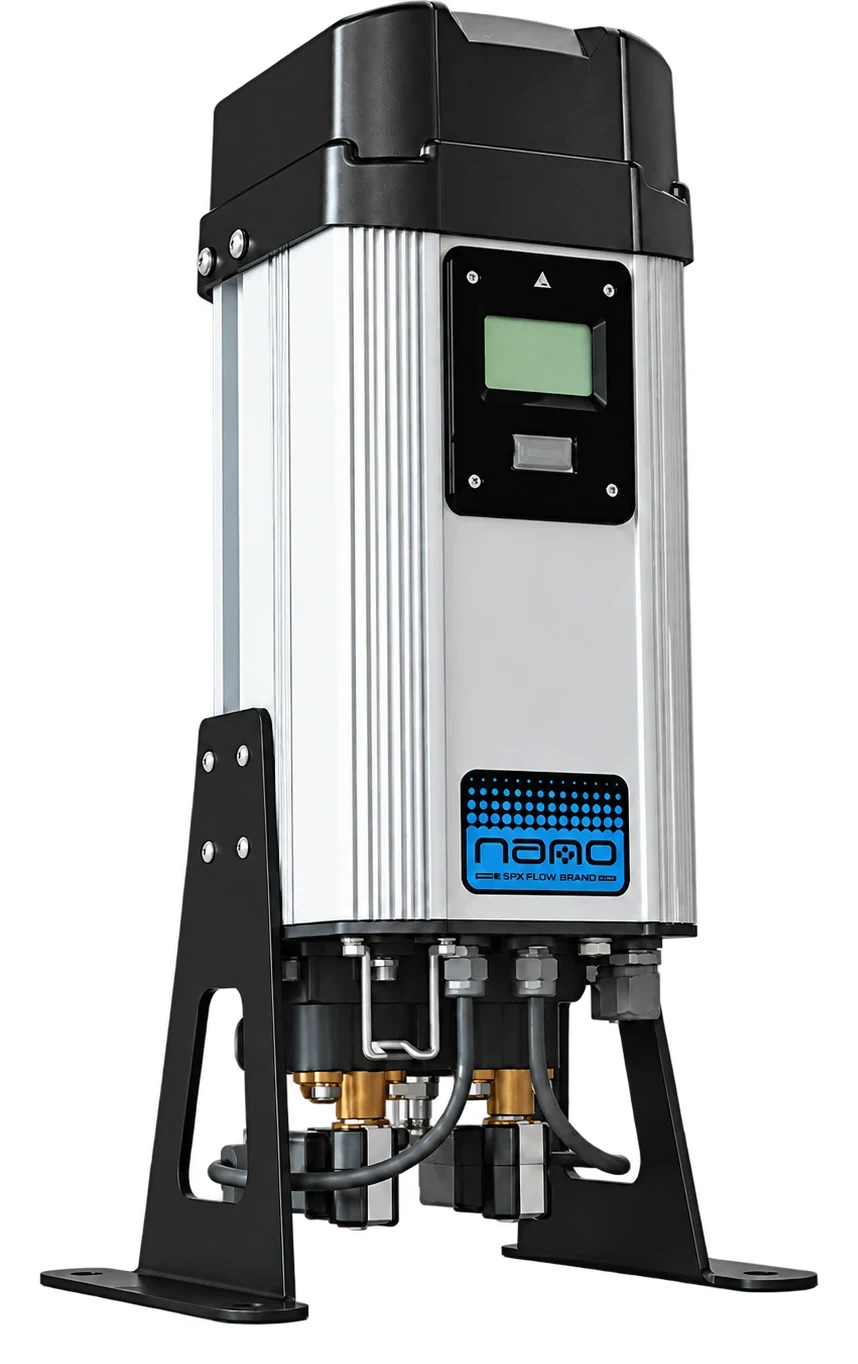
Stored cold or modulated compressor
Up to 635 SCFM the thermal-mass dryer and up to 1,050 SCFM the dry thermal-mass dryer save energy by stopping: the refrigeration compressor runs to chill the glycol or the exchanger block, rests while the stored cold dries the air, and restarts when the block warms. The phase-change dryer works the same way to 1,250 SCFM with a medium that freezes around the exchanger. The digital-scroll dryer, from 600 SCFM, keeps its compressor turning but unloads the scroll for part of every cycle, so capacity follows the load from zero to 100 percent with no stored cold and no dew point swing. Stopping saves slightly more at very light load; modulating holds the dew point flatter and suits a process that cannot tolerate a 45°F excursion.
Compressor to dryer at this size
A 100 hp screw at 450 SCFM takes the 500 or 510 SCFM size; a 150 hp at 680 SCFM takes the 800; a 200 hp at 900 SCFM takes the 1,000 or 1,050; a 250 hp at 1,100 SCFM takes the 1,250. Two compressors that can run together are sized as one. Apply the same inlet and ambient derates as for any refrigerated dryer: the ratings assume 100°F air arriving in a 100°F room, and a hot compressor room costs 10 to 20 percent of capacity.
Air-cooled or water-cooled
An air-cooled dryer at 1,000 SCFM rejects its heat into the compressor room and needs clear space around the condenser. The water-cooled versions of the phase-change and digital-scroll dryers put that heat into a tower or chilled water loop, absorb 20 to 30 percent less power because the condensing temperature is lower, and tolerate a hot room. They suit plants that already run cooling water past the compressor room; a plant without a loop should not build one for the dryer. The air-cooled versus water-cooled page gives the water flow and temperature limits.
Payback and the case for non-cycling
A 600 SCFM cycling dryer in a plant loaded 45 percent of the time saves roughly 15,000 to 20,000 kWh a year against a non-cycling unit, which recovers the price difference in two to three years at typical industrial tariffs and faster where a utility rebate applies. A plant loaded 20 hours a day recovers nothing and should choose the non-cycling dryers of the same band. Both types need the same 1 micron prefilter, 0.01 micron afterfilter and bypass loop.
300 to 1,250 SCFM cycling dryer questions
A 150 hp screw delivers 650 to 690 SCFM, so the 800 SCFM phase-change or digital-scroll model covers it with a margin for a warm inlet. If the compressor is loaded around the clock, the 850 SCFM non-cycling model does the same job for less.
A thermal-mass dryer stops its refrigeration compressor and runs on stored cold, then restarts; a digital-scroll dryer keeps the compressor running and unloads it for part of each cycle. Both track the air load; the scroll holds a flatter dew point and is offered from 600 SCFM up.
The 265 to 400 SCFM dry thermal-mass sizes come in 230 V single-phase and 460 V three-phase builds, and the 265 SCFM thermal-mass unit is 230 V. Everything larger in the band is 460/3/60; other voltages are quoted on request for the digital-scroll line.
When the plant has a cooling tower or chilled water loop within reach and the compressor room runs hot. A water-cooled dryer of this size absorbs 20 to 30 percent less power and does not depend on room air, but it adds a water connection, a strainer and a control valve to maintain.
Yes, size for size. The current phase-change series carries the same flows, connections and voltages as the previous generation from 300 to 1,250 SCFM, including the water-cooled sizes, so it drops into the existing piping.