
1-805-484-2992
Quotes - Engineering - SalesHigh-Pressure Air Dryers for PET Blow Molding
A stretch blow molder runs on two compressed air systems. Plant air at 100 to 125 psig drives the preform feed, the stretch-rod and clamp actuators, the grippers and the conveyors. Blow air at 500 to 725 psig, most often 580 psig (40 bar), comes from a separate multi-stage booster: a pre-blow starts the bubble, then full pressure forces the softened preform against the mold wall in a fraction of a second.
The mold is cooled with 40 to 55°F chilled water so the bottle sets before ejection. Water vapor in the blow air condenses on that cold wall and comes off in the bottle as haze, spots and an orange-peel surface; over months it pits the aluminum cavity and corrodes the blow valve block, and oil aerosol leaves a film and an odor a beverage filler will reject. Both air systems need a refrigerated dryer, and the high-pressure one needs a dryer built for the pressure.
Blow air is dried after the booster aftercooler and the high-pressure receiver, ahead of the blow-air header, with the dryer's flow read from its 500 or 725 psig rating. At 580 psig a given SCFM holds about a fifth of the water it would at 100 psig, and a 38°F pressure dew point there corresponds to roughly -30°F at atmosphere, so a refrigerated high-pressure dryer is enough for bottle quality without a desiccant tower.
Flow follows the bottles. A 500 ml water line at 20,000 bottles an hour draws about 500 to 800 SCFM of blow air without air recovery and 30 to 40 percent less with it; a multi-stage booster delivers roughly 3 SCFM per hp at 580 psig, so that line sits behind a 200 to 300 hp machine. The HHPR Series covers 115 to 2,400 SCFM at 680 psig and the APET Series 45 to 1,000 SCFM at 725 psig.
Request a PET blow-air dryer quote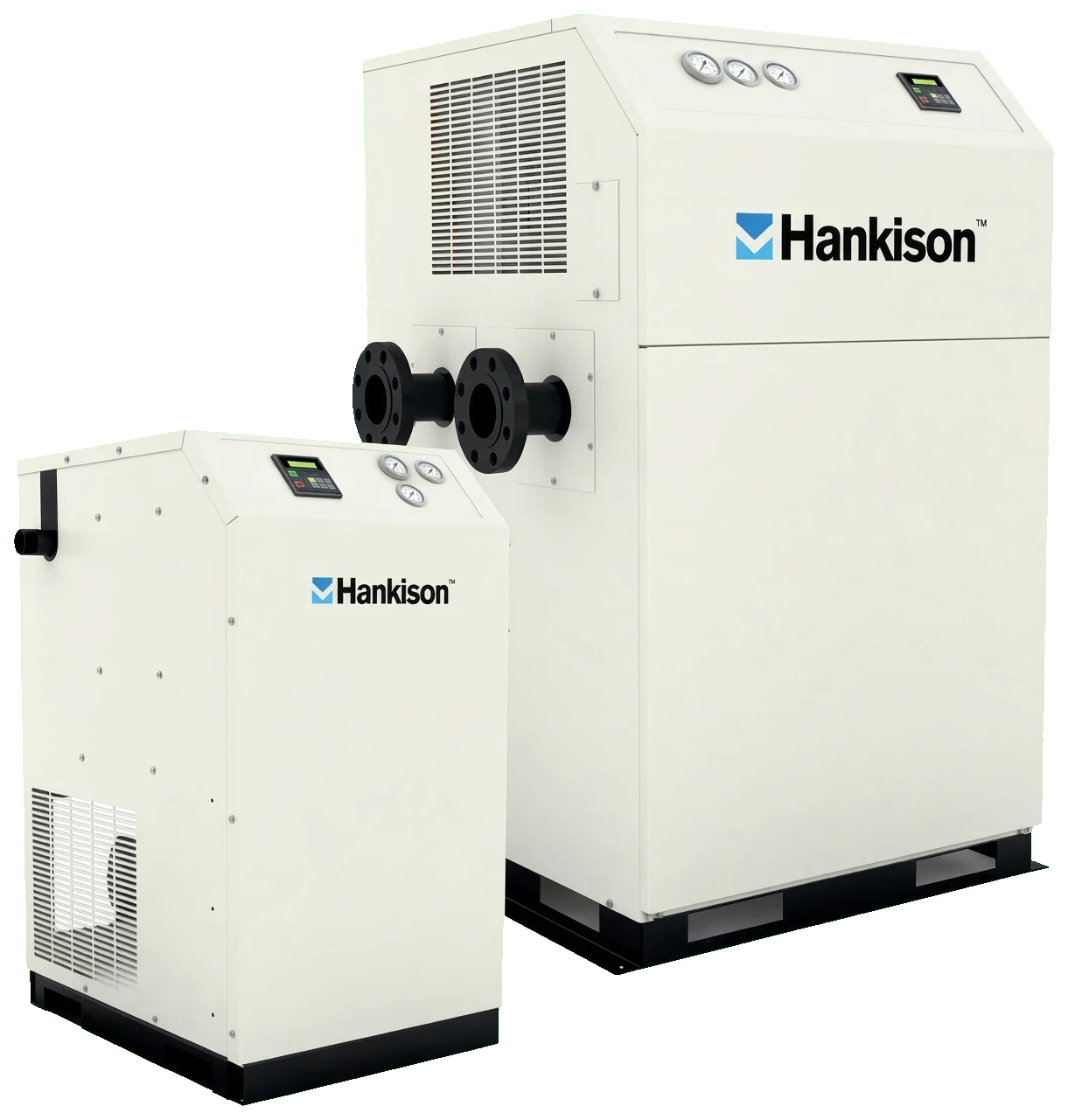
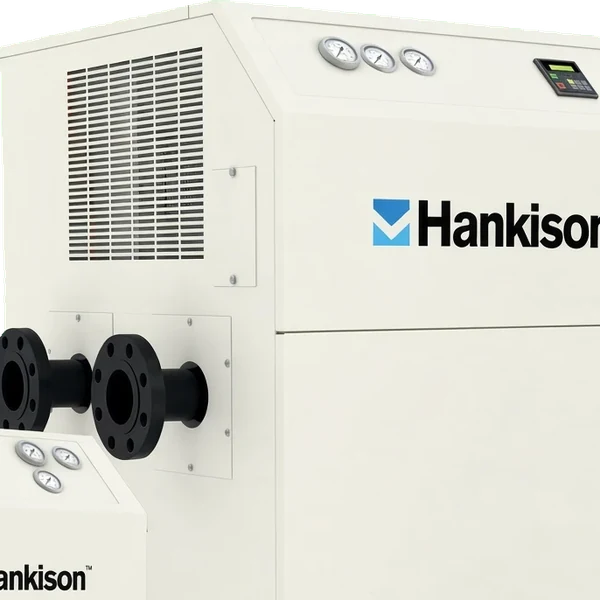
What wet or oily blow air does to a bottle
The defects that trace back to the air rather than the preform
- Haze, water spots and orange peel where condensate forms on the chilled mold wall
- Pitting in aluminum cavities and corrosion inside the blow valve block
- Oil film and odor inside the bottle, caught by the filler at incoming inspection
- Sticking pre-blow and exhaust valves, and a recovery loop feeding wet air back to the pre-blow

The specification for a PET blow-air dryer
What to ask for on each side of the booster
- High-pressure side: a dryer rated 680 or 725 psig, capacity read at blow pressure, 38°F pressure dew point
- Low-pressure side: a standard dryer sized to the screw compressor, with a 1 micron prefilter and a 0.01 micron afterfilter
- Condensate drains rated for the pressure on the high-pressure receiver, separator and dryer
- Inlet air at or below 100°F from the booster aftercooler; every 10°F above costs 15 to 20 percent of capacity
Dryers that fit a PET line
High-pressure ratings are at 500 to 725 psig; the plant-air dryers and filters are rated at 100 psig and 100°F inlet. The retired HPET Series cross-references size for size to the HHPR Series.
| SERIES | TYPE | FLOW RANGE | MAX INLET | MAX PRESSURE |
| HHPR Series | High Pressure | 115 to 2,410 SCFM | 120°F | 680 psig |
| APET Series | High Pressure | 45 to 1,000 SCFM | 120°F | 725 psig |
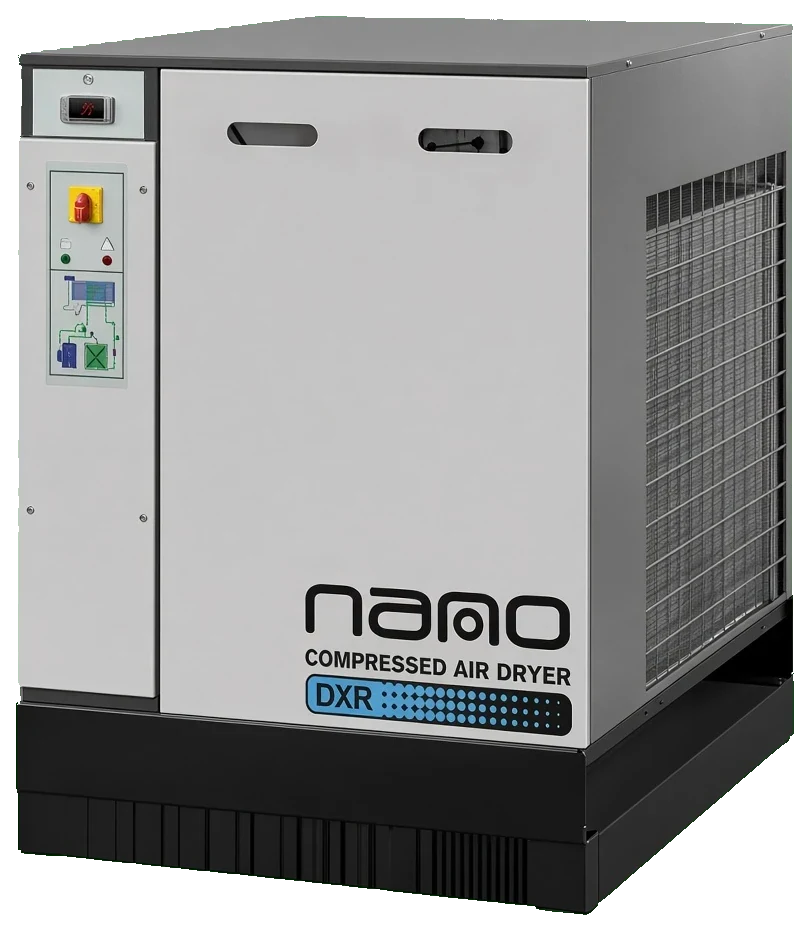
| DXR Series | Non-Cycling | 10 to 4,200 SCFM | 131°F | 203 psig |
| FLXA Series | Cycling | 75 to 2,000 SCFM | 120°F | — |
| GFN Series Filters | Compressed Air Filter | 6 to 1,500 SCFM | — | 232 psig |
| NGF Series Filters | Compressed Air Filter | 20 to 1,500 SCFM | — | 250 psig |
| NETD, NPTD & NHPTD Timed Drains | Condensate Drain | Call for sizing | — | 6,000 psig |
| 530 & 600 Series Electric Drains | Condensate Drain | Call for sizing | — | 1,500 psig |
Send us the booster horsepower, the blow pressure and the bottle rate; we size the high-pressure dryer and the plant-air dryer together.
Pressure works for the dryer, temperature works against it
Compressing air to 580 psig squeezes most of its water out in the booster's intercoolers and aftercooler before the dryer sees it, which is why a high-pressure dryer handles more SCFM in a smaller frame than a plant-air unit. What it cannot shrug off is hot inlet air: a booster aftercooler fouled by a dusty compressor room sends 120°F air to the dryer and takes a third of its capacity away, and the first sign is haze on the afternoon shift's bottles. Read the dryer inlet temperature on a summer afternoon before assuming the dryer is undersized.
- Read the dryer capacity at blow pressure, then correct for inlet and ambient temperature
- Keep the booster aftercooler and the dryer condenser clean; both live in the same dusty room
- Dry downstream of the air recovery return, or dry the recovered stream separately
Where the two dryers go
Low-pressure side: screw compressor, aftercooler, receiver, 1 micron prefilter, refrigerated dryer, 0.01 micron afterfilter, then the plant header that feeds the molder's actuators and preform handling. High-pressure side: the booster discharge runs through its aftercooler, a high-pressure receiver, the high-pressure dryer and on to the blow-air header. Feeding the booster with dried plant air lightens the load on the high-pressure dryer but does not replace it; the booster's own cooling condenses more water and the receiver keeps the air saturated.
Sizing at blow pressure
The sizing figure is the booster delivery in SCFM at 580 psig, corrected for inlet and ambient temperature like any refrigerated dryer: 110°F inlet air costs about 20 percent, a 110°F compressor room about 12 percent. A booster delivering 600 SCFM into a 105°F room wants the 750 SCFM model, not the 600. The operating pressure page covers the correction factors.
Air recovery systems
Most new blow molders recover part of the exhaust from each blow and reuse it for the pre-blow or return it to the booster inlet. That air has been through a chilled mold and back, so the recovery loop is the wettest part of the machine and the usual reason a dryer that looks large enough on paper still lets haze through. Keep the high-pressure dryer downstream of the point where recovered air rejoins the supply, or dry the recovered stream separately.
Non-cycling on both sides, usually
A bottle line runs three shifts at a rate that changes only at a size changeover, so the high-pressure dryers are non-cycling machines and the plant-air side is the same steady-load case: a DXR Series non-cycling dryer costs least and holds its dew point. A FLXA Series cycling dryer on the plant air only pays back where the molder is one of several lines that come and go through the week. A lubricated booster needs oil removal downstream of the high-pressure dryer in housings rated for blow pressure; an oil-free final stage, which most beverage lines specify, avoids the question.
PET blow-air drying questions
No. The heat exchanger, separator and drain of a plant-air dryer are rated for 200 to 232 psig, and its capacity table is at 100 psig. The HHPR Series is built and rated for 680 psig and the APET Series for 725 psig, with capacity published at blow pressure.
Because it is a pressure dew point. Air dried to 38°F at 580 psig expands about 40 to 1 as it enters the preform, and its dew point at that moment is far below the mold wall, in the region of -30°F, so no water can condense on the bottle.
A 500 ml line at 20,000 bottles an hour draws about 500 to 800 SCFM at 580 psig without air recovery, 30 to 40 percent less with it. Larger bottles and higher rates scale roughly with the volume blown, and the booster nameplate at blow pressure is the figure to size the dryer from.
Yes. The plant air runs the stretch rods, clamps, grippers and preform feed at 100 psig, none of which pass through the high-pressure dryer. A standard refrigerated dryer sized to the screw compressor, with its prefilter and afterfilter, sits on that side.
One rated for the pressure. The NHPTD timed drains in the NETD family are rated from 600 to 6,000 psig, and the 532-02-1500 electric drain in the 530 Series is rated 1,500 psig; a 230 psig zero-loss drain from the plant-air side does not belong on a 580 psig separator.
More on high-pressure blow air
How operating pressure changes dryer capacity
The correction factors from 60 to 725 psig, and why they favor the high-pressure dryer.
Learn More
Injection Molding
Refrigerated air drying for injection molding: core pulls, valve gates, robots and hopper loaders, sizing by compressor, and filtration.
Learn More
Printing & Converting
Dry, oil-free compressed air for presses, laminators, slitters and gluers: register, air shafts, food packaging film and dryer sizing.
Learn More