
1-805-484-2992
Quotes - Engineering - SalesCondensate Drains for Refrigerated Dryers and Filters
A refrigerated dryer does nothing useful until the water it condenses leaves the system, and it leaves through a drain. So does the water knocked out by the aftercooler, the receiver, the separator and both filter bowls. Every one of those points needs its own drain, chosen for the volume it sees and the air it is allowed to waste, and every drain needs a discharge line that lets it open.
At the rating point a dryer condenses roughly 6 gallons a day for every 100 SCFM it dries, and the aftercooler and receiver ahead of it take out more than that again on a humid day. A drain that sticks shut floods the separator and sends all of it downstream.
Timed, zero-loss and float drains
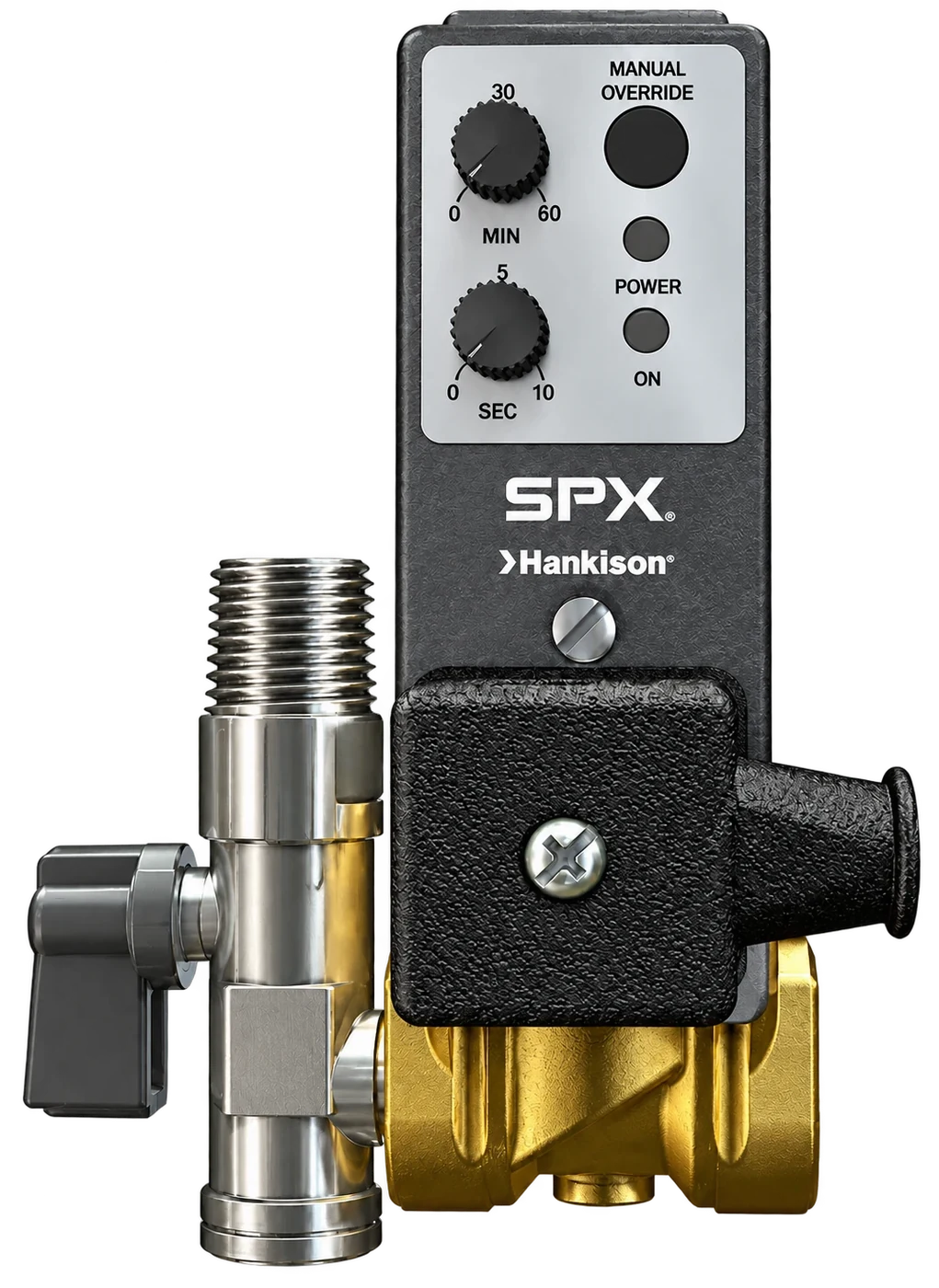
A timed drain is a solenoid valve fired by a clock: an interval and an open time are set on the timer, and the valve opens whether there is water waiting or not. It is the cheapest drain, it tolerates dirty condensate, and it wastes compressed air on every cycle, which adds up on a receiver drain set for a wet August and left there through a dry January. The NETD, NPTD and NHPTD timed drains and the 530 Series electric drains cover 1/4 to 1/2 in outlets from 175 to 6,000 psig.
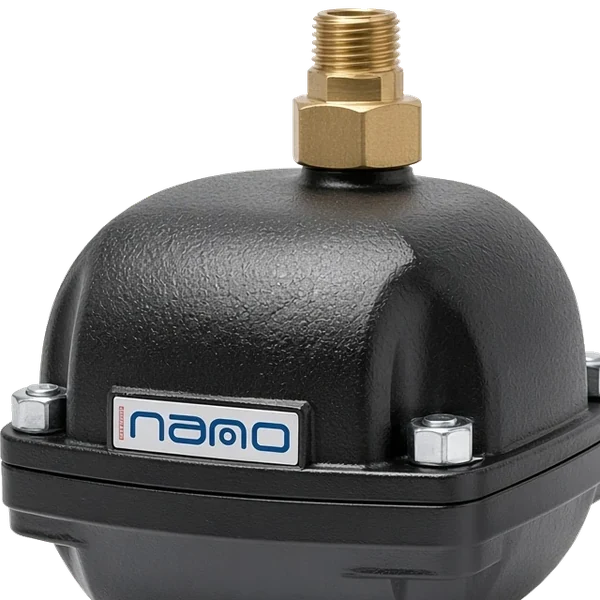
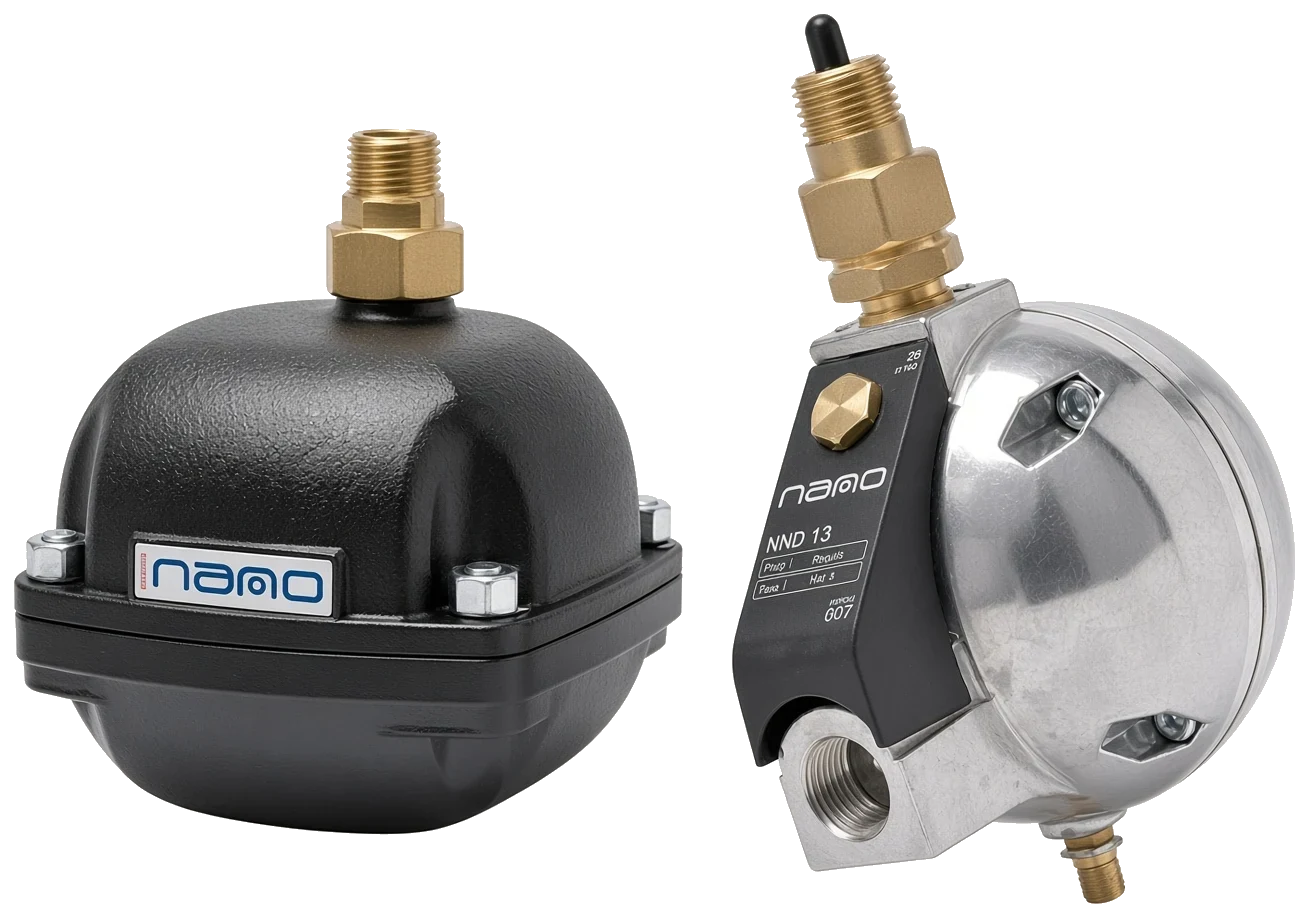
A zero-loss drain opens only when liquid is present. The electronic level-sensing types in the ND Series and the 600 Series demand drain use a capacitive sensor and a valve; the pneumatic types, the Snap-Trap and Trip-L-Trap and the magnetic float drains, use a float and need no power. None of them vents air, so they pay for themselves on any compressor that idles part of the day.
Where each drain belongs
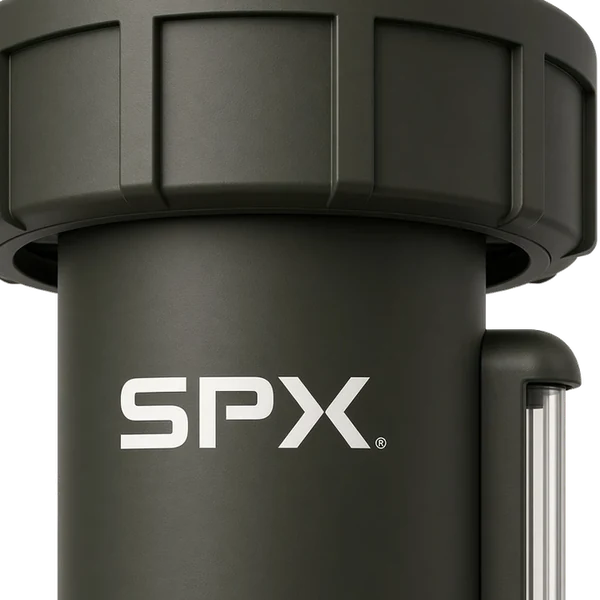
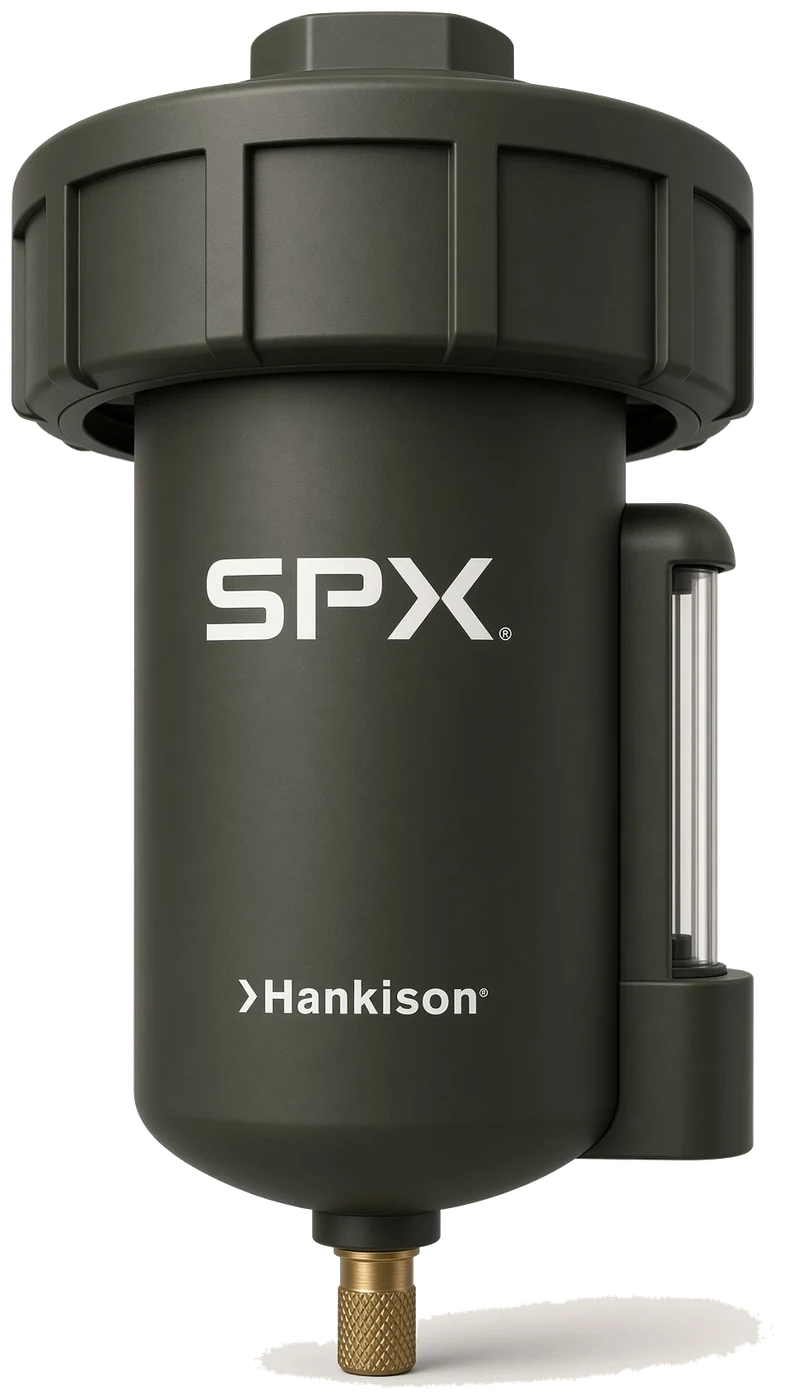
The receiver sees the largest volume and the dirtiest condensate, so it gets a heavy-duty drain: a 1/2 in timed 532 Series valve with its strainer, or a level-sensing ND Series drain sized for the compressor. The separator and the prefilter bowl see steady liquid and take a float drain or a Snap-Trap. The dryer's own separator is usually supplied with a zero-loss drain fitted, as on the DXR, TMC, FLXA, HRHT and HTR Series, or a timed electric drain on some larger units. The afterfilter bowl collects little and takes the smallest float drain.
Outdoors or in an unheated room, the heated model in the ND Series keeps the valve from freezing. On high-pressure systems the NHPTD drains to 6,000 psig and the 1,500 psig 532 Series valve are the choices.
Related installation pages
Worked example: drains for a 500 SCFM plant
Five collection points, five drains, one separator
- Receiver: 532-04-300-1 timed drain with strainer, or a NED-LC level-sensing drain
- GF 0700 WS separator and GFN 0700 M1 prefilter: float drains fitted to the housings
- DXR 0500 NA dryer: zero-loss drain supplied on the unit
- GFN 0700 M01 afterfilter: float drain; every line run separately to an oil-water separator
Reading a drain specification
Five numbers that decide the fit
- Maximum pressure: 175 to 300 psig on most drains, 1,500 to 6,000 psig on the high-pressure models
- Inlet and outlet size: 1/4, 3/8 or 1/2 in
- Power: 115 or 230 V for electric drains; none for pneumatic and magnetic float types
- Discharge per cycle or capacity, and the body material: brass, aluminum or stainless
Drain selection by collection point
The condensate load at each point in a 100 psig system, the drain type that suits it and the series that supply it.
| COLLECTION POINT | CONDENSATE LOAD | DRAIN TYPE | SERIES |
| Aftercooler and receiver | Largest; dirty, with compressor oil | Timed 1/2 in valve with strainer, or level-sensing zero-loss | 532 Series, ND Series NED-LC |
| Separator | Steady bulk liquid | Float drain fitted to the housing | GF WS drain kit, Snap-Trap |
| Prefilter bowl | Moderate; liquid and oil | Float or pneumatic zero-loss | Snap-Trap, ND Series NED 12 |
| Dryer separator | About 6 gallons a day per 100 SCFM at the rating point | Zero-loss, usually supplied on the dryer | As fitted; 600 Series demand drain as a replacement |
| Afterfilter bowl | Small | Smallest float drain | Snap-Trap, filter housing drain |
| Outdoor or unheated | Any of the above | Heated zero-loss | ND Series NHD 12 |
| High pressure, 600 to 6,000 psig | As the system | High-pressure timed drain | NHPTD, 532-02-1500 |
Zero-loss, pneumatic and electric drains
Piping the discharge
Each drain gets its own line, short, sloped downward, and open at the far end into a vented collection point. Manifolding several drains into one pipe lets the pressure from one hold the others shut, and a long or rising line stalls a float drain. Keep the line at the drain's outlet size or larger and never fit a check valve or a trap it cannot lift against. Where the line runs outside, heat-trace it or use the heated drain.
Oil-water separation
Condensate from a lubricated compressor carries compressor oil, and most jurisdictions limit the oil in what goes to a sewer to a few parts per million. The drain lines therefore run to an oil-water separator, which lets the oil float off for collection and passes the water to the drain, rather than to a floor drain. The separator is sized on the total compressor horsepower it serves, and its own cartridge is a maintenance item.
Mistakes with drains
A timed drain set to its shortest interval and longest open time in July and never touched again, venting air all winter. A float drain on a receiver, where the volume and the sludge overwhelm it. Drains from three bowls piped into one 3/8 in line. A strainer never cleaned, so the valve seats on grit and leaks air continuously. And a dryer drain that discharges into a bucket nobody empties, which then backs up into the separator. Each shows up as water downstream or as an air leak the compressor is paying for.
Choosing between timed and zero-loss
Timed drains suit small, intermittent systems and dirty duty where their simplicity outweighs the air they waste. Zero-loss drains suit any plant that runs more than one shift or leaves the compressor up overnight, where the venting of a timed drain becomes a measurable share of the compressor's output. On the dryer itself the choice is normally already made, since most current series arrive with a zero-loss drain fitted, so the decision falls on the receiver and the filter bowls.
Condensate drain questions
Whatever passes the orifice during every open period after the water has gone, which on a 1/2 in valve set to open for ten seconds every few minutes is a continuous leak of several SCFM. On a plant that runs one shift it is tolerable; on one that runs three it is a compressor running for nothing.
Not without a vented collection point between them. Pressure from a discharging drain holds the others shut, and a float drain cannot lift against a line that is already full. Run each drain separately to the oil-water separator inlet.
Usually grit on the valve seat or a strainer blocked enough to hold the valve open, and occasionally a float stuck by oil. Isolate, clean the strainer and the seat, and if the drain is a timed type check that the open time has not been turned up to compensate for a blocked line.
If the compressor is lubricated, yes. The condensate carries the compressor's oil, and discharge limits for oil in wastewater are low enough that a floor drain is not a lawful destination in most places. The separator is a passive tank with a replaceable element and is sized to the compressor horsepower.
An unheated drain line outdoors freezes shut, the condensate backs up into the separator or filter bowl, and water goes downstream. Use the heated drain from the ND Series where the drain is exposed, or heat-trace and insulate the discharge line.