
1-805-484-2992
Quotes - Engineering - SalesCondensate Drains for Compressed Air Systems
Zero-loss, timed, pneumatic and electric drains for every low point from the aftercooler to the filter bowl
Every device that separates water from compressed air collects it somewhere, and every collection point needs a drain: the aftercooler separator, the receiver, the inlet separator, the dryer's own separator, and the bowl of each filter. A drain that fails open vents compressed air all day; a drain that fails closed floods the separator and sends the water downstream, which is how a properly sized dryer ends up blamed for wet air. The drain is the cheapest part of the system and the one most often at fault.
Four series are catalogued. The zero-loss family opens only when liquid is present, by float, magnetic latch, pneumatic level sensing or an electronic capacitive sensor, and vents no air; a heated version serves outdoor installations. The timed solenoid family fires on an adjustable interval in aluminum, brass or stainless bodies, with high-pressure versions to 6,000 psig. The pneumatic mechanical drains need no power at all, from a compact 20 cc-per-cycle unit for filter bowls to a heavy-duty trap passing 24 gallons an hour at 500 psig. The electric timer drains pair a NEMA 4 solid-state timer with a solenoid valve to 300 or 1,500 psig, and a demand version opens on level instead.
Choosing among them comes down to three things: the condensate rate at that point, the pressure and material the condensate demands, and whether the plant can afford to vent air on a timer. On any compressor that idles part of the day, a zero-loss drain pays for itself against a timed one.
- Zero-loss level-sensing drains that vent no compressed air
- Timed solenoid drains in three materials and four voltages, to 6,000 psig
- Pneumatic float drains with no electrical connection, to 500 psig
- Electric timer drains to 1,500 psig and a demand drain that opens on level
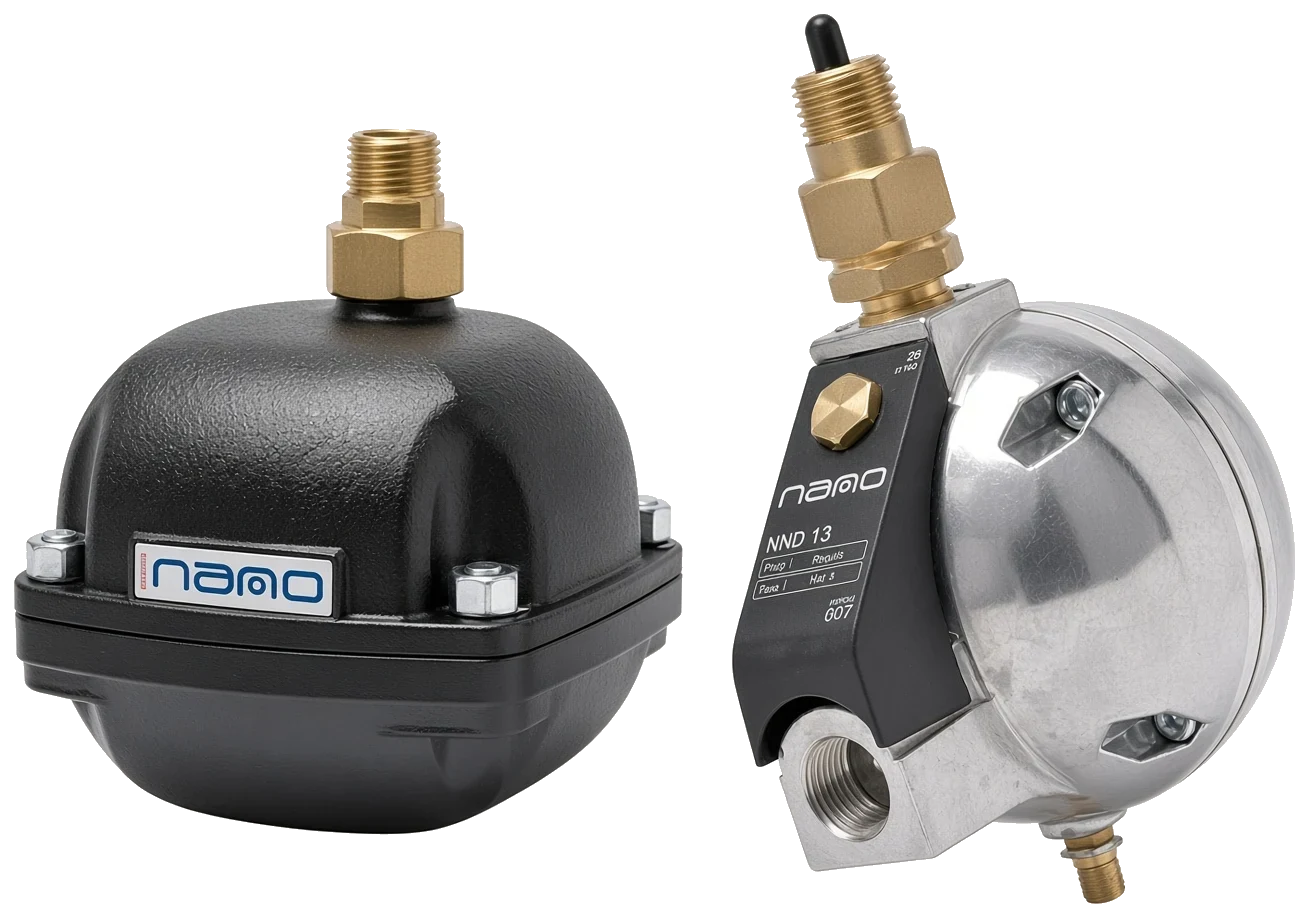
The four drain series
Each series with its pressure rating and the number of part numbers catalogued. The series pages list every drain with its connections, type and rating.
| SERIES | TYPE | FLOW RANGE | PART NUMBERS | NOTES |
| ND Series Zero-Loss Drains | Condensate Drain | See series | 12 listed | 12 part numbers |
| NETD, NPTD & NHPTD Timed Drains | Condensate Drain | See series | 22 listed | 22 part numbers |
| Snap-Trap & Trip-L-Trap Drains | Condensate Drain | See series | 19 listed | 120°F max |
| 530 & 600 Series Electric Drains | Condensate Drain | See series | 7 listed | 280°F max |
Drain series by operating principle
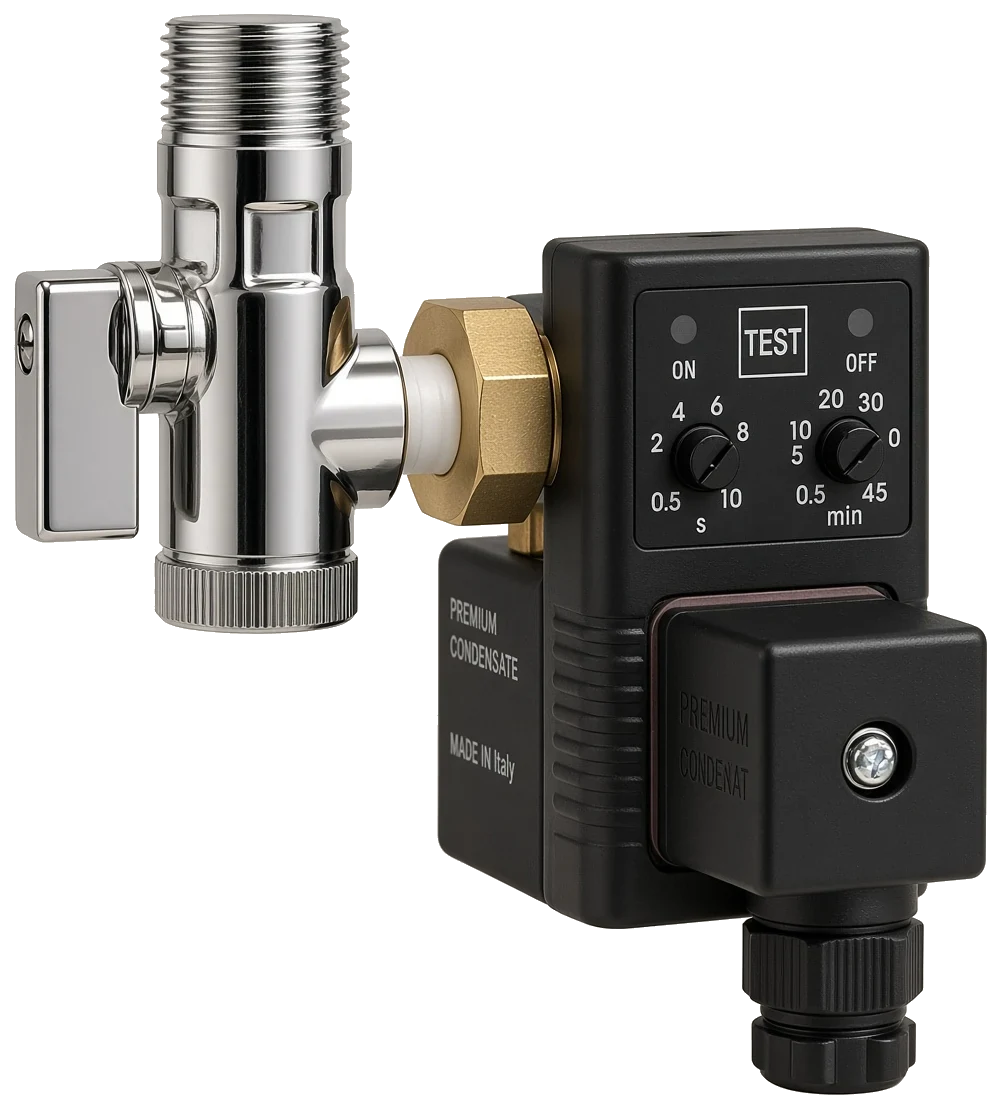
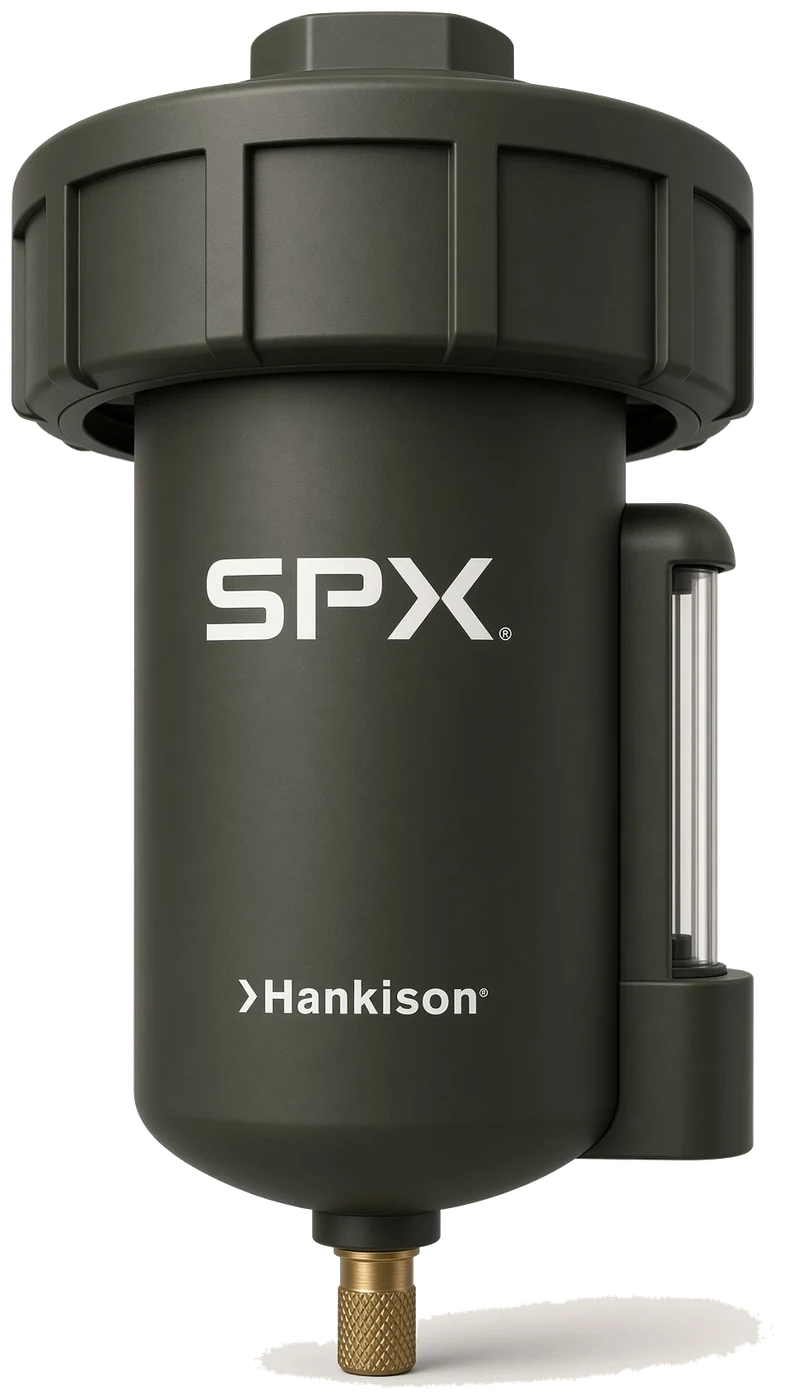
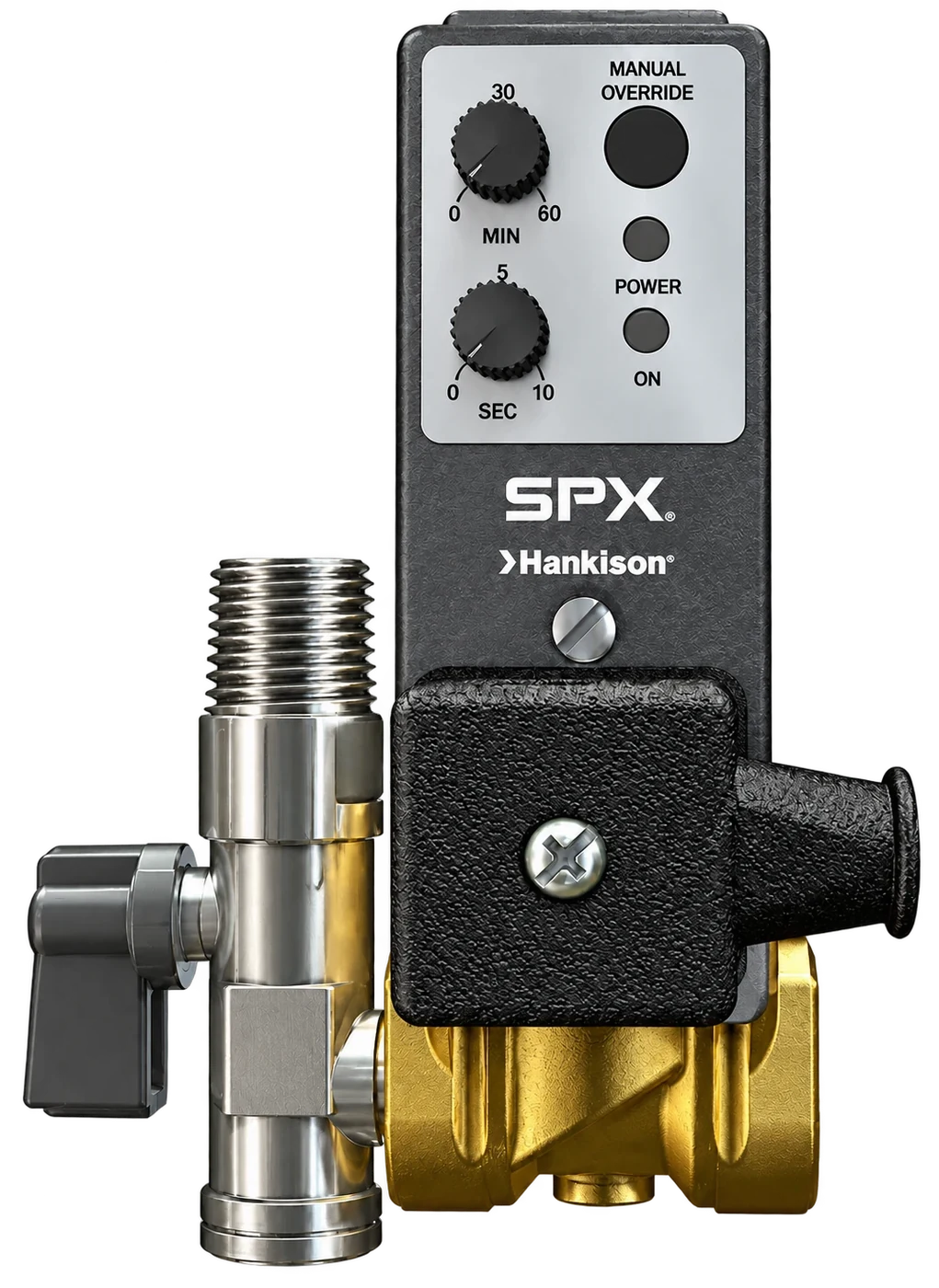
Zero-loss or timed
A timed drain opens for a set fraction of a second every few minutes whether or not there is water to discharge, and at each opening it vents compressed air; on a 100 psig system through a 1/2 in valve that is a measurable slice of the compressor's output over a year, and on a compressor that is unloaded most of the night it is the only air being made. A zero-loss drain senses liquid and opens only for it, closing before air escapes. The pneumatic and magnetic zero-loss drains need no power and suit remote or classified locations; the electronic level-controlled drains add an alarm contact and a test button and are sized by model from a small shop compressor to a central plant. Timed drains keep their place on low-flow, intermittent points and where a strainer and a simple valve are all the location will support.
Sizing a drain
Condensate rate is the sizing figure, and it depends on flow, inlet temperature and humidity far more than on the dryer's nameplate. A 500 SCFM plant in a humid summer produces several gallons of condensate an hour across the aftercooler separator, dryer and filters, most of it at the first separator. Fit the largest drain there, a mid-size drain at the dryer, and the compact pneumatic or float drains on filter bowls, and match the pressure rating: standard drains to 230 or 300 psig, the heavy-duty pneumatic trap to 500 psig, the electric timer drain to 1,500 psig and the high-pressure timed drains to 6,000 psig.
Materials, oils and the outdoors
Condensate from an oil-lubricated compressor is an emulsion of water and oil, acidic where the compressor draws air from a process area, and it attacks brass and zinc over time. The timed solenoid family is offered in aluminum, brass and stainless bodies; the heavy-duty pneumatic trap in carbon steel or all stainless; the compact pneumatic drain uses acetal internals and fluoroelastomer seals that shrug off synthetic lubricants. Drains installed outdoors or in an unheated compressor shed freeze in winter, which is what the heated zero-loss drain is for. Every drain discharge should run to an oil-water separator rather than the floor drain, because the condensate is an oily waste in most jurisdictions.
Installation and testing
Mount the drain below the low point it serves, with a short vertical drop and an isolation valve so it can be serviced under pressure; the larger level-controlled drains have two inlets so a balance line can be run back to the vessel above the liquid level. Fit a strainer ahead of any solenoid valve unless the drain includes one. Test every drain on the shift walk: a timed drain has a test button, a pneumatic trap a sight glass, and a level drain an alarm contact that the plant system can watch. The condensate drains page in Installation covers the piping detail, and the separators page covers what the drain hangs from.
Condensate drain questions
Most current dryers ship with a zero-loss or demand drain fitted, and the previous generation used timed electric drains. Where a dryer's drain is being replaced, a level-controlled zero-loss drain rated for the dryer's pressure is the usual upgrade, sized for the condensate the dryer produces rather than for its air flow.
Every opening vents the drain line's volume plus whatever passes the valve during the open time, and a 1/2 in valve opening for two seconds every two minutes passes a few SCFM on average. On a compressor loaded all day that is a fraction of a percent; on one that idles it is the difference between the compressor running and not.
Yes. The pneumatic float drains, the magnetic zero-loss drains and the compact and heavy-duty mechanical traps all operate on system pressure and a float, which suits filter bowls, remote receivers and classified areas where wiring is impractical.
The high-pressure timed solenoid drains, rated 600, 1,200, 3,625, 5,000 or 6,000 psig in brass or stainless with 1/4 in connections, and the 1,500 psig electric timer drain for lower classes. Match the class to the system's relief setting, not its normal pressure.
A solenoid drain does, because scale and rust from the receiver hold the valve open; the economy and premium timed drains and the electric timer drains include one on most models, the 1,500 psig version excepted. Float and pneumatic drains have screen-protected ports instead.
To an oil-water separator and then to drain. Compressor condensate carries lubricant and is treated as oily waste, and a drain line dumped on the compressor room floor also freezes, corrodes the slab and hides a failed drain.