
1-805-484-2992
Quotes - Engineering - SalesWhat we need from the old dryer
Start at the nameplate and write down everything on it. The model number identifies the series and, on nearly every line, the rated SCFM: an HPRN250 is 250 SCFM, an FLX4.5 is 450, a DXR 0125 is 125. The rating conditions matter as much as the number, because a dryer rated at 100 psig, 100°F inlet and 100°F ambient can be compared directly with the tables on this site, while one rated at a milder point needs adjusting. Then the maximum working pressure, the voltage and phase, the refrigerant, and the pipe size at the inlet and outlet.
Then look past the nameplate. The compressor may have been replaced with a larger one, the room may be hotter since a second machine went in, the plant may run a second shift it did not run when the dryer was bought. A replacement sized to the old nameplate carries the old plant's duty, not the current one. The three topic pages below take the nameplate, the cross-reference and the part-number lookup in turn.
- Model number and rated SCFM, with the rating conditions if the plate or manual gives them
- Maximum working pressure, voltage and phase, refrigerant, and inlet and outlet connection size
- Footprint and weight, and whether the unit is floor-standing, wall-mounted or receiver-mounted
- What has changed: compressor horsepower today, room temperature in summer, hours and shifts
- Whether the old dryer was ever short of capacity, which usually means going up a size rather than matching it
The replacement topics
Nameplate, cross-reference and part-number lookup
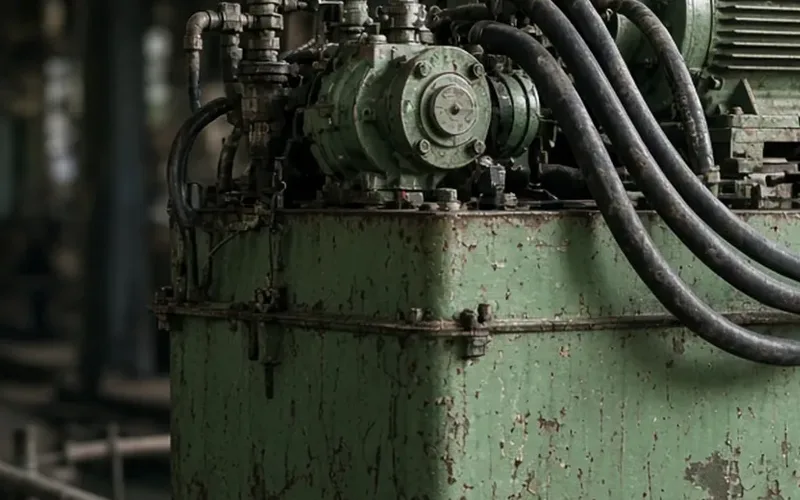
Replacing an Existing Dryer: How to read the old nameplate, which current series replaces the retired HPR, HPRN, FLEX, HITN and HPET Series, and what changes in connections, voltage and footprint when the new unit arrives.

Cross-Reference by Flow: A table of flow against the current series and model examples from 25 to 10,000 SCFM, and the method for crossing any other make by its rated SCFM at the standard point, including metric ratings.

Part Number Index: How this site organizes its series pages and part-number pages, how each series builds its model numbers, and where the four series catalogued on our sister site are found.
Like for like is rarely the right order
A dryer bought fifteen years ago was sized for the compressor and the room of fifteen years ago. If nothing has changed, the same rated SCFM in the successor series is the right replacement and the job is a nameplate read and a connection check. If anything has changed, and something usually has, the replacement is sized from scratch: delivered flow today, inlet temperature today, room temperature today, corrected with the sizing factors. The old dryer's rated flow is then one data point, and a useful one, because a plant that never had wet air on the old unit has just told you its minimum.
The retired series and their successors
Five series on this site are the previous generation. The HPR Series is replaced size for size by the HPRB Series, the FLEX Series by the FLXA Series under the same model numbering, the HITN Series by the HRHT Series, and the HPET Series by the HHPR Series. The HPRN Series, 75 to 1,200 SCFM, is covered by the non-cycling DXR Series at the same flows, or by the FLXA Series where the plant would benefit from cycling. The replacing page tabulates the pairs with what changes.
Connections, voltage and footprint
A successor is not always the same size or the same pipe. An HPRN250 was 2 in NPT; the DXR 0250 NA that replaces it is 1-1/2 in FNPT and needs two reducers. The 1,500 and 2,000 SCFM FLXA sizes moved from 4 in to 6 in flanges and grew in height. Small cabinet dryers went from 3/4 in NPT to 1/2 in FNPT. The current units are also lighter, use different refrigerants, and in several cases draw less power, none of which matters to the installation except the connections and the floor space, which we confirm on every replacement quote.
Crossing another make
A dryer from any other maker is crossed by its rated SCFM at 100 psig, 100°F inlet and 100°F ambient, once its rating point has been checked, because some are rated at a milder ambient or a metric reference point and read 15 to 20 percent higher than they would at ours. The cross-reference page puts the current series against flow from 25 to 10,000 SCFM. Send the old nameplate, or a photograph of it, to Sales and we return the match.
Replacement questions
Yes, if the compressor, the room and the shifts are the same as when it was installed. Confirm those three things, choose the successor series at the same SCFM, and check the connection size. If any of them has changed, size again with the correction factors before ordering.
Size from the plant instead: compressor horsepower or delivered SCFM, line pressure, summer room temperature and whether there is an aftercooler. The old dryer's pipe size and footprint help confirm the range, and a photograph of the unit usually identifies the series.
Not necessarily, if the existing prefilter and afterfilter are the right grades, the right size for the compressor and their elements are fresh. A replacement is a good moment to check all three and to fit differential indicators if the housings lack them.
Yes, at the same corrected duty, and it is often the better replacement where the plant has grown into a second shift or idles at weekends. The piping and filtration are the same; only the running cost and the price differ.
Then the replacement goes up a size, and the sizing pages will usually show why: a room or an inlet temperature the original selection did not allow for. Matching a dryer that passed water every August buys another dryer that passes water every August.