
1-805-484-2992
Quotes - Engineering - SalesPiping and Bypass Valves for a Refrigerated Dryer
The dryer is one item in a train that runs compressor, aftercooler, receiver, separator or prefilter, dryer, afterfilter, header. Each item prepares the air for the next: the aftercooler and receiver take out the bulk water and the surges, the prefilter takes out the oil and rust that would coat the exchanger, and the afterfilter catches the oil aerosol that only condenses once the air is cold. Move any of them and the dryer either does more than it was sized for or less than the plant needs.
Around the dryer go a bypass, so the plant can run on wet air during service, and isolation valves on each filter. On small dryers a single-body valve replaces the three-valve manifold.
The order of equipment and why
Air leaves a screw compressor at 180°F or more and the aftercooler brings it to 15 to 20°F above the room, which condenses roughly two thirds of the water the air came in with. The wet receiver collects that water, smooths the compressor's load cycles into a steady flow, and cools the air a little further. A separator or a 1 micron coalescing prefilter then removes the remaining liquid and the compressor oil, so the dryer's exchanger stays clean.
After the dryer the air is at 38°F and any oil aerosol in it has shrunk to droplets a 0.01 micron coalescer can catch, which is why the afterfilter belongs there and not in the warm air upstream. An activated carbon filter follows the coalescer where the process needs class 1 oil, and then the header. A dry receiver after the dryer is optional and useful where the plant has short heavy draws.
Related installation pages
Bypass, isolation and pipe size
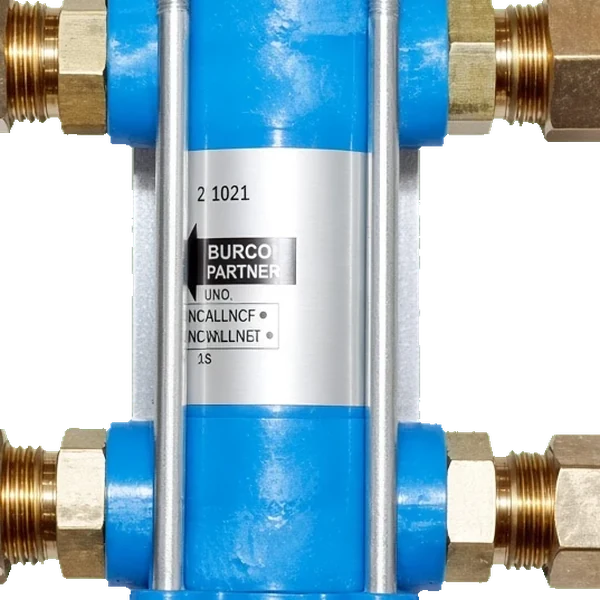
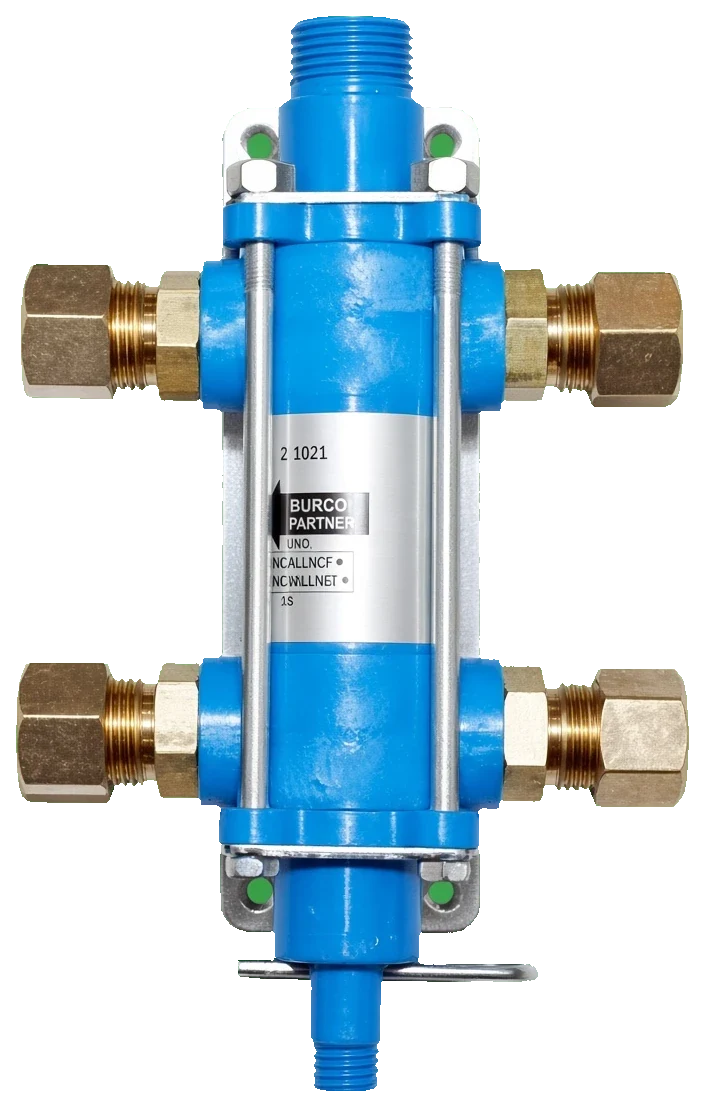
A bypass is three valves and a tee: an isolation valve on the dryer inlet, one on the outlet, and a valve on a line that joins the two. In service the isolation valves are open and the bypass is shut; to change a filter element or work on the dryer, the bypass opens first, then the isolation valves close, and the plant runs on undried air until the work is done. On dryers up to 35 SCFM the 1701 Series single-body valve does all three jobs in one brass fitting, and its bleed versions vent the isolated dryer automatically.
Pipe the dryer and its filters at their connection size or larger, never smaller; a 1 in dryer on 3/4 in pipe is throttled at both ends and the pressure drop lands on the compressor's electricity bill. Fit unions or flanges either side of each component so it can be lifted out, and a flexible connector at the compressor to keep vibration out of the exchanger.
Worked example: 25 hp screw, 110 SCFM, the piping list
Every item at 1 in and in the right order
- Package aftercooler into a wet receiver with a zero-loss drain on the bottom
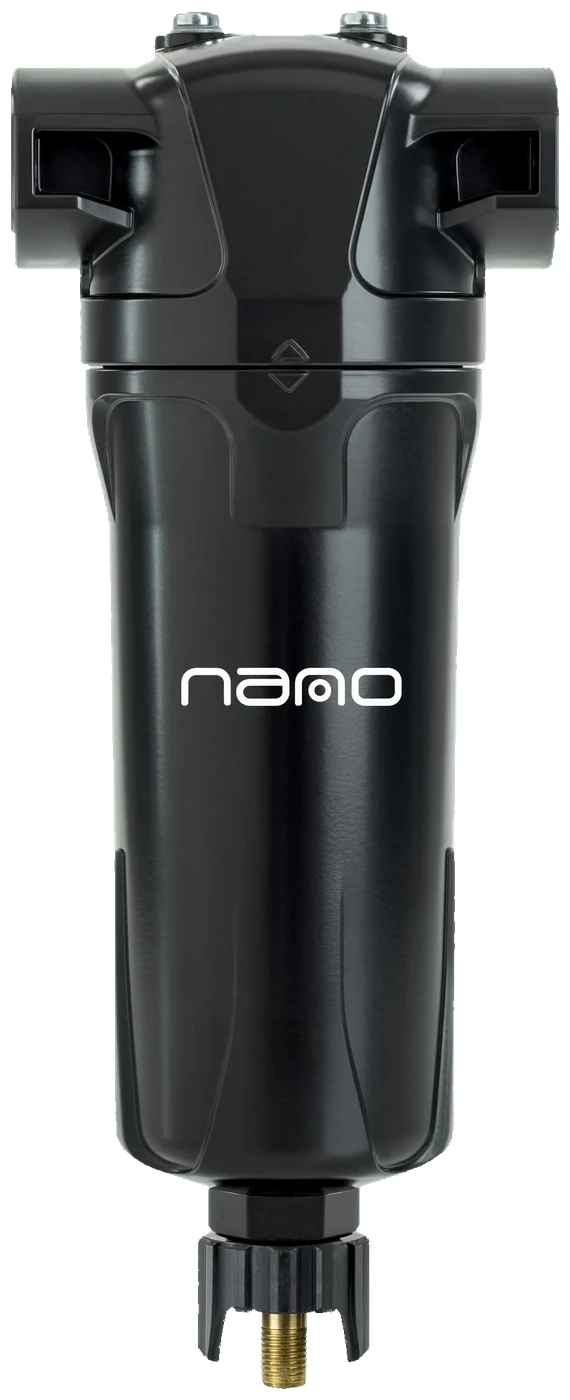
- GF 0125 WS separator, then a GFN 0125 M1 prefilter, both with float drains
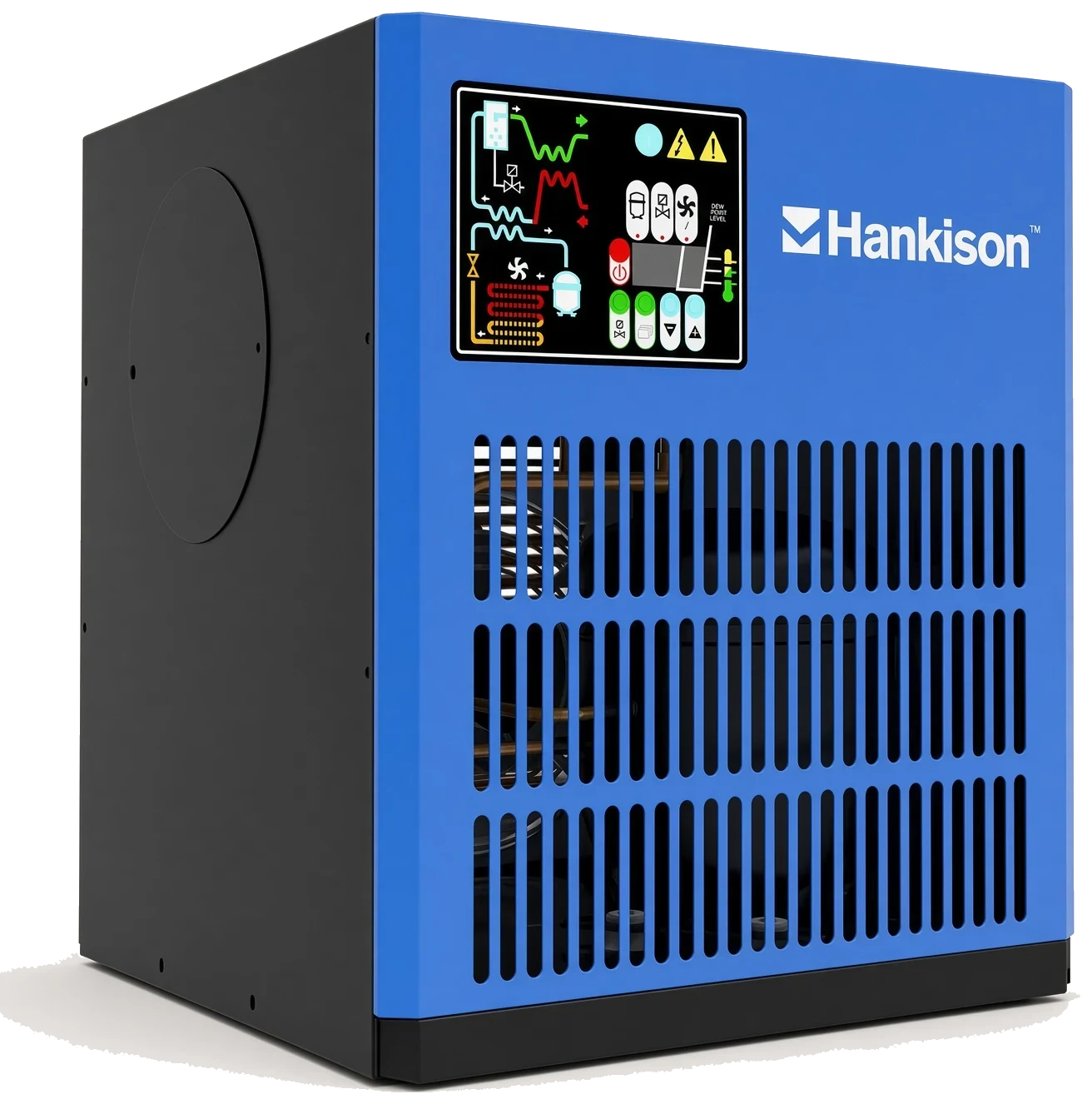
- DXR 0125 NA dryer, 1 in FNPT, with three 1 in ball valves as the bypass
- GFN 0125 M01 afterfilter, then the header; drains piped separately to an oil-water separator
Reading a bypass arrangement
Three valves, two positions, one rule
- Run: inlet and outlet isolation open, bypass closed
- Service: open the bypass, then close both isolation valves
- Never leave the bypass cracked; it is the commonest source of wet air from a healthy dryer
- 1701-1 is the non-bleed type; 1701-2 and 1701-3 depressurize the isolated dryer through an orifice
The piping order and what each item does
From compressor to header for a lubricated rotary screw or piston compressor feeding a refrigerated dryer.
| POSITION | ITEM | WHAT IT DOES | RULE |
| 1 | Aftercooler | Brings discharge air to 15 to 20°F above the room; condenses most of the water | On the package, or fitted separately on a piston compressor |
| 2 | Wet receiver | Collects bulk condensate, smooths load cycles | Drain on the bottom; the dryer goes after it |
| 3 | Separator or 1 micron prefilter | Bulk liquid, oil and rust off the exchanger | Float or zero-loss drain; differential gauge |
| 4 | Refrigerated dryer | Cools to 38°F, drains the condensate, reheats the outlet air | Full connection size; bypass around it |
| 5 | 0.01 micron afterfilter | Oil aerosol that condenses in the cold air | After the dryer, never before it |
| 6 | Activated carbon filter | Oil vapor, for class 1 oil | Only downstream of a coalescer; changed on hours |
| 7 | Header | Dry, filtered air to the plant | No wet tie-ins, no second compressor joining here |
Bypass valves, small dryers and separators
Nothing wet after the dryer
Everything that makes air must enter the train upstream of the dryer. A second compressor tied into the header downstream, a rented portable hosed into the nearest drop, or a bypass left a quarter open all put saturated air into a line the dryer has just dried. The same applies to reheating: the dryer's own air-to-air exchanger already warms the outlet air back toward room temperature, so there is no reason to route the dry line past the aftercooler or to fit a heater, and every reason not to run the outlet through a space colder than 38°F uninsulated.
Pipe sizing
Size the mains for a pressure drop of about 1 psi per 100 ft at the compressor's full output, which usually means one size larger than the dryer's connection on long runs. Slope the wet side toward the receiver and fit drip legs at low points. Keep the bypass line at the same size as the main so the plant is not throttled while the dryer is out.
Mistakes in the piping
The dryer ahead of the receiver, where it takes every load surge. The afterfilter ahead of the dryer, where it catches little. A regulator ahead of the dryer, which cuts its capacity. No bypass, so the first filter change shuts the plant. Drains from three bowls manifolded into one line, so the pressure from one holds the others shut. And a 3/4 in run of pipe to save money on a 1 in dryer, which costs more in compressor power in the first year than it saved.
Small dryers and point-of-use units
Dryers to 50 SCFM at a single machine or a paint booth are usually wall-mounted with the bracket kits listed alongside the 1701 valves, piped in 1/2 in or 3/4 in tube, and drained through a pneumatic float drain. The 1701 valve suits 5 to 35 SCFM at up to 200 psig, with 3/8 in tube connections on the dryer side and 3/8 in NPT on the service side; above 35 SCFM a three-valve bypass at the dryer's connection size takes over. The HPRB Series and the smaller DXR sizes are the usual dryers in this class.
Piping and bypass questions
A wet receiver sits between the aftercooler and the dryer, collects the bulk condensate and evens out the compressor's load cycles; every installation should have one. A dry receiver sits after the dryer and stores dried air for short heavy draws; it is optional and must be fed only from the dryer outlet.
No. It is sized for 5 to 35 SCFM at up to 200 psig with 3/8 in tube connections on the dryer side, which matches the smallest cabinet dryers. From 50 SCFM up, use three ball valves and a tee at the dryer's connection size.
On long runs, yes; at the dryer, match the connection. Mains sized for about 1 psi drop per 100 ft at full compressor output are typically one size above the dryer's port, with reducers at the dryer and filters.
Because the first few feet of pipe still run below the room's dew point on a humid day, so moisture from the room condenses on the outside. It is harmless unless it drips on equipment, in which case insulate that section; it is not water inside the line.
Only if it has its own dryer. A compressor tied in after the dryer puts saturated air straight into the dry header, and the plant sees water on the first cool morning. Tie it in ahead of the receiver and size the dryer for both, or give it a dryer of its own.