
1-805-484-2992
Quotes - Engineering - SalesRefrigerated Air Dryers for Pharmaceutical Plants
A pharmaceutical plant runs two compressed air systems inside one set of pipes. Utility air drives the cylinders on blister and cartoning lines, the actuators on process valves, the instrument loops on autoclaves and the packaging hall's robots and labelers. Process air touches the product: the atomizing air on a tablet coater, the spray nozzles and filter pulse-jets on a fluid-bed granulator, the vacuum break on a sterilizer, the transfer air in a capsule filler and the overpressure in an isolator. Water in utility air is the ordinary story of sticking valves and drifting instruments. Water in process air is a deviation: organisms from a wet pipe on a coated tablet, moisture in a hygroscopic granulation, condensate in a sterile vacuum break.
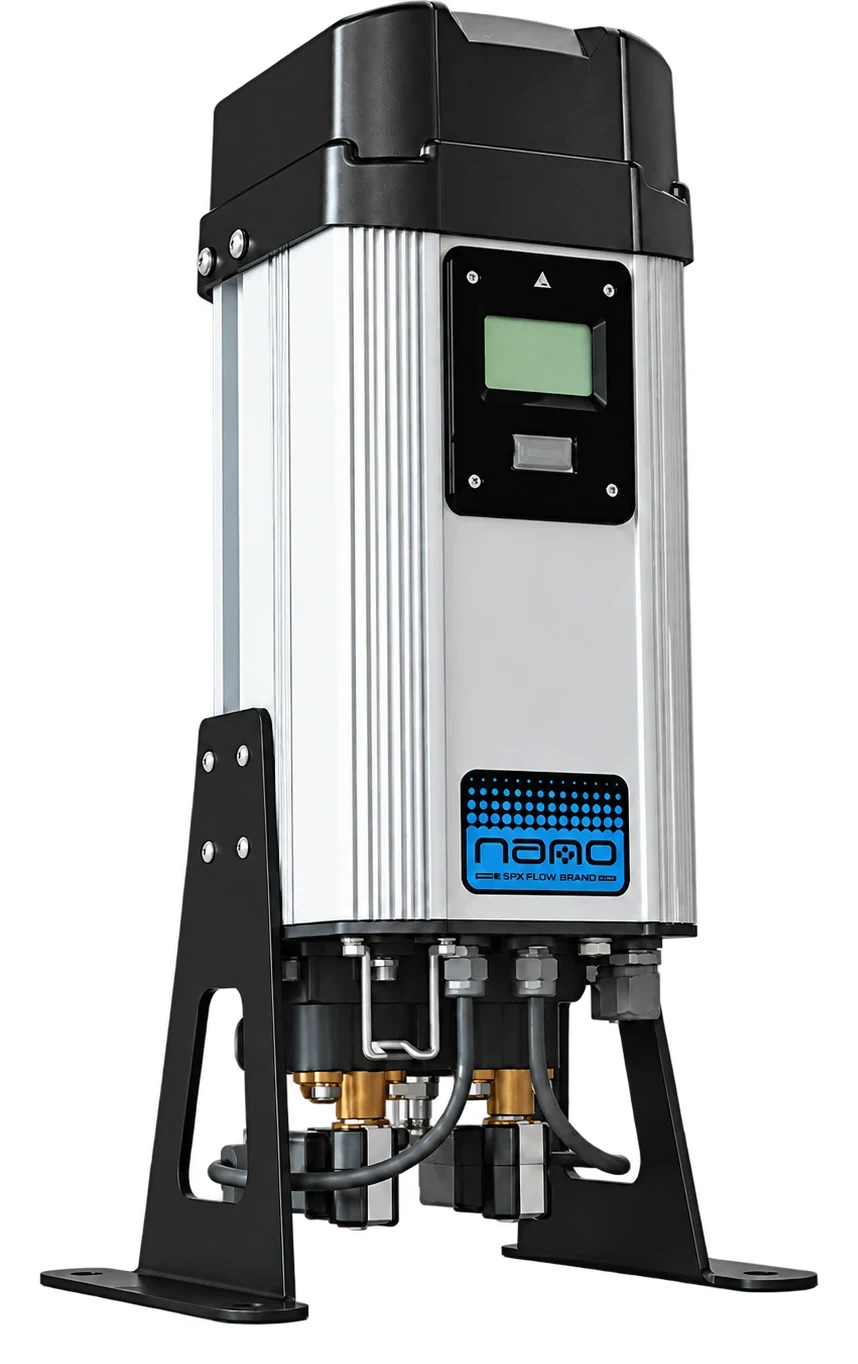
The refrigerated dryer is the plant's utility-air dryer and the first stage of its process air. Utility air is specified at ISO 8573-1 class 2.4.2 or 1.4.1, a 38°F pressure dew point with coalescing filtration, which the refrigerated dryer delivers. Product-contact air is commonly specified at class 1.2.1 with microbiological monitoring: a –40°F dew point from a desiccant stage fed by the refrigerated dryer, oil to 0.01 mg per cubic meter and a sterile filter at the point of use.
A solid-dose plant runs on a 50 to 100 hp oil-free screw, 220 to 450 SCFM, and a large site on 150 hp and more. A 75 hp screw at 320 to 340 SCFM is the 400 SCFM dryer, with the desiccant stage on the process branch sized for its 50 to 100 SCFM alone. Oil-free compressors remove the oil question at the source, but their air is saturated all the same, so the dryer, separator and drains are unchanged.
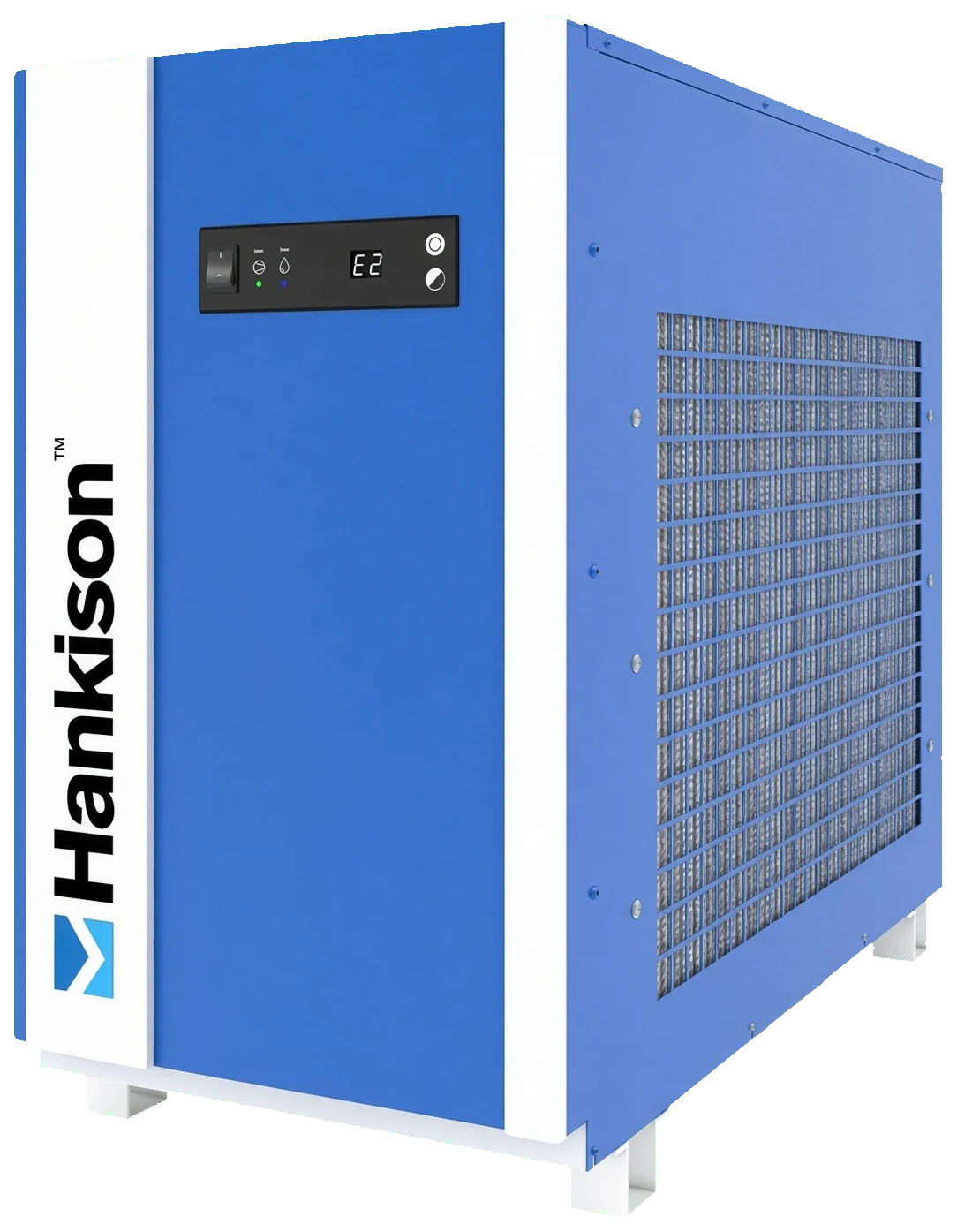
Pharmaceutical plants run steady, validated schedules with the compressor loaded through the week, which is the non-cycling case; the DXR series or, above 600 SCFM, the AES digital-scroll dryers fit. Sites with one-shift packaging and idle weekends save with the FLXA cycling series.
Request a pharmaceutical air dryer quote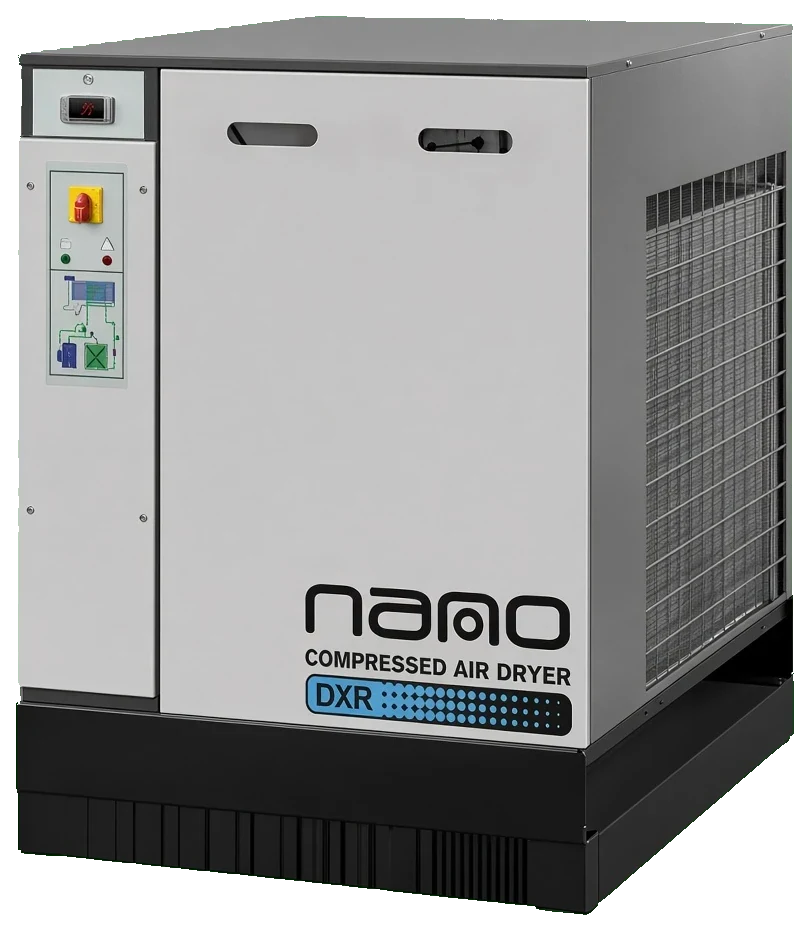
What water does in a pharmaceutical plant
Utility air and process air
- Process valve actuators and instrument positioners sticking or drifting on condensate
- Organisms from a wet pipe reaching coated tablets, granulations and sterile vacuum breaks
- Moisture in atomizing and pulse-jet air wetting hygroscopic powders in the granulator
- Deviations, investigations and lost batches when a monitored air point fails its class
The two specifications a pharma plant writes
Utility air and product-contact air
- Utility air, class 2.4.2 or 1.4.1: 38°F pressure dew point from a refrigerated dryer with 0.01 micron coalescing
- Process air, class 1.2.1: desiccant stage fed by the refrigerated dryer, oil to 0.01 mg per cubic meter, sterile filter at the point of use
- Dew point, particle, oil and microbiological monitoring at defined points on a defined schedule
- Dryer, filters and monitor documented in the qualification package with their alarms
Dryers that fit a pharmaceutical plant
Rated at 100 psig and 100°F inlet air. A site on a 50 to 100 hp oil-free screw uses the 250 to 500 SCFM sizes; larger sites use 600 to 1,250 SCFM. The PDM dew point monitor gives the outlet reading the qualification package needs.
| SERIES | TYPE | FLOW RANGE | MAX INLET | MAX PRESSURE |
| DXR Series | Non-Cycling | 10 to 4,200 SCFM | 131°F | 203 psig |
| AES Series | Digital Scroll Cycling | 600 to 10,000 SCFM | 120°F | 232 psig |
| FLXA Series | Cycling | 75 to 2,000 SCFM | 120°F | — |
| NXC Series | Cycling | 20 to 2,000 SCFM | 158°F | 232 psig |
| HF Series Filters | Compressed Air Filter | 20 to 21,250 SCFM | — | 300 psig |
| GFN Series Filters | Compressed Air Filter | 6 to 1,500 SCFM | — | 232 psig |
| ND Series Zero-Loss Drains | Condensate Drain | Call for sizing | — | 290 psig |
| PDM Dew Point Monitor | Dew Point Monitor | Call for sizing | — | 145 psig |
Send the compressor, the process-air points and the classes in the user requirement specification; we size the refrigerated dryer and specify the process branch to match.
Monitor the dew point where the class is claimed
A dryer's controller shows a dew point measured inside the dryer, which is useful for the technician and not what the qualification refers to. The class is claimed at the point of delivery, after the filters and the pipe, and that is where the monitoring point belongs: a sample port with a dew point sensor at the refrigerated dryer outlet for the utility header, and another after the desiccant stage for the process branch.
A portable monitor reading –148 to +68°F covers both, with a 4-20 mA output and alarm contacts so the building system logs it. A quarterly reading with the room temperature noted is the record most inspections expect, and a permanent sensor on the process branch is common practice.
- Sample port after the filters, not inside the dryer
- A single monitor serving both the utility header and the process branch
- Alarm contacts wired to the building monitoring system
Where the dryer and filters go
Compressor, aftercooler, receiver, 1 micron prefilter, refrigerated dryer, 0.01 micron coalescer, header for utility air. The process branch leaves the header through a desiccant dryer sized for the process points, then a 0.01 micron filter and a sterile filter at each point of use, with a sample port ahead of the sterile filter for the monitoring program. The refrigerated dryer stays in the utility room; only stainless pipe and the final filters enter the classified areas. The filter placement page shows the stages and where the drains sit.
Why the refrigerated dryer comes first
A desiccant dryer fed with saturated 100°F compressor air spends most of its purge or heater energy removing water that a refrigerated dryer removes for a fraction of the cost. Air arriving at the desiccant bed at a 38°F dew point carries about a tenth of the water, so the bed cycles less, a purge-saving control keeps the purge down, and the desiccant lasts years. The refrigerated versus desiccant page sets out the pairing.
Cycling or non-cycling for pharma
A validated plant runs a steady schedule, and the compressor is loaded most of the week; the non-cycling DXR series at full load costs no more to run than a cycling dryer and has fewer parts to qualify. Sites whose packaging runs one shift, or whose compressor is variable-speed and idles at night, spend enough hours at low load for the FLXA cycling series to pay back. Above 600 SCFM the AES digital-scroll dryers modulate refrigeration to the load, and the controller's dew point output can be wired to the plant's monitoring system.
Documenting the dew point
Under cGMP the dryer is a qualified utility: the user requirement specification states the class at each point, the qualification proves it, and the monitoring program keeps proving it. A dew point monitor at the refrigerated dryer outlet and another after the desiccant stage give logged readings against the class limits, with alarm contacts to the building system. The dew point and ISO classes page lists the class values the specification refers to.
Pharmaceutical air questions
Yes. An oil-free compressor settles the oil class at the source but its discharge is saturated with water at the aftercooler outlet, exactly like a lubricated machine. The refrigerated dryer, the separator, the coalescer for water aerosol and the drains are unchanged; the activated carbon stage is what becomes optional.
Air that can touch product or a sterile surface takes the contact class: coater atomizing air, granulator spray and pulse-jet air, sterilizer vacuum breaks, capsule and powder transfer air and isolator overpressure. Cylinders, actuators, instruments and packaging line pneumatics are utility air at class 2.4.2 or 1.4.1, which the refrigerated dryer with coalescing filtration meets.
It can, but the desiccant dryer then does the bulk drying at many times the energy cost and cycles far more often. The efficient arrangement is the refrigerated dryer on the whole plant flow with the desiccant stage sized for the process branch alone, fed with air that is already at a 38°F dew point.
As a utility with a stated class at each delivery point. The design review records the dryer's rating and correction factors for the room, the installation check confirms the piping order and drains, and the performance test logs dew point, particles, oil and microbiology at the defined points. A dew point monitor with alarm contacts makes the ongoing monitoring routine.
A 75 hp screw delivers 320 to 340 SCFM, which is the 400 SCFM refrigerated dryer in a normal utility room and the 450 to 500 SCFM size in a hot one. The desiccant stage on the process branch is sized for that branch, typically 50 to 100 SCFM, not for the compressor.
More on pharmaceutical air
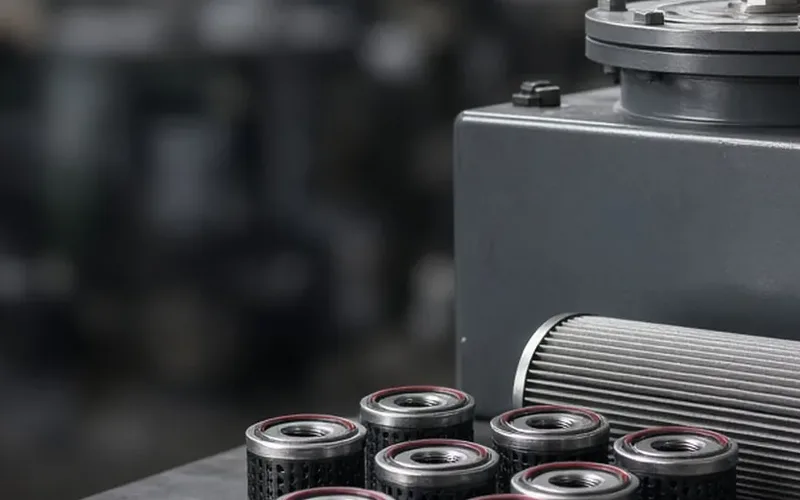
Filter placement around the dryer
The order of prefilter, dryer, coalescer, carbon and sterile stages, and which grade belongs at each point of a validated system.
Learn More
Food Packaging
Compressed air drying for form-fill-seal, tray sealing and reject blasts: contact and non-contact classes, chilled halls and dryer sizes.
Learn More
Bottling & Canning
Compressed air drying for fillers, cappers, seamers and rinsers: machine air at 38 degrees, rinser air with a sterile filter, hot halls.
Learn More