
1-805-484-2992
Quotes - Engineering - SalesCompressed Air Filters for Refrigerated Dryers
Prefilters, oil-removal afterfilters, carbon adsorbers and high-temperature housings from 6 to 21,250 SCFM
A refrigerated dryer removes water. It does not remove compressor oil, pipe scale or the aerosol of oil and water that leaves its own separator, and it is damaged by the solids that arrive from the compressor. Filters do those jobs, and every dryer installation on this site is drawn with two of them: a 1 micron coalescing prefilter between the receiver and the dryer inlet, and a 0.01 micron oil-removal afterfilter at the dryer outlet, where the air is cold and the oil aerosol coalesces best.
Four series are catalogued here. The general-purpose die-cast housing line covers 6 to 1,500 SCFM in eighteen sizes with 1 micron, 0.01 micron and activated-carbon elements; the threaded aluminum line covers 20 to 1,500 SCFM in fourteen housings with five color-coded grades; the modular housing family runs from a 20 SCFM bowl to a 21,250 SCFM ASME vessel with seven push-on element grades; and the high-temperature line takes 450°F air straight off a piston compressor.
Housings are selected on flow at line pressure with a pressure-drop allowance, and elements are changed on differential pressure, typically at 6 to 10 psi, or once a year; activated-carbon elements are changed on hours. Each series page lists the housings, the element grades and the replacement element for every part number.
- 1 micron prefilter ahead of the dryer, 0.01 micron afterfilter behind it
- Activated-carbon elements for oil vapor to 0.003 ppm where the process needs it
- Modular, threaded and ASME-vessel housings from 6 to 21,250 SCFM
- 450°F high-temperature housings for air with no aftercooler
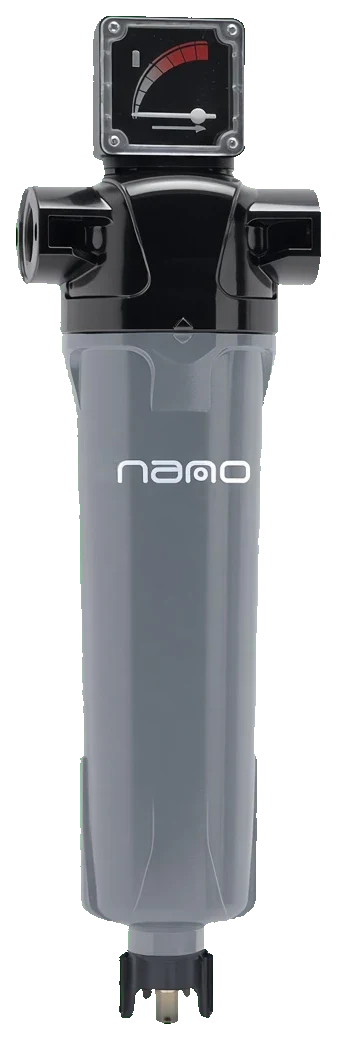
The four filter series
Flow range, pressure rating and the number of part numbers catalogued for each series. Open a series for its housing sizes, element grades and replacement elements.
| SERIES | TYPE | FLOW RANGE | PART NUMBERS | NOTES |
| HF Series Filters | Compressed Air Filter | 20 to 21,250 SCFM | 180 listed | 300 psig max |
| NGF Series Filters | Compressed Air Filter | 20 to 1,500 SCFM | 70 listed | 250 psig max |
| GFN Series Filters | Compressed Air Filter | 6 to 1,500 SCFM | 18 listed | 232 psig max |
| GHTN High-Temperature Filters | Compressed Air Filter | 15 to 1,600 SCFM | 11 listed | 150 psig max |
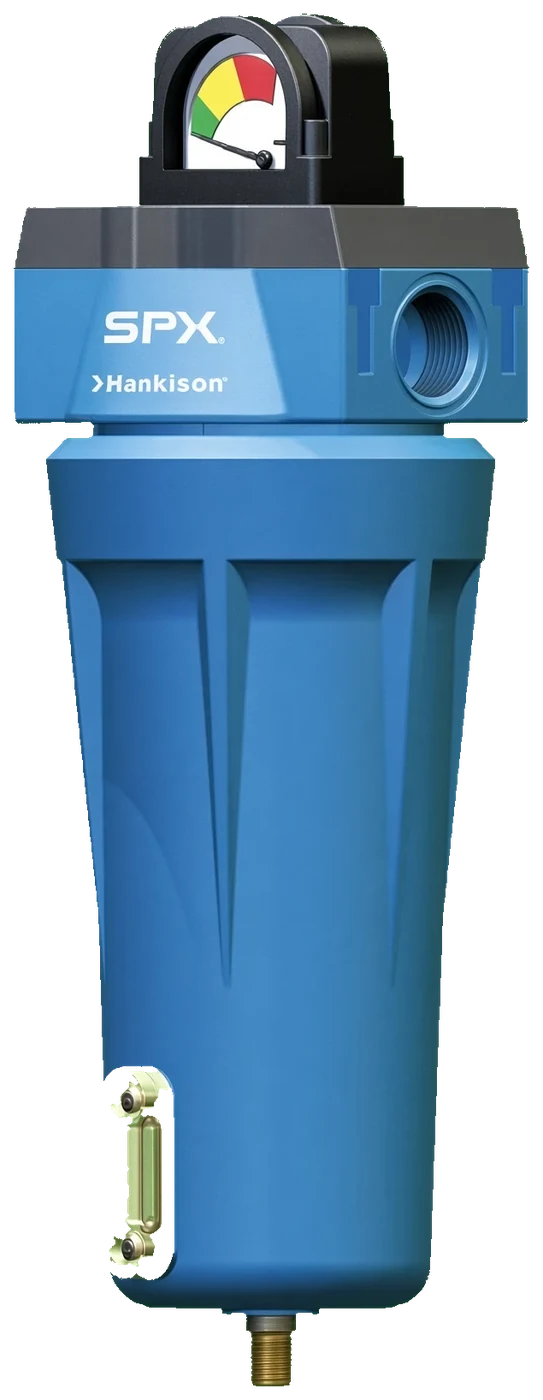
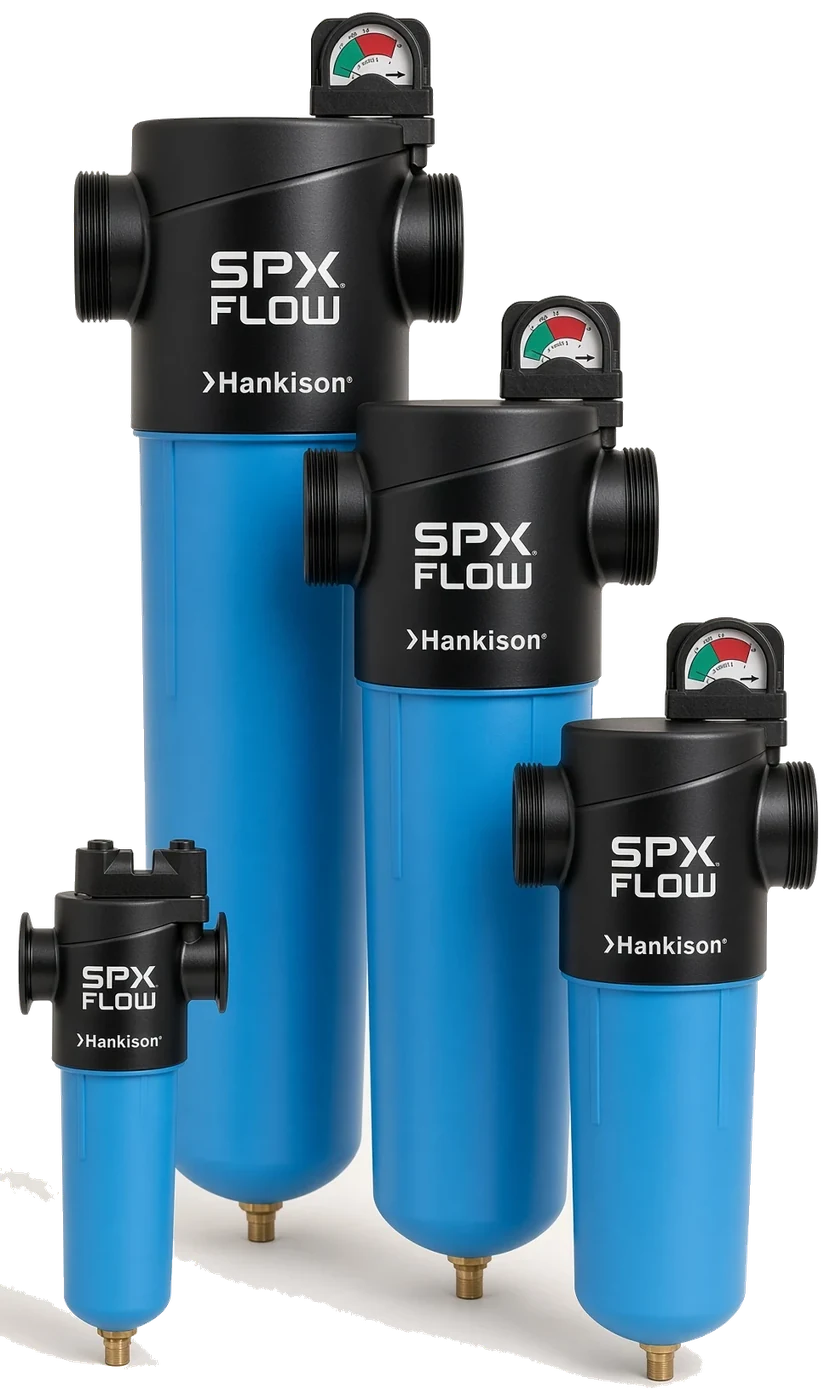
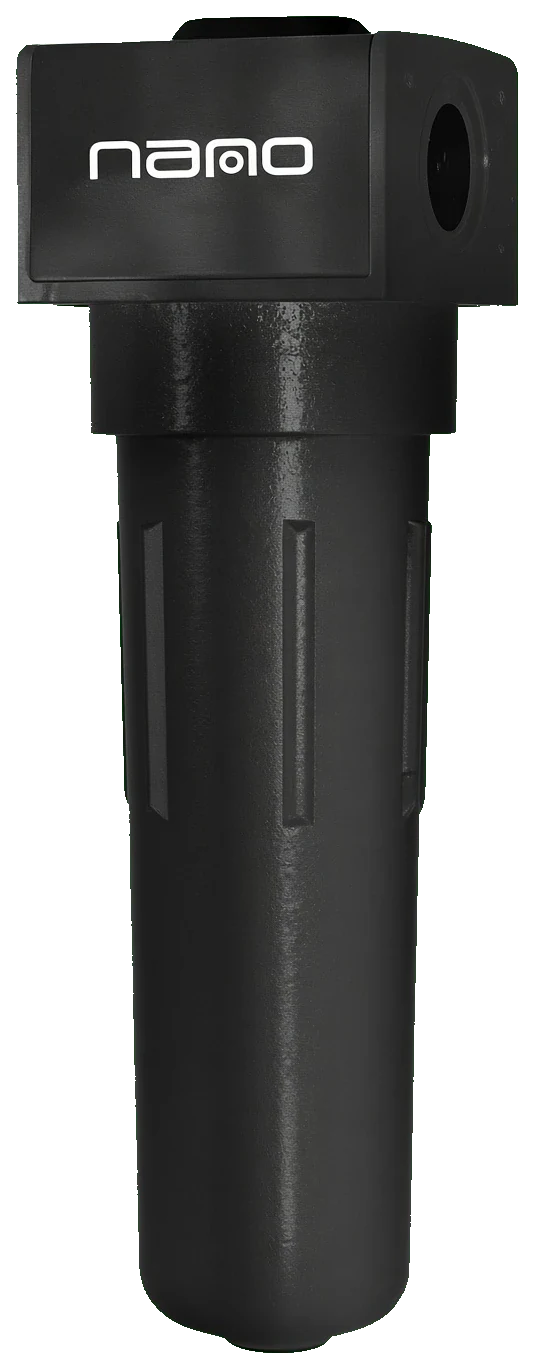
Filter series by housing type
Grades and what they remove
A 1 micron particulate and coalescing element is the prefilter grade: it stops solids from the compressor and receiver and takes the oil aerosol down to about 0.3 to 1 ppm, which protects the dryer's exchanger and drain. A 0.01 micron high-efficiency coalescer is the afterfilter grade, taking remaining oil to 0.01 ppm or lower for paint, packaging and food-contact air. An activated-carbon adsorber follows it where oil vapor and odor must go too, to 0.003 ppm, and it must always sit behind a coalescer because liquid oil ruins the carbon. The 3 micron separator-filter grade is for the spot after a compressor with no separator at all, and the modular family adds a 1 micron dust filter for the outlet of a desiccant dryer.
Sizing a filter housing
Size on the compressor's delivery at the actual line pressure, not the dryer's nameplate, because the filters see the same flow as the dryer and cost the plant pressure every hour. A housing rated 250 SCFM at 100 psig passes more at 125 psig and less at 80, and the pressure drop across a clean 1 micron element runs 1 to 2 psi, rising to 6 to 10 psi at change-out. Choosing the next housing up halves the clean pressure drop and doubles the element life for a modest price, which is why the prefilter is often one size larger than the dryer.
Housings, drains and indicators
The die-cast general-purpose housings spin their bowl off without a tie rod and carry an automatic float drain on the 1 micron and 0.01 micron grades, a manual drain on the carbon grade, and an optional differential-pressure gauge. The threaded aluminum line uses a pleated element with a large open area that cuts pressure drop roughly in half, a slide indicator or two-color gauge as standard, and a bowl that sounds a warning if it is loosened under pressure. The modular family locks head to bowl with a quarter-turn bayonet, takes the same seven element grades in every housing, and above 1,000 SCFM becomes an ASME vessel holding several elements. The high-temperature housings use a push-fit element with dual o-rings and a manual ball-valve drain.
Hot air and where the filter goes
Standard coalescing elements are limited to 150 or 176°F, so air from a piston compressor without an aftercooler must pass a 450°F particulate housing first, then the high-inlet-temperature dryer, then the coalescer once the air is cool. On a standard installation the order is receiver, prefilter, dryer, afterfilter, carbon filter, header, with a bypass around the group and a zero-loss drain on every bowl; the filter placement page explains why a coalescer works better cold and the drains page covers the bowl drains.
Compressed air filter questions
Yes, a 1 micron coalescing prefilter. It keeps compressor oil and pipe scale out of the dryer's exchanger and separator, where they foul the surfaces and jam the drain, and it takes the bulk aerosol so the 0.01 micron afterfilter has less to do.
A 0.01 micron high-efficiency oil-removal coalescer, rated to 0.01 ppm or better remaining oil. It belongs at the dryer outlet because a coalescer captures aerosol more efficiently in cold air, and it is followed by an activated-carbon element only where oil vapor and odor matter, as in food packaging or breathing air.
On differential pressure: a slide indicator or gauge on the housing shows the drop across the element, and 6 to 10 psi is the change point on most grades, 5 psi on the high-temperature housings. Elements that never reach that pressure are still changed yearly, and activated-carbon elements after about 1,000 hours.
Within a series, yes. The modular family takes any of its seven push-on grades in the same housing, the threaded line any of its five, and the die-cast line its three, so the same body serves as prefilter or afterfilter depending on the element ordered.
A high-temperature particulate housing rated 450°F with a 1 micron element, in eleven sizes from 15 to 1,600 SCFM. Standard coalescers are limited to 150 or 176°F and would fail on 180 to 200°F air.
Yes. Several dryer series are ordered with a matched prefilter and afterfilter pair, and the thermal-mass and high-temperature dryers publish the matching housing for every size. Ask for the pair with the dryer quote so the connections and flows match.