
1-805-484-2992
Quotes - Engineering - SalesRefrigerated Air Dryers for Body Shops
A collision shop runs everything on air: DA sanders at 12 to 17 SCFM each, grinders and cutoff tools, impact wrenches and ratchets, the frame rack's air-over-hydraulic pump, blow guns, a tire changer and the spray booth. The compressor behind it is usually a 5 to 10 hp two-stage piston on an 80-gallon tank, or a 10 to 20 hp screw in a larger shop, and most of the piston units have no aftercooler. Water in the air rusts the sander's vane motor and blows through the pad onto bare metal, where it flash rusts under the filler; it spits out of blow guns onto a panel that was ready for primer; and in the booth it is fisheyes.
The target is a 38°F pressure dew point, ISO 8573-1 class 4, for the booth line, and anything better than 50°F, class 6, for the tools in a heated shop. The choice of dryer turns on the compressor: a piston machine sending 180 to 200°F air needs a high-inlet-temperature dryer, while a screw with an aftercooler takes a standard cabinet unit.
A 5 hp piston compressor delivers 17 to 20 SCFM, a 7.5 hp unit 25 to 30 and a 10 hp unit 35 to 40, all at 175 psig and all hot. The HRHT and HTR high-inlet-temperature dryers cover that range at 25 to 125 SCFM and plug into a 115 V outlet. A 15 hp screw with its own aftercooler delivers 65 to 70 SCFM at 110°F and takes an 85 SCFM standard dryer.
The booth branch is the one line in the shop that wants 38°F rather than 50°F. Shops on a hot piston supply get there by running the booth line through a small standard dryer after the air has cooled in the header, with the three-stage filter behind it at the booth wall.
Request a body shop dryer quote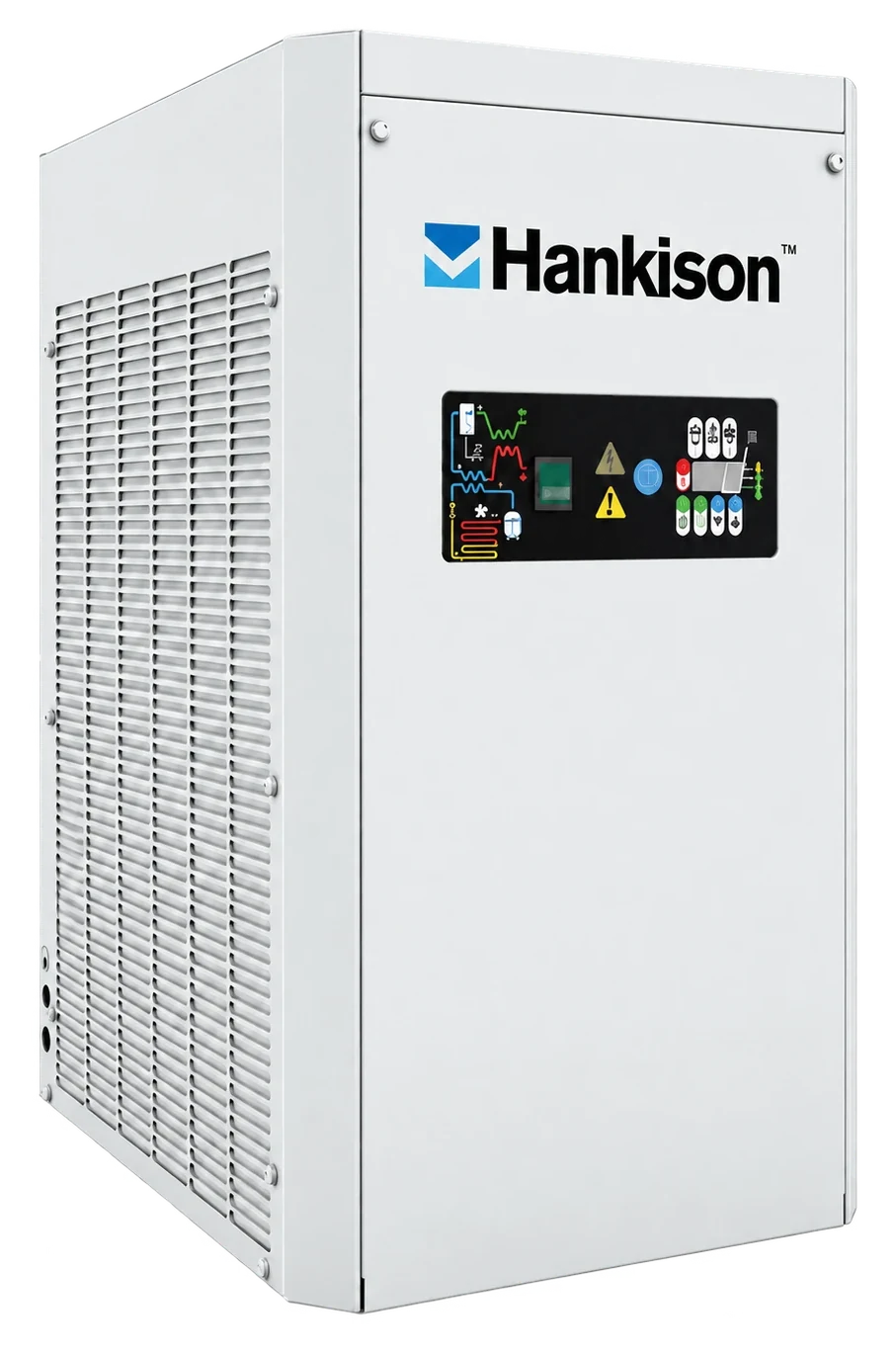
What water does in a collision shop
From the tank to the panel
- Sander vane motors rusting and losing speed as water washes the oil out
- Water through the sander pad onto bare steel, flash rusting under the filler and primer
- Blow guns spraying condensate over a panel that was masked and ready for the booth
- Frame rack pumps and tire changer cylinders pitting from condensate sitting in the bore
The dryer for a piston compressor shop
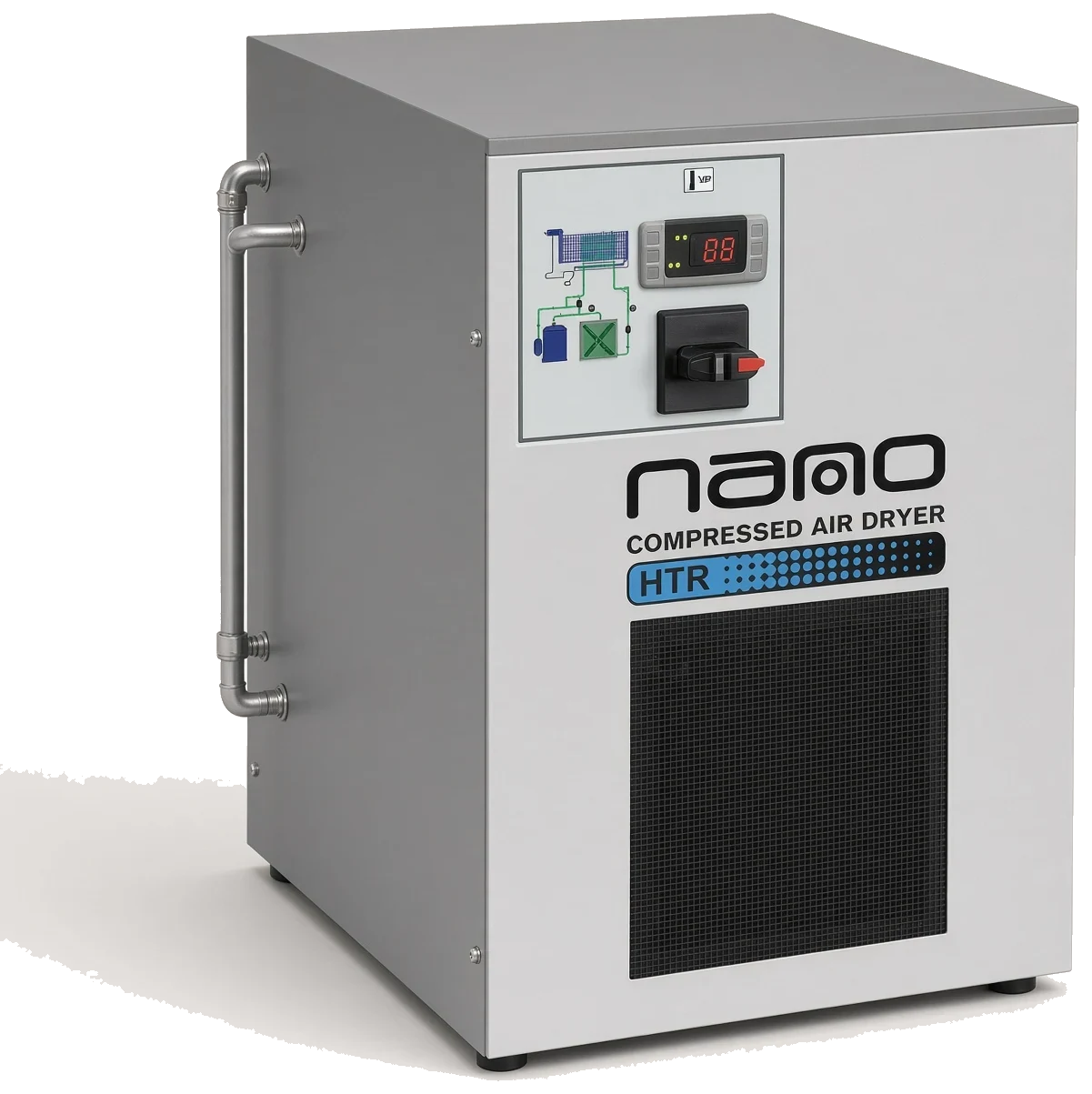
Built for hot tank air
- High-inlet-temperature dryer rated for 180 to 200°F air when the compressor has no aftercooler
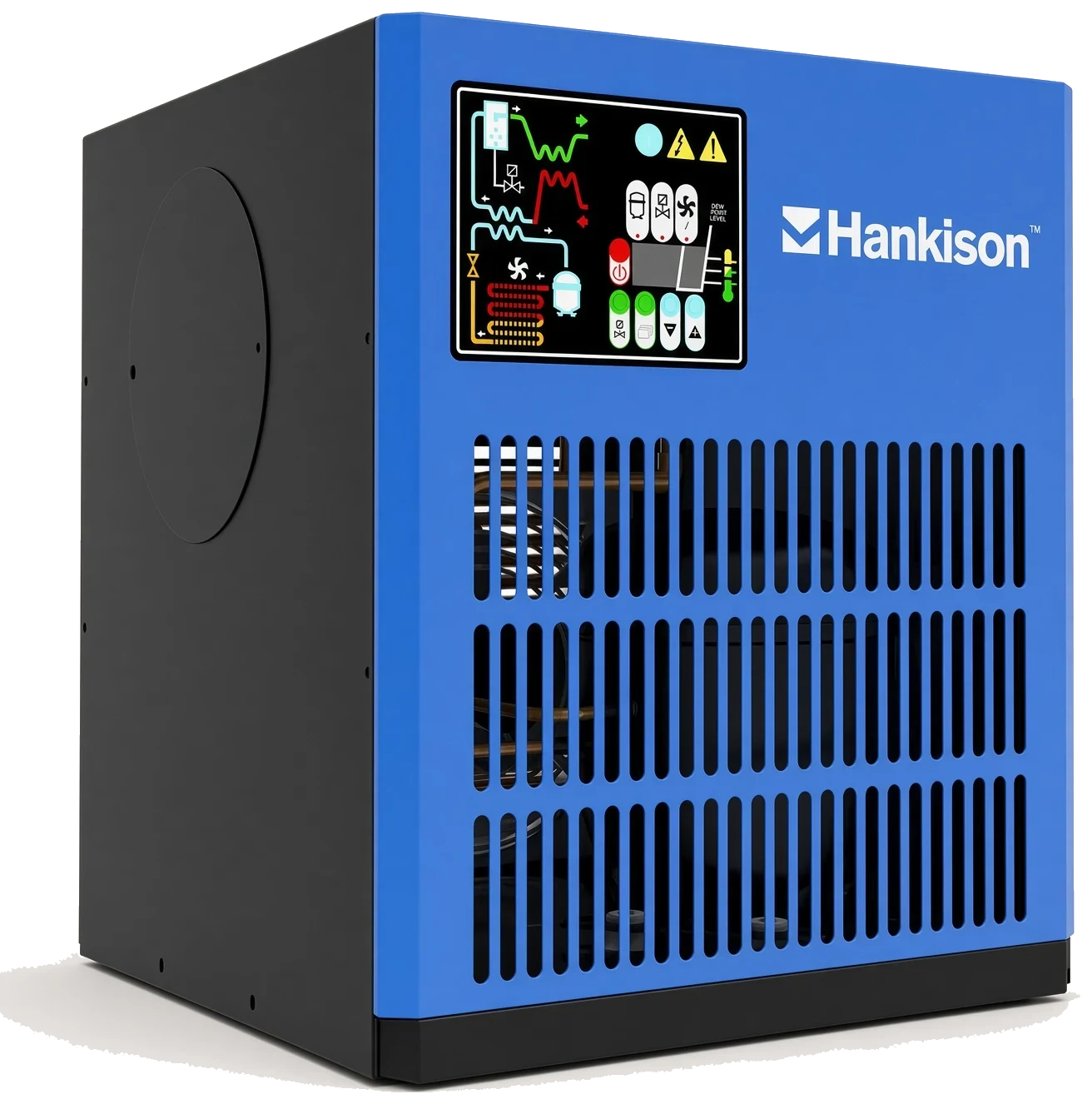
- Standard 38°F cabinet dryer when the compressor is a screw with its own aftercooler
- Booth branch through a 38°F dryer and a three-stage filter at the booth wall
- Automatic drain on the tank as well as the dryer, because the tank catches half the water
Dryers that fit a body shop
Standard ratings are at 100 psig and 100°F inlet, except the HRHT and HTR series, which are rated at 200 and 180°F inlet respectively. A 5 to 10 hp piston shop sits in the 25 to 50 SCFM sizes; a 15 to 20 hp screw shop uses 85 to 105 SCFM.
| SERIES | TYPE | FLOW RANGE | MAX INLET | MAX PRESSURE |
| HRHT Series | High Inlet Temperature | 25 to 100 SCFM | 200°F | — |
| HTR Series | High Inlet Temperature | 25 to 125 SCFM | 180°F | 232 psig |
| HPRB Series | Non-Cycling | 7 to 50 SCFM | 120°F | 200 psig |
| DXR Series | Non-Cycling | 10 to 4,200 SCFM | 131°F | 203 psig |
| GHTN High-Temperature Filters | Compressed Air Filter | 15 to 1,600 SCFM | — | 150 psig |
| GFN Series Filters | Compressed Air Filter | 6 to 1,500 SCFM | — | 232 psig |
| 1701 Bypass Valves & Mounting Brackets | Bypass & Mounting | 5 to 35 SCFM | — | 200 psig |
| Snap-Trap & Trip-L-Trap Drains | Condensate Drain | Call for sizing | — | 175 psig |
Send the compressor horsepower and type, whether it has an aftercooler and how many bays and booths it feeds; we pick the dryer and the booth filter.
Thirty feet of pipe is an aftercooler
A shop with a standard dryer and a hot piston compressor has a cheap alternative to replacing the dryer: cool the air before it gets there. Thirty to forty feet of black iron pipe run along the wall between tank and dryer, sloped back toward a drain leg, drops 180°F air to within 20°F of the room and condenses a good share of the water on the way. A standard dryer then sees the inlet it was rated for.
It is not as tidy as a high-inlet-temperature dryer, and it needs its drain leg emptied, but for a shop that already owns a good 38°F cabinet dryer it turns a marginal installation into a working one for the price of the pipe.
- Pipe sloped back to a drain leg with an automatic drain
- Standard dryer only after the air is under 120°F
- High-inlet-temperature dryer where there is no room for the run
Where the dryer goes in a small shop
Tank, dryer, filters, header. On a receiver-mounted piston compressor the tank is the receiver, so the dryer is piped from the tank outlet, with a 1701 single-body bypass on dryers to 35 SCFM so the dryer can be isolated without shutting the shop down. The tank gets an automatic drain of its own, because on a hot piston compressor about half the day's water condenses in the tank and a technician who forgets the manual drain on Friday sends it all down the line on Monday. The piping and bypass page shows the layout.
Hot inlet air and the 50°F dew point
A high-inlet-temperature dryer taking 180°F air delivers a 50°F pressure dew point, ISO 8573-1 class 6, which is dry enough for every tool and lift in a heated shop. The same dryer fed cooler air does better. For the booth, where the air expands and cools through the gun, take the booth branch through a standard 38°F dryer or add an aftercooler and run one standard dryer for everything. The inlet temperature page explains why a standard dryer cannot be pushed to 180°F.
Cycling or non-cycling for a body shop
Non-cycling, without much thought. Body shop demand is as intermittent as it gets, but at 25 to 50 SCFM the non-cycling cabinet dryers draw a few hundred watts, and a cycling dryer's saving would take decades to repay its price. The place to save power in a small shop is the drain: a timer drain on a compressor that idles between customers vents air every few minutes all night, which is why the HRHT, HTR and HPRB series ship with a zero-loss drain and the tank gets a pneumatic float drain.
Sizing a shop that grew
Shops add a bay, a second booth and waterborne flash-off blowers without touching the compressor, then wonder why the dryer that was fine for years is passing water. Count the air again: two waterborne blowers add 40 to 80 SCFM to a supply that was sized for two sanders. Either the compressor grows and the dryer with it, or the booth gets its own supply. The reciprocating compressor pages turn horsepower into dryer sizes.
Body shop air questions
A high-inlet-temperature dryer in the 25 to 35 SCFM size, rated to accept 180 to 200°F air. A standard dryer piped straight off that tank sees air well above its 100°F rating and cannot hold a dew point, so it passes water on the first humid day.
Because the tank only catches the water that condenses in the tank. Air leaving it at 120°F or more is still saturated and keeps condensing in the pipe, the hose and the tool as it cools. Draining the tank is necessary; only a dryer takes the vapor out.
For the tools, yes. For the booth, take that branch through a small standard dryer holding 38°F with a three-stage filter at the booth wall, because the air cools as it expands at the gun cap and a 50°F dew point leaves less margin than a painter wants on a humid day.
Yes. The 25 to 50 SCFM cabinet dryers and the high-inlet-temperature units are 115 V plug-in machines that hang on a bracket or sit on a shelf beside the tank. Leave clearance for the condenser fan and keep them out of the booth room, where overspray fouls the coil.
No. A prefilter and afterfilter pair at the dryer covers the shop; the booth is the one branch that needs the three-stage filter at its wall for oil vapor. A filter-regulator at a bay is a convenience for setting tool pressure, not a substitute for the dryer.
More on body shop air
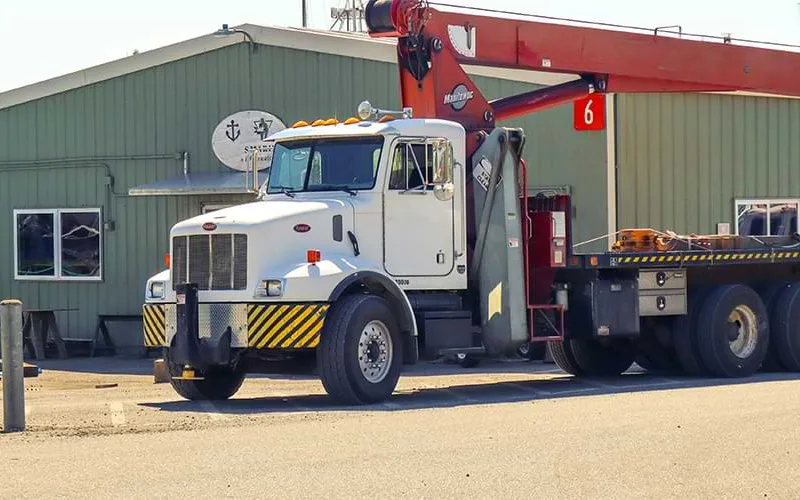
Dryers for 7.5 to 10 hp piston compressors
The compressor size in most body shops, with the flow it delivers, the temperature it delivers it at and the dryers that fit.
Learn More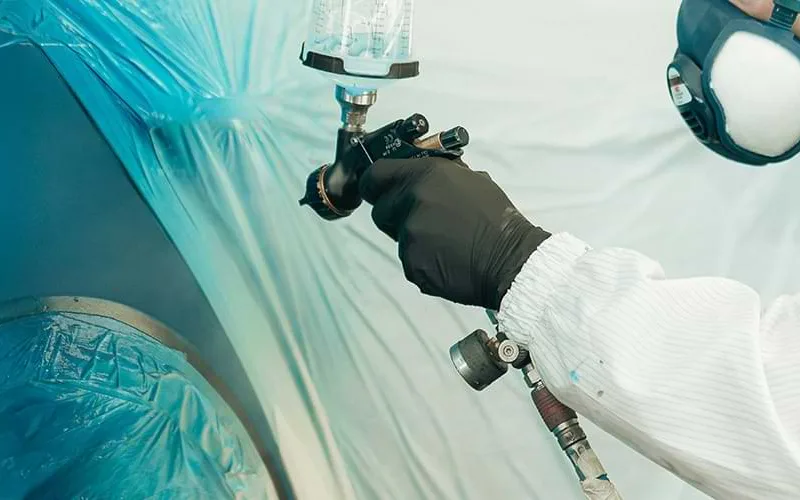
Paint Spraying
Compressed air drying for spray guns and paint lines: why fisheyes and blushing start at the compressor, and the dryer and filters to fix it.
Learn More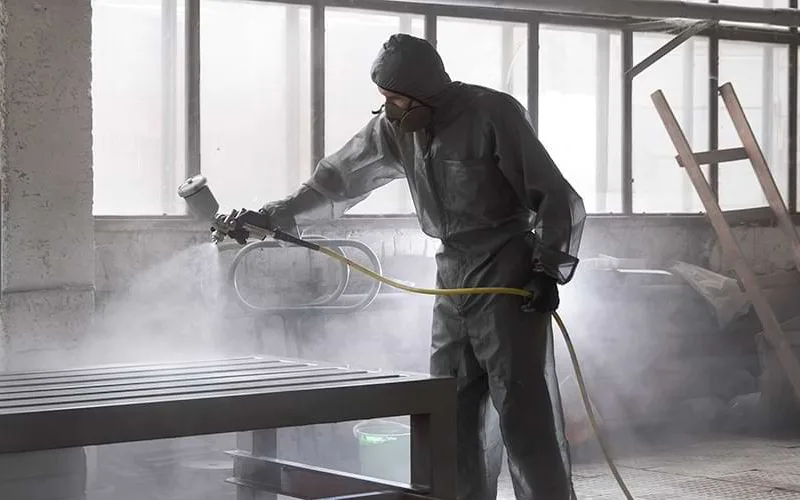
Powder Coating
Compressed air for powder coating: hoppers, guns and blow-off, the dew point and oil limits the gun makers set, and dryers that meet them.
Learn More