
1-805-484-2992
Quotes - Engineering - SalesAir Dryers for Dental & Medical Facilities
A dental practice runs on a small oil-free piston compressor, 1 to 5 hp with two or three heads on a tank, delivering about 2 SCFM for every operatory in use at once: the high-speed handpiece turbine at 30 to 40 psig, the air-water syringe, the chair controls, and the lab's sandblaster and model trimmer. A six-chair office draws 10 to 15 SCFM. A hospital is a different scale, with a duplex medical-air plant under NFPA 99 for patient breathing air, a separate instrument-air system for surgical tools, and then all the air that is not medical gas: laboratory bench air, sterile-processing utility air, the maintenance shop and the pneumatic building controls.
Water in dental air is the complaint the patient notices. Condensate in the handpiece line arrives as a spit of water at the bur, carries the corrosion products of the line with it and shortens turbine bearing life; in the syringe it fogs the mirror. Because dental compressors are oil-free, the contaminant after water is particulate and whatever the intake draws in, which is why the dental filter train ends in a fine coalescing element. A membrane or desiccant dryer is often built into the compressor package; where it is not, or where a clinic with 20 to 60 chairs outgrows it, a small refrigerated dryer with a filter pair is the usual answer.
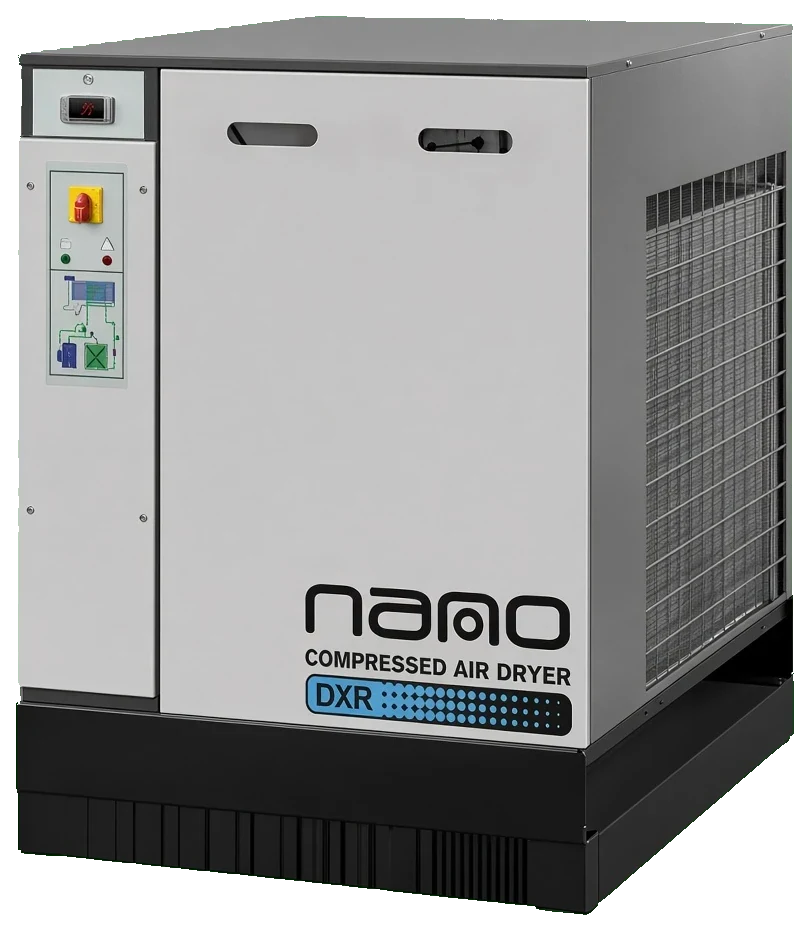
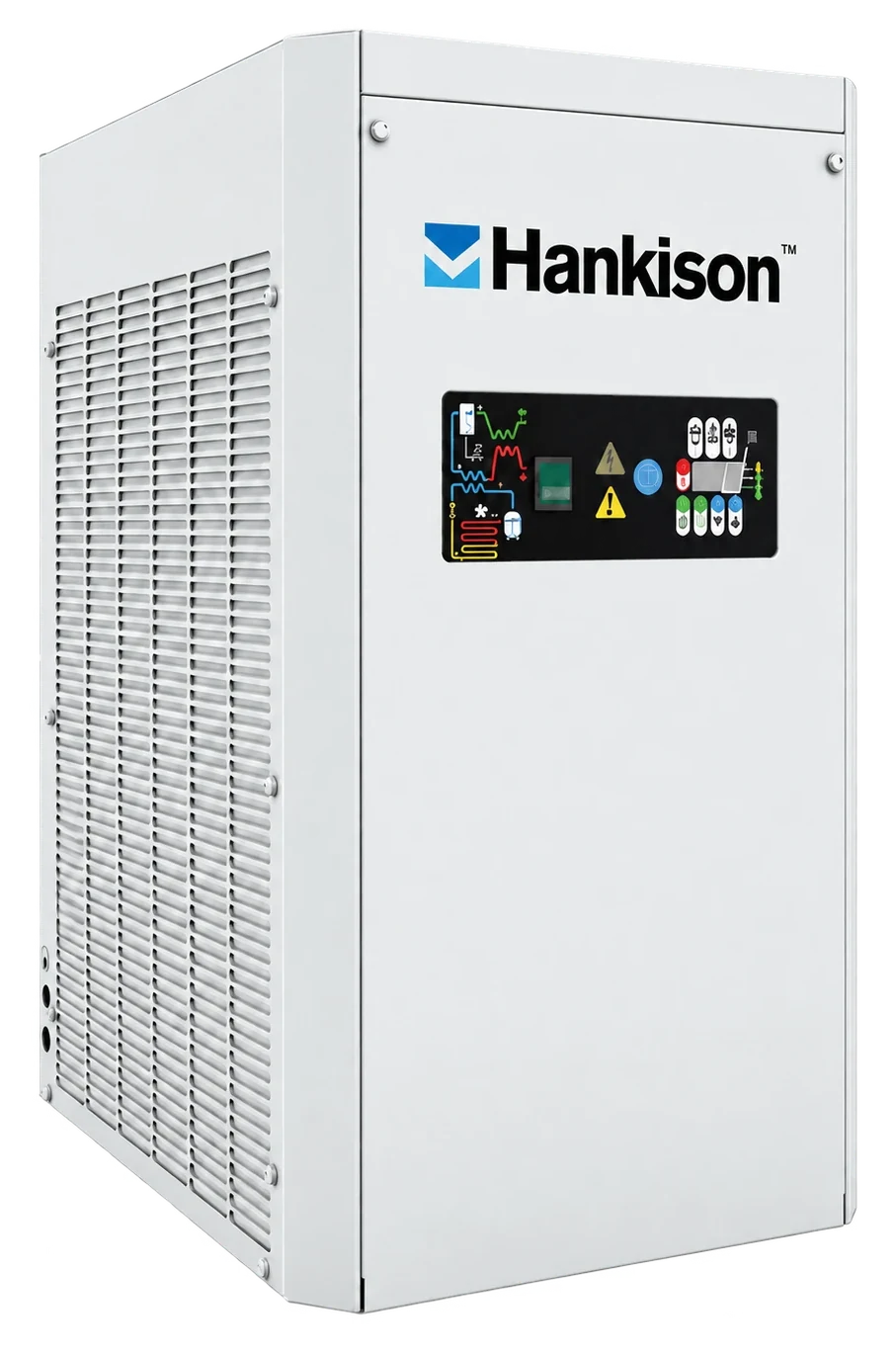
A refrigerated dryer holds a 38°F pressure dew point at tank pressure, which is roughly 20°F by the time the regulator has dropped the air to handpiece pressure, well below any operatory. It sits after the tank and ahead of the regulator, with a 1 micron prefilter, a 0.01 micron coalescing afterfilter, a wall bracket and a 1701 bypass valve so it can be serviced without closing the practice. The HPRB Series at 7 to 25 SCFM and the DXR Series at 10 to 30 SCFM cover offices; a 30-chair clinic on a 15 hp oil-free scroll uses the 50 to 65 SCFM sizes. Confirm the dew point the practice's authority requires before choosing between a refrigerated dryer and a membrane or desiccant unit.
Hospital medical air is not a refrigerated-dryer application, and this site does not pretend otherwise. NFPA 99 requires the medical-air dryers to deliver a dew point below the frost point, 32°F at line pressure, with an alarm at 35°F, and instrument air for surgical tools to reach -22°F, both of which take desiccant drying. The refrigerated dryers here serve the rest of the building: laboratory air, sterile-processing utility air, shop air and control air, each on its own small compressor.
Request a dental or medical dryer quote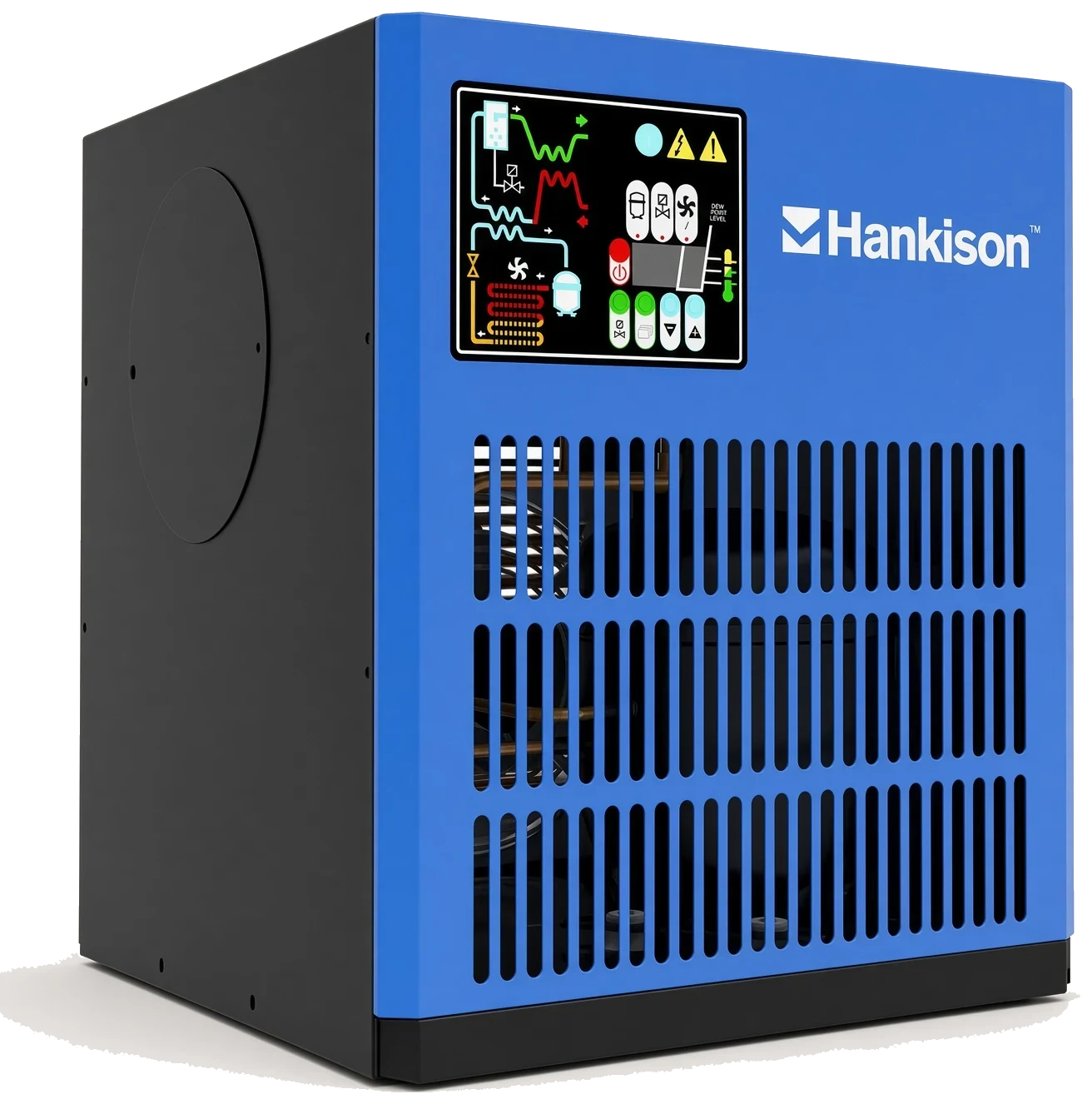

What wet air does in a dental or medical facility
Where it shows up first
- Water spit from the handpiece at the bur and a fogged mirror from the syringe
- Shortened turbine bearing life and corrosion in the delivery-unit valves
- Sandblaster media clumping and model trimmers streaking in the dental lab
- Sterilizer door seals and pneumatic valves in sterile processing sticking on wet utility air
The specification for non-medical-gas air
Dental air, lab air and utility air; NFPA 99 systems are separate
- Oil-free compressor with a tank; refrigerated dryer at tank pressure, 38°F pressure dew point, ahead of the regulator
- 1 micron prefilter and 0.01 micron coalescing afterfilter, elements changed on the annual service
- Wall bracket and 1701 bypass valve so the dryer can be isolated during clinic hours
- Desiccant drying, not refrigerated, for NFPA 99 medical air and instrument air
Dryers and filters that fit dental and support air
Ratings at 100 psig and 100°F inlet. A 1 to 5 hp oil-free dental compressor delivers 4 to 18 SCFM; a clinic or laboratory on a 7.5 to 15 hp oil-free scroll delivers 25 to 60 SCFM.
| SERIES | TYPE | FLOW RANGE | MAX INLET | MAX PRESSURE |
| HPRB Series | Non-Cycling | 7 to 50 SCFM | 120°F | 200 psig |
| DXR Series | Non-Cycling | 10 to 4,200 SCFM | 131°F | 203 psig |
| HRHT Series | High Inlet Temperature | 25 to 100 SCFM | 200°F | — |
| GFN Series Filters | Compressed Air Filter | 6 to 1,500 SCFM | — | 232 psig |
| NGF Series Filters | Compressed Air Filter | 20 to 1,500 SCFM | — | 250 psig |
| 1701 Bypass Valves & Mounting Brackets | Bypass & Mounting | 5 to 35 SCFM | — | 200 psig |
| Snap-Trap & Trip-L-Trap Drains | Condensate Drain | Call for sizing | — | 175 psig |
| PDM Dew Point Monitor | Dew Point Monitor | Call for sizing | — | 145 psig |
Tell us the compressor size, the number of operatories or the utility-air duty, and any dew point your authority specifies; we size the dryer and filters to match.
The compressor closet is the dryer's hardest environment
A dental compressor lives in a closet or a basement corner, and a refrigerated dryer beside it shares the heat. An air-cooled dryer rated at 100°F ambient loses 12 percent of its capacity at 110°F and trips on high refrigerant pressure not far above that, and a closet with a compressor cycling all day reaches those temperatures by mid-afternoon. Give the closet a louvered door or a transfer grille, and keep the dryer's condenser clear of the compressor's exhaust air. Where the closet cannot be ventilated, pipe the compressor to the tank first and the tank to the dryer, so the tank sheds heat before the air reaches the dryer inlet.
- Ventilate the compressor closet; a dryer at 110°F ambient loses 12 percent of its capacity
- Pipe compressor to tank to dryer so the tank cools the air first
- Clean the dryer condenser at the annual service along with the compressor's intake filter
Where the dryer goes in a dental office
Compressor, tank, 1 micron prefilter, dryer, 0.01 micron coalescer, then the regulator and the manifold to the operatories. Drying at tank pressure ahead of the regulator gives the lowest dew point at the chair and keeps the dryer at the pressure it is rated for. Most dental compressors are in a closet or a basement mechanical room, so the dryer goes on a wall bracket beside the tank with a 1701 bypass valve, and it needs a few inches of clearance for its condenser and a room that stays below about 100°F. The lab and dental compressor page walks through the installation.
Sizing to the operatory count
Figure 2 SCFM per operatory in use at the same time, so a six-chair office peaks at 10 to 12 SCFM and a 15 SCFM dryer covers it, while a twelve-chair clinic on a 5 hp compressor takes the 25 SCFM size. Size to the compressor's delivery when it is larger than the chair count suggests.
What NFPA 99 does and does not cover
NFPA 99 governs the piped medical gas systems of a health care facility. Its medical-air plant must be duplex, oil-free and dried below the frost point with a dew point alarm at 35°F, and its instrument air must reach -22°F, so both run on desiccant dryers and are engineered and certified as medical gas systems. It does not turn every compressor in the building into a medical gas source: the laboratory, the sterile-processing department, the maintenance shop and the pneumatic building controls run on their own compressors, and those are the systems a refrigerated dryer and a filter pair serve. Dental air answers to the practice's own authority, and the drying requirement varies, so check it before choosing the dryer type.
Oil-free compressors still need filters
An oil-free piston or scroll compressor removes the oil aerosol but not the wear particles, the intake dust or the moisture, and a handpiece turbine is no more tolerant of grit than of water. Keep the 1 micron prefilter and the 0.01 micron coalescing afterfilter, change them on the annual service, and drain the tank with a zero-loss drain rather than a valve someone is supposed to open weekly.
Dental and medical air questions
No. NFPA 99 requires the medical-air dryers to deliver a dew point below the frost point with an alarm at 35°F, which a refrigerated dryer cannot reach, so medical-air and instrument-air plants use desiccant dryers. Refrigerated dryers serve the laboratory, sterile-processing utility, shop and control air elsewhere in the building.
A six-chair office peaks at about 10 to 12 SCFM with every chair in use, so the 15 SCFM size of the HPRB or DXR Series covers it with margin, and a 2 or 3 hp oil-free compressor delivers about that much. Size to the compressor if it is larger than the chair count needs.
Not while the membrane is within its rating. A refrigerated dryer comes in when the package dryer is undersized for chairs that were added, when the practice grows into a clinic on a larger compressor, or when a membrane element has failed and the office wants a dryer it can service in place.
At tank pressure the dryer holds 38°F, and once the regulator drops the air to 30 to 40 psig for the handpiece the dew point is around 20°F, far below the operatory temperature, so no water can condense in the line or at the bur. Where a jurisdiction requires a stated lower dew point for dental air, a membrane or desiccant unit meets it.
Yes. The 0.01 micron element catches the wear particles and intake dust an oil-free compressor produces, and it is the last defense for a handpiece turbine bearing. Change it and the 1 micron prefilter on the annual service, and fit a zero-loss drain on the tank so water never reaches the dryer as a slug.
More on dental and support air
Dryers for lab and dental compressors
The oil-free compressor packages behind dental offices and laboratories, matched to the 7 to 50 SCFM dryers that fit.
Learn More
Woodworking
Refrigerated air drying for cabinet and millwork shops: nailers, edgebanders, sanders, spray finishing and dust collector pulse valves.
Learn More
Textiles
Refrigerated air drying for air-jet looms, texturing, winders and dye houses: loom stops from wet air, oil class and central plant sizing.
Learn More