
1-805-484-2992
Quotes - Engineering - SalesFour decisions, in the order they should be made
The first question is not which dryer but whether a refrigerated dryer is the right machine at all. Every unit on this site delivers a pressure dew point of 38°F, ISO 8573-1 class 4, and a few of the special-duty series deliver class 5 or 6. That is dry enough for the great majority of plant air: tools, cylinders, valves, blasting, machining, packaging and paint in a heated building. It is not dry enough for lines that run outdoors below freezing, for instrument air specified at minus 40°F, or for processes that call out class 1, 2 or 3 water. Those need a desiccant dryer, and the second topic below says so plainly.
Once refrigerated is confirmed, the remaining choices are about running cost and the building rather than about the air. A cycling dryer costs more to buy and less to run when the plant spends hours at part load; a non-cycling dryer is the simpler and cheaper machine for a compressor that stays loaded. Air cooling suits a ventilated room; water cooling suits a hot one or a central plant. The four topic pages take each decision in turn with the numbers behind it.
- Dew point: 38°F class 4 from any refrigerated dryer; minus 40°F class 2 or minus 100°F class 1 only from desiccant
- Duty cycle: non-cycling for compressors loaded most of the shift; thermal-mass, digital-scroll or variable-speed cycling for swinging or two-shift loads
- Air quality beyond water: particles and oil are set by the filters around the dryer, not by the dryer itself
- Cooling medium: air-cooled up to a 120°F room; water-cooled builds of the FLXA, AES, VDR, HES and FLX Series beyond it
The selection topics
One page for each of the four decisions
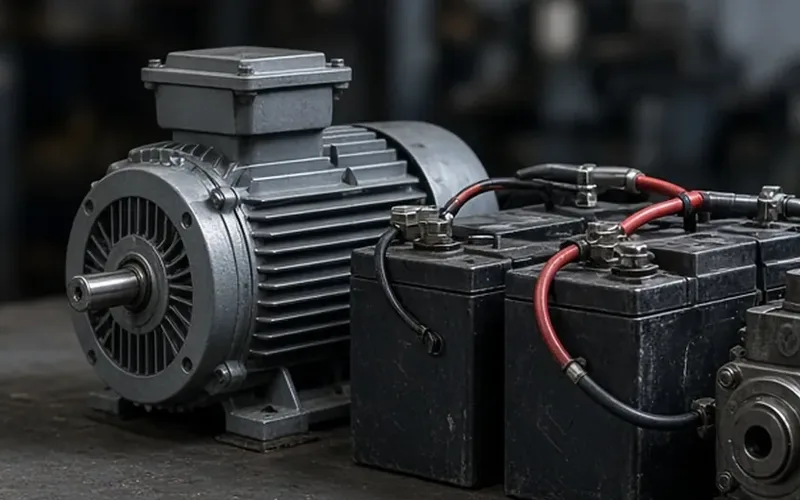
Cycling vs Non-Cycling: A non-cycling dryer draws the same power at 20 percent load as at 100; a cycling dryer stores cold and stops its compressor. Annual kWh worked for four duty profiles on a 500 SCFM dryer, and how the payback depends on hours at part load.

Refrigerated vs Desiccant: Where 38°F is enough and where it is not, what a desiccant dryer costs in purge air and consumables, and the hybrid arrangement that puts a refrigerated dryer ahead of a small desiccant unit for the one line that needs it.
Dew Point & ISO 8573-1 Classes: The ISO 8573-1:2010 table for water, particles and oil, the difference between pressure dew point and atmospheric dew point, and how to write a purity class that the dryer and filters will actually meet.
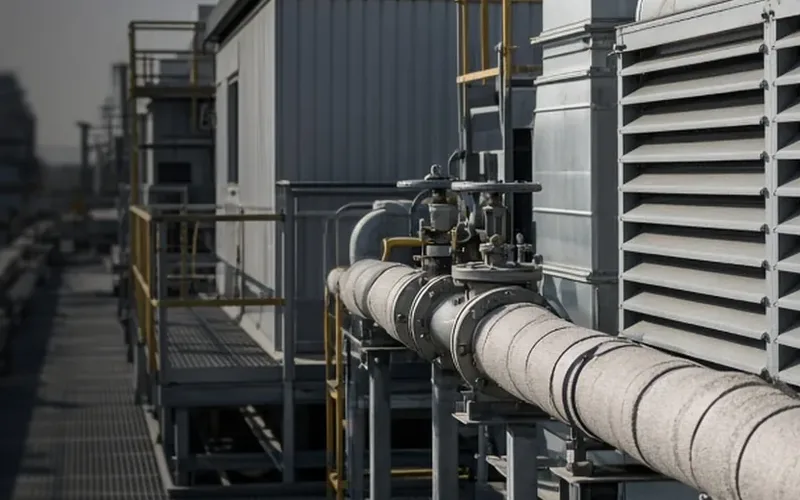
Air-Cooled vs Water-Cooled: Heat rejected into the compressor room against heat sent to the tower, the 85°F water rating, condenser water quality, and which series are offered in both builds.
Match the dryer to the load profile, not the compressor
Two plants with the same 50 hp compressor can need different dryers. A machine shop that loads the compressor 80 percent of a single shift and switches it off at night is a non-cycling duty: the dryer runs eight hours, mostly near full load, and the cheapest machine to buy is also close to the cheapest to run. A packaging plant that leaves the compressor up around the clock but draws heavily only on day shift is a cycling duty: the dryer spends sixteen hours a day at a fraction of its load, and a thermal-mass or digital-scroll unit repays its premium in power. The cycling page works the kilowatt-hours for both.
Take the dew point from the process
Ask what the driest point of use actually needs. A paint line wants no liquid water and no oil; a CNC spindle wants class 4 water and class 2 oil; a laboratory or a control cabinet outdoors may need class 2 water. The ISO classes page turns those needs into a purity class, and the class tells you whether the dryer is refrigerated or desiccant and which filter grades go around it.
Then decide where the heat goes
A 1,000 SCFM air-cooled dryer adds its refrigeration load and its motor power to the compressor room, on top of what the compressor already rejects. In a room with an exhaust fan that is manageable; in a room that already sits at 110°F it costs the dryer 12 percent of its capacity and the compressor some of its own. Water-cooled builds move that heat to the tower and hold their rating regardless of the room. The cooling page lists which series come both ways and what the condenser water has to be.
What we ask before we quote
Compressor horsepower or delivered SCFM, line pressure, the compressor room's summer temperature, whether the compressor has an aftercooler, the hours the plant runs and how the load varies across them, the driest point of use, and whether tower or city water is available. With those eight answers we return a corrected duty, a model in each series that fits it, and the running cost difference between them. Call 1-805-484-2992 between 8am and 5pm or use the quote form.
Selection questions
A non-cycling dryer sized on the corrected duty. It holds the steadiest dew point, has the fewest parts and is never the wrong machine, only sometimes the more expensive one to run. Move to a cycling dryer once you know the plant spends real hours at part load.
No. The evaporator is held just above 32°F so the condensate cannot freeze, and 35 to 38°F is the physical floor for the technology. A lower dew point means a desiccant dryer, either for the whole plant or for the one line that needs it.
Not the type, but the dew point does. Every refrigerated dryer wants a 1 micron prefilter and a 0.01 micron afterfilter; a desiccant dryer adds a particulate afterfilter for desiccant dust. Oil and particle classes come from those filters, whichever dryer sits between them.
Mostly. On this site the water-cooled builds start at 600 SCFM in the AES Series and 800 SCFM in the FLXA Series, and the FLX and larger HES systems are water-cooled only. Below that, air cooling and a ventilated room are the practical answer.
Within a few degrees. A thermal-mass dryer lets its stored cold warm slightly before the compressor restarts, so the dew point moves between roughly 35 and 45°F across a cycle, which is still class 4 to 5. Digital-scroll and variable-speed units modulate continuously and hold closer to a fixed point.