
1-805-484-2992
Quotes - Engineering - SalesRefrigerated Air Dryers for Blasting & Surface Prep
Abrasive blasting moves more compressed air through one hose than any other job in a plant, and it moves it straight onto bare metal. A 3/8 in nozzle at 100 psig draws about 200 SCFM; a 1/2 in nozzle draws 340. Water in that air wets the abrasive in the pot so it clumps, bridges the metering valve and surges out of the nozzle in pulses, and it wets the steel the nozzle just cleaned, so a surface blasted to near-white flash rusts before the painter reaches it. Oil carried with the air coats the abrasive, transfers to the substrate and lifts the coating months later.
Coating specifications deal with this by requiring the air to pass a blotter test: a sheet of white paper held in the air stream for a minute with no trace of water or oil. A refrigerated dryer holding a 38°F pressure dew point, ISO 8573-1 class 4, with a coalescing filter behind it passes that test in any heated blast room or shop. Outdoor winter work is the case a refrigerated dryer does not cover.
The compressor sets the dryer size, and blasting needs big compressors. One 3/8 in nozzle is a 50 hp screw; two nozzles or one 1/2 in nozzle is a 75 to 100 hp machine at 340 to 450 SCFM; a blast room with three operators runs on 150 to 250 hp and a dryer in the 700 to 1,250 SCFM sizes. At the other end of the scale, a suction-type cabinet gun uses 15 to 25 SCFM at 80 psig and rides on the shop compressor and a small dryer.
Blasting is pressure-sensitive, so the dryer is chosen for low pressure drop as well as dew point. Every psi lost between compressor and nozzle costs about 1.5 percent of production, and a dryer at its full rating drops 3 to 5 psi. One size up cuts that by more than half, because pressure drop falls with the square of the flow.
Request a blast air dryer quote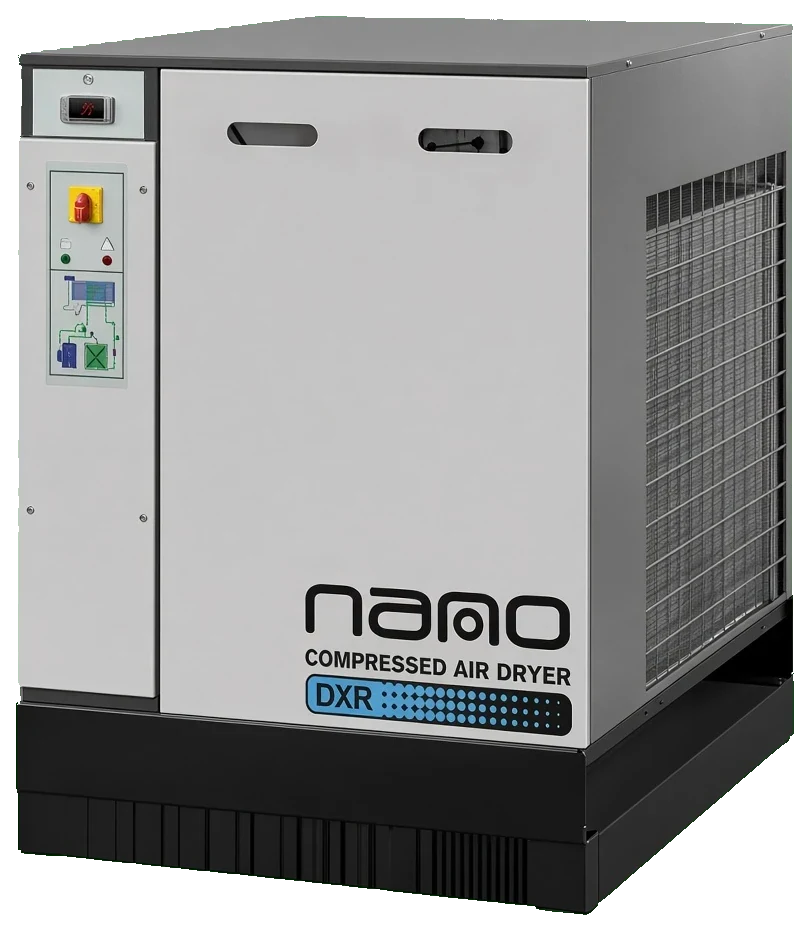
What wet or oily air does to a blast job
In the pot, at the nozzle and on the steel
- Abrasive clumping in the pot, bridging the metering valve and surging out of the nozzle
- Flash rust on near-white steel within minutes when the air leaves the surface damp
- Oil from the compressor transferred to the substrate by the abrasive, lifting the coating later
- Failed blotter tests that stop the job until the air supply is corrected
The air specification for blasting
Dry, oil-free and at pressure
- 38°F pressure dew point, ISO 8573-1 class 4, for any blast room or shop that stays above freezing
- Coalescing afterfilter and, on lubricated compressors, an activated carbon filter to pass the oil blotter test
- Dryer selected one size above the compressor's delivery to hold the pressure drop under 2 psi
- Centrifugal separator ahead of the dryer on compressors that run hot or outdoors
Dryers that fit blasting
Ratings at the 100 psig, 100°F inlet point. A 50 to 100 hp screw behind one or two nozzles uses the 250 to 500 SCFM sizes; a multi-operator blast room on 150 to 250 hp needs 700 to 1,250 SCFM. The HPRB series covers cabinet blasting on a shop compressor.
| SERIES | TYPE | FLOW RANGE | MAX INLET | MAX PRESSURE |
| DXR Series | Non-Cycling | 10 to 4,200 SCFM | 131°F | 203 psig |
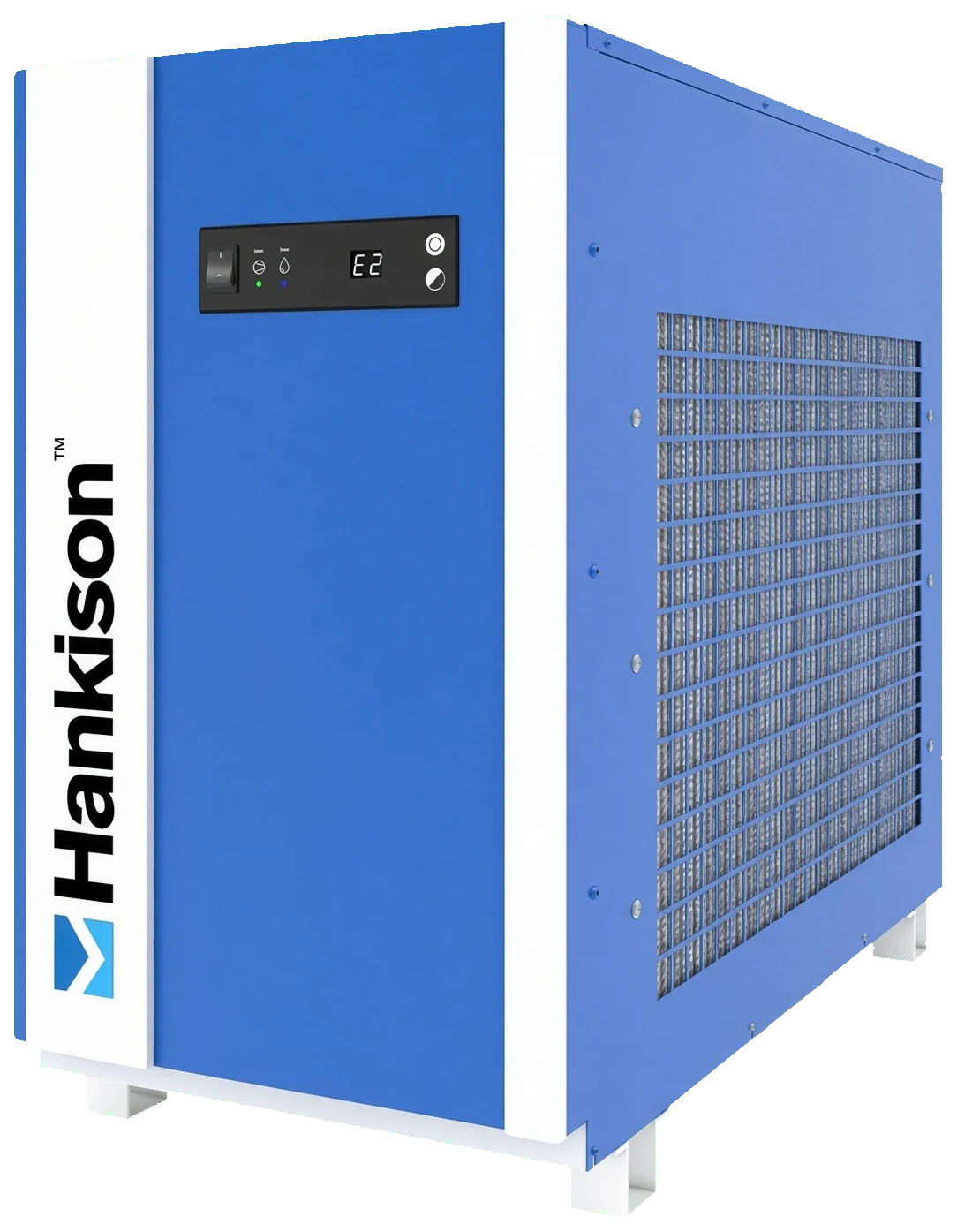
| FLXA Series | Cycling | 75 to 2,000 SCFM | 120°F | — |
| AES Series | Digital Scroll Cycling | 600 to 10,000 SCFM | 120°F | 232 psig |
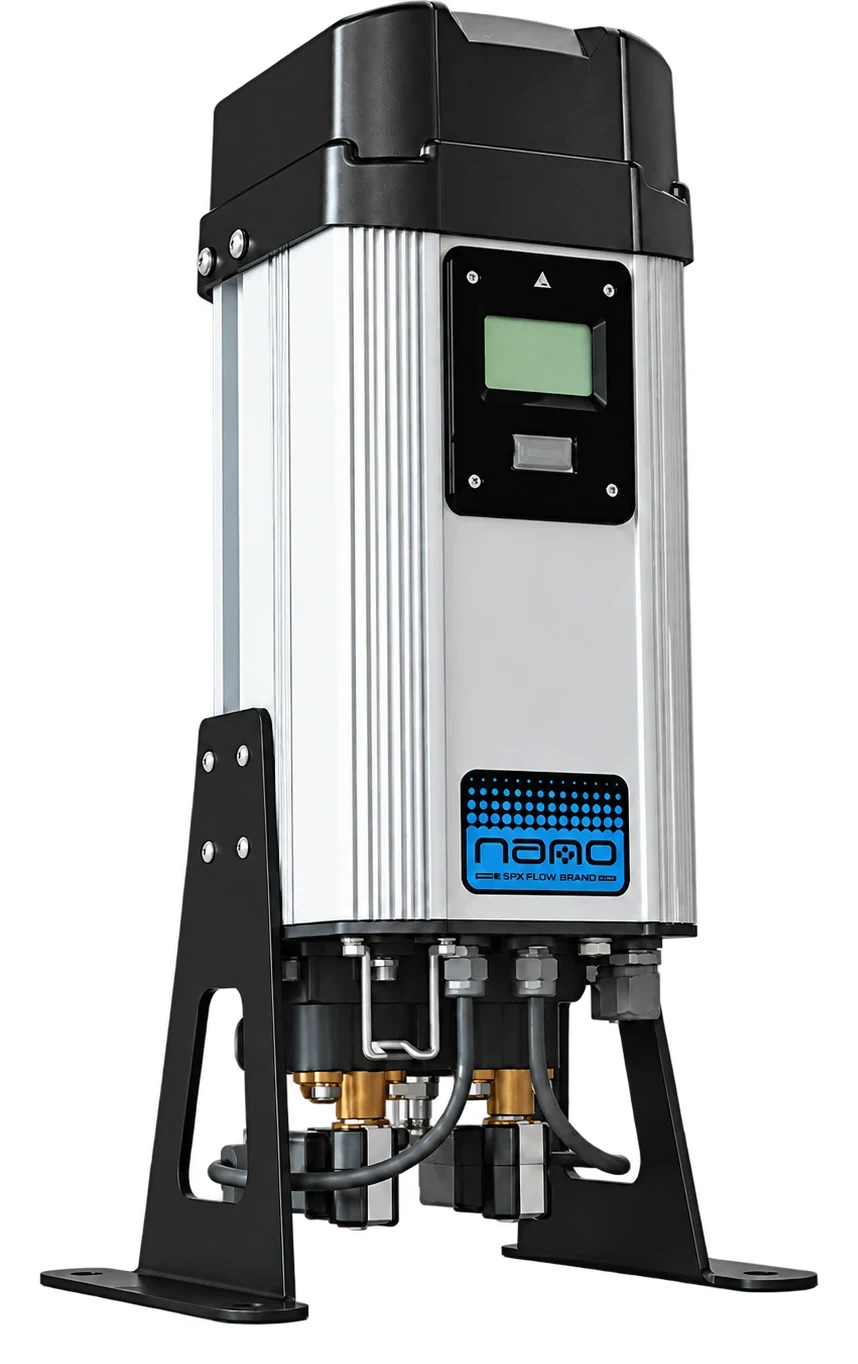
| HPRB Series | Non-Cycling | 7 to 50 SCFM | 120°F | 200 psig |
| GF WS Series Separators | Water Separator | 6 to 3,000 SCFM | — | 232 psig |
| HF Grade 11 Separators | Water Separator | 20 to 21,250 SCFM | — | 300 psig |
| HF Series Filters | Compressed Air Filter | 20 to 21,250 SCFM | — | 300 psig |
| ND Series Zero-Loss Drains | Condensate Drain | Call for sizing | — | 290 psig |
Tell us the nozzle sizes, the compressor and where the blasting happens; we size a dryer for the flow and the pressure drop the nozzle can afford.
Nozzle pressure is production
A blast operator working at 90 psig at the nozzle removes coating about a third slower than one at 100 psig, and it is not unusual to find 80 psig at the nozzle behind a compressor set at 125. The losses are in the hose, the couplings, the pot's piping and the dryer and filters, in roughly that order. The dryer's share is 3 to 5 psi at its rated flow, and it shrinks to 1 or 2 psi when the dryer is selected a size above the compressor's delivery.
The same oversizing buys margin for hot inlet air and a dirty aftercooler, so the dryer chosen for pressure drop is usually the one that also holds its dew point on the hottest day.
- Select the dryer one size above the compressor delivery
- Use 1-1/4 in hose to the pot and 1 in from the pot on 3/8 in nozzles
- Gauge the pressure at the nozzle, not at the compressor
Where the dryer goes for a blast room
Compressor, aftercooler, receiver, separator, prefilter, dryer, afterfilter, then the blast hose header. A blast room compressor often sits outdoors or in a lean-to with its aftercooler working against 100°F summer air, so the air reaching the dryer can be 120°F. A centrifugal separator ahead of the dryer takes out the bulk water that condenses in the pipe between the two, and the inlet temperature correction, 0.65 at 120°F, decides the dryer size: a 100 hp screw at 450 SCFM with 120°F inlet air is a 700 SCFM dryer, not a 500.
Cold weather and field work
A refrigerated dryer is the right dryer for a blast room, a fixed shop or a shipyard shed that stays above 40°F. Field blasting in winter with 200 ft of hose on frozen ground is different: air dried to 38°F will condense in a hose at 20°F, and that job needs a desiccant or deliquescent field dryer behind the portable compressor. The refrigerated versus desiccant page sets out the boundary.
Cycling or non-cycling for blasting
Blasting is a full-flow, long-run duty. When the nozzle is open the compressor is loaded, and a shift in a blast room can run six hours at that rate. That is the non-cycling case: a DXR dryer at full load costs no more to run than a cycling unit at full load, and it has fewer parts. The exception is the plant where the blast room is one user among many and the compressor spends most of the week at partial load; there a cycling dryer such as the FLXA saves power on the days nobody is blasting.
Shot peening and precision blasting
Peening cabinets and micro-blasting for surface texture run at 20 to 80 SCFM and are fussier than a blast room, because the media is metered by weight or by a regulator that a slug of water upsets. The dryer specification is the same 38°F class 4, but the afterfilter matters more: a 0.01 micron coalescer keeps compressor oil off the shot and off the part, which on a peened aircraft component is the difference between a pass and a rejected lot.
Blast air drying questions
At 100 psig, about 80 SCFM through a 1/4 in nozzle, 140 through a 5/16 in, 200 through a 3/8 in, 250 through a 7/16 in and 340 through a 1/2 in. Nozzles wear and the consumption grows by a third before an operator notices, so size the dryer for a worn nozzle, not a new one.
A sheet of clean white absorbent paper is held in the air stream from the blast hose, without abrasive, for at least a minute and inspected for any sign of water or oil. A refrigerated dryer holding 38°F passes the water half in any heated room; the oil half depends on the filter, so a lubricated compressor gets a 0.01 micron coalescer and usually an activated carbon element.
Wet abrasive. Water carried into the pot with the air makes the grit clump and bridge the metering valve, so it comes through in pulses. Dry the air to 38°F, drain the pot's moisture separator, and keep the pot lid closed between loads so the media does not absorb humidity from the room.
No. A separator at the pot catches liquid that has already condensed, but air leaving an aftercooler at 100°F is saturated and keeps condensing all the way down the hose and into the pot. Only a dryer takes the vapor out; the separator is a useful first stage ahead of it.
The inlet temperature. A portable screw delivers air 20 to 30°F above the outdoor temperature, so on a 95°F day the dryer sees 120°F air and keeps about 65 percent of its rating. Put a separator ahead of the dryer, apply the inlet correction, and expect one or two sizes larger than the compressor's nameplate suggests.
More on air for blasting
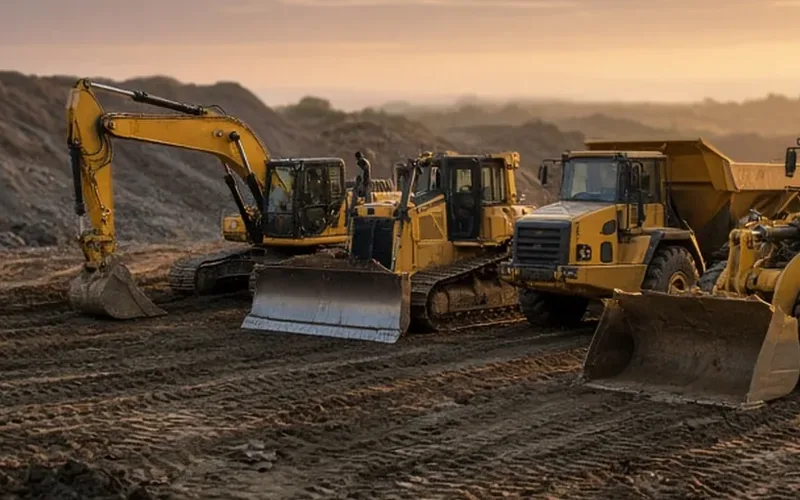
Dryers for rental and portable compressors
Matching a dryer to a portable screw compressor's hot delivery, and what to do when the job is outdoors.
Learn More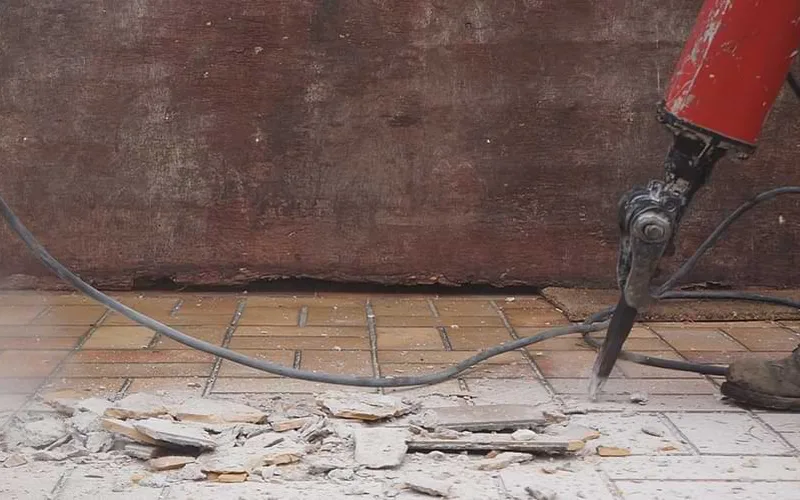
Pneumatic Tools & Controls
Compressed air drying for air tools, cylinders, valve manifolds and pneumatic controls: what water does to each and which dryer band fits.
Learn More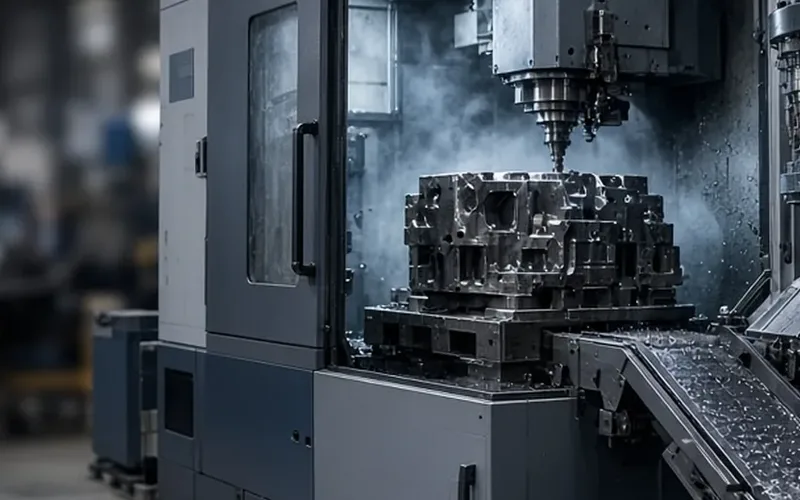
CNC & Machining
Compressed air drying for CNC machining centers and machine tools: why spindles, tool changers and air blast need a 38 degree dew point, and which dryers fit.
Learn More