
1-805-484-2992
Quotes - Engineering - SalesRefrigeration that matches the load instead of running flat out
A cycling dryer is bought for the hours the compressor is not loaded. A non-cycling dryer draws close to full power at any load; a cycling dryer stores cold, modulates or slows its refrigeration compressor so that power follows the air being dried, which in a plant that idles nights and weekends cuts the dryer's electricity by half to four fifths.
Four mechanisms are used across the section. Thermal-mass dryers chill a glycol loop or the metal of the exchanger itself and stop the refrigeration compressor until the stored cold is used up. Phase-change dryers freeze a storage medium around a brazed-plate exchanger and rest while it melts. Digital-scroll dryers keep the compressor turning but unload the scroll for part of every cycle, so capacity tracks demand from zero to 100 percent with no stored cold and no dew point swing. Variable-speed dryers drive inverter scroll compressors that simply turn slower as the load falls, with the lowest part-load draw of all.
The bands run from 20 to 250 SCFM for 5 to 50 hp compressors on a single shift, through 300 to 1,250 SCFM and 1,600 to 2,000 SCFM for 60 to 450 hp plants with variable demand, to 2,500 to 12,500 SCFM for central plants with several compressors on a sequencer. Water-cooled builds are offered from 600 SCFM, and the modular skid above 3,000 SCFM adds redundancy as well as savings.
Tell us the compressor size and the hours it runs loaded each week; the payback against a non-cycling dryer is a two-line calculation we do with the quote.
The cycling arithmetic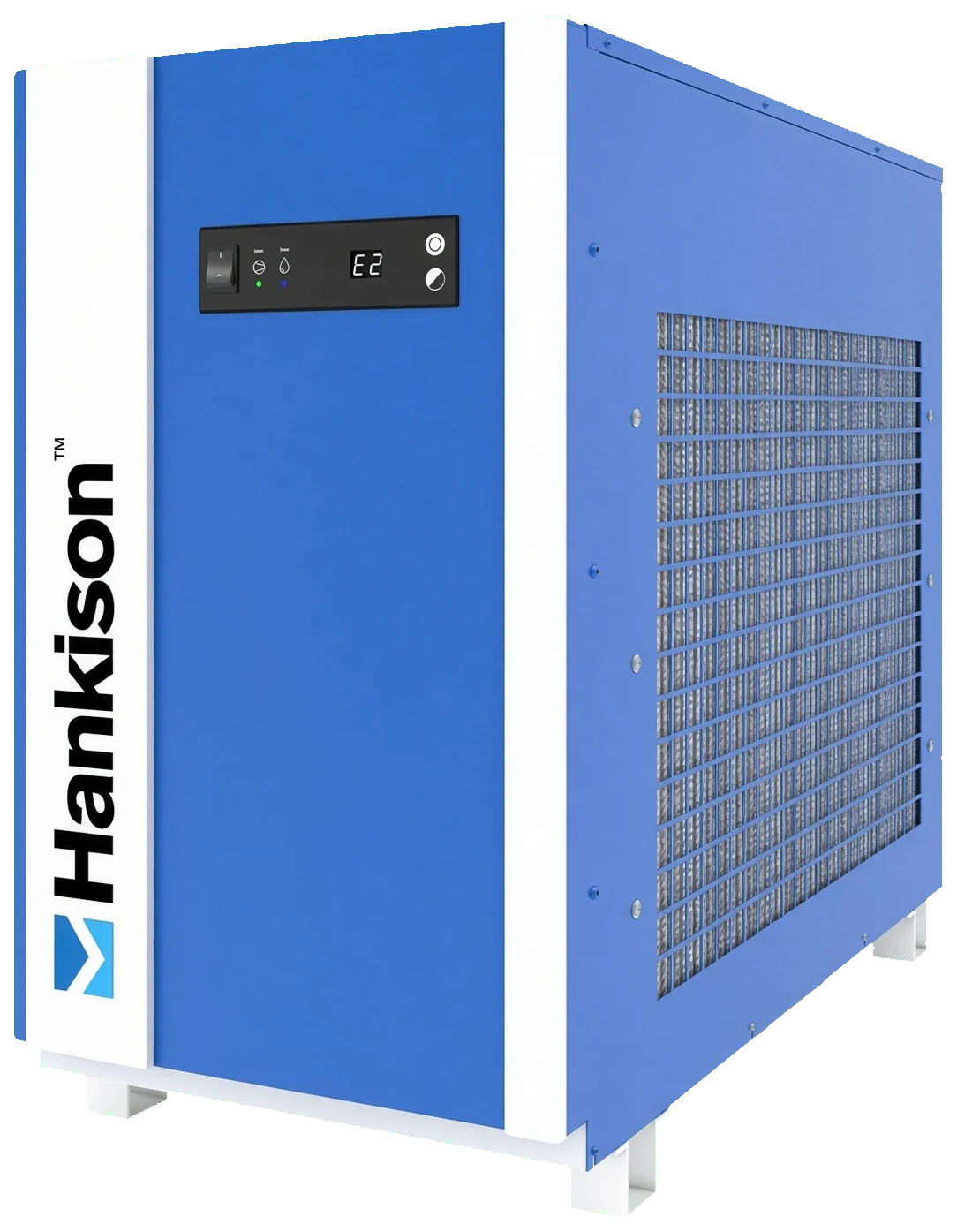
Four flow bands, 20 to 12,500 SCFM
Choose the band by delivered flow, and the technology within it by how flat the dew point must stay
Every cycling series, current and previous generation
FLEX Series: Cycling dryer from 75 to 2,000 SCFM that trims refrigeration power to the actual load; previous generation, replaced size for size by the FLXA Series.
75 to 2,000 SCFM · Cycling
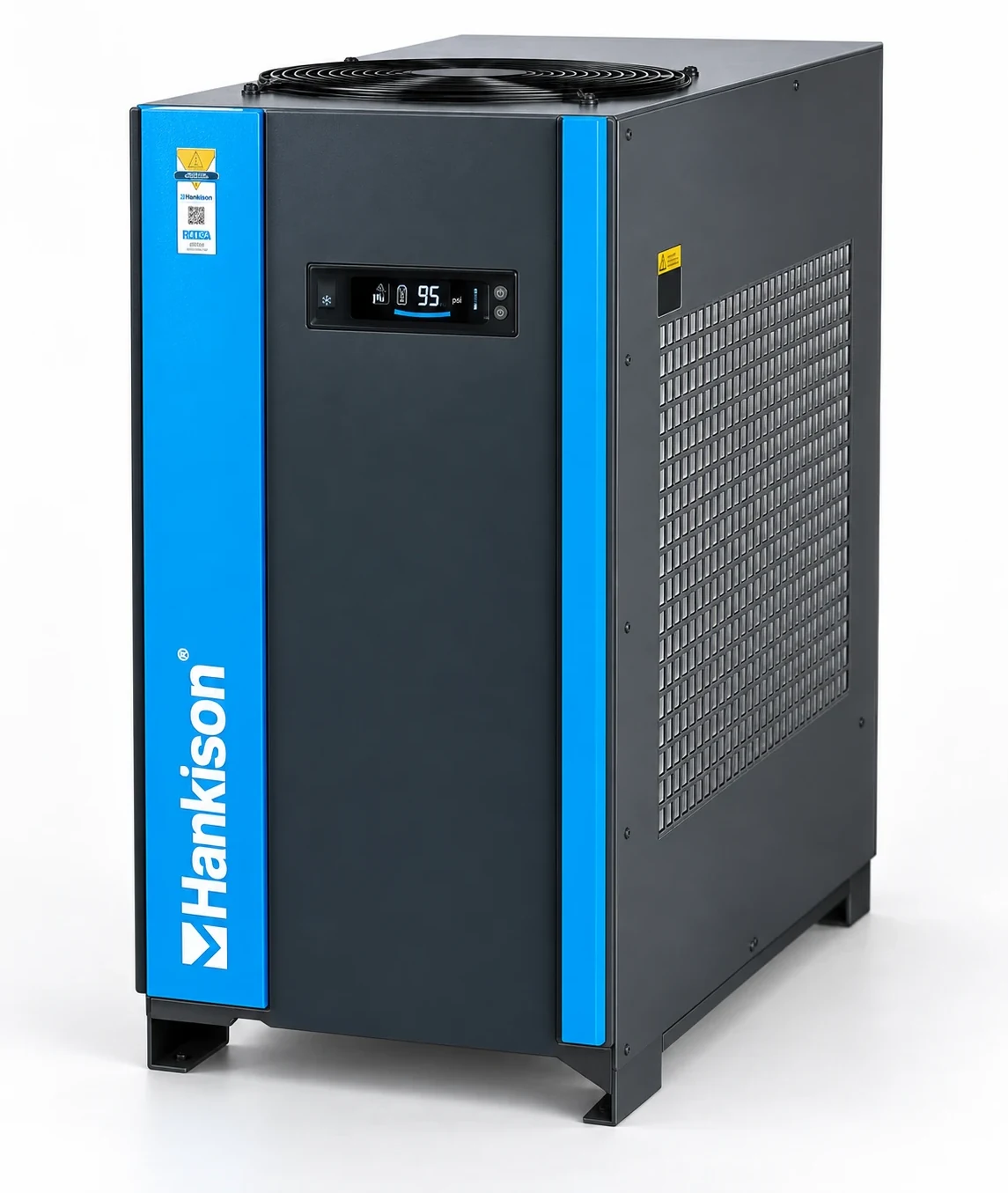
FLXA Series: Current cycling dryer, 75 to 2,000 SCFM, air- or water-cooled, with low-GWP refrigerants and a heat-transfer cycling control that follows the load.
75 to 2,000 SCFM · Cycling · 120°F max inlet · R513A (75-550 scfm), R454C (800-2000 scfm)
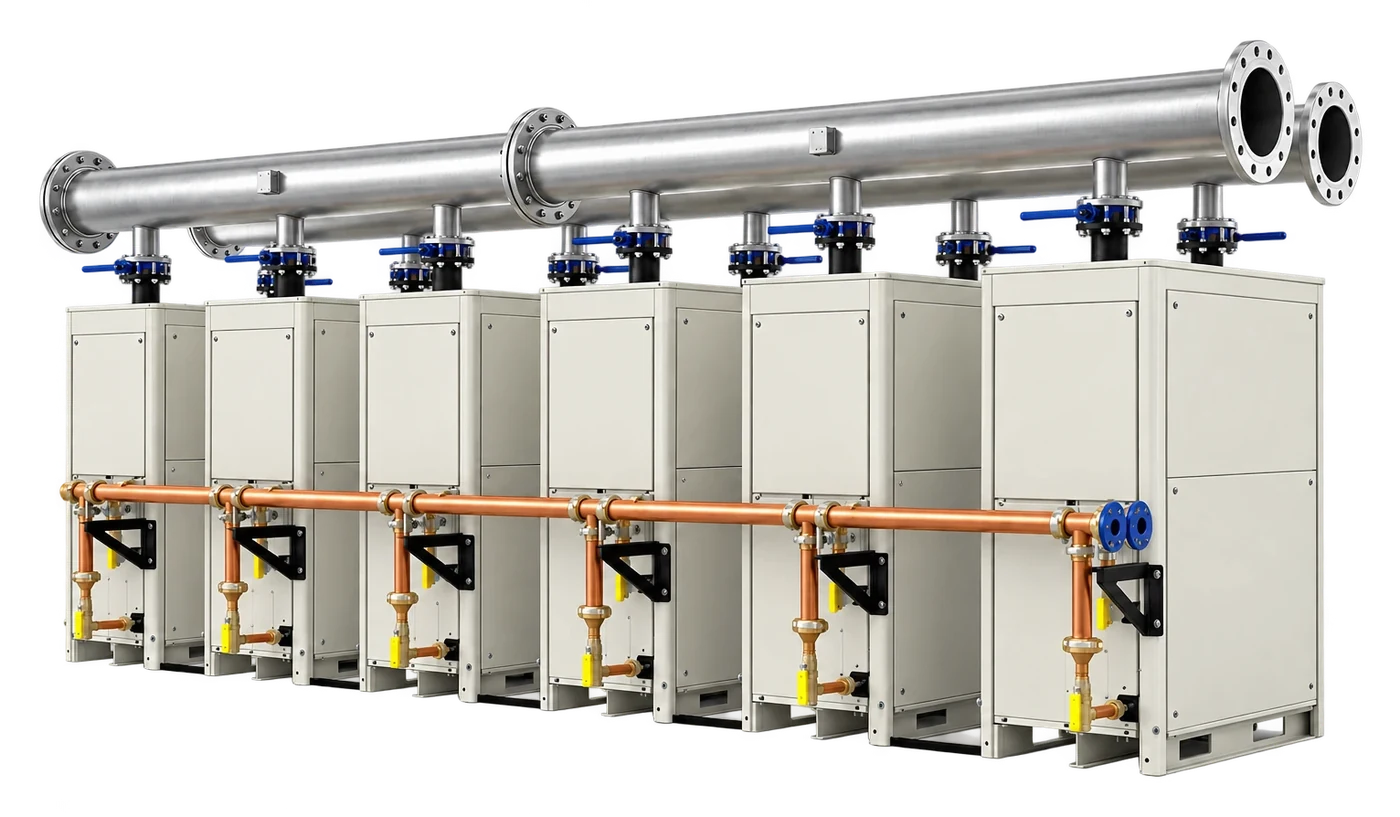
FLX Series: Modular water-cooled cycling dryer skid for 3,000 to 12,000 SCFM, built from paired 1,500 and 2,000 SCFM modules.
3,000 to 12,000 SCFM · Cycling · 225 psig max inlet · 120°F max inlet
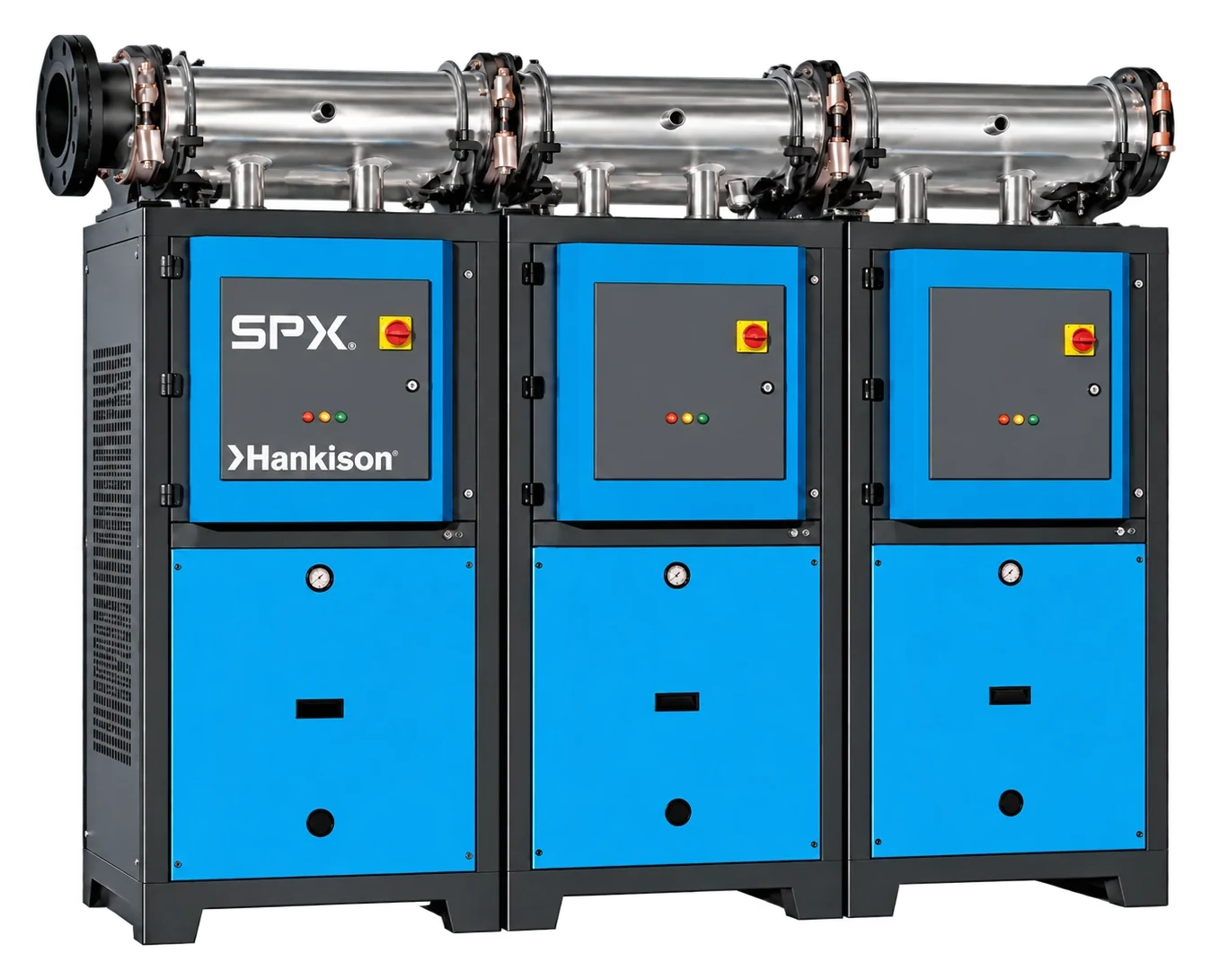
HES Series: Energy-saving digital-scroll dryer from 2,500 to 12,500 SCFM for central plants, modular above 3,750 SCFM.
2,500 to 12,500 SCFM · Digital Scroll Cycling · 232 psig max inlet · 130°F max inlet
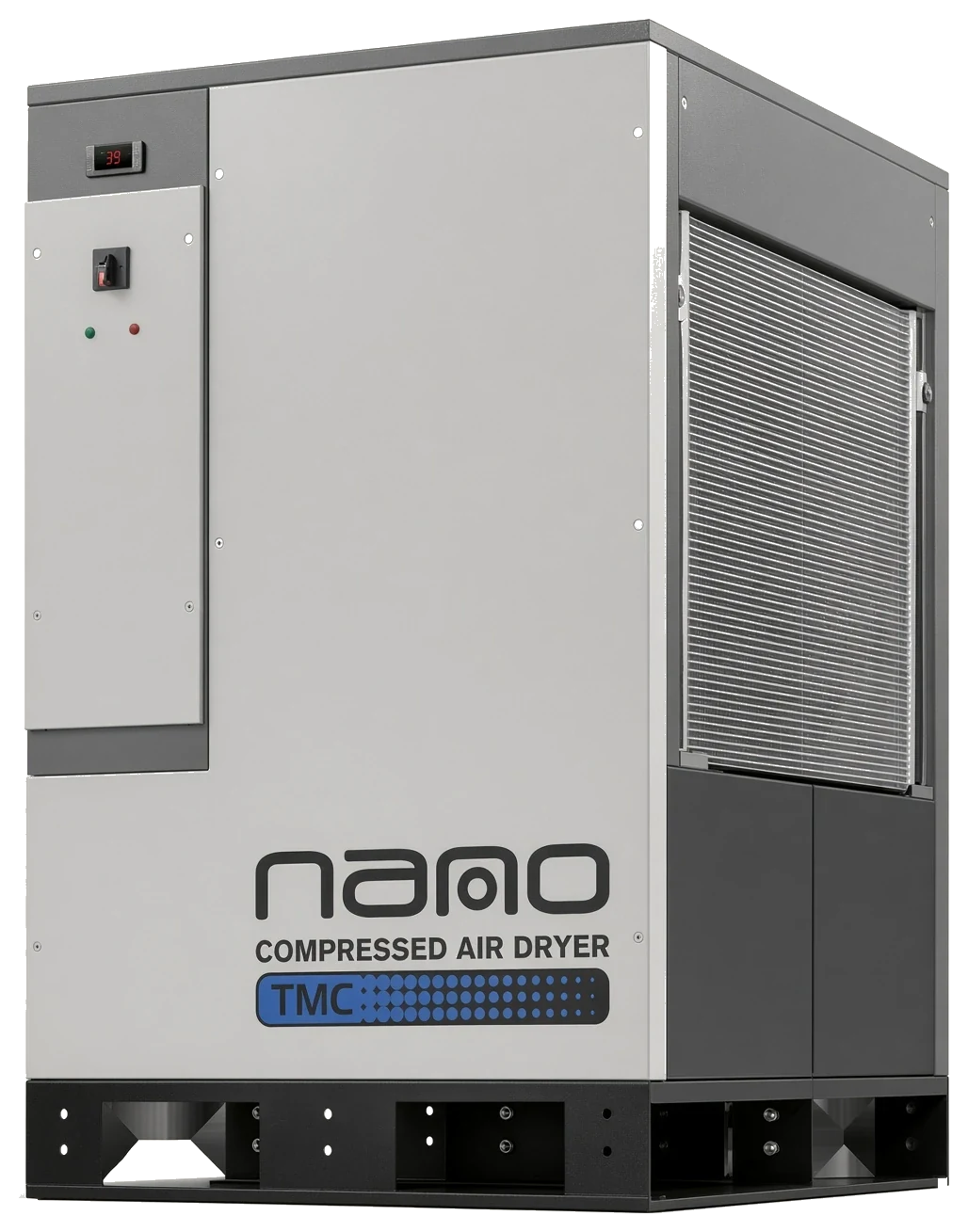
TMC Series: Thermal-mass cycling dryer from 30 to 635 SCFM; stores cold in a thermal mass so the refrigeration compressor rests when air demand drops.
30 to 635 SCFM · Thermal Mass Cycling · 210 psig max inlet · 140°F max inlet
NXC Series: Cycling dryer in 19 sizes from 20 to 2,000 SCFM with a dry thermal mass and up to 80 percent power savings at part load.
20 to 2,000 SCFM · Cycling · 232 psig max inlet · 158°F max inlet
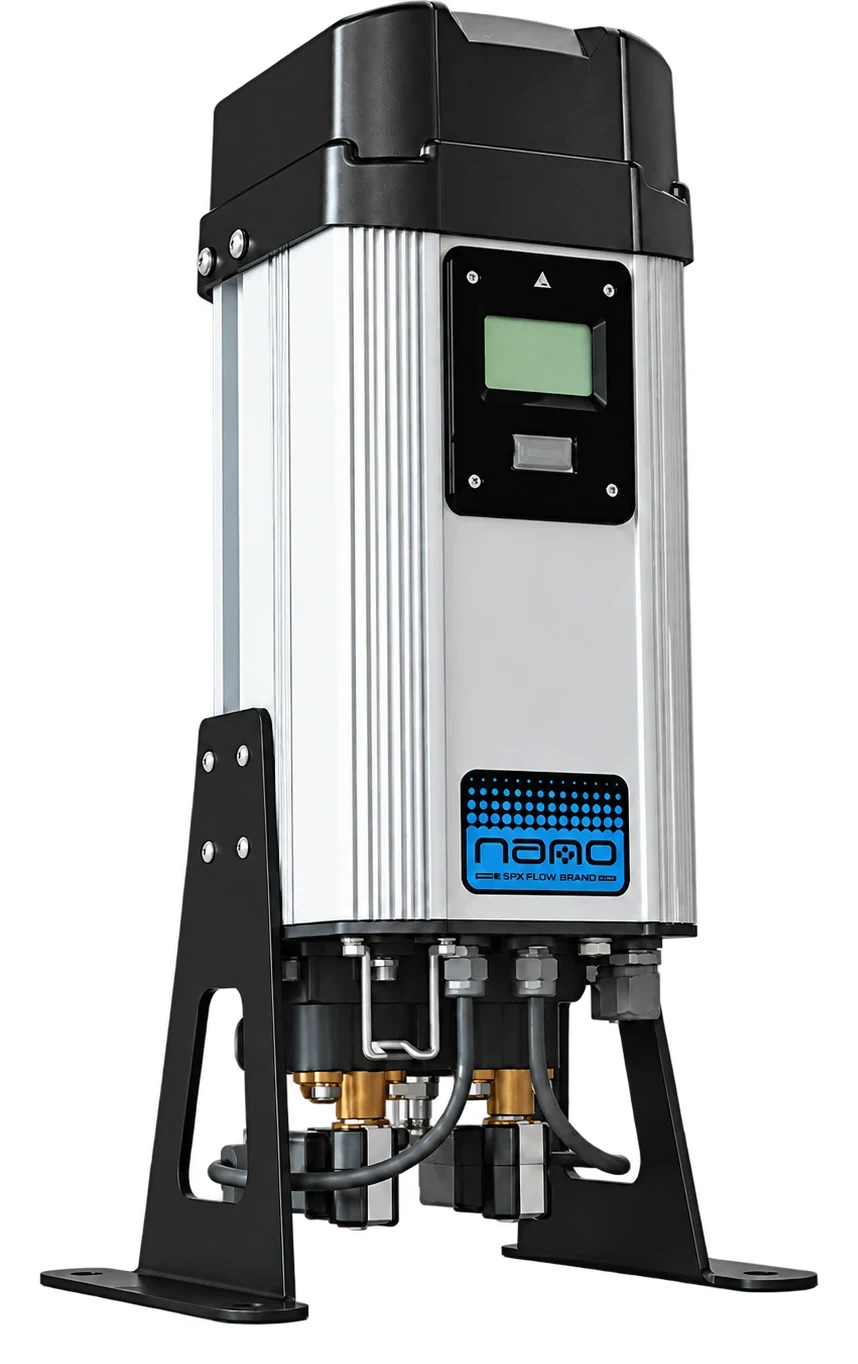
AES Series: Digital-scroll cycling dryer from 600 to 10,000 SCFM in air- and water-cooled builds, matching refrigeration capacity to demand continuously.
600 to 10,000 SCFM · Digital Scroll Cycling · 232 psig max inlet · 120°F max inlet
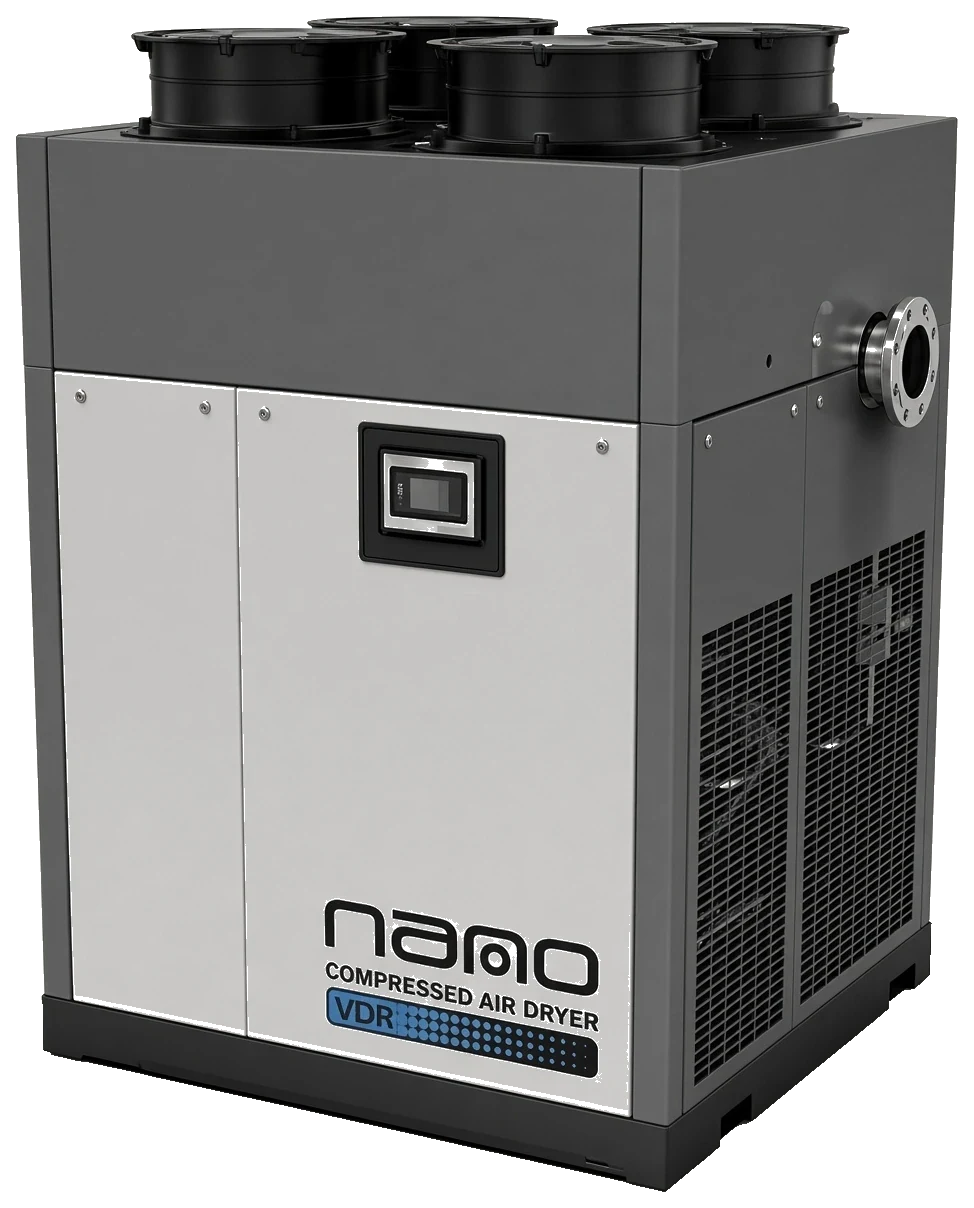
VDR Series: Variable-speed dryer from 2,600 to 8,450 SCFM whose inverter-driven compressor tracks plant load; air- and water-cooled versions.
2,600 to 8,450 SCFM · Variable Speed Cycling · 203 psig max inlet · 158°F max inlet
Selection notes
Three questions that pick the cycling dryer
1.
How many hours loaded
Take the hours the dryer is powered each week and the hours the compressor is loaded. Below about 60 percent, a cycling dryer recovers its price difference in two to three years; above 80 percent it recovers little.
A single-shift shop with the dryer left on all week is the strongest case of all, and a utility rebate often closes the gap on its own.
2.
Stored cold or modulation
Thermal-mass and phase-change dryers stop the refrigeration compressor and let the dew point drift a few degrees between cycles; digital-scroll and variable-speed dryers keep it turning and hold the dew point within a degree or two.
Plant air, tools and paint lines are served by either; a process that logs dew point for a quality record is better with the modulating designs.
3.
Air or water cooling
Every series is air-cooled, and from 600 SCFM the phase-change, digital-scroll and variable-speed dryers are also built water-cooled, absorbing 20 to 35 percent less power because the condenser runs cooler.
Specify water-cooled where a tower or chilled loop already passes the compressor room; do not build a loop for the dryer.
Cycling dryer questions
A non-cycling dryer runs its refrigeration compressor continuously and regulates with a hot-gas bypass valve; a cycling dryer stops, unloads or slows the compressor as the air load falls. Both deliver a 38 to 41°F pressure dew point at rated conditions; the cycling dryer costs more and uses less power at part load.
On thermal-mass and phase-change dryers it drifts a few degrees within the controller's band, typically 35 to 45°F, and returns when the compressor restarts. Digital-scroll and variable-speed dryers modulate instead of stopping and hold it within a degree or two.
Often, because small compressors are the ones most often left idle with the dryer running. A 130 SCFM cycling dryer draws about 1 kW at full load and almost nothing on stored cold, so a single-shift shop can save 60 to 80 percent of its drying electricity.
A cycling dryer whose scroll compressor unloads for part of each cycle rather than stopping, so refrigeration capacity follows the load continuously. It is offered from 600 to 10,000 SCFM in air- and water-cooled builds and holds a flatter dew point than the designs that stop and restart.
The current phase-change series replaces the earlier phase-change dryer size for size from 75 to 2,000 SCFM, with the same connections and voltages. The part number pages state the replacement for every retired model.