
1-805-484-2992
Quotes - Engineering - SalesAir Dryer Bypass Valves and Wall Mount Brackets
Isolating a dryer for service without stopping the plant, and getting a small dryer off the floor
A refrigerated dryer will need to come out of the line at some point: to change a drain, clean a condenser, replace a filter element next to it, or be swapped for a new unit. Without a bypass, that means shutting the compressor down and the plant with it. The bypass lets wet air flow around the dryer for an hour while the work is done, and on a dryer that has been sized correctly an hour of undried air is a nuisance, not a failure.
For dryers and filters up to about 35 SCFM the catalog offers a single-body bypass valve that does the work of three isolation valves and their fittings in a hand-sized brass and nylon block, with 3/8 in tube on the dryer side and 3/8 in NPT on the service side, rated 200 psig. In its bleed versions it also depressurizes the isolated dryer automatically, so the technician is not working on a charged unit. Larger dryers use a conventional three-valve bypass built from line-size ball valves, which this page lays out.
The same page carries the wall-mount bracket kits for the small cabinet dryers and for the modular filter housings, and describes the matched filter packages that several dryer series can be ordered with, so a small installation arrives as one order rather than five.
- Single-body bypass valve for dryers and filters to 35 SCFM, 200 psig
- Bleed versions depressurize the isolated unit when switched to bypass
- Wall-mount bracket kits for small cabinet dryers and modular filter housings
- Three-valve bypass layout and matched filter packages for larger dryers
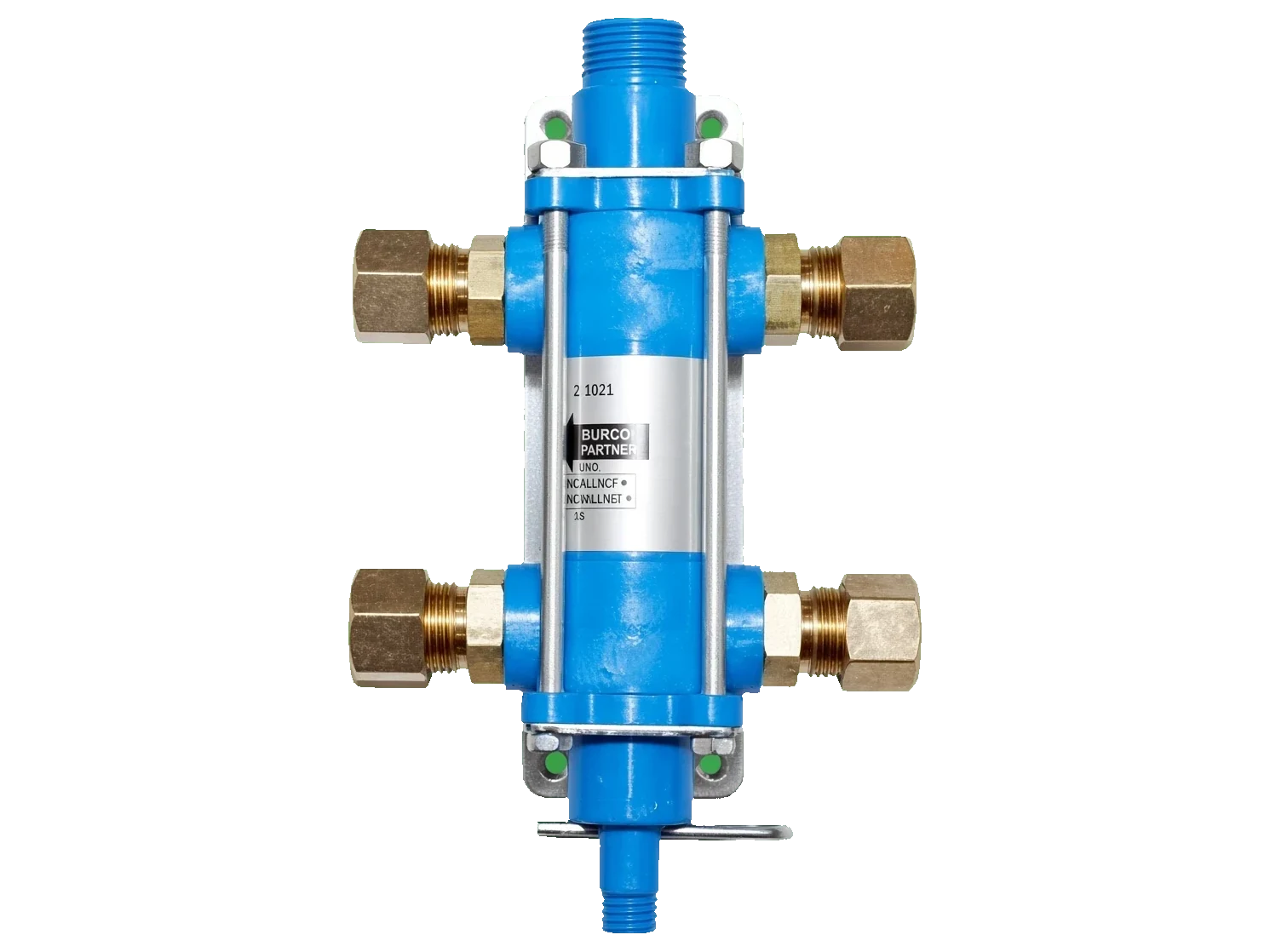
Bypass valves and bracket kits
The single-body bypass valve series with its rating and the number of part numbers, covering the three valve versions and the four bracket kits. Open the series for each part number's connections and the dryer or housing it fits.
| SERIES | TYPE | FLOW RANGE | PART NUMBERS | NOTES |
| 1701 Bypass Valves & Mounting Brackets | Bypass & Mounting | 5 to 35 SCFM | 7 listed | 200 psig max |
The bypass and mounting series
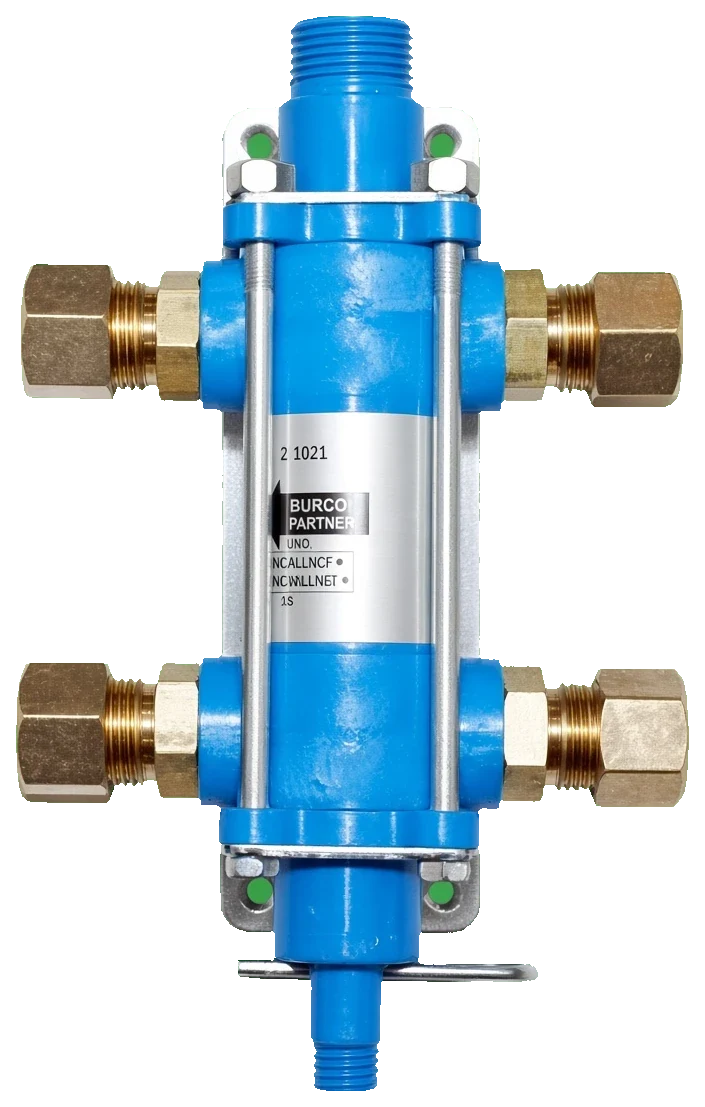
The single-body bypass valve
Three versions share one body. The non-bleed valve isolates the dryer or filter and leaves it pressurized, which is right when the unit will be back on line in minutes. The bleed versions vent the isolated component through a small orifice as the handle is turned to bypass, so a dryer or a filter bowl can be opened safely without a separate vent valve, and the current bleed part is the one supplied for new small dryers. The wetted parts are brass, nylon and nitrile, the tube connections use compression fittings with reusable ferrules, and the whole valve weighs about half a pound, so it hangs on the dryer's own connections. It is sized for 5 to 35 SCFM at 200 psig and 120°F, which is the 2 to 7.5 hp compressor class.
A three-valve bypass for larger dryers
Above 35 SCFM the bypass is built from pipe: a full-port ball valve on the dryer inlet, one on the outlet, and one in a bypass leg the same size as the header that joins inlet to outlet upstream of both. Normal running is inlet and outlet open, bypass closed; service is the reverse. Put the prefilter and afterfilter inside the bypassed section so they can be changed with the dryer, fit unions on the dryer side of each isolation valve so the unit lifts out, and use full-port valves so the bypass adds no pressure drop. The piping and bypass page draws the arrangement for each size.
Wall-mount brackets
A 5 to 50 SCFM cabinet dryer weighs 45 to 100 lb and does not belong on the floor behind the compressor, where it collects dust in the condenser and takes the occasional forklift. The bracket kits carry the small cabinet dryers on a wall or a column at working height, with the connections on the back panel lined up for the bypass valve and the drain line, and a second pair of kits hangs the modular filter housings from 20 to 780 SCFM beside them. Order the bracket with the dryer so the mounting holes match the cabinet, and leave 12 in clear behind the unit for the condenser discharge.
Filter packages with the dryer
Several dryer series can be ordered with their filters as one package: the small non-cycling cabinet dryer, the phase-change cycling dryer and the retired high-inlet-temperature dryer take a matched 1 micron prefilter and 0.01 micron afterfilter pair, and the thermal-mass and high-temperature direct-expansion dryers publish the matching housing sizes for every model. The package arrives with the connections sized to the dryer, which removes the commonest small-installation mistake of a 1/2 in filter on a 3/4 in dryer. The filters page covers the grades, and the 5 to 50 SCFM dryers are the units these accessories were designed around.
Points that decide a bypass or bracket
On flow it fits: a 7.5 hp piston unit makes roughly 26 to 30 SCFM, inside the valve's 35 SCFM limit. Temperature is the catch. The body is rated 120°F, and air straight off a piston head with no aftercooler runs far hotter, so on a high-inlet-temperature dryer the valve can not go on the inlet side. Either cool the air first or build the bypass from line-size ball valves rated for the heat.
Header size, with full-port valves in all three positions. During service the entire plant flow passes through that leg, so a reduced-port valve or a pipe one size down shows up as low pressure at the far machines exactly when a dryer change is under way. Also make sure the bypass valve closes fully in normal running; a handle left partly open sends wet air around a healthy dryer and the complaint gets logged as a dryer failure.
The condenser fan pushes warm air out of the back panel. Mount the cabinet tight to a wall and that air turns around and comes back in, so the condenser runs hot, the refrigeration circuit loses capacity and the dew point drifts above 38°F on warm afternoons. The same thing happens when the bracket hangs the dryer directly above the compressor's cooling discharge. Pick a spot where the cabinet breathes room air.
No. The orifice only opens to the isolated side, and only as the handle is turned to bypass, so what escapes is the air trapped in the dryer and any filter bowl next to it. On a small cabinet dryer that is a short hiss and then silence. A bleed valve that keeps hissing with the handle in the run position is not seated fully home, and it should be checked before it is written off as a leak elsewhere.