
1-805-484-2992
Quotes - Engineering - SalesRefrigerated Air Dryers for Food Packaging
A packaging hall is a pneumatic plant with food in it. Form-fill-seal machines close their jaws with air cylinders, tray sealers clamp and cut with air, case erectors, labelers and palletizer grippers run on valve islands, checkweighers reject with an air blast, and vacuum pick-and-place heads run on venturi generators. Water in that air sticks a sealing jaw for a fraction of a second and the pack leaks; it corrodes cylinders in a washdown environment; and in the air that reaches open product, a reject blast, a blow-off into an open tray, a pneumatically conveyed ingredient, it carries whatever grew in the wet pipe onto the food.
The food-grade codes of practice split the specification in two. Non-contact air, the cylinders and valve islands, is ISO 8573-1 class 2.4.2: a 38°F pressure dew point from a refrigerated dryer, with coalescing filtration. Contact air is class 2.2.1: a –40°F dew point, oil to 0.01 mg per cubic meter and a sterile filter at the point of use, which means a desiccant stage on that branch, fed by the refrigerated dryer.
A packaging hall with six lines runs on a 50 to 100 hp screw, 220 to 450 SCFM, and a large plant with pneumatic ingredient conveying on 150 hp and more. A 75 hp screw at 320 to 340 SCFM is the 400 SCFM dryer in a normal compressor room and the 450 or 500 size in a hot one. The dryer sits in the compressor room; the packaging hall gets stainless drops, filters at the machines and the desiccant branch where product is touched.
Halls that run two shifts with changeovers between products spend hours at low flow, and there a cycling dryer stops its refrigeration compressor while the thermal mass carries the load. A three-shift hall with a loaded compressor is the non-cycling case.
Request a packaging air dryer quote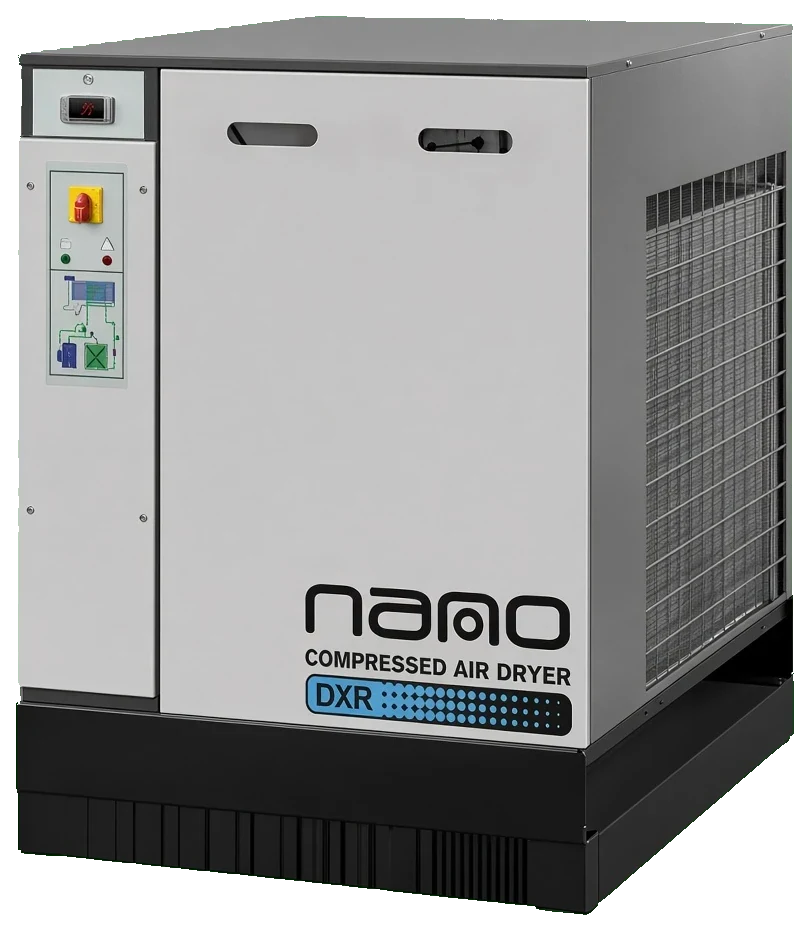
What water does on a packaging line
Seals, cylinders and the product itself
- Sealing jaws hesitating as condensate washes the lubricant from the cylinder, leaving leaking packs
- Reject blasts and blow-off nozzles carrying organisms from a wet pipe onto open product
- Cylinders and valve islands corroding where washdown humidity meets wet internal air
- Vacuum pick-and-place heads losing grip as rust dust from the header blocks the venturi
The two specifications a food plant writes
Non-contact and contact air
- Non-contact, class 2.4.2: 38°F pressure dew point from a refrigerated dryer, coalescing filter, oil to 0.1 mg per cubic meter
- Contact, class 2.2.1: –40°F from a desiccant stage fed by the refrigerated dryer, oil to 0.01 mg, sterile filter at the point of use
- Activated carbon after the coalescer on a lubricated compressor, so oil vapor never reaches the hall
- Dew point logged at the dryer outlet, because an auditor wants a reading, not a rating
Dryers that fit a packaging hall
Capacities at the 100 psig, 100°F inlet rating point. A hall on a 50 to 100 hp screw uses the 250 to 500 SCFM sizes; larger plants use 600 to 1,250 SCFM, where the FLXA and AES series follow the swing between changeovers and full production.
| SERIES | TYPE | FLOW RANGE | MAX INLET | MAX PRESSURE |
| DXR Series | Non-Cycling | 10 to 4,200 SCFM | 131°F | 203 psig |
| FLXA Series | Cycling | 75 to 2,000 SCFM | 120°F | — |
| NXC Series | Cycling | 20 to 2,000 SCFM | 158°F | 232 psig |
| AES Series | Digital Scroll Cycling | 600 to 10,000 SCFM | 120°F | 232 psig |
| HF Series Filters | Compressed Air Filter | 20 to 21,250 SCFM | — | 300 psig |
| GFN Series Filters | Compressed Air Filter | 6 to 1,500 SCFM | — | 232 psig |
| ND Series Zero-Loss Drains | Condensate Drain | Call for sizing | — | 290 psig |
| PDM Dew Point Monitor | Dew Point Monitor | Call for sizing | — | 145 psig |
Send the compressor horsepower, the hall temperature and which lines have product-contact air; we size the refrigerated dryer and specify the contact branch.
A reading beats a rating at audit time
A dryer's data sheet says 38°F at 100 psig, 100°F inlet and 100°F ambient. The auditor's question is what the dew point was last Tuesday at 3 pm, when the compressor room was 108°F and the aftercooler needed cleaning. The only good answer is a logged reading from a dew point monitor at the dryer outlet, checked against the ISO 8573-1 class the plant's food-safety plan claims.
A portable monitor that reads –148 to +68°F covers both the refrigerated plant air and the desiccant contact branch, and a quarterly reading with a note of the compressor room temperature is the record most audit schemes accept.
- Dew point logged at the dryer outlet, not assumed from the rating
- Quarterly readings and after any change to the compressor or dryer
- One monitor for the refrigerated header and the desiccant branch

Where the dryer and filters go
Compressor, aftercooler, receiver, 1 micron prefilter, refrigerated dryer, 0.01 micron coalescer, activated carbon filter, header. The dryer stays in the compressor room, never in the washdown zone, and the header enters the hall in stainless with drops taken off the top and a filter-regulator at each machine. Where a branch touches product it leaves the header through a desiccant dryer sized for that branch and ends in a sterile filter at the nozzle. The filter placement page shows the order of the stages and the drains between them.
Chilled halls and cold stores
A refrigerated dryer holds about 38°F, and a fresh-food packaging hall at 45°F leaves only a few degrees of margin; a cold store at 36°F leaves none, and the air line along its ceiling condenses. Where a line enters space at or below 40°F, feed it from the desiccant branch rather than the plant header, or route it through warm space and drop into the cold room from above. The refrigerated versus desiccant page draws that line in detail.
Cycling or non-cycling for packaging
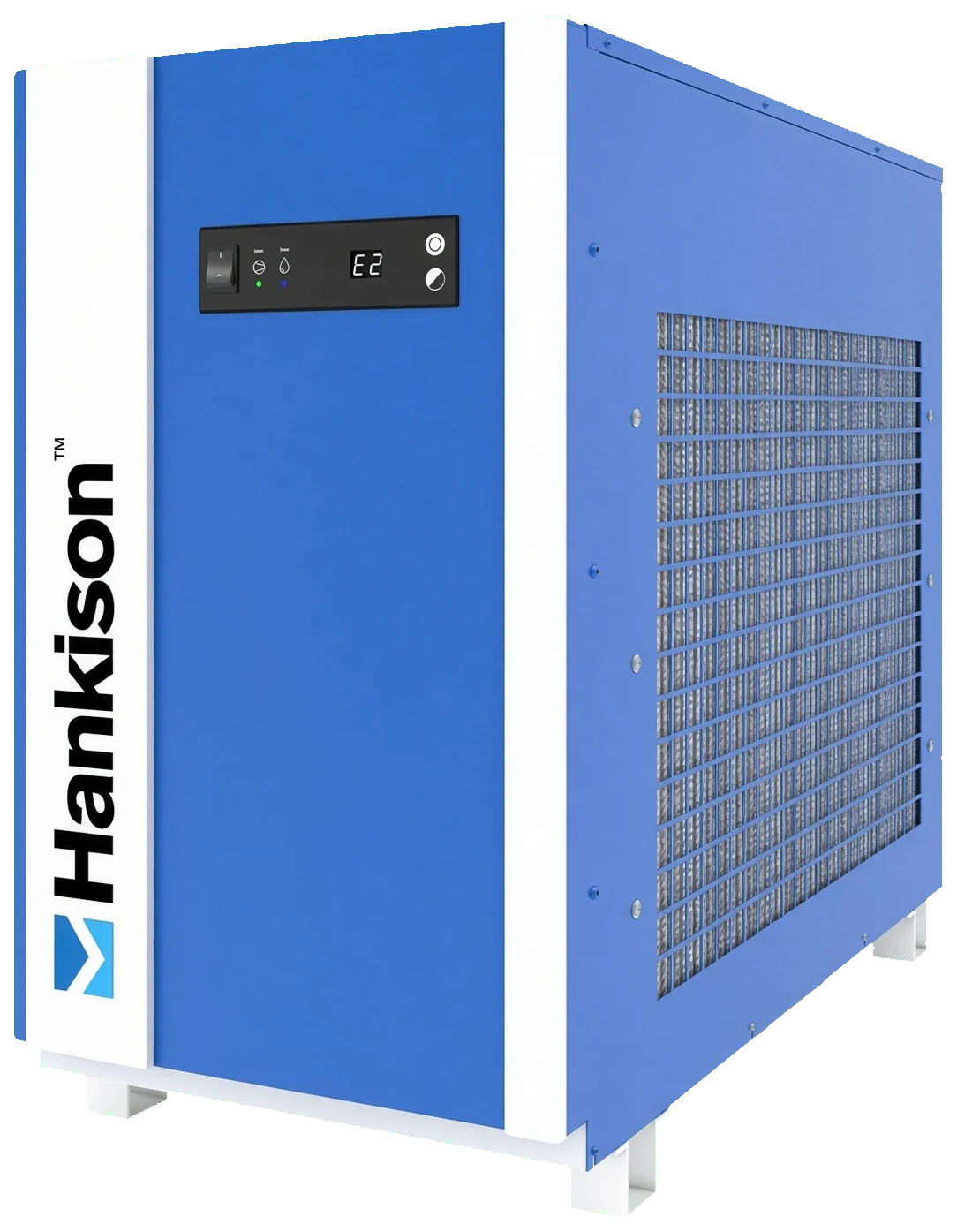
Packaging demand follows the schedule. A hall that runs two shifts, stops for changeovers and washdown, and holds pressure overnight spends most of its hours well below the compressor's output, and a cycling dryer such as the FLXA or NXC saves 50 to 80 percent of dryer power there. A three-shift hall with a loaded compressor gets little from cycling and does better with the simpler non-cycling DXR. Above 600 SCFM the AES digital-scroll dryers modulate refrigeration to the load continuously, which suits a plant whose demand never settles.
Oil-free compressors
Many food plants run oil-free compressors so that oil class 1 is met at the source. Oil-free air is still saturated with water at the aftercooler outlet, so the dryer, the separator and the drains are unchanged; only the carbon filter becomes optional. The 0.01 micron coalescer stays, because an oil-free machine still passes dust and the water aerosol the dryer's separator does not catch. The dew point and ISO classes page lists what each class number means.
Packaging line air questions
Any air that can reach open product or the inside of a package: reject blasts on a checkweigher, blow-off into open trays or bags before sealing, air knives over open product, and pneumatic conveying of ingredients. Cylinders, valve islands and grippers on the outside of a sealed pack are non-contact.
For non-contact air, yes, and that is most of the plant. The food-grade codes ask for class 2.4.2 there, which a refrigerated dryer with a coalescing filter meets. Contact air is specified at class 2.2.1, a –40°F dew point, which takes a desiccant stage on that branch fed by the refrigerated dryer.
A 75 hp screw delivers 320 to 340 SCFM, which is the 400 SCFM dryer at a normal compressor room temperature and the 450 to 500 SCFM size in a hot room. Size for the compressor's delivery, not for the sum of the machines, and correct for the room's summer temperature.
Condensate in the cylinder. A jaw cylinder that has stood overnight with water in it washes its lubricant out on the first strokes and sticks for a fraction of a second, which is enough to leave a weak seal. Check the dryer outlet dew point and the drop: a drop from the bottom of the header delivers water even behind a working dryer.
It does not need to be, because it does not belong in the washdown zone. Put the dryer in the compressor room, run the header into the hall in stainless, and put the washdown-rated filter housings and filter-regulators at the machines where the water is.
More on packaging hall air
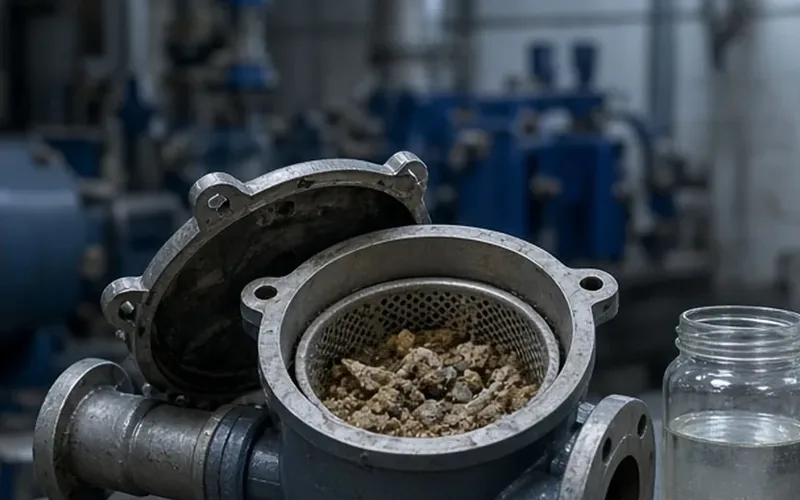
Dew point and ISO 8573-1 classes
What the class numbers for particles, water and oil mean, and which dryer and filter combination delivers each one.
Learn More
Bottling & Canning
Compressed air drying for fillers, cappers, seamers and rinsers: machine air at 38 degrees, rinser air with a sterile filter, hot halls.
Learn More
Breweries & Wineries
Compressed air drying for brewhouse and cellar valves, keg lines and winery presses: the 38 degree dryer and the cold cellar below it.
Learn More