
1-805-484-2992
Quotes - Engineering - SalesCompressed Air Dryers for Textile Mills
A weaving mill is one of the largest compressed air users in any industry. An air-jet loom inserts the weft with a main nozzle and a row of relay nozzles along the reed, drawing 20 to 40 SCFM per loom at 85 to 100 psig, so a weave room of 100 looms wants 2,000 to 4,000 SCFM from a central plant of several 200 to 400 hp rotary screws. The rest of the mill is smaller but no less sensitive: air splicers on winders, texturing and intermingling jets, vortex spinning nozzles, and the pneumatic valves and instrument air of the dye house and stenter frames.
Every one of those nozzles is a small, precise orifice, and water and oil in the air reach it first. Condensate in a relay nozzle disturbs the jet and the weft falls short, which the loom reports as a stop; oil aerosol coats the nozzle bore, changes the jet, and marks the greige cloth in ways that appear as dye defects weeks later. Splicers cut instead of joining and loom solenoid valves corrode from the inside. A mill measures this as stops per 100,000 picks, and wet air raises the number for every loom in the room.
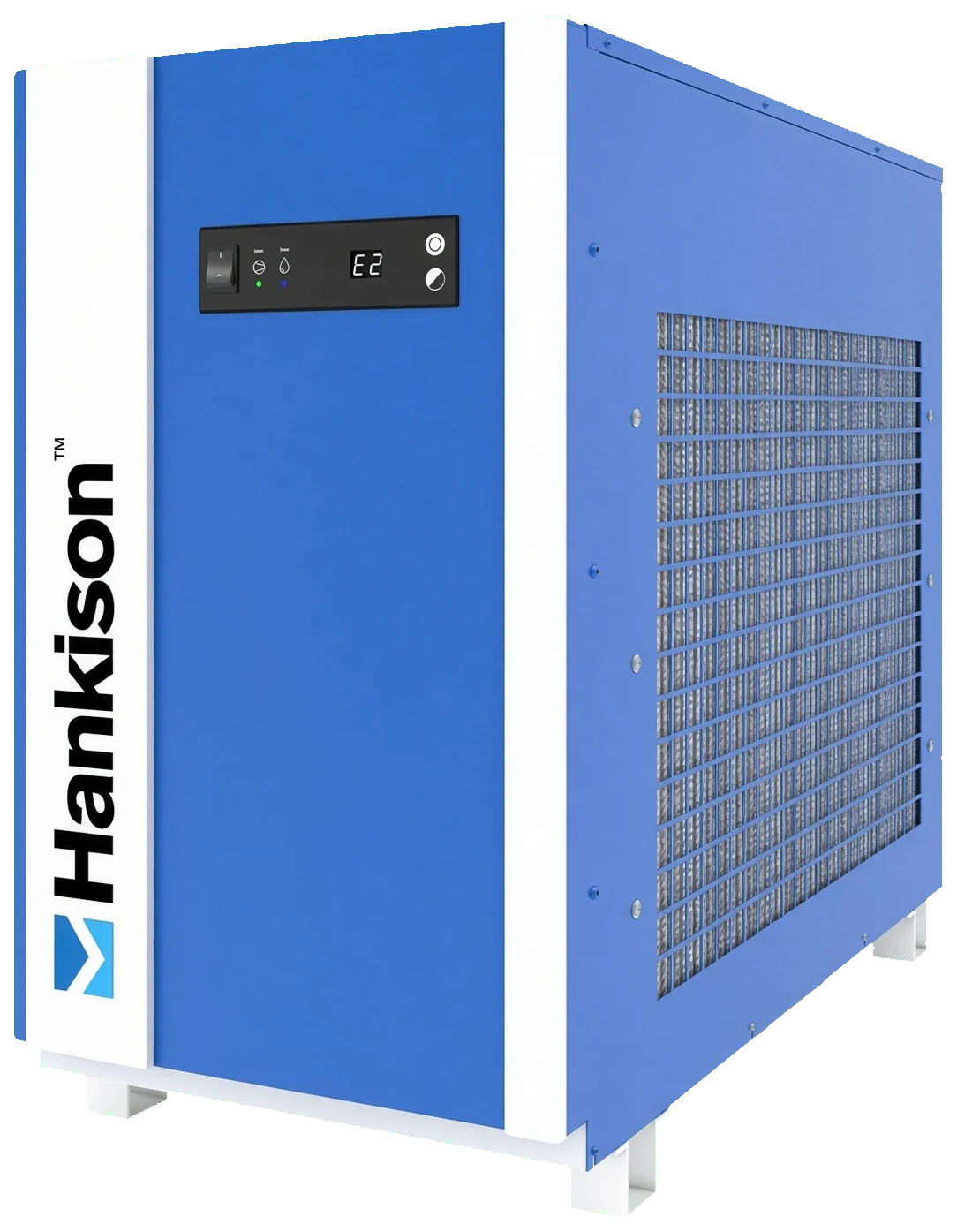
The weave room is held at 78 to 85°F and 70 to 80 percent relative humidity for the yarn, so nothing the air touches is cold, and a refrigerated dryer holding a 38°F pressure dew point (ISO 8573-1 class 4) satisfies the loom builder's air specification. What the specification also asks for is oil: class 1 or 2, which a lubricated screw plant reaches with a 0.01 micron coalescing afterfilter behind the dryer. Pressure drop matters more here than anywhere: a loom room runs close to its minimum pressure, and every psi lost in the dryer and filters is a psi the compressors make up at full load.
The dryer is a central-plant machine sized to the combined compressor output: the DXR Series in single units to 4,200 SCFM, the FLXA Series to 2,000 SCFM in air- or water-cooled builds, and the AES Series digital-scroll or VDR Series variable-speed dryers to 10,000 SCFM where the loom count changes by shift. A mill in a hot climate with tower water at the compressors usually takes the water-cooled version, which holds its rating on the hottest day.
Request a mill dryer quote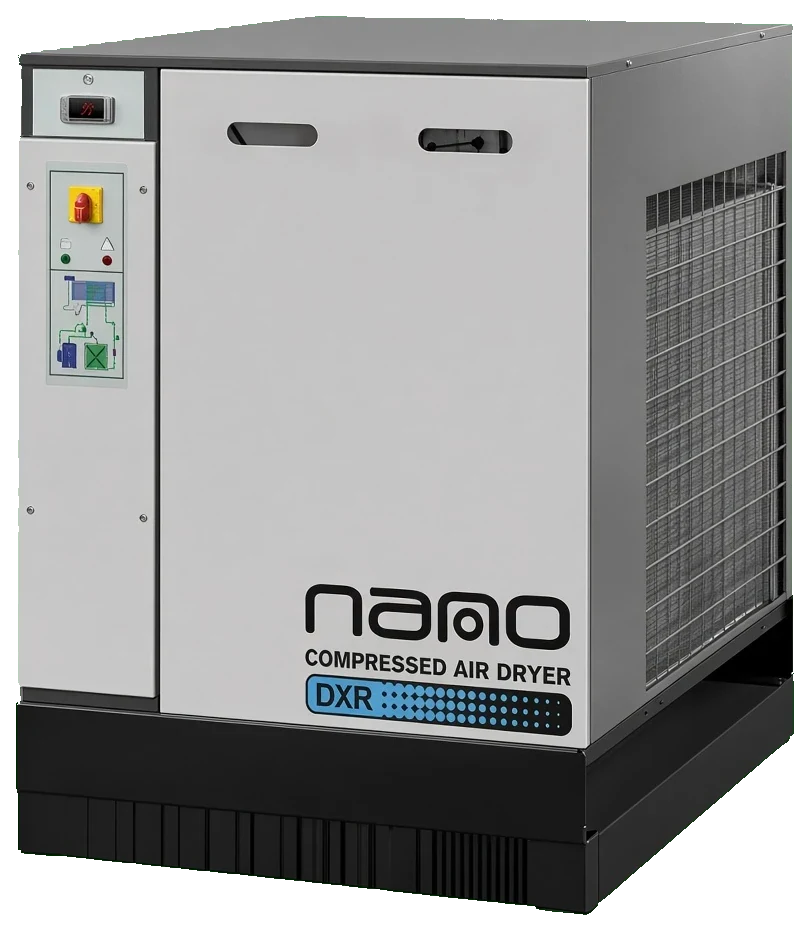
What wet or oily air does in a weave room
The numbers the weaving manager watches
- Weft insertion failures and loom stops as condensate disturbs the relay nozzle jets
- Oil residue in nozzle bores that changes the jet profile and marks the greige cloth
- Splicers cutting instead of joining, and texturing jets producing uneven bulk
- Corroded loom solenoid valves and instrument air failures in the dye house
The dryer specification for a textile plant
What the loom builder's air specification usually asks for
- 38°F pressure dew point, ISO 8573-1 class 4, at the combined output of every compressor on the header
- Oil class 1 or 2: 0.01 micron coalescing afterfilter, activated carbon where the yarn goes to a sensitive dye
- Lowest pressure drop through dryer and filters, sized a step up rather than at the edge of the rating
- Water-cooled dryer where tower water is at hand; a cycling or variable-capacity dryer where the loom count varies by shift
Dryers that fit a textile mill
Ratings at 100 psig and 100°F inlet. A weave room of 50 looms on 300 to 400 hp of compressors lands in the 1,600 to 2,000 SCFM sizes; larger rooms use the 2,500 to 4,200 SCFM units or paired dryers.
| SERIES | TYPE | FLOW RANGE | MAX INLET | MAX PRESSURE |
| DXR Series | Non-Cycling | 10 to 4,200 SCFM | 131°F | 203 psig |
| FLXA Series | Cycling | 75 to 2,000 SCFM | 120°F | — |
| AES Series | Digital Scroll Cycling | 600 to 10,000 SCFM | 120°F | 232 psig |
| VDR Series | Variable Speed Cycling | 2,600 to 8,450 SCFM | 158°F | 203 psig |
| HPRplus Series | Non-Cycling | 2,500 to 3,000 SCFM | 120°F | 232 psig |
| HF Series Filters | Compressed Air Filter | 20 to 21,250 SCFM | — | 300 psig |
| GFN Series Filters | Compressed Air Filter | 6 to 1,500 SCFM | — | 232 psig |
| ND Series Zero-Loss Drains | Condensate Drain | Call for sizing | — | 290 psig |
Send the compressor line-up, the loom count and whether the compressor room has tower water; we size the dryer, the filters and the bypass for the plant.
Two dryers in parallel, or one dryer and a bypass
A weave room runs around the clock, and a dryer that must come off line for service takes the looms with it unless the plant has planned for it. The cheapest plan is a full-size bypass around a single dryer, which keeps the looms running on wet air for the hours the dryer is down; on a summer day those hours cost a measurable rise in stops. The better plan for a room of any size is two dryers in parallel, each sized for 60 to 70 percent of the plant, which carries the full load with both running and most of it with one. The AES Series has a modular interface that lets up to five units run together; the DXR Series does the same job with a common header and check valves.
- Give a single dryer a full-size bypass, and accept wet air during service
- Prefer two dryers in parallel at 60 to 70 percent of the plant each for a 24-hour mill
- Fit isolation valves so filters and drains can be changed without touching the looms
Where the dryer goes in a central plant
Compressors, aftercoolers, a common receiver, prefilters, the dryer, afterfilters and the main to the weave room, with a full-size bypass around the dryer so a filter change does not stop the looms. With three or four compressors on one header the dryer is sized to the sum of their nameplates rather than to the looms, and a second dryer in parallel gives the redundancy a mill running 24 hours a day cannot do without. The multiple compressors page covers the arrangement.
Pressure drop is money in a loom room
An air-jet loom is set up at a fixed supply pressure, and the compressors run at whatever discharge pressure delivers it after the losses in between. A dryer and filter pair that lose 5 psi instead of 2 raise the compressor discharge by 3 psi, which on 1,000 hp of compressors is roughly 1.5 percent more power around the clock. Specify the dryer one size above the calculated duty and change filter elements at 6 psid.
Oil-free or lubricated with filters
Loom builders specify oil class 1 or 2 because oil on the nozzle changes the jet and marks the cloth. An oil-free screw plant gets there with the dryer and a 0.01 micron coalescing afterfilter for particles. A lubricated plant gets there with the same coalescer, sized generously for pressure drop, and an activated carbon filter where a fine or light-colored fabric is going to a dye that shows the faintest oil mark. Either way the elements are changed on differential pressure, and the drains under them are the zero-loss type.
Air-cooled or water-cooled, cycling or not
A mill in a hot climate has two things in its favor: tower water at the compressor room, and a load that is steady around the clock. The water-cooled FLXA Series and AES Series hold their full rating on 85°F cooling water however hot the room gets, and the air-cooled versus water-cooled page sets out the trade. On a steady three-shift load the non-cycling DXR Series or HPRplus Series is the lowest-cost dryer to buy and run; where the loom count drops on the night shift or at weekends, the AES or VDR Series turns the unused capacity into power saved.
Textile mill air questions
Between 20 and 40 SCFM at 85 to 100 psig, depending on reed width, pick rate and the yarn. A 100-loom weave room therefore needs 2,000 to 4,000 SCFM of dry air, which is a central plant of several 200 to 400 hp compressors and a dryer, or a pair of dryers, sized to their combined output.
Yes. Condensate reaching a relay nozzle disturbs the jet enough for the weft to fall short, and the loom stops. Mills that put a dryer on a previously wet system see the stop rate fall within days, most of all in summer.
No. The room is held above 78°F for the yarn, so a 38°F pressure dew point is 40°F below anything the air will touch, and desiccant drying would spend 10 to 15 percent of the compressed air on purge for nothing. The exceptions are outdoor mains in a cold climate and instrument air feeding a controls specification that names class 2.
Water-cooled, if tower water already reaches the compressor room. An air-cooled dryer in a 110°F compressor house loses 12 percent of its rating on the days the mill needs it most, while a water-cooled unit on 85°F water holds its full capacity. The water-cooled FLXA and AES Series cover 800 to 10,000 SCFM.
Both are in service on air-jet looms. Oil-free machines reach class 1 with the dryer and a 0.01 micron afterfilter for particles; lubricated machines reach class 2 with the coalescer and class 1 with an activated carbon stage behind it. The filters cost a fraction of the compressor difference, so the choice usually turns on the compressors the mill already owns.
More on drying air for a weave room
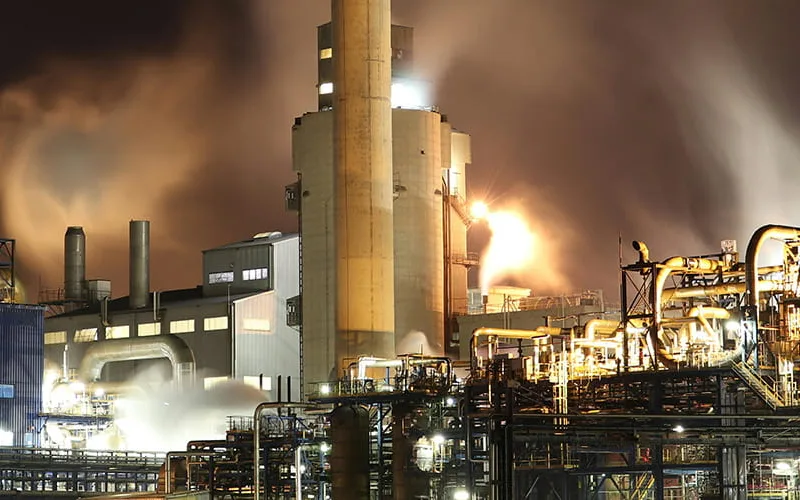
Dryers for 300 hp and larger compressor plants
The central-plant dryer sizes that match multi-compressor installations from 1,600 SCFM up.
Learn More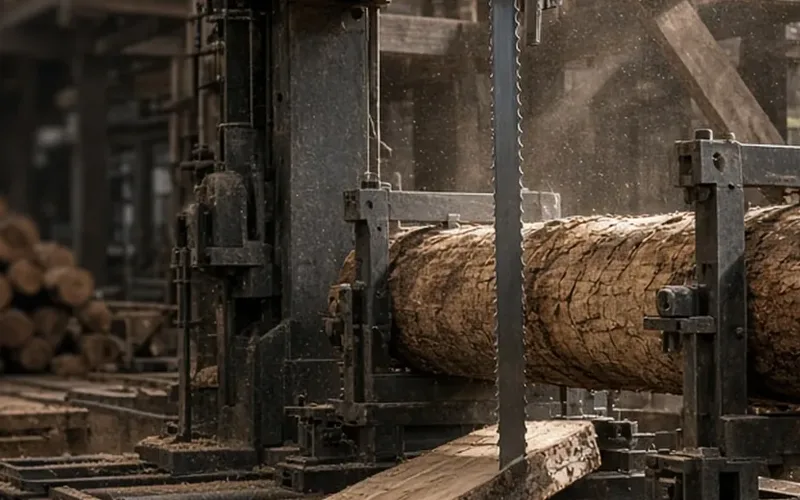
Woodworking
Refrigerated air drying for cabinet and millwork shops: nailers, edgebanders, sanders, spray finishing and dust collector pulse valves.
Learn More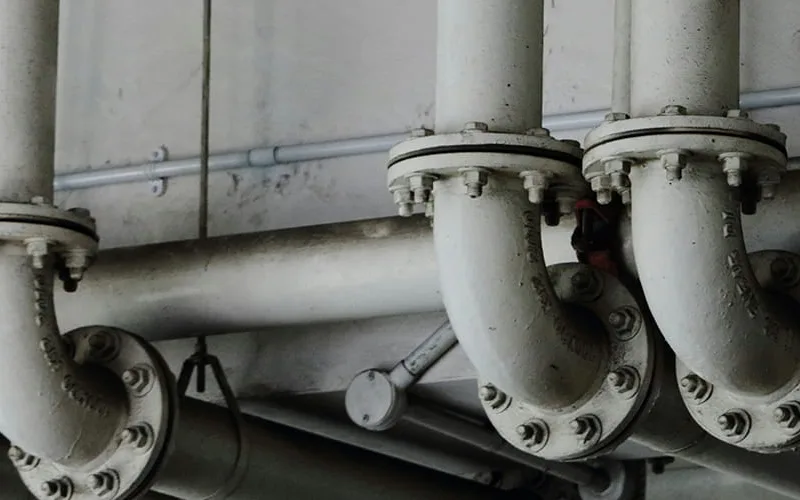
HVAC Controls
Refrigerated drying and filtration for pneumatic building controls: thermostats, damper and valve actuators, and 5 to 20 SCFM compressors.
Learn More