
1-805-484-2992
Quotes - Engineering - SalesFood, Beverage & Pharma
Contact Air and Non-Contact Air
Food and pharmaceutical plants divide their compressed air into air that touches the product and air that does not, and the two get different specifications. Non-contact air runs the cylinders on a case erector, the valve actuators in a cellar and the instrument loops on a pasteurizer; the food-grade codes of practice most auditors work to ask for ISO 8573-1 class 2.4.2 there: particles to class 2, a 38°F pressure dew point, oil to 0.1 mg per cubic meter. Contact air blows a bottle clean, fluidizes a powder or breaks a sterilizer vacuum, and the same codes ask for class 2.2.1: a –40°F dew point, oil to 0.01 mg per cubic meter and a sterile filter at the point of use. A refrigerated dryer with a 0.01 micron coalescer and an activated carbon filter delivers class 2.4.1 for the whole plant; the –40°F contact air is a desiccant dryer downstream of it, fed by it.
- Refrigerated dryer at the compressor room for every non-contact use: 38°F, class 4, with coalescing and carbon filters for oil class 1
- Desiccant stage and sterile filter on the branches that touch product, sized for that branch alone
- Cold rooms, cellars and chilled packaging halls sit below 38°F: those lines condense on a refrigerated dew point and need the desiccant branch too
Five Applications
Pick the Page for Your Plant
Each page below covers the air-using equipment on that line, what water and oil do to the product and the process, the compressor size and flow behind it, the classes the contact and non-contact air need, where the dryer, filters and desiccant branch go, and the series that fit. An oil-free compressor does not change any of it: oil-free air is still saturated with water, and the dryer is the same. Most of these plants land on the DXR non-cycling series, the FLXA and NXC cycling series, the AES digital-scroll dryers for the larger halls, the HF and GFN filters and the ND zero-loss drains, with a PDM dew point monitor to prove the class on paper.



Cold Rooms Below the Dew Point
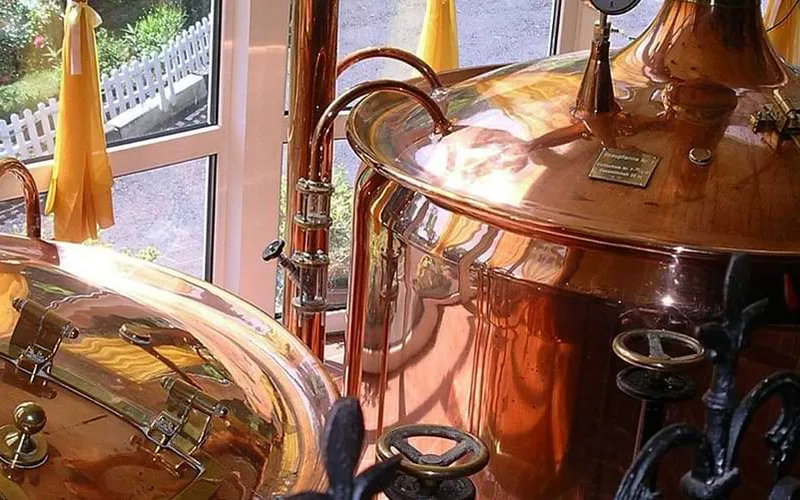
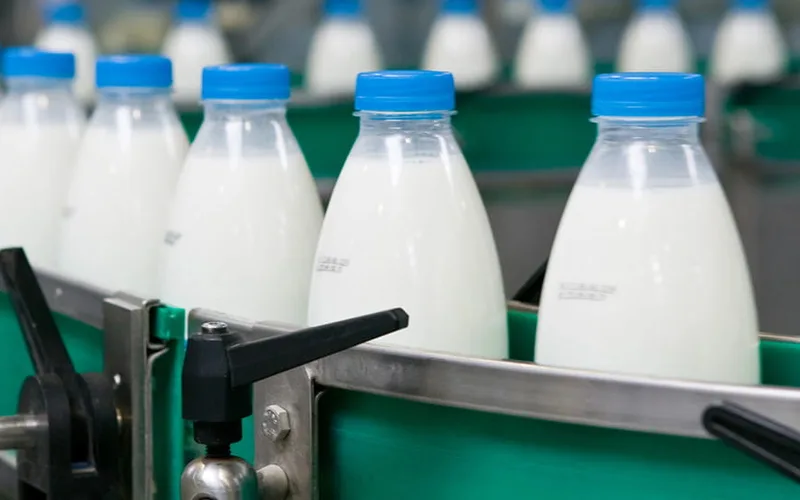
The refrigerated dryer's 38°F dew point is the limit that matters in these plants, because so much of the building is colder than that. A beer cellar at 34°F, a dairy cold store at 36°F, a chilled packaging hall at 45°F with an air line running along its ceiling: every one of them will condense water inside a line carrying 38°F air, and the valve actuator or cylinder at the end of that line gets the water. The refrigerated dryer is still doing its job; the line is simply colder than its dew point.
The answer is not to abandon the refrigerated dryer but to add a desiccant stage on the branch that enters the cold space, fed by the refrigerated dryer so the desiccant bed sees a tenth of the water load and purges accordingly. The plant air stays on the refrigerated dryer, which is cheaper to run and simpler to keep, and the cold branch and the product-contact branch get their –40°F from a unit sized for that branch alone. The refrigerated versus desiccant page explains where the line falls.
Series That Carry Food and Pharma Duty
Plants to 250 SCFM: the DXR non-cycling series and the TMC and NXC cycling series for breweries, small packagers and pilot plants. Halls to 1,250 SCFM: the DXR sizes and the FLXA cycling series, water-cooled where the compressor room runs hot. Central plants to 10,000 SCFM: the AES digital-scroll dryers and the VDR variable-speed series, whose refrigeration follows the swing between CIP cycles and production. Every one is on the refrigerated dryers page with its ratings and part numbers.
Around the dryer: HF and GFN prefilter and afterfilter pairs with 0.01 micron and activated carbon elements for oil class 1; the GF WS centrifugal separator ahead of the dryer on a wet system; ND zero-loss drains at every low point, because a timer drain on a 24-hour plant vents air all year; and the PDM dew point monitor, which reads the outlet dew point on site and gives an auditor a number rather than an assurance. The accessories page groups them by dryer size.
Typical Range Across Food, Beverage and Pharma Plants
Starting points, not limits. Flow is the compressor's delivery at 100 to 125 psig; contact air and chilled-room branches take a desiccant stage after the refrigerated dryer.
| APPLICATION | TYPICAL COMPRESSOR | DELIVERED FLOW | DEW POINT NEEDED | DRYER BAND THAT FITS |
| Food packaging | 25–150 hp rotary screw | 100–700 SCFM | 38°F class 4 non-contact; –40°F class 2 for contact air and chilled halls | 300–1,250 cycling |
| Bottling & canning | 50–300 hp screw, plus high pressure for PET | 200–1,250 SCFM | 38°F class 4 for machine air; class 2 with a sterile filter for rinser air | 300–1,250, high pressure |
| Breweries & wineries | 10–50 hp rotary screw | 40–230 SCFM | 38°F class 4 in the packaging hall; desiccant for cellar branches below 38°F | 20–250 SCFM cycling |
| Pharmaceutical | 25–150 hp oil-free screw | 100–700 SCFM | 38°F class 4 utility air; class 1.2.1 with a sterile filter for product contact | 300–1,250 SCFM |
| Dairy processing | 40–200 hp rotary screw | 175–900 SCFM | 38°F class 4 in the process hall; desiccant for cold rooms and contact points | 300–1,250 cycling |
Food and pharma plant air questions
No. Oil-free compressors remove the oil problem, not the water problem: their discharge is saturated at whatever temperature the aftercooler leaves it, and it condenses in the first cool pipe. The refrigerated dryer and the drains are the same as on a lubricated system; only the carbon filter becomes optional.
The food-grade codes of practice most auditors follow ask for class 2.2.1 where air touches the product: particles class 2, a –40°F pressure dew point and oil to 0.01 mg per cubic meter, with a sterile filter at the point of use. Non-contact air is class 2.4.2, which a refrigerated dryer with a coalescer meets.
Because the cold room is colder than 38°F. Air at a 38°F dew point condenses in any pipe below that temperature, and a cellar or cold store at 34 to 36°F qualifies. Feed those branches from a desiccant stage after the refrigerated dryer, or route the line through warm space and take the drop off the top of the header at the door.
Non-cycling where the line runs three shifts with a loaded compressor, which is most bottling halls and dairies. Cycling where production is one or two shifts, where demand swings between CIP and production, or where a variable-speed compressor spends hours at partial flow, which is most breweries and many packaging halls. Above 300 SCFM the digital-scroll AES series follows the load continuously.
Measure it. A dew point monitor at the dryer outlet gives a logged pressure dew point rather than a rating on a data sheet, and an oil-vapor and particle test at the point of use completes the ISO 8573-1 record. Most plants take the dew point reading quarterly and after any change to the compressor or dryer.