
1-805-484-2992
Quotes - Engineering - SalesCross-Reference Any Air Dryer by Rated Flow
A refrigerated dryer of any make crosses to this site through one number: its rated SCFM at 100 psig inlet, 100°F inlet air and 100°F ambient, delivering a 38°F pressure dew point. Read that number off the old unit, confirm the rating point it was quoted at, match the technology, and the table below gives the current model at or above it. If the plant has changed since the old dryer was sized, correct the duty first on the sizing pages and cross the corrected figure instead.
The table runs from 25 to 10,000 SCFM. Between the rows, the flow band pages list every model from every series.
Check the rating point before you cross
Not every maker rates at the same conditions. Many metric-rated dryers follow the ISO 7183 reference point of 7 bar, 35°C inlet and 25°C ambient, which is 100 psig, 95°F and 77°F. A dryer rated there carries typically 15 to 20 percent less at our 100°F and 100°F point, so a 400 SCFM rating on that basis is closer to a 330 SCFM dryer here. Others quote 35°F rather than 38°F dew point, a slightly harder duty that can be crossed at face value.
Metric flows convert directly: 1 m3/h is 0.589 CFM, 1 m3/min is 35.3 CFM and 1 l/s is 2.12 CFM. A dryer rated 680 m3/h is a 400 CFM unit before the rating-point adjustment.
Match the technology, then the band
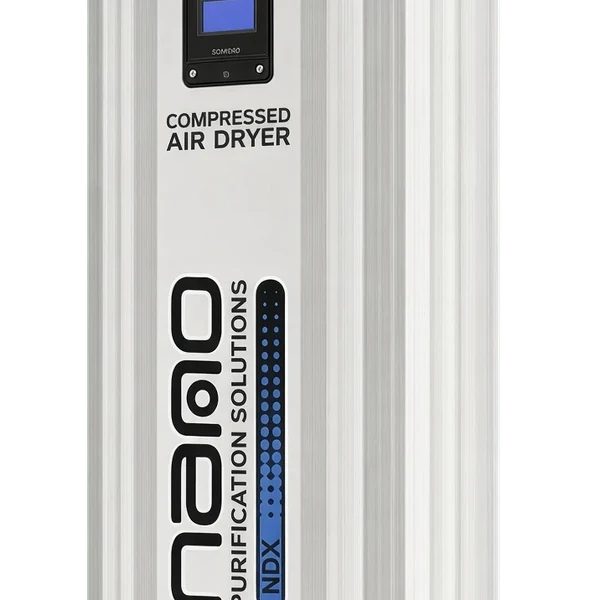
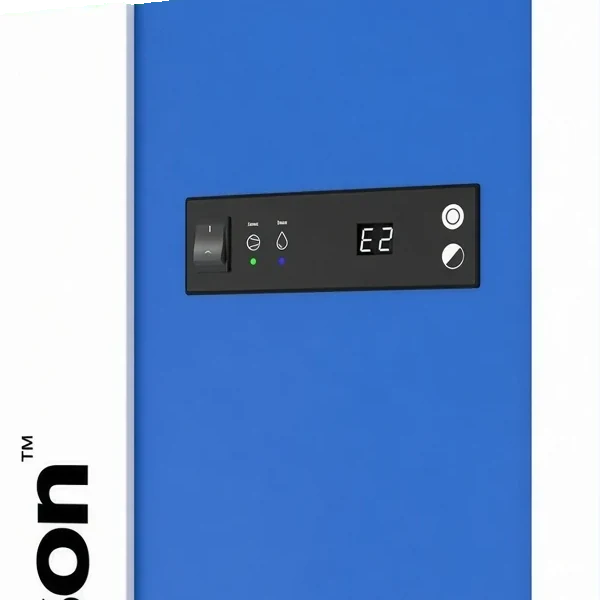
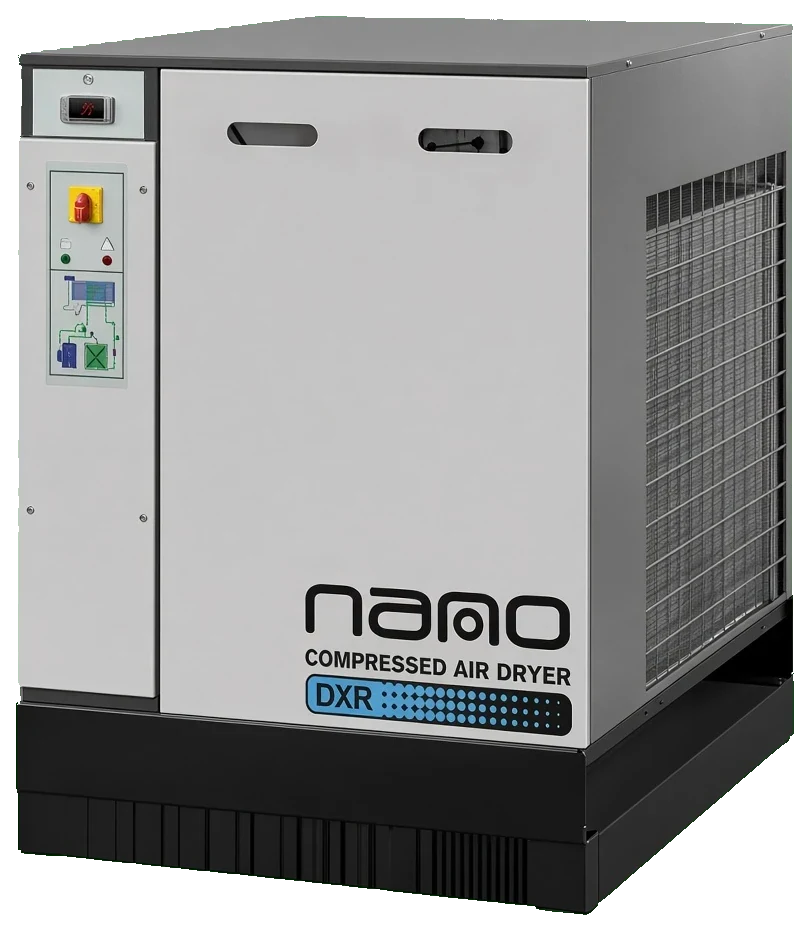
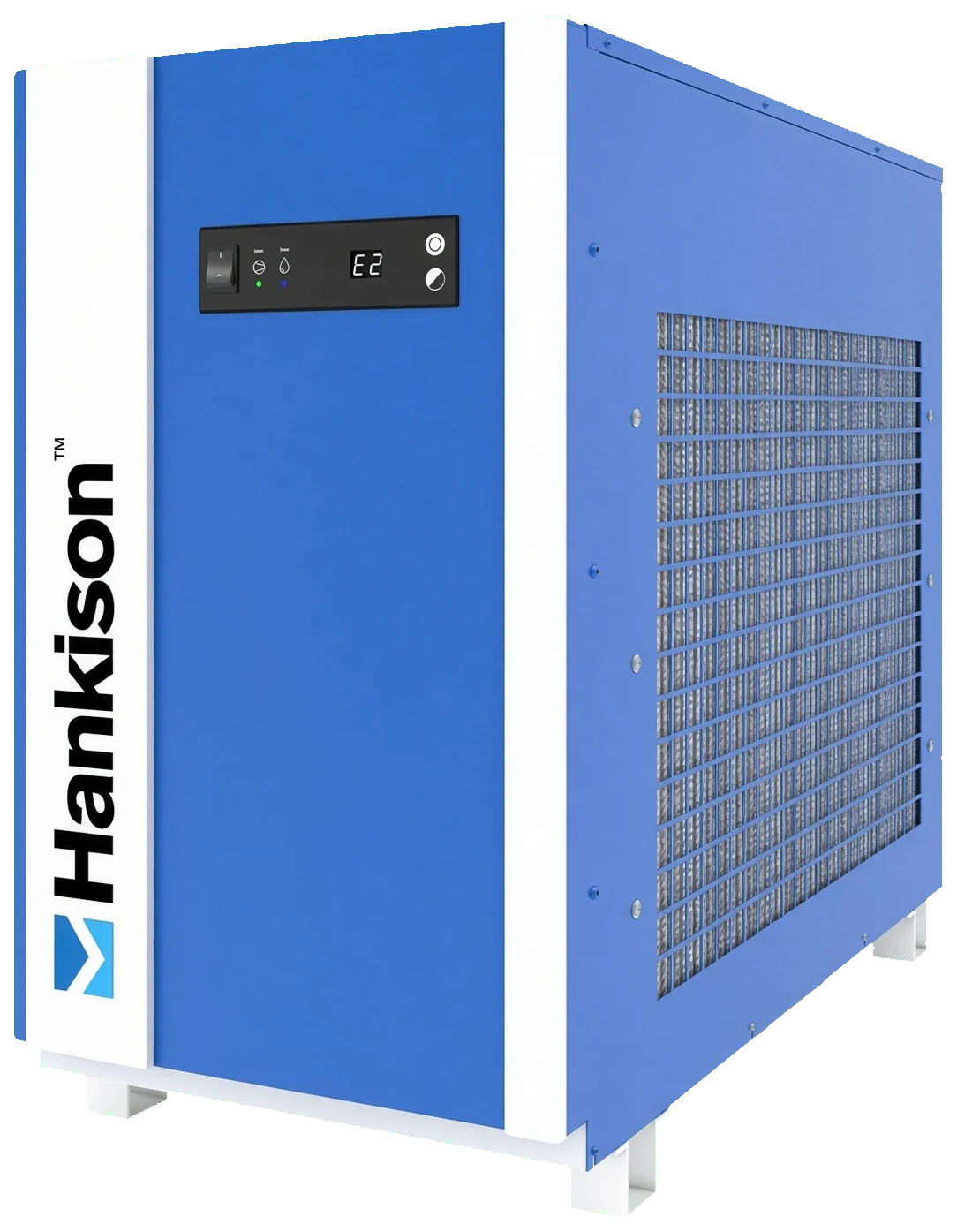
A non-cycling dryer crosses to the DXR, HPRB or HPRplus Series; a cycling, thermal-mass, digital-scroll or variable-speed dryer to the TMC, FLXA, NXC, AES, VDR, HES or FLX Series; a high inlet temperature unit to the HRHT or HTR Series; a high-pressure unit to the HHPR, APET or AXHP Series at the matching pressure. The cross can also be a change of technology: a plant replacing a non-cycling unit that now runs two shifts is usually better served by the cycling equivalent at the same flow.
Each flow band page lists every model in that band from every series, current first, with connections and voltages side by side.
Worked example: crossing a metric-rated 400 SCFM dryer
Why the old unit passed water every summer
- Old unit rated 680 m3/h at 7 bar, 35°C and 25°C: 400 SCFM at the metric point, about 330 SCFM at ours
- Plant: 90 hp screw, 400 SCFM at 100 psig, 110°F inlet, 100°F room: duty 400 / 0.80 = 500 SCFM
- The old dryer was two sizes short of the corrected duty, which the summer complaints confirmed
- Cross: DXR 0500 NA non-cycling, or FLXA5.5-A or TMC 0510 N cycling
Reading another make's rating
Four things to find on the old data sheet
- The rated flow and its units: SCFM, CFM, m3/h, m3/min or l/s
- The rating point: 100 psig, 100°F, 100°F, or the metric 7 bar, 35°C, 25°C
- The dew point the rating delivers: 35°F, 38°F or 3°C are all class 4
- The technology: non-cycling, cycling, high inlet temperature or high pressure
Flow to current series and model examples
Rated SCFM at 100 psig, 100°F inlet and 100°F ambient. Models named are the first at or above the row's flow in each series; the band page lists the rest.
| RATED FLOW | NON-CYCLING | CYCLING | SPECIAL DUTY | FLOW BAND |
| 25 SCFM | HPRB25-A; DXR 0030 NA | TMC 0030 N; NXC 0030 | HRHT25A at 200°F; AXHP-30 to 6,000 psig | 5 to 50 SCFM |
| 50 SCFM | HPRB50-A; DXR 0050 NA | TMC 0055 N; NXC 0065 | HRHT60A; HTR 0050; APET-65 at 725 psig | 5 to 50 SCFM |
| 100 SCFM | DXR 0105 NA | FLXA1.2-A; TMC 0105 N; NXC 0110 | HRHT100A; HTR 0100; HHPR-115 | 65 to 250 SCFM |
| 150 SCFM | DXR 0150 NA | FLXA1.5-A; TMC 0170 N; NXC 0165 | HHPR-150; APET-200 | 65 to 250 SCFM |
| 250 SCFM | DXR 0250 NA | FLXA3.1-A; TMC 0265 N; NXC 0265 | APET-260; AXHP-275 | 20 to 250 SCFM cycling |
| 500 SCFM | DXR 0500 NA | FLXA5.5-A; TMC 0510 N; NXC 0500 | APET-570; HHPR-600 | 300 to 1,250 SCFM |
| 1,000 SCFM | DXR 1050 NA | FLXA10.1-A; AES-1000A; NXC 1050 | HHPR-1000; APET-1000 | 300 to 1,250 SCFM cycling |
| 2,000 SCFM | DXR 2200 NA | FLXA20.1-A; AES-2000A; NXC 2000 | HHPR-2000 | 1,600 to 2,000 SCFM cycling |
| 3,000 SCFM | DXR 3000 NA; HPRP3000 | AES-3000A; HES3000; FLX 3000; VDR 3150 A | HHPR-2400 is the top of the high-pressure range | 1,600 to 4,200 SCFM |
| 5,000 SCFM | Two DXR units in parallel | AES-5250A; HES5000; VDR 5050 A; FLX 6000 | — | 2,500 to 12,500 SCFM |
| 10,000 SCFM | — | AES-10000A; HES10000; FLX 10000 | — | 2,500 to 12,500 SCFM |
The widest current ranges
Using the table
Find the row at or just above the old dryer's rated flow after any rating-point adjustment, and read across to the technology that matches. The models named are examples; the band page linked in each row lists every model in that range. Where the old dryer sat between two rows, go to the higher one, and where the plant has grown, cross the corrected duty rather than the nameplate. Most model numbers here encode the flow, so a DXR 0500 NA is 500 SCFM and an AES-3000A is 3,000; the FLXA numbers are in hundreds with a small offset, an FLXA4.5-A being 450 SCFM, and the HHPR numbers are nominal, an HHPR-300 being rated 371 SCFM.
Above 4,200 SCFM
The largest single non-cycling unit is the DXR 4200 NA. Above that the choices are cycling systems, the AES Series to 10,000 SCFM, the HES Series to 12,500 and the FLX modular skids to 12,000, or two smaller dryers in parallel on a common header, which also gives the plant a standby.
Mistakes in cross-referencing
Taking a metric rating at face value. Crossing the model number rather than the flow, when two makers use similar numbers for different sizes. Crossing a dryer that was undersized and inheriting the problem. Matching a 725 psig unit with a 680 psig one without checking the system pressure. And crossing a cycling dryer to a non-cycling one because it was cheaper, in a plant whose load profile was the reason the cycling unit was bought.
When to send it to us
A photograph of the old nameplate and the compressor's horsepower are enough for us to do the cross and check it against the plant. We return the model in each series that fits and the connection size against the existing pipe. Call 1-805-484-2992 between 8am and 5pm or use the quote form.
Cross-reference questions
Multiply by 0.589 for CFM, then check the rating point. A 680 m3/h unit is 400 CFM, and if it was rated at 35°C inlet and 25°C ambient it is worth about 330 SCFM at the 100°F and 100°F point this site uses.
That the old dryer was rated with cooler inlet air and a much cooler room than our standard point, so its nameplate flow is optimistic here by typically 15 to 20 percent. Reduce it by that much before finding the row, or better, size from the plant's compressor and conditions and ignore the old rating.
No, only the same or greater corrected capacity. Non-cycling to cycling is a common and sensible cross where the plant runs part-load hours; cycling to non-cycling saves money on the purchase and costs it back in power. High inlet temperature and high-pressure units must stay within their own type.
One dryer is cheaper to buy and pipe. Two in parallel give a standby and let one unit carry a light night load alone, which is why central plants often split the duty. Above 4,200 SCFM the choice is between two units and a modular cycling system.
Usually but not always. DXR, TMC, NXC, AES, VDR, HES and FLX numbers are the rated SCFM; FLXA numbers are in hundreds with a small offset; HHPR numbers are nominal, with the HHPR-300 rated at 371 SCFM; HPET numbers are refrigeration horsepower; and AXHP numbers carry the flow and the pressure class together.