
1-805-484-2992
Quotes - Engineering - SalesNon-Cycling Refrigerated Air Dryers, 1,600 to 4,200 SCFM
Central-plant dryers for 300 hp and larger compressors
Above 300 hp the compressor room is usually a plant in its own right: two or three screw machines on a sequencer, a large receiver, a header that runs the length of the building. The dryer here is sized for 1,600 to 4,200 SCFM of combined delivery, which is a single 350 to 900 hp screw or centrifugal compressor, or two 300 hp screws with a third on standby, at 100 psig and 100°F.
Non-cycling makes sense at this scale when the plant runs continuously, because the refrigeration compressor of a 2,500 SCFM dryer draws 15 kW whether it cycles or not, and the thermal-storage hardware that lets a cycling dryer rest is only paid back by idle hours. A continuous process plant has none, so it buys the simpler machine with hot-gas bypass control and a steady 38°F pressure dew point.
Nine current models cover the band. The direct-expansion line runs 1,600 to 4,200 SCFM in seven sizes on 4 in and 6 in ANSI flanges, and the large plant dryer adds 2,500 and 3,000 SCFM units with 6 in flanges, networked controls and two-stage separation. All are 460 V three phase; 575 V is available on the direct-expansion sizes.
- Rated 1,600 to 4,200 SCFM at 100 psig, 100°F inlet and 100°F ambient
- 4 in flanges to 2,400 SCFM, 6 in flanges from 2,500 SCFM; 460/3/60 power
- 7.8 to 19.6 kW absorbed; 575 V option on the direct-expansion sizes
- Zero-air-loss demand drains and digital or networked controls on every model
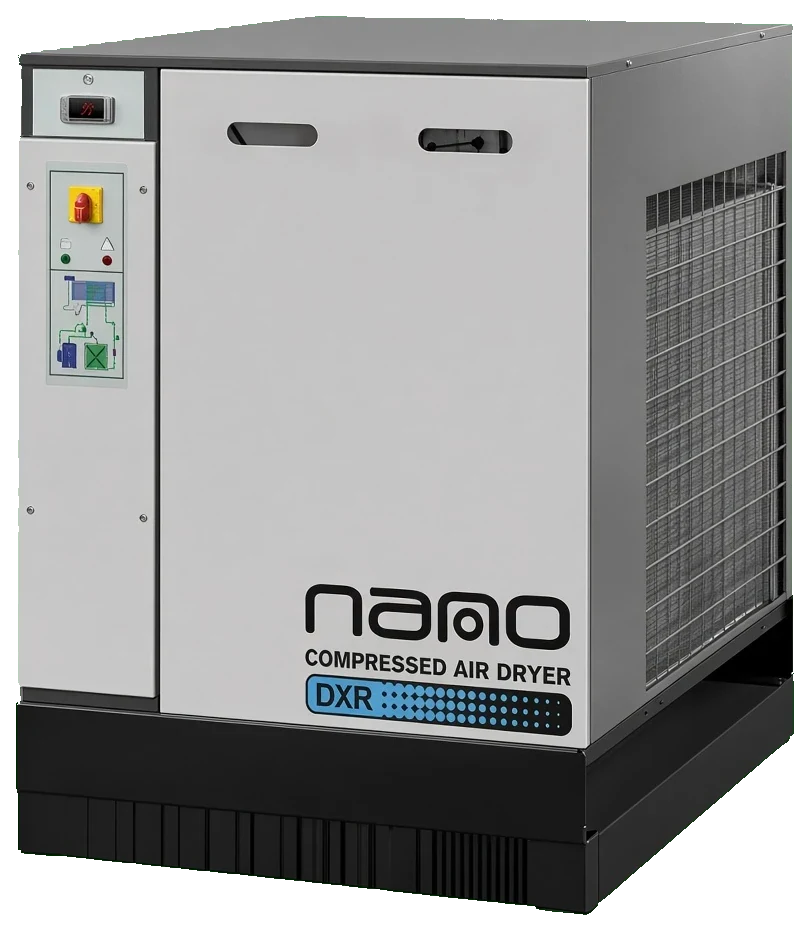
Every 1,600 to 4,200 SCFM non-cycling model
Nine flanged models rated at 100 psig, 100°F inlet and 100°F ambient, listed with connection size and supply voltage. Each part number links to its specification page with dimensions and weight.
| PART NUMBER | SERIES | SCFM | CONNECTION | VOLTAGE | STATUS |
| DXR 1600 NA | DXR Series | 1,600 | 4 in ANSI flange | 460/3/60 (575/3/60 optional) | Current |
| DXR 1800 NA | DXR Series | 1,800 | 4 in ANSI flange | 460/3/60 (575/3/60 optional) | Current |
| DXR 2200 NA | DXR Series | 2,200 | 4 in ANSI flange | 460/3/60 (575/3/60 optional) | Current |
| DXR 2400 NA | DXR Series | 2,400 | 4 in ANSI flange | 460/3/60 (575/3/60 optional) | Current |
| DXR 3000 NA | DXR Series | 3,000 | 6 in ANSI flange | 460/3/60 (575/3/60 optional) | Current |
| DXR 3500 NA | DXR Series | 3,500 | 6 in ANSI flange | 460/3/60 (575/3/60 optional) | Current |
| DXR 4200 NA | DXR Series | 4,200 | 6 in ANSI flange | 460/3/60 (575/3/60 optional) | Current |
| HPRP2500 | HPRplus Series | 2,500 | 6 in flange | 460/3/60 | Current |
| HPRP3000 | HPRplus Series | 3,000 | 6 in flange | 460/3/60 | Current |
The two series in this band
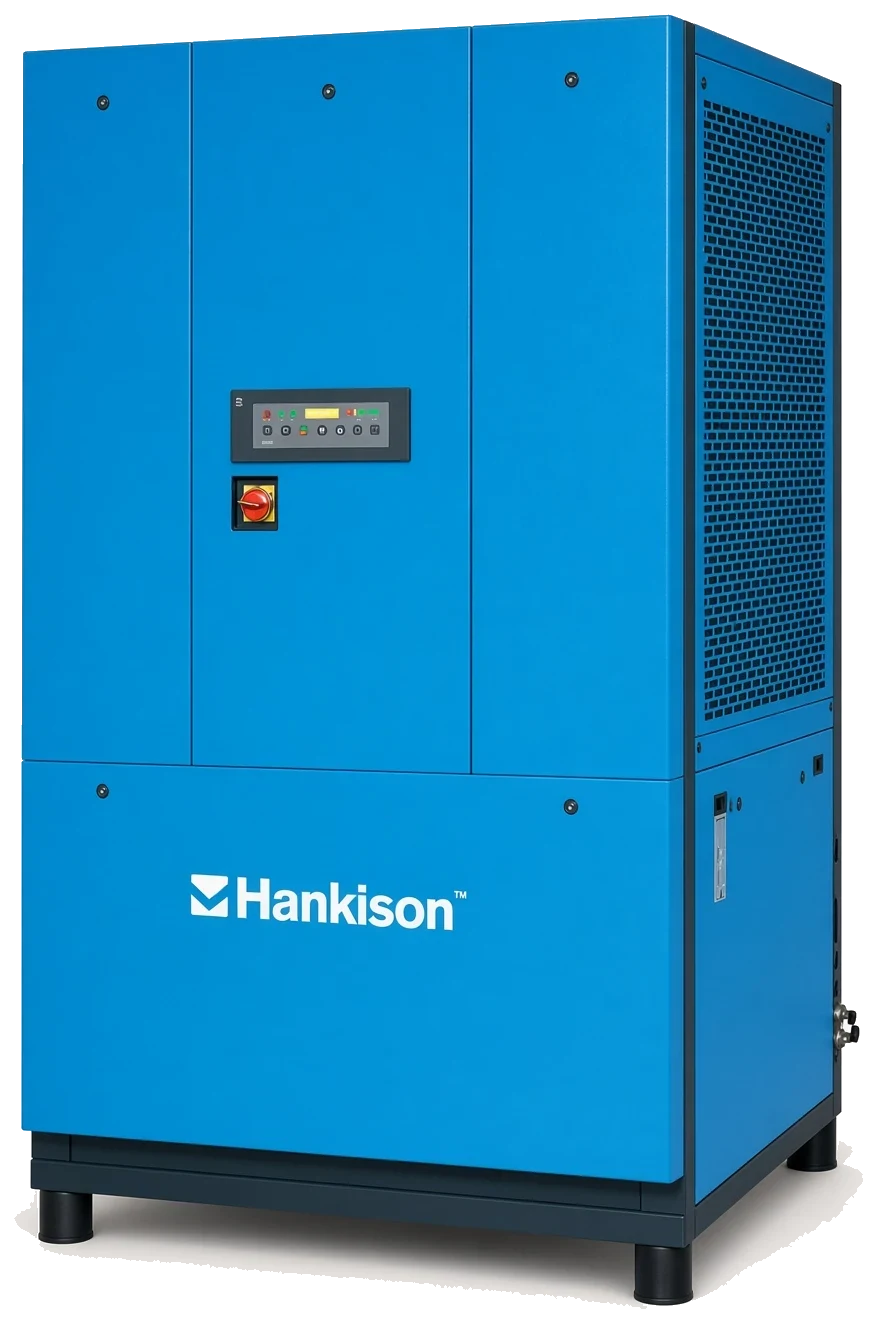
Sizing a multi-compressor plant
Add the delivery of every compressor the sequencer can run at once, not the installed total. A plant with three 300 hp screws and one on standby is a 2,600 to 2,800 SCFM duty, which lands on the 3,000 SCFM dryer with margin for a 105°F inlet; if all four run in summer peaks it is the 3,500. Centrifugal compressors are sized from their data sheet rather than from horsepower, because their delivery moves with inlet air temperature and the surge margin. Where the plant expects to add a compressor within the dryer's life, buy the next size now; a 4,200 SCFM dryer costs far less than two 2,200s piped in parallel.
Pressure drop counts at this flow
At 3,000 SCFM every psi lost across the dryer and its filters is roughly half a percent of the compressor plant's energy, so a dryer with 3 psi of loss instead of 5 pays for itself on the electricity bill. The current exchangers are designed for low air velocity, and the flanged connections should match the header rather than be reduced to save on fittings. Keep the 1 micron prefilter and the 0.01 micron afterfilter sized for the full plant flow, and change elements on differential pressure, not on the calendar.
What sets the two series apart
The direct-expansion line is the straightforward choice: one aluminum precooler, chiller and separator block, hot-gas bypass, a zero-air-loss drain and a digital dew point display, in seven sizes from 1,600 to 4,200 SCFM. The large plant dryer at 2,500 and 3,000 SCFM adds stainless brazed-plate exchangers, a two-stage separator that removes particles of 3 micron and larger, level-actuated demand drains and a controller with Ethernet and RS485 ports so the dryer reports into the plant system. Both hold the same dew point; the second is for plants that want the dryer on the network and the five-year warranty option.
Cooling, room and installation
Every model in the band is air-cooled and rejects tens of kilowatts of heat into the compressor room, which is one more reason the room needs ducted exhaust. The 3,000 to 4,200 SCFM units stand about 78 in tall and weigh close to a ton, so they are set on a pad with the flanges at header height and a full-flow bypass loop around them. For a plant that idles at weekends the large cycling and digital-scroll dryers are the alternative, and the multiple-compressor page covers sequencing and header layout.
1,600 to 4,200 SCFM dryer questions
A 500 hp screw delivers 2,150 to 2,300 SCFM at 100 to 125 psig, which is the 2,400 SCFM direct-expansion model in a cool room or the 2,500 SCFM plant dryer where the inlet runs warm. At this size confirm the delivery from the compressor data sheet rather than the horsepower rule.
Usually. One dryer means one bypass, one drain and one set of filters, and it costs less than two 2,200 SCFM units. Two dryers in parallel only make sense where the plant must keep drying air with one unit out of service.
No. The non-cycling models in this band are air-cooled throughout. Water-cooled condensers are offered on the cycling and digital-scroll dryers of the same capacity, which is where a plant with a tower or chilled water loop should look.
4 in ANSI flanges from 1,600 to 2,400 SCFM and 6 in flanges from 2,500 to 4,200 SCFM. Match the flange to the header; necking a 6 in header down to 4 in through the dryer adds pressure drop the plant pays for every hour.
The 2,500 and 3,000 SCFM plant dryer carries a controller with Ethernet and RS485 ports and a dry-alarm contact. The direct-expansion models carry a digital dew point display on the panel that the operator reads on the shift walk.