
1-805-484-2992
Quotes - Engineering - SalesCycling Refrigerated Air Dryers, 1,600 to 2,000 SCFM
Phase-change, thermal-mass and digital-scroll dryers for 300 to 450 hp compressors
This band is a single 300 to 450 hp rotary screw or a pair of 150 to 200 hp machines on one header, delivering 1,300 to 2,000 SCFM. At this size a non-cycling dryer absorbs 8 to 10 kW continuously, so a plant that runs two shifts and stops at the weekend pays for a third shift of drying it never uses. A cycling dryer gives that back.
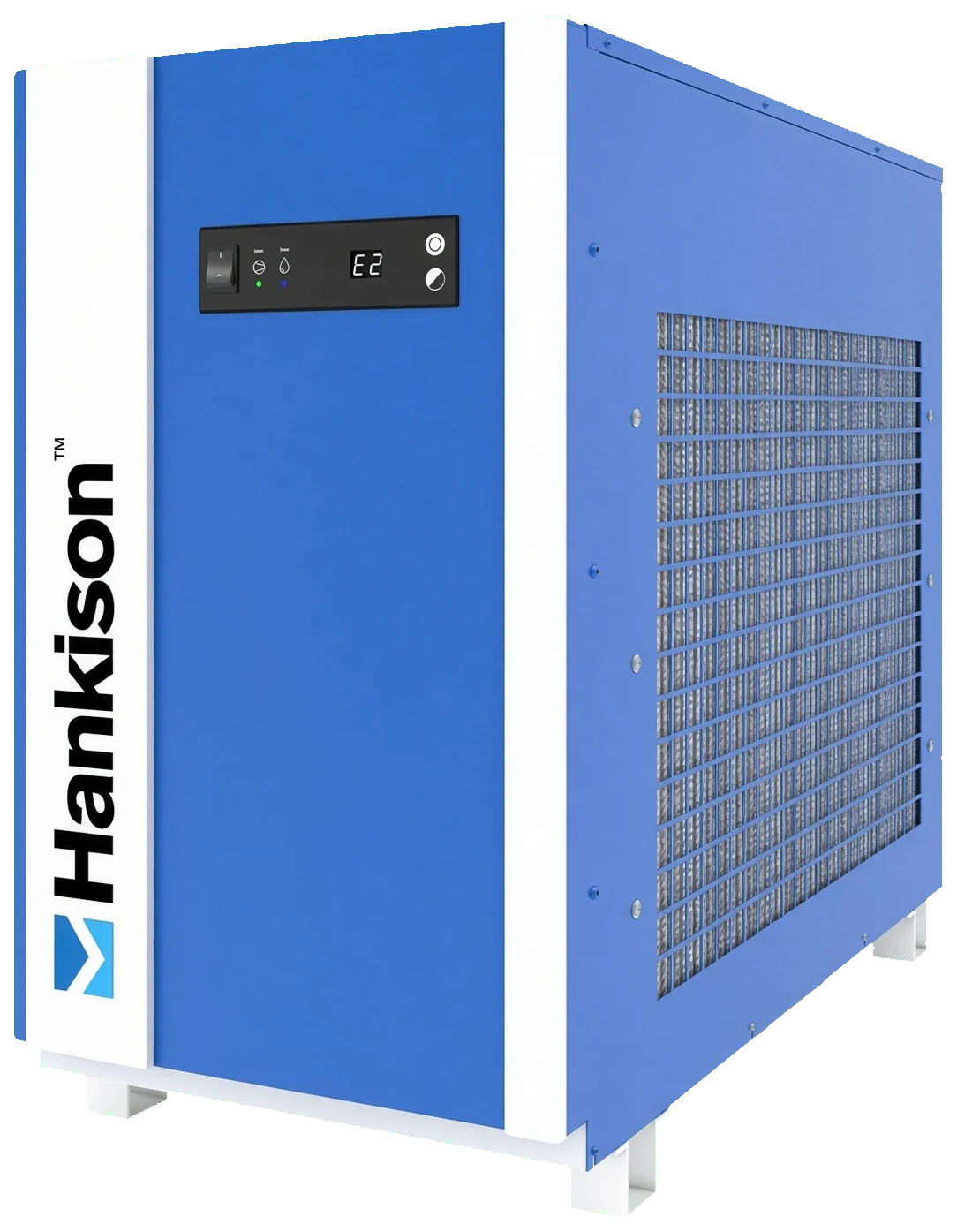
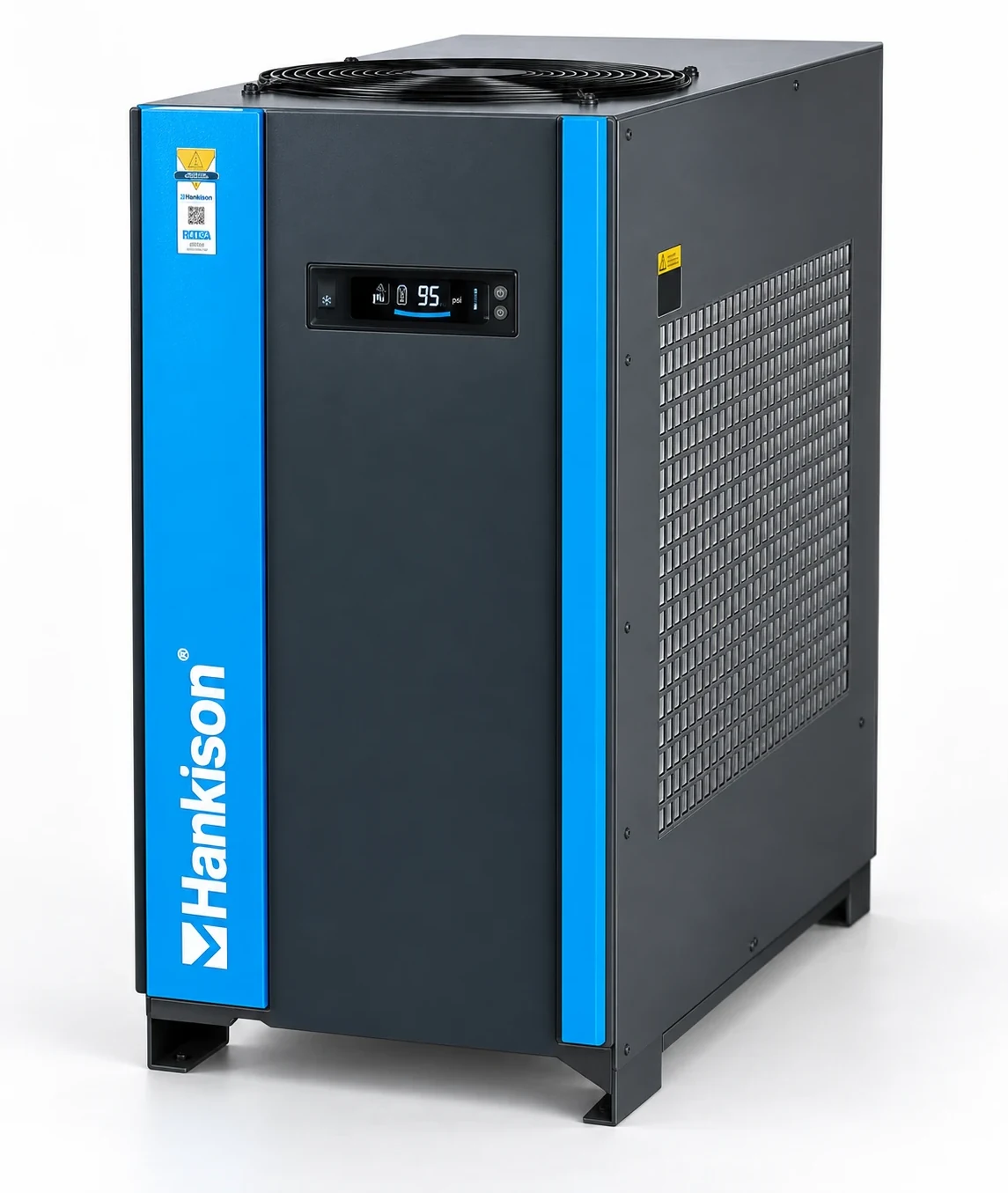
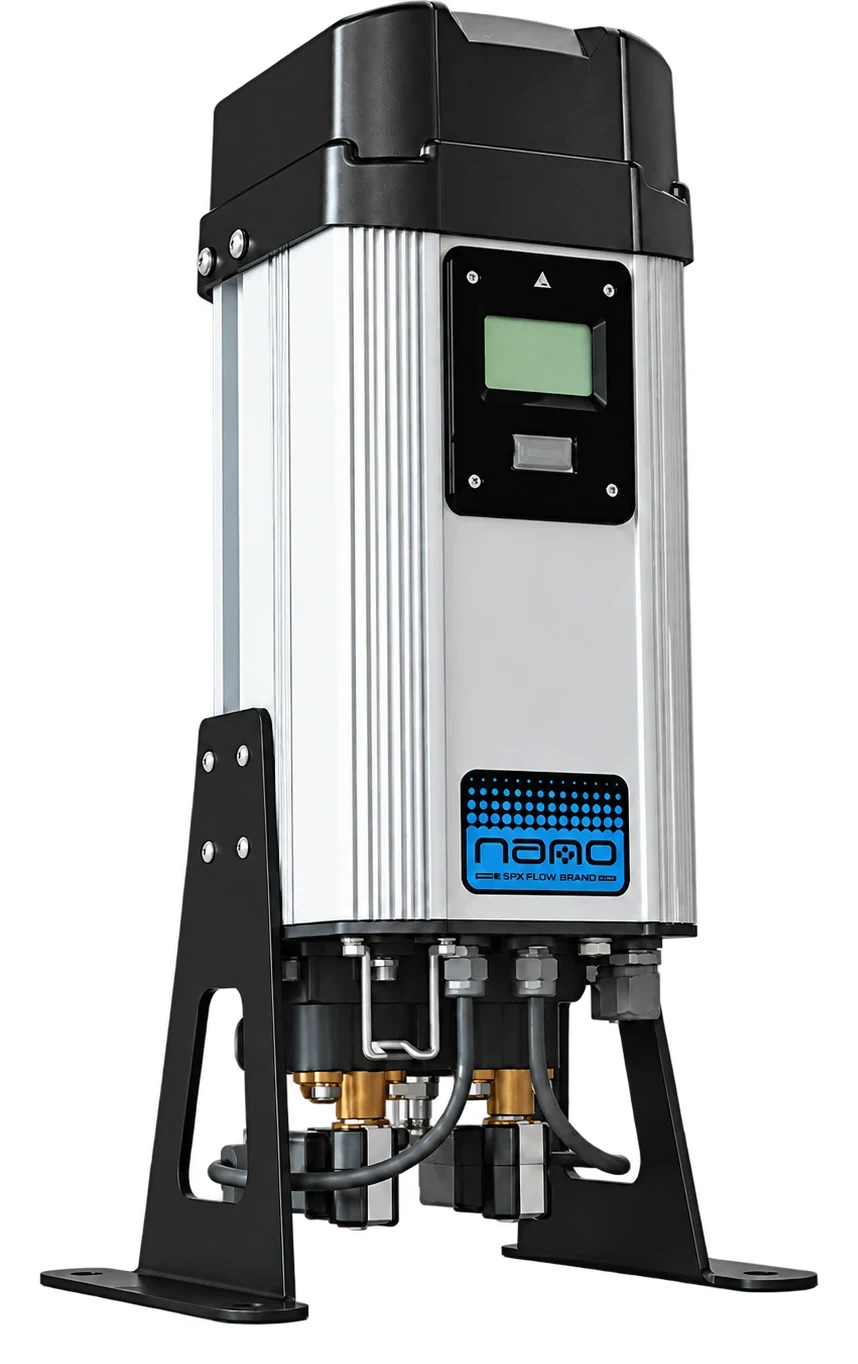
Three current series cover it. The phase-change dryer at 1,500 and 2,000 SCFM freezes a storage medium around its stainless brazed-plate exchanger and stops the refrigeration compressor while the medium melts. The dry thermal-mass dryer at 1,300, 1,600 and 2,000 SCFM stores cold in the exchanger block itself. The digital-scroll dryer at 1,500, 1,750 and 2,000 SCFM modulates a scroll compressor from zero to full capacity and never lets the dew point drift.
Every model is 460 V three phase on 4 in or 6 in flanges, and the phase-change and digital-scroll dryers come in air-cooled and water-cooled builds. The previous phase-change generation, 1,500 and 2,000 SCFM in both cooling types, is listed with its replacement.
- Rated 1,300 to 2,000 SCFM at 100 psig, 100°F inlet and 100°F ambient
- 460/3/60 power, 5 to 17.5 kW at full load and far less at part load
- 4 in and 6 in flanged connections matched to plant headers
- Air-cooled and water-cooled builds of the phase-change and digital-scroll dryers
Every 1,300 to 2,000 SCFM cycling model
Seventeen flanged models at the standard rating point of 100 psig, 100°F inlet and 100°F ambient. Water-cooled units carry a W suffix; the current series come first and the previous generation follows with the series that replaces it.
| PART NUMBER | SERIES | SCFM | CONNECTION | VOLTAGE | STATUS |
| AES-1500A | AES Series | 1,500 | 4 in flange | 460/3/60 | Current |
| AES-1500W | AES Series | 1,500 | 4 in | 460/3/60 | Current |
| AES-1750A | AES Series | 1,750 | 4 in flange | 460/3/60 | Current |
| AES-1750W | AES Series | 1,750 | 4 in | 460/3/60 | Current |
| AES-2000A | AES Series | 2,000 | 4 in flange | 460/3/60 | Current |
| AES-2000W | AES Series | 2,000 | 4 in | 460/3/60 | Current |
| FLXA15.1-A | FLXA Series | 1,500 | 6 in flange | 460/3/60 | Current |
| FLXA15.1-W | FLXA Series | 1,500 | 6 in flange | 460/3/60 | Current |
| FLXA20.1-A | FLXA Series | 2,000 | 6 in flange | 460/3/60 | Current |
| FLXA20.1-W | FLXA Series | 2,000 | 6 in flange | 460/3/60 | Current |
| NXC 1300 | NXC Series | 1,300 | 3 in NPT | 460/3/60 | Current |
| NXC 1600 | NXC Series | 1,600 | 4 in flange | 460/3/60 | Current |
| NXC 2000 | NXC Series | 2,000 | 4 in flange | 460/3/60 | Current |
| FLX15.1 | FLEX Series | 1,500 | 4 in flange | 460/3/60 | Replaced by FLXA |
| FLX15.1-W | FLEX Series | 1,500 | 4 in flange | 460/3/60 | Replaced by FLXA |
| FLX20.1 | FLEX Series | 2,000 | 4 in flange | 460/3/60 | Replaced by FLXA |
| FLX20.1-W | FLEX Series | 2,000 | 4 in flange | 460/3/60 | Replaced by FLXA |
Four series with models in this band
Which compressor, and how many hours
A 300 hp screw at 1,300 to 1,400 SCFM takes the 1,500 or 1,600 SCFM size; a 400 hp at 1,750 to 1,850 takes the 2,000; two 200 hp machines that can run together are a 1,800 SCFM duty and take the 2,000 as well. Then look at the load profile. A cycling dryer at 2,000 SCFM saves the most where the compressors unload for a shift a day or stop for the weekend; a plant that holds 80 percent load around the clock will do as well with the non-cycling dryers of the same size at a lower first cost.
Stopping versus modulating at 2,000 SCFM
The phase-change and dry thermal-mass dryers stop a 7 to 10 kW refrigeration compressor and restart it, which at this size means a controller that limits starts per hour and rides on stored cold in between. The digital-scroll dryer avoids starts altogether: the scroll unloads for a fraction of each short cycle and reloads, so power follows the load smoothly and the pressure dew point holds within a degree or two. Process plants that log dew point choose the scroll; general plant air is served equally well by either.
Cooling the condenser
Air-cooled units at this capacity move a great deal of room air and put 30 to 40 kW of heat into the compressor room, which only works with ducted exhaust or a large open bay. The water-cooled builds of the phase-change and digital-scroll dryers absorb 20 to 30 percent less power because the condenser runs cooler, are indifferent to a 110°F room, and stand shorter because there is no fan deck. They need cooling water within the temperature and flow limits on the series page, a strainer and an isolation valve. Plants with a tower loop already serving the compressors should specify water-cooled.
What is in the machine
The phase-change dryer uses a stainless brazed-plate exchanger with an integral demister, a smart controller with real-time dew point, and low-GWP R454C refrigerant on these sizes. The dry thermal-mass dryer uses a wide-path aluminum exchanger with no hot-gas bypass valve and a microprocessor controller with dew point display and drain test. The digital-scroll dryer pairs its modulating compressor with brazed-plate exchangers and a modular interface that lets up to five units share a header. Around all three go a 1 micron prefilter, a 0.01 micron afterfilter and zero-loss drains on every bowl; the filters page covers the housings and elements.
1,600 to 2,000 SCFM cycling dryer questions
The band collects every model between the 1,250 SCFM units of the previous band and 2,000 SCFM, and two series have sizes at 1,300 and 1,500 SCFM. A 300 hp compressor at 1,350 SCFM is served by one of those rather than by a 2,000 SCFM unit.
A non-cycling dryer of that size absorbs about 10 kW, or 87,000 kWh a year if it is never switched off. In a plant loaded half the time a cycling dryer uses roughly half that, and the difference at industrial tariffs usually recovers the extra cost within three years.
The current phase-change dryers use 6 in flanges at 1,500 and 2,000 SCFM; the dry thermal-mass and digital-scroll dryers use 4 in flanges, with 3 in NPT on the 1,300 SCFM unit. Match the dryer flange to the header rather than reducing through the dryer.
Yes, with a full-flow isolation valve on each so one can be serviced while the other carries the plant. The digital-scroll line has a modular interface that lets up to five units coordinate their loading; the others are simply piped in parallel with balanced runs.
The current 2,000 SCFM phase-change model, in the same air-cooled or water-cooled build. Capacity and voltage carry over, but the current unit is taller and uses 6 in flanges where the previous one had 4 in, so check the pipe spool and the ceiling height before it ships.