
1-805-484-2992
Quotes - Engineering - SalesRefrigerated Air Dryers for Laser & Plasma Cutting
A plasma torch and a fiber laser cutting head both use compressed air as a process gas, and both punish wet air. In a plasma torch, water and oil in the 90 to 120 psig stream make the arc wander, pit the electrode and nozzle within a few hundred pierces, and leave a ragged, dross-heavy edge. In a fiber laser cutting with air assist at 200 to 300 psig, moisture fogs the protective window over the lens, oil burns onto it, and the cut shows oxide streaks and burn-back at the kerf.
The two processes need different dew points, and this page keeps them apart. Plasma air is satisfied by a refrigerated dryer holding 38°F, ISO 8573-1 class 4, with a 0.01 micron coalescer behind it; the common plasma specification is class 1.4.2. Laser assist air is not: it is normally specified at class 1.2.1, a –40°F pressure dew point that only a desiccant dryer reaches. The refrigerated dryer still belongs in that system, as the first stage that does the bulk of the drying and dries the rest of the shop.
Flow is modest for plasma and large for laser air. A 100 to 400 amp air plasma system draws 6 to 20 SCFM, so a plasma table rides on the shop compressor: a 10 to 30 hp screw and a dryer in the 65 to 150 SCFM band that also feeds the tools. A single fiber laser head with air assist draws 40 to 60 SCFM at 220 to 300 psig, which means a booster or a dedicated high-pressure compressor, a receiver, and a dryer train rated for that pressure.
With a booster, the refrigerated dryer sits on the low-pressure side ahead of it, sized for the shop compressor, and the desiccant dryer sits on the high-pressure side. With a dedicated 300 to 450 psig compressor, an HHPR or APET high-pressure refrigerated dryer is the first stage ahead of the desiccant unit.
Request a cutting air dryer quote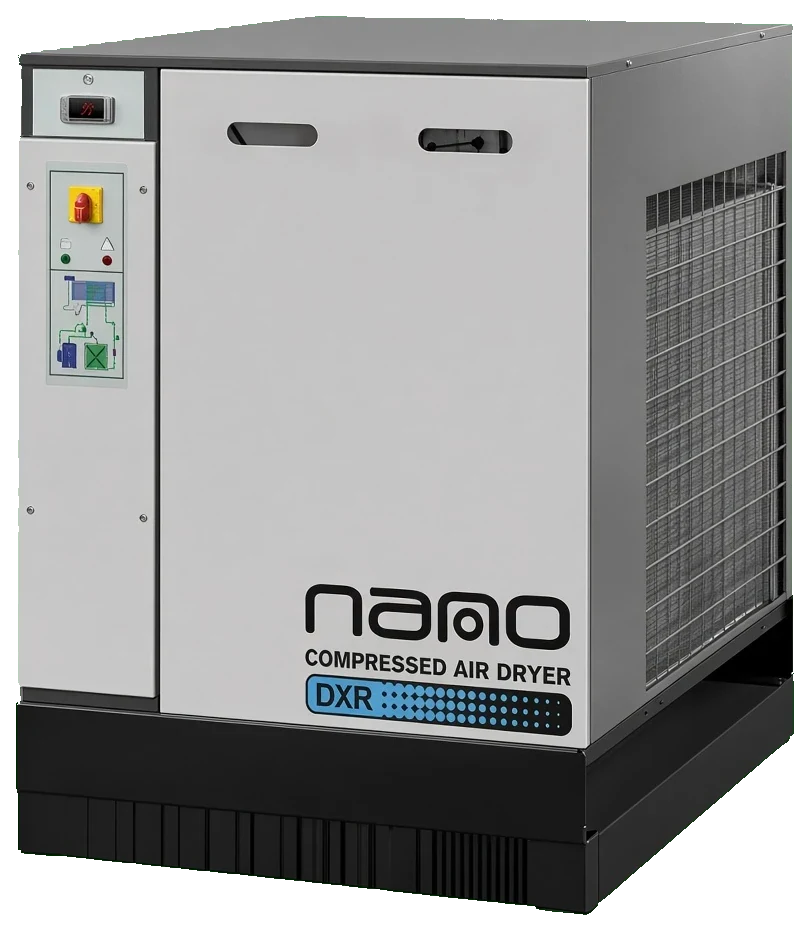
What wet or oily air does at the torch
Consumables, optics and edge quality
- Plasma electrodes and nozzles failing in a few hundred pierces instead of a few thousand
- Arc instability and double arcing from water droplets flashing to steam in the plasma column
- Laser protective windows fogged by moisture and stained by burnt oil, scattering the beam
- Oxide streaks, dross and burn-back on air-cut stainless and aluminum
Two specifications, not one
Plasma and laser air written separately
- Plasma: 38°F pressure dew point (class 4), 0.01 micron coalescer, activated carbon if the compressor is lubricated
- Laser assist: –40°F pressure dew point (class 2) from a desiccant dryer, oil class 1, particles class 1
- Refrigerated dryer as the first stage of the laser train and as the dryer for the rest of the shop
- Filters and dryer on the high-pressure side rated for the booster or compressor discharge pressure
Dryers that fit cutting tables
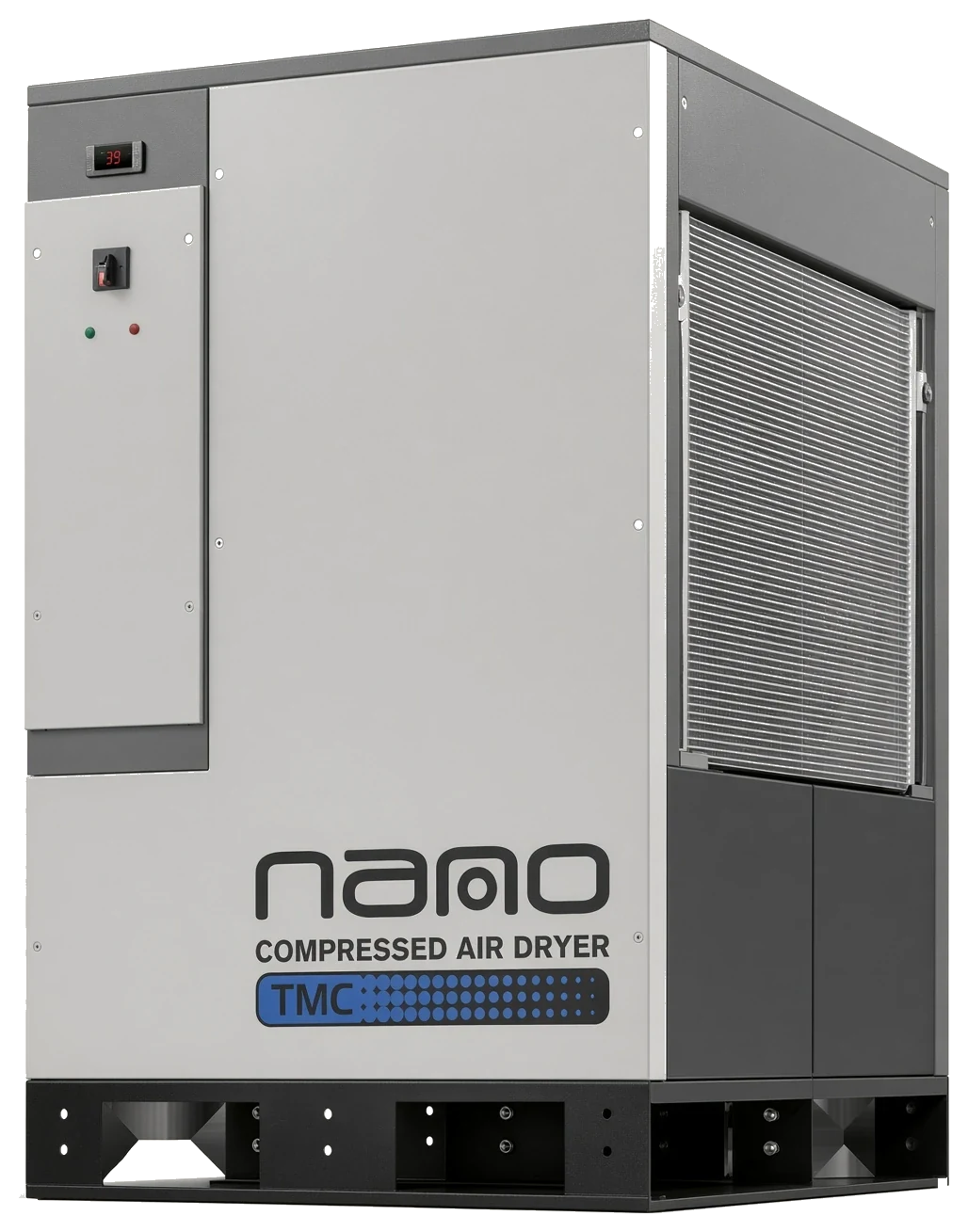
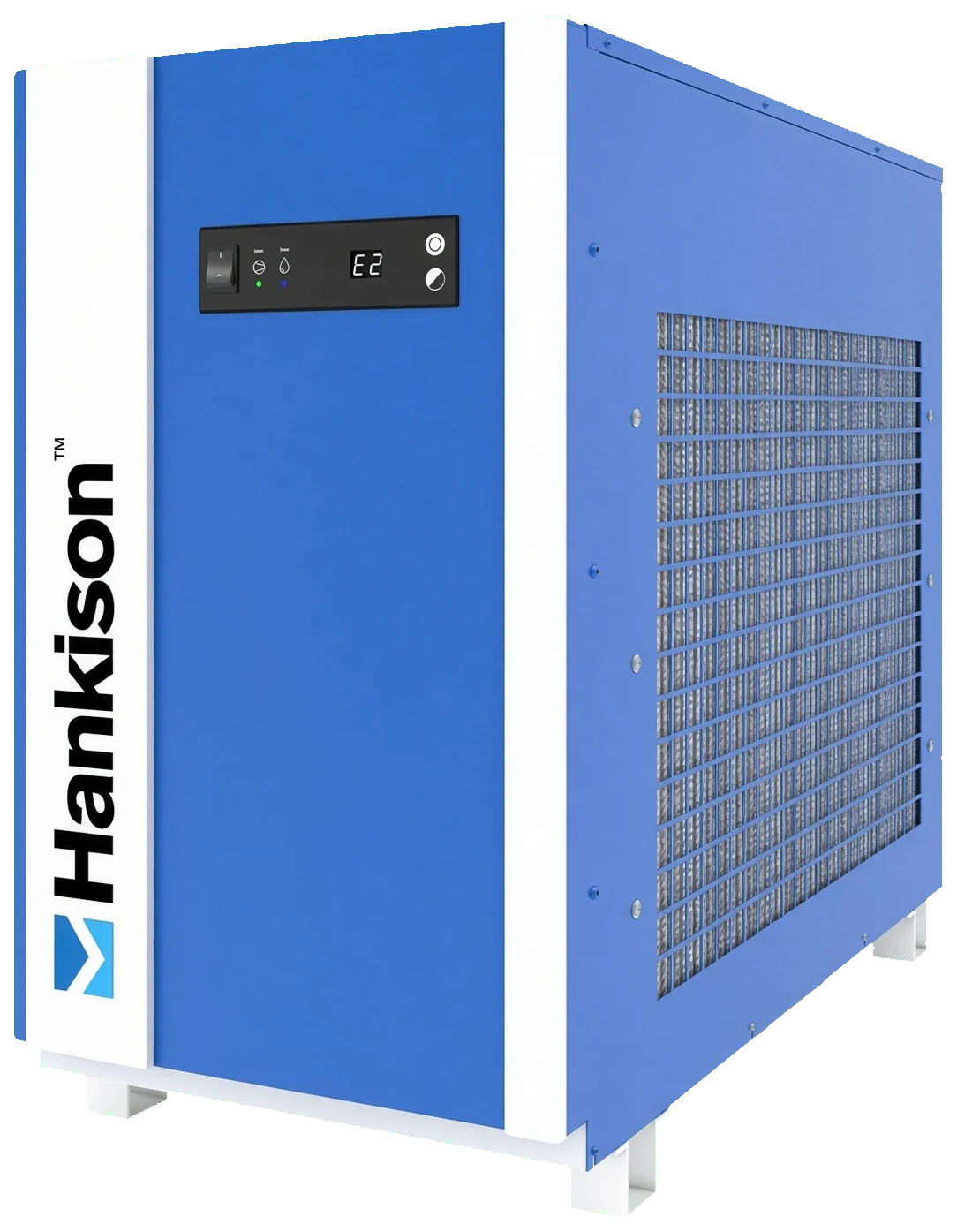
Flows at 100 psig with 100°F inlet air. The DXR, TMC and FLXA series dry the shop compressor behind a plasma table; the HHPR and APET series are the high-pressure first stage ahead of a desiccant dryer on a 300 to 725 psig laser assist line.
| SERIES | TYPE | FLOW RANGE | MAX INLET | MAX PRESSURE |
| DXR Series | Non-Cycling | 10 to 4,200 SCFM | 131°F | 203 psig |
| TMC Series | Thermal Mass Cycling | 30 to 635 SCFM | 140°F | 210 psig |
| FLXA Series | Cycling | 75 to 2,000 SCFM | 120°F | — |
| HHPR Series | High Pressure | 115 to 2,410 SCFM | 120°F | 680 psig |
| APET Series | High Pressure | 45 to 1,000 SCFM | 120°F | 725 psig |
| GFN Series Filters | Compressed Air Filter | 6 to 1,500 SCFM | — | 232 psig |
| HF Series Filters | Compressed Air Filter | 20 to 21,250 SCFM | — | 300 psig |
| ND Series Zero-Loss Drains | Condensate Drain | Call for sizing | — | 290 psig |
Tell us whether the machine is plasma or laser, the cutting pressure and the compressor behind it; we lay out the dryer and filter train for each side.
Pressure at the head, not at the compressor
Both processes are pressure-sensitive and both are usually starved by the piping rather than the compressor. A plasma torch that needs 120 psig at the machine gets 95 psig through 60 ft of 1/2 in hose with a grinder running upstream, and the cut quality drops before anyone looks at the dryer. A laser head set for 250 psig sees the receiver pressure fall through every long cut if the receiver is too small for the booster to keep up.
Run the plasma table its own line with a filter-regulator at the machine. Give the laser a receiver sized for a minute of full-head flow at cutting pressure, with the desiccant dryer between receiver and machine so the stored air is dried on the way out.
- Dedicated line and regulator at the plasma table
- High-pressure receiver sized for a minute of full-head flow
- Desiccant dryer between the receiver and the laser
Plasma tables on shop air
A plasma table is the least demanding cutting process and the one most often fed badly, because it hangs off the same drop as the grinders. The fix is a refrigerated dryer at the compressor room holding 38°F, a 1 micron prefilter ahead of it, a 0.01 micron oil-removal filter behind it and, on a lubricated compressor, an activated carbon filter at the table for the oil vapor no coalescer catches. Regulate at the table and run a dedicated line from the header so the torch sees 120 psig while the shop is using air.
Laser assist air, honestly
Compressed air is the cheapest assist gas for a fiber laser on thin steel, stainless and aluminum, but only if it arrives at class 1.2.1. A refrigerated dryer cannot get there: its floor is about 38°F, and the laser makers ask for –40°F because any moisture reaching the head condenses on the protective window as the gas expands through the nozzle. The train that works is a refrigerated dryer, coalescing filters, a booster or high-pressure compressor, a receiver, a desiccant dryer and a final particulate filter. The refrigerated versus desiccant page sets out why the two dryers are partners rather than alternatives.
Where the refrigerated dryer goes in a laser train
Ahead of the desiccant dryer, always. Air reaching a desiccant bed at 38°F dew point carries about a tenth of the water of saturated 100°F air, so the bed regenerates less often, a purge-saving control keeps the purge down, and the desiccant lasts years instead of months. With a booster, the refrigerated dryer sits on the 100 to 125 psig side. With a dedicated 300 to 450 psig compressor, the first stage is an HHPR or APET high-pressure dryer; at 300 psig the air holds far less water per standard cubic foot, which is why those dryers carry more flow at pressure than their nominal rating.
Cycling or non-cycling for a cutting shop
A cutting cell works in bursts, but the shop around it decides the duty. A job shop with one table, a press brake and a few grinders idles between jobs and saves real power with a cycling dryer such as the TMC or FLXA. A fabrication plant running the laser two shifts with a loaded compressor does better with the simpler non-cycling DXR. On the high-pressure side the HHPR and APET are non-cycling; the receiver ahead of them smooths the head's on-off draw.
Cutting table air questions
No. A refrigerated dryer bottoms out around 38°F and the laser makers specify a –40°F pressure dew point, ISO 8573-1 class 2, because moisture condenses on the protective window as the assist gas expands through the nozzle. Use the refrigerated dryer as the first stage and a desiccant dryer after it; that combination is a laser-grade air package.
Water and oil in the plasma air are the usual reason, ahead of amperage and pierce technique. Droplets flash to steam in the arc and erode the electrode and nozzle, and oil carbonizes on the swirl ring. A 38°F refrigerated dryer with a 0.01 micron coalescer behind it normally doubles consumable life.
Class 1.4.2 is the common specification: particles to class 1, water to class 4 (a 38°F pressure dew point) and oil to class 2 (0.1 mg per cubic meter). A refrigerated dryer meets the water class and a 0.01 micron coalescing afterfilter meets the oil and particle classes.
No. An HHPR or APET dryer at 300 to 725 psig is the first stage: it takes the bulk of the water out at pressure so the desiccant dryer behind it sees a light load and purges less. The desiccant stage still sets the –40°F dew point the head needs.
For an oxide-free edge on stainless and aluminum, yes, and many shops run nitrogen for those jobs and air for mild steel and thin material. Dried air costs a fraction of bottled or generated nitrogen, so a shop that cuts mostly mild steel usually pays for the laser-grade air train in months.
More on cutting table air
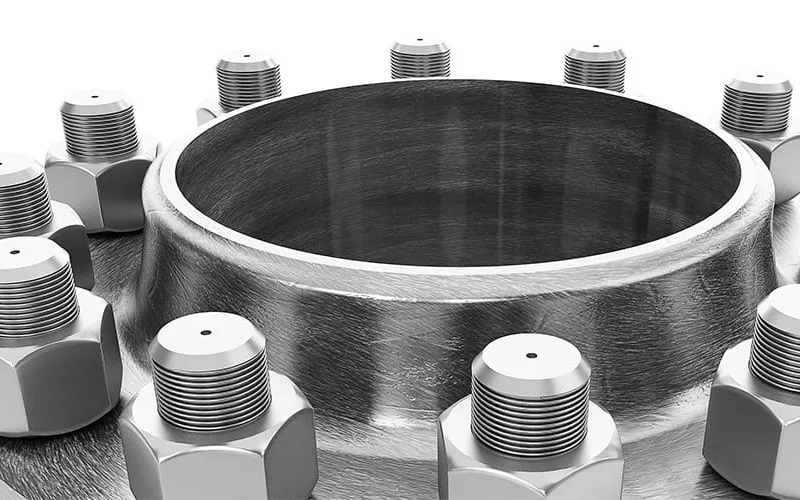
High-pressure refrigerated dryers to 725 psig
The HHPR and APET series: the first-stage dryers for boosted or dedicated high-pressure air feeding a laser cutting head.
Learn More
Pneumatic Tools & Controls
Compressed air drying for air tools, cylinders, valve manifolds and pneumatic controls: what water does to each and which dryer band fits.
Learn More
CNC & Machining
Compressed air drying for CNC machining centers and machine tools: why spindles, tool changers and air blast need a 38 degree dew point, and which dryers fit.
Learn More