
1-805-484-2992
Quotes - Engineering - SalesWhat a plant-size screw compressor asks of its dryer
High steady flow, a warm room and a load profile worth reading
At 60 hp and above the compressor is a fixed installation with a controller that logs loaded hours, an aftercooler that adds 15 to 20°F to the room temperature and a 2 to 3 in discharge. The dryer must carry the full delivered flow, reject 2 to 7 kW of heat somewhere, and hold 38°F at 100 percent on days and at 40 percent overnight.
60 to 75 hp
- 260 to 345 SCFM delivered
- Dryer size 300 to 400 SCFM
- Mid-size machine shops, plastics, packaging
100 to 125 hp
- 430 to 575 SCFM delivered
- Dryer size 500 to 600 SCFM
- Plants with a paint line or blast room on the header
150 to 200 hp
- 645 to 920 SCFM delivered
- Dryer size 800 to 1,000 SCFM
- Foundries, bottling, automotive suppliers
250 hp
- 1,075 to 1,150 SCFM delivered
- Dryer size 1,250 SCFM; 1,500 to 1,600 in a hot room
- The last single-dryer size before flanged headers
Horsepower to dryer size, 60 to 250 hp
Delivered flow at 100 to 125 psig for a single-stage screw at 4.3 to 4.6 SCFM per hp. Dryer sizes at the rating point; the hot-room column applies the 0.88 factor for a 110°F compressor room, which is where most of these machines live in July.
| COMPRESSOR HP | TYPICAL DELIVERY | DRYER SIZE AT 100°F | DRYER SIZE, HOT ROOM (110°F) | DRYER BAND |
| 60 hp | 260 to 275 SCFM | 300 to 325 SCFM | 325 to 400 SCFM | 300 to 1,250 SCFM |
| 75 hp | 325 to 345 SCFM | 400 SCFM | 400 to 450 SCFM | 300 to 1,250 SCFM cycling |
| 100 hp | 430 to 460 SCFM | 500 SCFM | 550 to 600 SCFM | 300 to 1,250 SCFM |
| 125 hp | 540 to 575 SCFM | 600 to 635 SCFM | 650 to 800 SCFM | 300 to 1,250 SCFM cycling |
| 150 hp | 645 to 690 SCFM | 800 SCFM | 800 to 850 SCFM | 300 to 1,250 SCFM |
| 200 hp | 860 to 920 SCFM | 1,000 to 1,050 SCFM | 1,050 to 1,250 SCFM | 300 to 1,250 SCFM cycling |
| 250 hp | 1,075 to 1,150 SCFM | 1,250 SCFM | 1,500 to 1,600 SCFM | 1,600 to 2,000 SCFM |
Non-cycling: the plant runs around the clock
Three shifts and a compressor loaded 70 percent of the time mean the dryer would rarely get to rest anyway. A direct-expansion unit with a hot-gas bypass gives the flattest dew point for the least money, and the previous-generation plant dryers cross-reference to it size for size.
- DXR Series: Direct-expansion non-cycling dryer in 27 sizes from 10 to 4,200 SCFM; the widest single range on the site, with a full data sheet behind every model.
- HPRN Series: Non-cycling refrigerated dryer from 75 to 1,200 SCFM for plant air on a single compressor; previous generation, cross-referenced to current models.
Cycling: one or two shifts, or a trim compressor
Where the header drops below half load for a third of the day, a cycling dryer earns back its premium in one to two years at this size. Phase-change, glycol and dry-mass designs all cover 300 to 1,250 SCFM, and the digital-scroll units modulate continuously from 600 SCFM up.
- FLXA Series: Current cycling dryer, 75 to 2,000 SCFM, air- or water-cooled, with low-GWP refrigerants and a heat-transfer cycling control that follows the load.
- TMC Series: Thermal-mass cycling dryer from 30 to 635 SCFM; stores cold in a thermal mass so the refrigeration compressor rests when air demand drops.
- NXC Series: Cycling dryer in 19 sizes from 20 to 2,000 SCFM with a dry thermal mass and up to 80 percent power savings at part load.
- AES Series: Digital-scroll cycling dryer from 600 to 10,000 SCFM in air- and water-cooled builds, matching refrigeration capacity to demand continuously.
Installing a 300 to 1,250 SCFM dryer
At this size the dryer is a piece of plant, wired at 460 V three phase, piped at 2 to 3 in and rejecting several kilowatts into the room or the cooling-water loop.
Air-cooled dryers between 300 and 1,250 SCFM draw 2 to 7 kW and reject that, plus the heat they take out of the air, into a compressor room that is already carrying the compressor's own heat. If the room cannot be ventilated to hold 100°F, duct the condenser discharge out or specify the water-cooled build, available from 800 SCFM in the cycling line and throughout the digital-scroll range; on 85°F tower water it also draws a quarter to a third less power.
Pipe it after the receiver with a 1 micron coalescing prefilter ahead and a 0.01 micron oil-removal afterfilter behind, each sized for the compressor's full output, and a three-valve bypass around the set. Connections step from 2 in NPT at 300 SCFM to 3 in at 850 and above; the dryer outlet should never be the smallest pipe in the system. Fit zero-loss drains on the separator, dryer and both filter bowls.
A 100 hp screw is the 500 SCFM dryer at 100°F; in a 110°F room with a tired aftercooler delivering 115°F air it becomes the 800.
Size a dryer for my plant compressor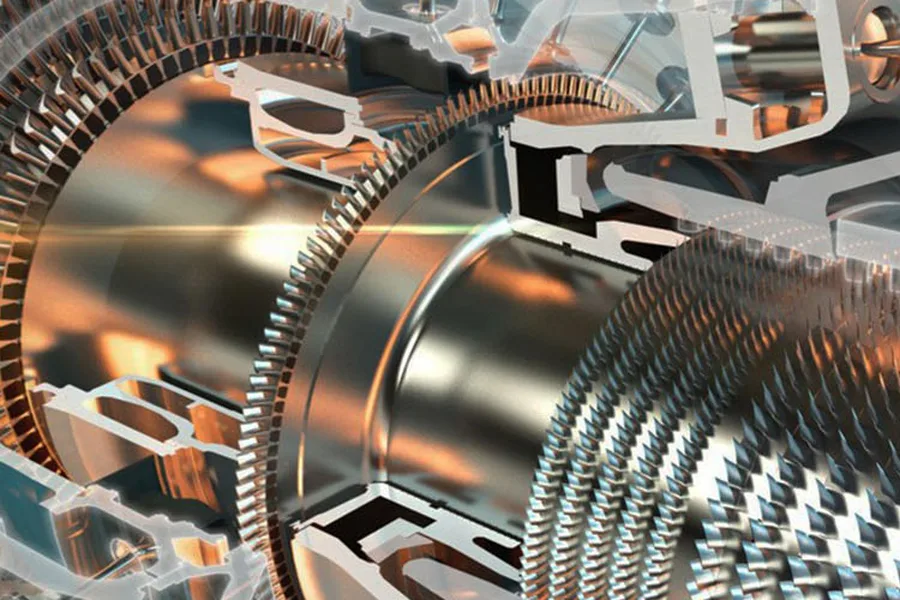





60 to 250 hp screw compressor dryer questions
A 100 hp screw delivers 430 to 460 SCFM at 100 to 125 psig, which the 500 SCFM dryer carries at the rating point. In a 110°F compressor room the corrected duty is 490 to 525 SCFM, so the 550 or 600 SCFM size is the safer order.
One 1,250 SCFM dryer in a cool room, or one 1,500 to 1,600 SCFM unit where the room runs hot; a single dryer is cheaper to buy and to pipe. Two dryers at 650 SCFM each only make sense where the plant wants to keep drying air with one unit down for service.
Air-cooled if the compressor room can be held at or below 100°F; water-cooled if it cannot, or if a cooling tower loop already serves the compressors. The water-cooled build of the same size draws roughly 30 percent less power and is indifferent to a 115°F room in August.
Usually. An 800 SCFM non-cycling dryer draws about 5.8 kW through the 16 hours a day the compressor is idle or lightly loaded, and a cycling unit of the same size spends most of that time stopped. At typical industrial power rates the difference pays the premium in under two years.
The current non-cycling and cycling series both have 500 and 550 SCFM models with 2 to 2-1/2 in connections, so the piping usually stays with a short spool change. Send the old part number and we return the current equivalent from the cross-reference by flow.