
1-805-484-2992
Quotes - Engineering - SalesNon-Cycling Refrigerated Air Dryers, 5 to 50 SCFM
Point-of-use and small-shop dryers for 2 to 10 hp compressors
A dryer in this band sits behind a 2 to 10 hp compressor: a shop piston unit, a small rotary screw, a dental or lab compressor, a single paint booth. The compressor delivers somewhere between 6 and 45 SCFM, and the dryer is picked from the models below by that flow at 100 psig and 100°F inlet, then corrected for whatever the inlet temperature and room really are.
Non-cycling means the refrigeration circuit runs continuously and a hot-gas bypass valve holds the evaporator just above freezing whatever the load. At this size the power penalty of running all the time is small (0.15 to 0.4 kW), so the simplicity wins: no thermal mass, no controller, a pressure dew point of roughly 38°F whether the compressor is loaded or idling.
Every model on this page connects at 3/8 in to 1/2 in NPT, plugs into 115 V single phase and stands on a bench or a wall bracket. The current sizes are listed first; the previous generation is kept for replacement matching and each one points at its successor.
- Sized for 5 to 50 SCFM at 100 psig and 100°F inlet
- 115/1/60 power, 3/8 in and 1/2 in NPT connections
- 38°F class 4 pressure dew point, non-cycling control
- Wall-mount brackets and a single-body bypass valve are catalog items
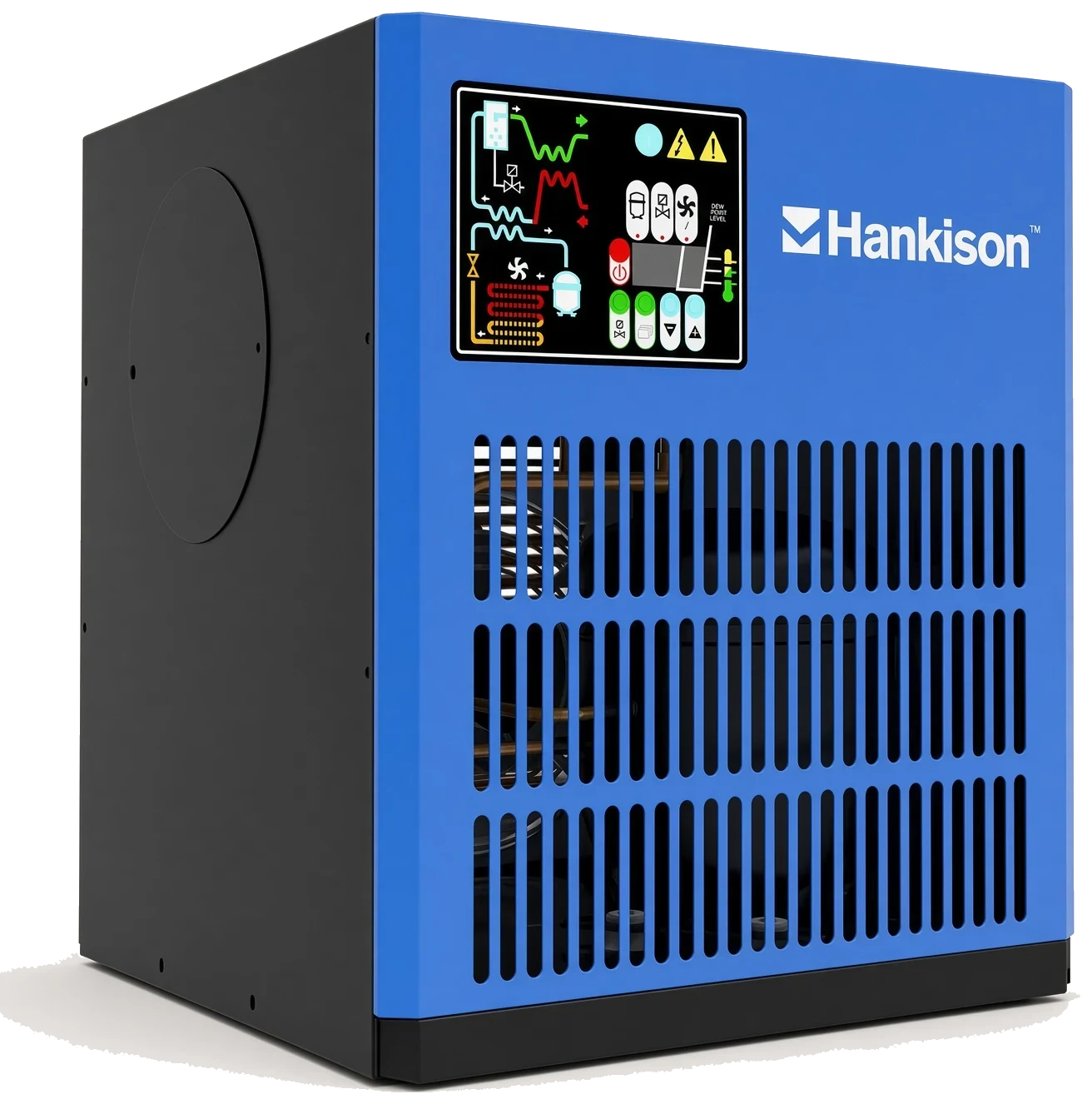
Every 5 to 50 SCFM non-cycling model
Ratings are at 100 psig inlet pressure, 100°F inlet temperature and 100°F ambient. Click a part number for its specifications; current models are listed first, the previous generation below them with the series that replaces it.
| PART NUMBER | SERIES | SCFM | CONNECTION | VOLTAGE | STATUS |
| DXR 0010 NA | DXR Series | 10 | 1/2 in MNPT | 115/1/60 | Current |
| DXR 0015 NA | DXR Series | 15 | 1/2 in MNPT | 115/1/60 | Current |
| DXR 0020 NA | DXR Series | 20 | 1/2 in MNPT | 115/1/60 | Current |
| DXR 0030 NA | DXR Series | 30 | 1/2 in FNPT | 115/1/60 | Current |
| DXR 0050 NA | DXR Series | 50 | 1/2 in FNPT | 115/1/60 | Current |
| HPRB7-A | HPRB Series | 7 | 3/8 in MNPT | 115/1/60 | Current |
| HPRB11-A | HPRB Series | 11 | 3/8 in MNPT | 115/1/60 | Current |
| HPRB15-A | HPRB Series | 15 | 3/8 in MNPT | 115/1/60 | Current |
| HPRB25-A | HPRB Series | 25 | 1/2 in FNPT | 115/1/60 | Current |
| HPRB32-A | HPRB Series | 32 | 1/2 in FNPT | 115/1/60 | Current |
| HPRB42-A | HPRB Series | 42 | 1/2 in FNPT | 115/1/60 | Current |
| HPRB50-A | HPRB Series | 50 | 1/2 in FNPT | 115/1/60 | Current |
| HPR5-10 | HPR Series | 5 | 3/8 in OD tube | 115/1/60 | Replaced by HPRB |
| HPR15 | HPR Series | 15 | 3/8 in OD tube | 115/1/60 | Replaced by HPRB |
| HPR25 | HPR Series | 25 | 3/4 in NPT | 115/1/60 | Replaced by HPRB |
| HPR35 | HPR Series | 35 | 3/4 in NPT | 115/1/60 | Replaced by HPRB |
| HPR50 | HPR Series | 50 | 3/4 in NPT | 115/1/60 | Replaced by HPRB |
The series that cover this band
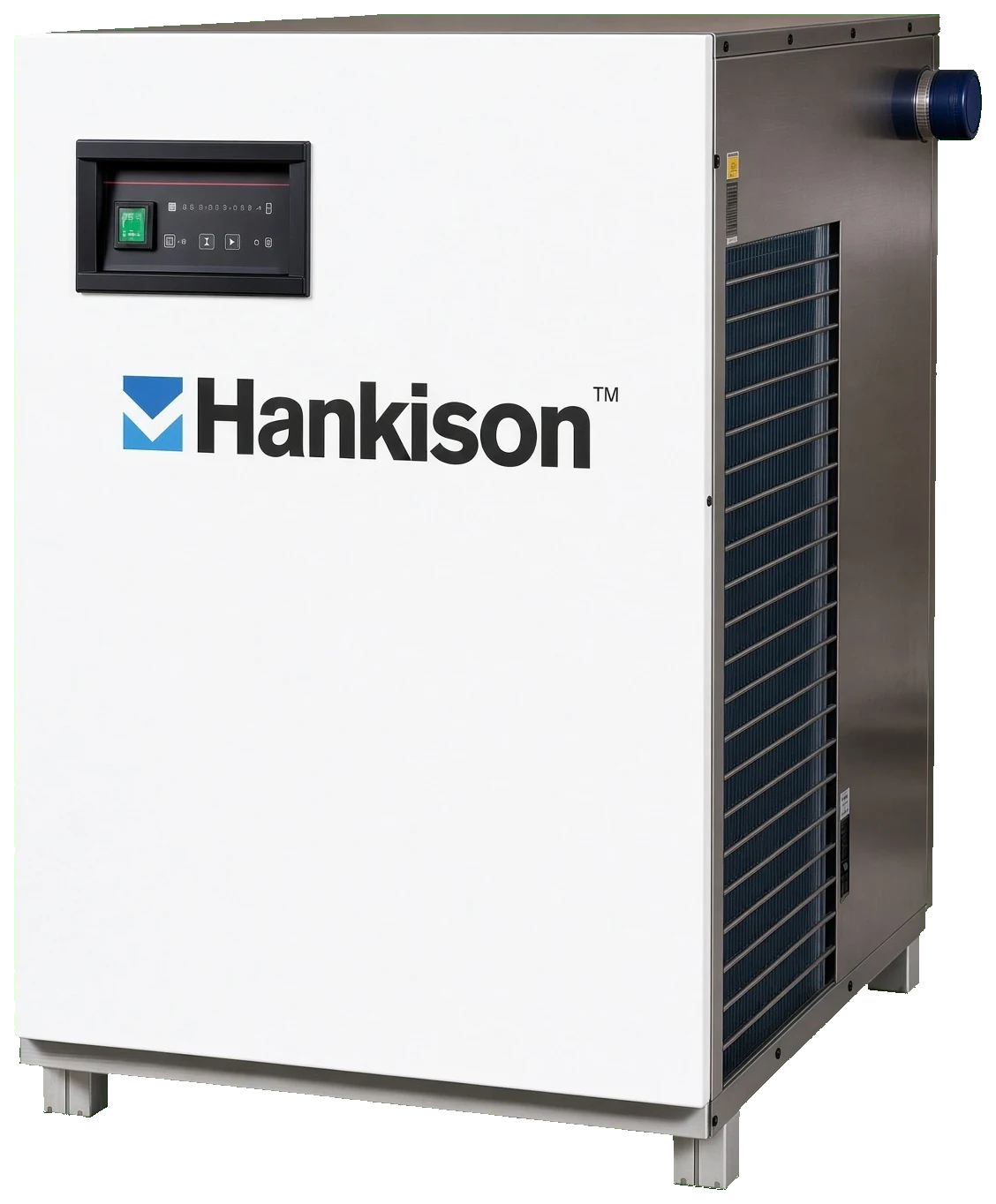
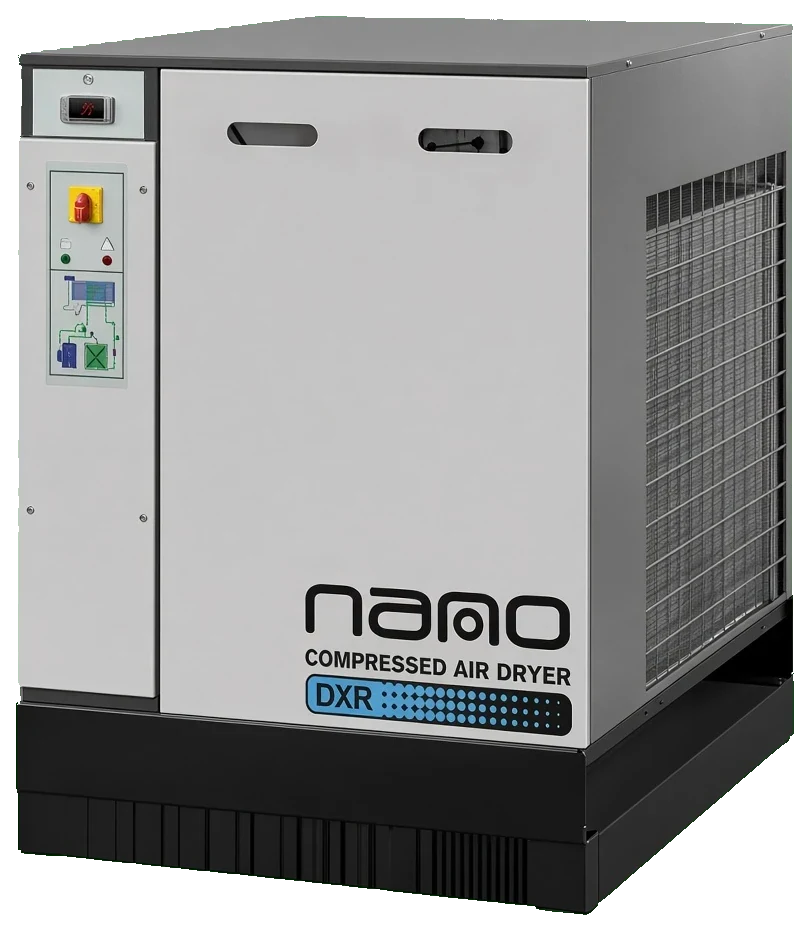
Which compressor, which dryer
A rule of thumb for this band: a piston compressor makes about 3.5 to 4 SCFM per horsepower, a small rotary screw 4 to 4.5. A 5 hp piston compressor is therefore a 15 to 20 SCFM dryer, a 7.5 hp unit needs 25 to 30 SCFM and a 10 hp screw wants the 42 or 50 SCFM size. Pick the next size up rather than down; a dryer running at 110 percent of rating loses its dew point on the hottest afternoon of the year, which is exactly when the shop notices water in the lines.
Inlet temperature is the trap
The ratings assume 100°F air arriving at the dryer. A piston compressor without an aftercooler can deliver 180°F air through a short pipe run. At that temperature a standard dryer in this band is derated to about half its nameplate, and the moisture load is four times higher. Either fit an aftercooler and separator, give the pipe run enough length to cool, or move to the high inlet temperature models, which are built for 180 to 200°F air.
What is in the box
The current 7 to 15 SCFM units use a copper coil exchanger with a pneumatic float drain; the 25 to 50 SCFM units move to an aluminum three-in-one exchanger that precools the inlet air against the cold outlet, chills it, and separates the condensate in the same block, with an electronic drain. The direct-expansion line covers the same flows in 10, 15, 20, 30 and 50 SCFM steps with a slightly different exchanger and a 131°F inlet allowance.
Installing a small dryer
Put a receiver or at least a separator ahead of the dryer so it sees a steady, cooler flow rather than pulses straight from the compressor head. A particulate filter in front protects the exchanger; an oil-removal coalescing filter behind it cleans up what the dryer cannot. Leave the sides clear so the condenser can breathe, and give the drain somewhere to go. The bypass and wall-mount page covers the single-body bypass valve that lets the dryer come out for service without shutting the shop down.
5 to 50 SCFM dryer questions
A 5 hp piston compressor delivers roughly 15 to 20 SCFM, so the 20 or 25 SCFM dryer is the usual match. Go to the 32 SCFM size if the compressor sits in a hot room or has no aftercooler, because both conditions derate the dryer.
Yes, and it is the right choice. A 10 hp rotary screw produces 40 to 45 SCFM, which is above the 42 SCFM size once inlet temperature is taken into account. The 50 SCFM unit still runs on 115 V single phase and uses the same 1/2 in connections.
No. Every model in the 5 to 50 SCFM band is a 115 V single-phase, plug-in unit drawing 0.15 to 0.45 kW. They can share a 15 A circuit with a small compressor as long as the compressor's inrush is considered.
A 38°F pressure dew point at the rating conditions, which is ISO 8573-1 class 4. Under a lighter load or cooler inlet the dew point drops a few degrees; it will never go below freezing, which is why a refrigerated dryer cannot be used for outdoor lines in winter.
Replacement units for the earlier small-cabinet series are supplied from the current line size for size; the part-number pages state the successor. Elements, drains and bypass valves for the earlier units are still stocked.