
1-805-484-2992
Quotes - Engineering - SalesPoint-of-Use Refrigerated Air Dryers
A point-of-use dryer is sized to the machine it serves, not to the compressor. It sits on the drop to one CNC cell, one paint booth or one lab bench, takes air that has already cooled to room temperature in the header, and only has to carry the flow that drop draws: 5 to 30 SCFM for a lab or dental office, 10 to 60 for a single machine, 30 to 100 for a paint booth. That makes it the smallest dryer on the site, a 115 V plug-in unit with 3/8 to 1 in connections.
The reasons to dry at the point of use are practical: there is no central dryer, the header runs outdoors and re-condenses, or one process needs cleaner air than the rest of the plant. The three pages below turn each duty into a flow, a dryer size and the filters that belong with it.
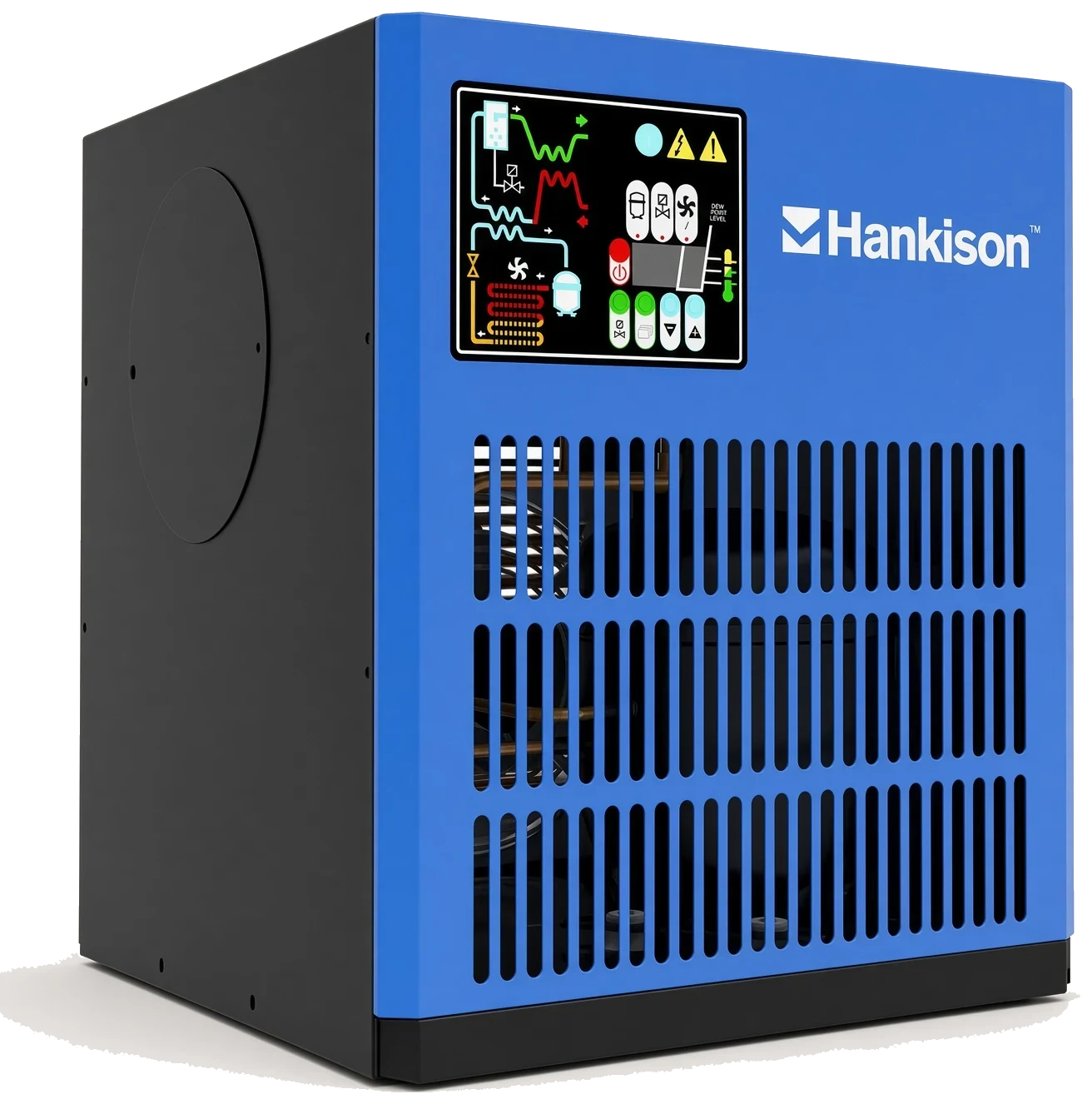
Pick the point-of-use duty
Each page turns the process into a flow, a dryer size and the filtration that goes with it
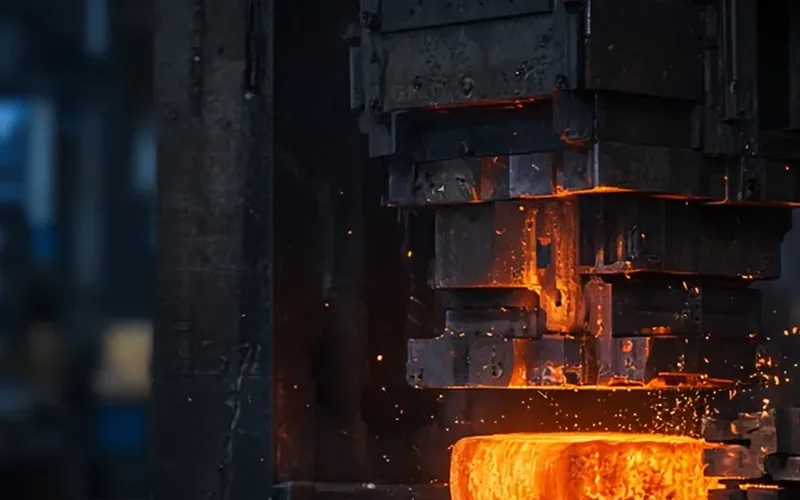
Single Machine: One CNC cell, packaging machine, press or blast cabinet drawing 10 to 60 SCFM from a wet header. Sized from the machine's peak draw with a 7 to 65 SCFM dryer and a two-stage filter set.
Paint Booth: Spray guns, sanders and supplied-air hoods drawing 30 to 100 SCFM. A 38°F dew point plus 0.01 micron oil removal and activated carbon, so the finish has no water spots or fisheyes.
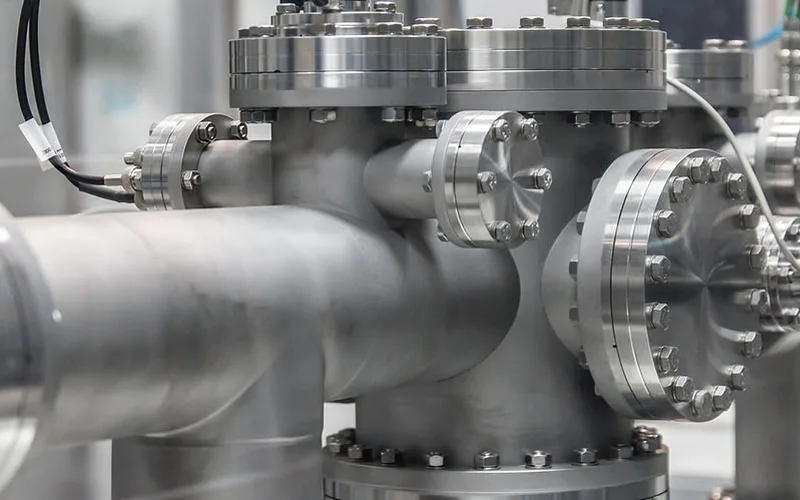
Lab & Dental: Instrument air and dental operatories drawing 5 to 30 SCFM from small oil-free compressors. The 7 to 32 SCFM plug-in dryers, and the high-inlet-temperature units where the oil-free head runs hot.
Three rules
Sizing a dryer to a machine instead of a compressor
1.
Flow is what the drop draws at its peak
Take the peak from the machine's data sheet, not the average: a machine that averages 8 SCFM may pull 30 during a blow-off or a cylinder stroke, and the dryer sees the peak.
Where the sheet is missing, a 3/16 in blast nozzle at 80 psig draws 45 to 50 SCFM, a spray gun 10 to 15, a dental chair 1 to 2.
2.
Inlet is room temperature, pressure is line pressure
Air at a drop has cooled to the plant's temperature, so the inlet correction is usually nil and the dryer is sized close to nameplate.
Line pressure at the machine is often 80 to 90 psig, which derates the dryer by 8 percent; a drop regulated below 80 psig should have the dryer upstream of the regulator.
3.
Filters decide the air quality, the dryer decides the water
A refrigerated dryer delivers a 38°F pressure dew point and nothing else. Oil, oil vapor and particles are the job of a 1 micron prefilter, a 0.01 micron coalescer and, for paint or breathing air, an activated carbon element after the dryer.
A process that needs air drier than 38°F takes a desiccant dryer downstream.
When a point-of-use dryer is the right answer
Where a central dryer exists and the header stays indoors, a second refrigerated dryer at the machine adds little; both deliver about 38°F, so the second is mostly a filter housing with a compressor attached. The point-of-use dryer earns its place when the central dryer is absent, undersized or a long way off.
It also earns its place on a header that leaves the building. Air dried to 38°F and piped across a yard at 20°F condenses again, and a dryer at the far end, indoors, takes that water back out before the machine sees it.
Sizing from the process rather than the nameplate
A 10 hp compressor feeding a whole shop may deliver 40 SCFM, but the one CNC machine on the drop draws 12, and the dryer is the 15 SCFM size, not the 42. A small dryer on a small load also holds its dew point better than a large dryer idling at a tenth of its rating, and draws 0.15 kW instead of 0.5.
The trap is the peak. Blow-off nozzles, air knives and large cylinders draw many times the machine's average for a few seconds, and a dryer sized to the average passes wet air during every one of them. Size to the highest flow the machine can sustain for a minute.
Filters, bypass and mounting at the drop
A point-of-use set is dryer, 1 micron prefilter, 0.01 micron afterfilter and, for paint or instruments, a carbon element, all on one wall bracket with a single-body bypass valve so the machine keeps running through an element change. The whole set for a 25 SCFM drop fits in a space 3 ft wide.
Every bowl and the dryer separator need a drain, and in a clean room, a clinic or a food area the discharge is piped to a suitable point rather than dripped on the floor.
Point-of-use dryer questions
Not by much. Both are refrigerated dryers limited to a pressure dew point around 38°F, so a second one only removes water that condensed in the header after the first. For air drier than 38°F the point-of-use unit has to be a desiccant dryer.
For the machine, at its peak draw. The dryer only ever sees the flow through that drop, so a 60 SCFM compressor feeding a 12 SCFM machine needs a 15 SCFM dryer at the machine.
Only a small one. At 80 psig a dryer carries 92 percent of its 100 psig rating, so a 15 SCFM machine wants the 20 or 25 SCFM size. Below 60 psig the derating reaches 20 percent and the dryer should move upstream of the regulator.
Off the header drop, before the regulator and lubricator, on a wall bracket at working height with the prefilter ahead of it and the afterfilter behind. Keep it out of the machine's enclosure so its condenser breathes room air, not cabinet heat.