
1-805-484-2992
Quotes - Engineering - SalesThe refrigeration runs all the time, and that is the point
A non-cycling dryer keeps its refrigeration compressor running whenever the dryer is switched on. A hot-gas bypass valve feeds warm refrigerant back into the evaporator as the air load falls, so the exchanger never ices and the pressure dew point holds near 38°F whether the plant is at full draw or a single tool is running.
That constancy is what the design buys. There is no stored cold to run down, no controller deciding when to restart, and no dew point swing between cycles; a plant that runs its compressor loaded 60 percent of the time or more gets the same dry air as a cycling dryer for a lower price and with fewer parts. The penalty is power at part load: the refrigeration compressor draws close to its full-load current whether it is drying 100 percent of the rated flow or 20.
Four flow bands cover the section. The 5 to 50 SCFM band is the small-cabinet dryer on a 115 V cord behind a 2 to 10 hp compressor; 65 to 250 SCFM serves the 15 to 50 hp rotary screw; 300 to 1,250 SCFM covers 60 to 250 hp and the two-compressor room; and 1,600 to 4,200 SCFM is the flanged central-plant dryer for 300 hp and up. The current direct-expansion series spans all four bands in 27 sizes, the current small-cabinet series covers the first, and the large plant dryer adds 2,500 and 3,000 SCFM units with networked controls.
Send the compressor horsepower or delivered SCFM, the inlet temperature and the room temperature, and we return the band, the model and a price.
Cycling or non-cycling?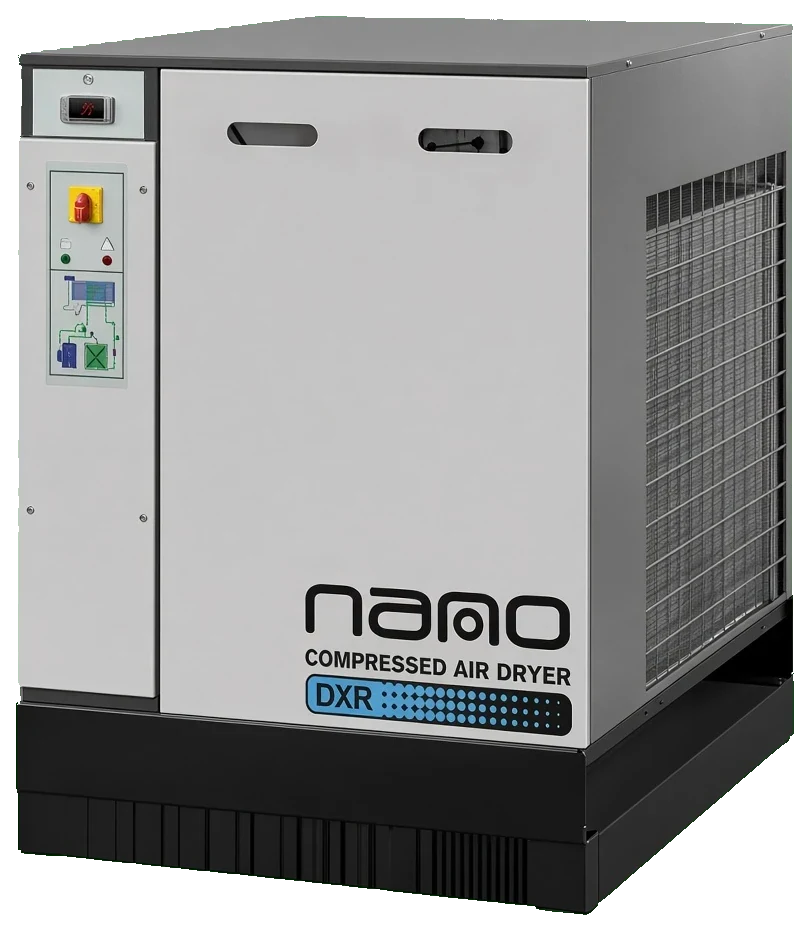
Four flow bands, 5 to 4,200 SCFM
Pick the band by the compressor's delivered flow, then the model by inlet and ambient temperature
Every non-cycling series, current and previous generation
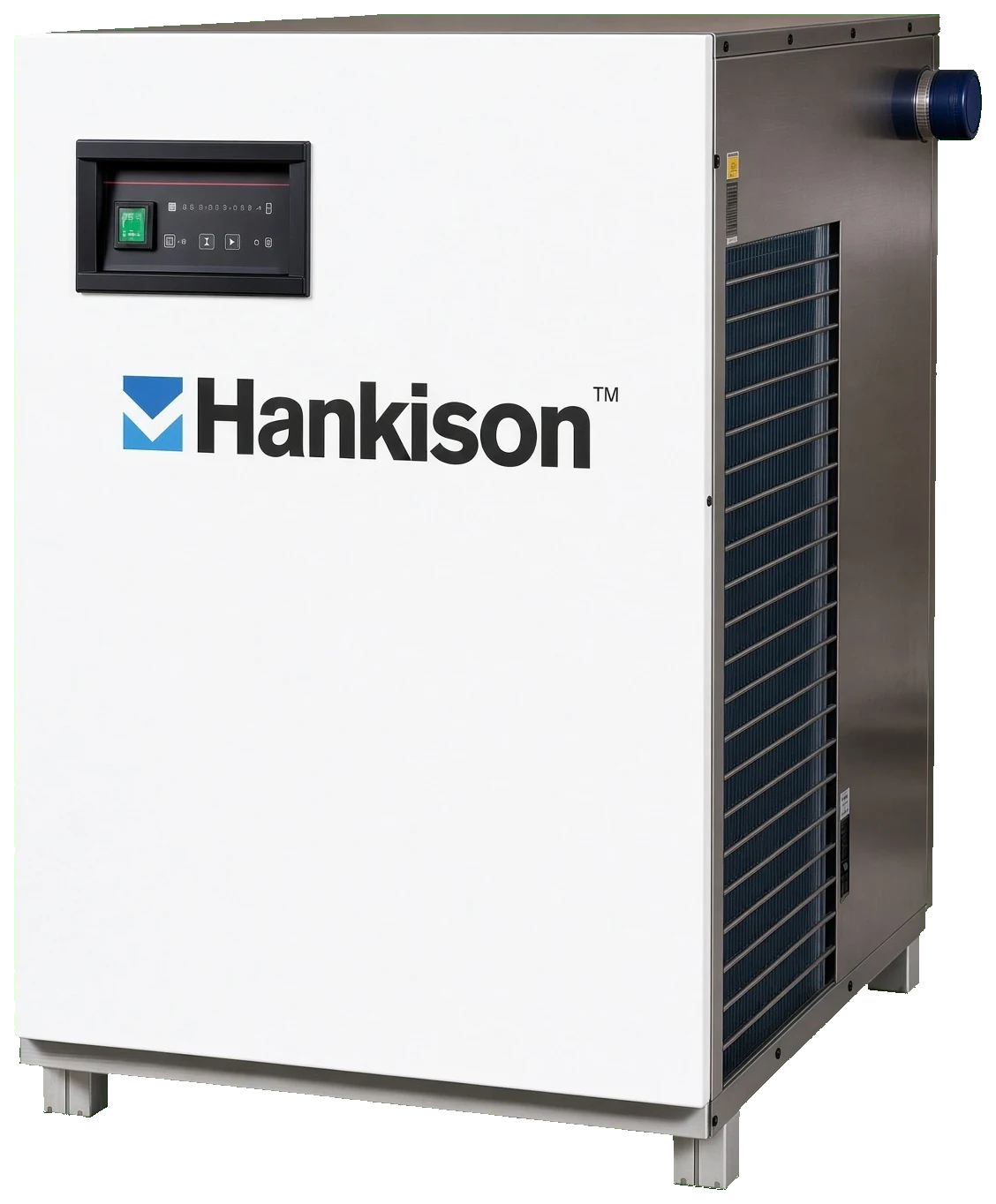
HPR Series: Compact non-cycling dryer for 5 to 50 SCFM shop and point-of-use air; the earlier generation of the small cabinet line, still supported with part numbers and replacements.
5 to 50 SCFM · Non-Cycling · 250 psig max inlet · 120°F max inlet
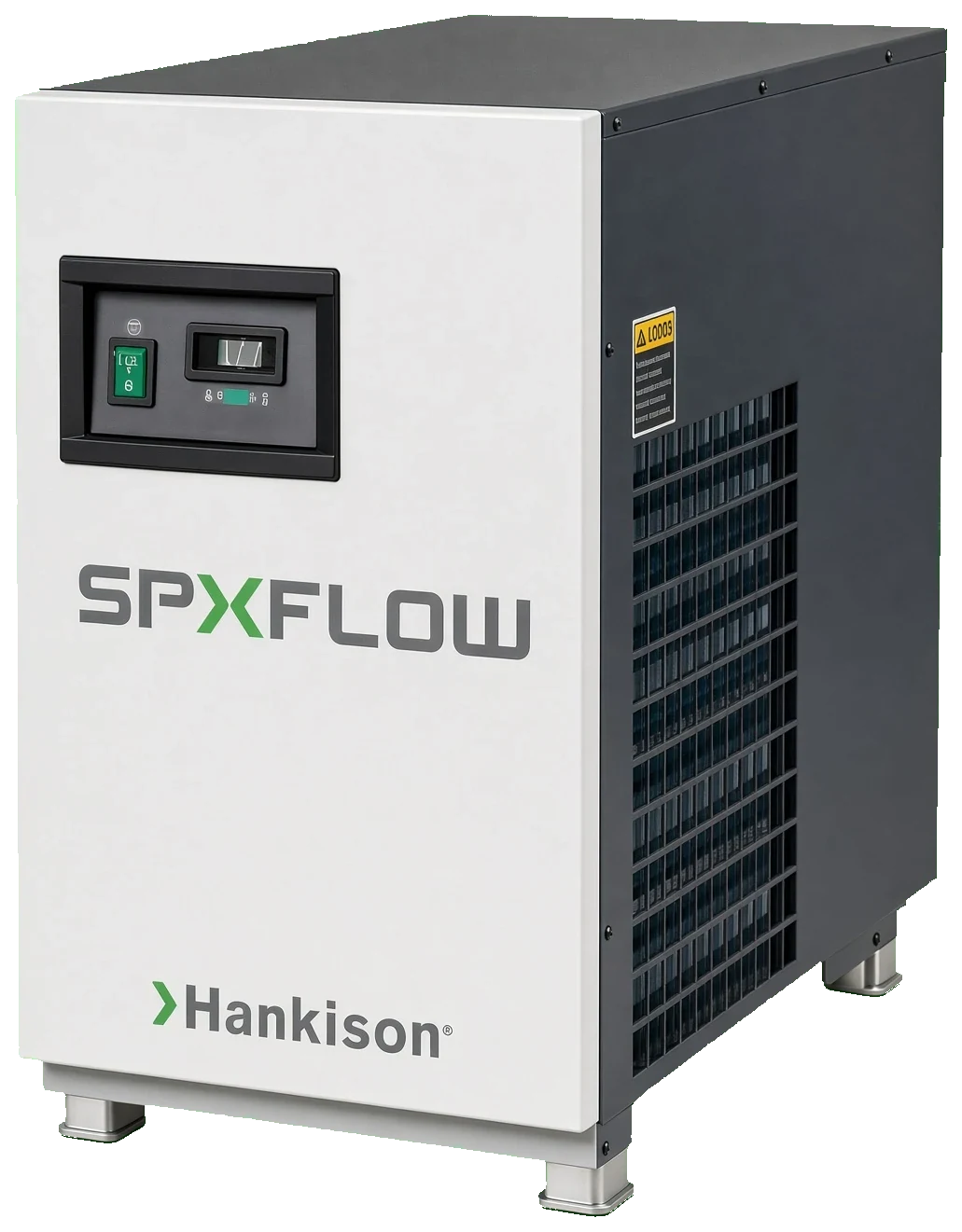
HPRN Series: Non-cycling refrigerated dryer from 75 to 1,200 SCFM for plant air on a single compressor; previous generation, cross-referenced to current models.
75 to 1,200 SCFM · Non-Cycling · 232 psig max inlet · 120°F max inlet
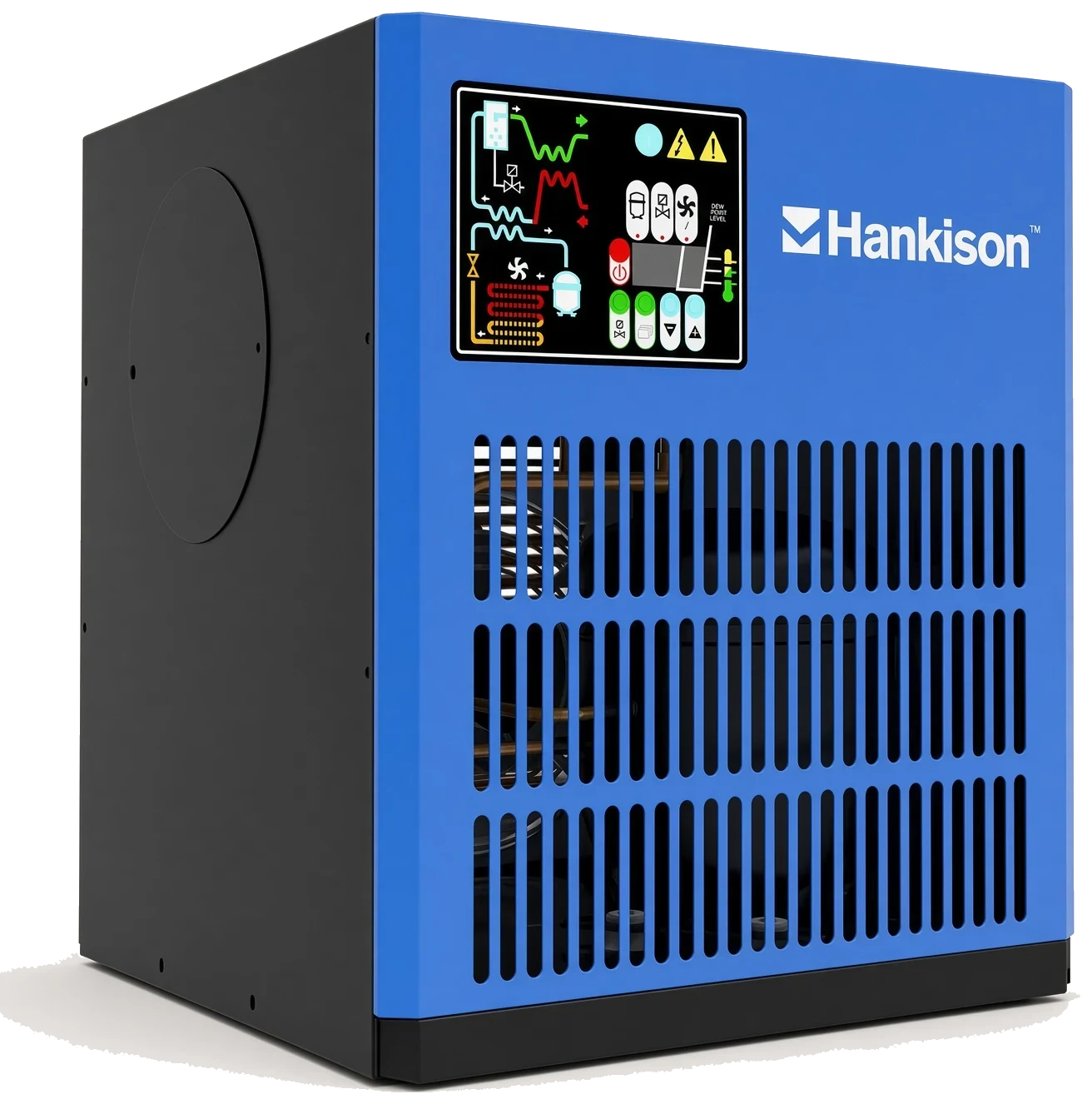
HPRB Series: Current small non-cycling dryer, 7 to 50 SCFM, with low-GWP R513A refrigerant, a 3-in-1 heat exchanger and a built-in separator on the larger sizes.
7 to 50 SCFM · Non-Cycling · 200 psig max inlet · 120°F max inlet
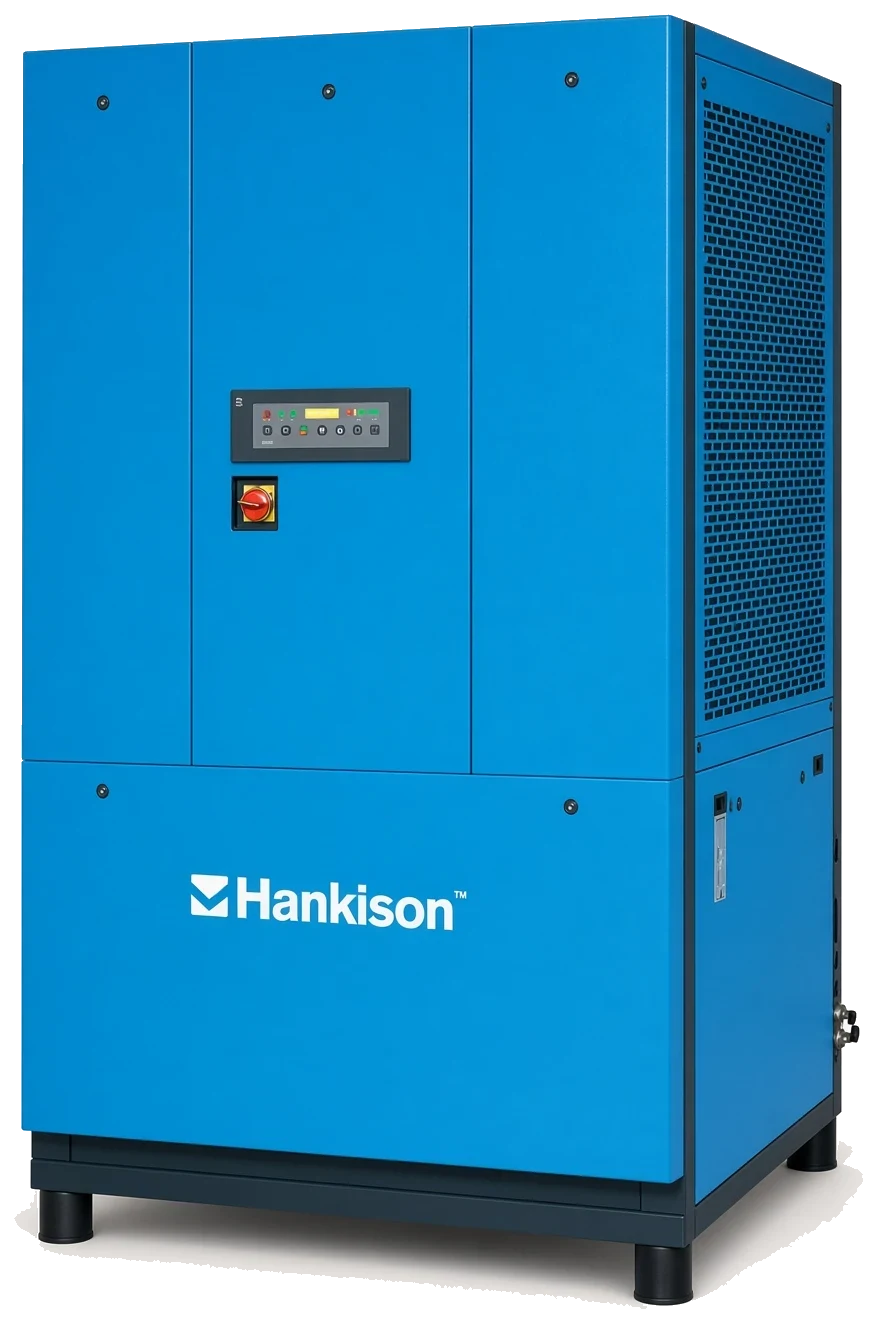
HPRplus Series: Large non-cycling dryer for 2,500 and 3,000 SCFM central plants with digital controls and a low-pressure-drop exchanger.
2,500 to 3,000 SCFM · Non-Cycling · 232 psig max inlet · 120°F max inlet
DXR Series: Direct-expansion non-cycling dryer in 27 sizes from 10 to 4,200 SCFM; the widest single range on the site, with a full data sheet behind every model.
10 to 4,200 SCFM · Non-Cycling · 203 psig max inlet · 131°F max inlet
Selection notes
Three things to settle before choosing a non-cycling dryer
1.
How it works
Inlet air is precooled against the cold outlet air, chilled to about 35°F against the refrigerant, and passed through a separator that takes out the condensate before the air is reheated on its way out.
The hot-gas bypass valve keeps the evaporator above freezing at any load, which is why the dryer needs no controller and why it draws about the same power at 20 percent load as at 100.
2.
When it is the right choice
A compressor loaded most of the hours the dryer is powered, a process that wants a dew point that does not move, and a budget that favors first cost over the electricity bill.
Three-shift plants, bottlers, continuous process lines and small shops where the dryer draws under half a kilowatt all fit; a single-shift plant with the dryer left on all week does not.
3.
What to check
Delivered SCFM from the compressor data sheet rather than horsepower, the inlet temperature the aftercooler actually achieves in summer, and the compressor room temperature at its worst.
Every 10°F above the 100°F rating point on either figure costs 10 to 20 percent of capacity; the correction factors are on the sizing pages.
Non-cycling dryer questions
The refrigeration compressor runs continuously while the dryer is on, and a hot-gas bypass valve regulates the evaporator temperature instead of stopping the compressor. It is the simplest refrigerated dryer design and holds the steadiest dew point.
Roughly the same at any load: about 0.15 to 0.45 kW for the 5 to 50 SCFM cabinet units, 1 to 3 kW from 65 to 250 SCFM, 2 to 7 kW to 1,250 SCFM and 8 to 20 kW at 1,600 to 4,200 SCFM. The figure is on every part number page.
Multiply rotary screw horsepower by 4.3 to 4.6, or piston horsepower by 3.5 to 4, for delivered SCFM, then pick the band that contains it: to 50 SCFM for 2 to 10 hp, 65 to 250 for 15 to 50 hp, 300 to 1,250 for 60 to 250 hp, and 1,600 and up for 300 hp and larger.
Yes. The retired small-cabinet and plant-air series are listed with every part number and its flow, connection and voltage, and each one points at the current model that replaces it, so a failed unit is matched in one step.
Up to 120 to 140°F depending on the model, with a capacity derate above 100°F. Air at 180 to 200°F from a piston compressor without an aftercooler needs the high-inlet-temperature dryers in the Special Duty section.