
1-805-484-2992
Quotes - Engineering - SalesFacilities & Trades
Five Very Different Compressors, One Dryer Question
This section covers the air systems that do not belong to a production line: a cabinet shop on a 10 hp piston compressor, a weaving mill on 500 hp of rotary screws feeding air-jet looms, a building's pneumatic thermostats on a 2 hp duplex unit in the boiler room, a dental practice on an oil-free twin-head compressor, and an electronics floor or laboratory on oil-free scrolls. The flows run from 5 SCFM to 2,500, the compressors from lubricated piston units with no aftercooler to oil-free machines with a class 1 oil specification, and in every case the question is the same: how dry, how clean, and which dryer.
For most of them a refrigerated dryer holding a 38°F pressure dew point (ISO 8573-1 class 4) is the answer, because the air is used indoors at room temperature and nothing it touches is colder than 38°F. The exceptions matter and are named on each page: pneumatic control lines that pass through unheated spaces, hospital medical air under NFPA 99, and purge or dry-box air in a laboratory, all of which need desiccant drying that a refrigerated unit cannot reach.
- Small piston compressors without an aftercooler discharge 180°F air and take a high-inlet-temperature dryer, not a standard one
- Oil-free compressors still need a 0.01 micron afterfilter for particles and, where vapor matters, an activated carbon stage
- A 1701 bypass valve and a wall bracket turn a 7 to 35 SCFM dryer into a serviceable installation in a closet or mechanical room
Five Applications
Find Your Building or Shop Below
Each page names the air-using equipment, the damage water and oil do to it, the compressor and flow typical of the trade, the dew point and ISO class to specify, where the dryer and filters go, and whether cycling or non-cycling drying fits the hours the compressor runs. The table beneath the tiles gives the short answer for each.
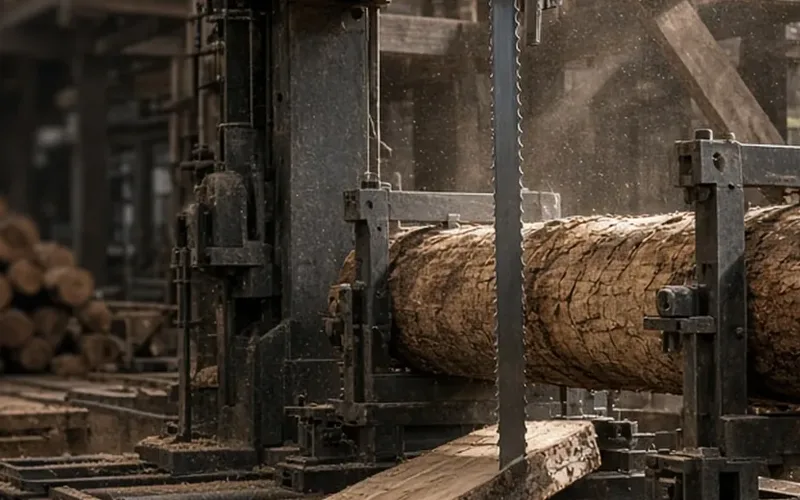

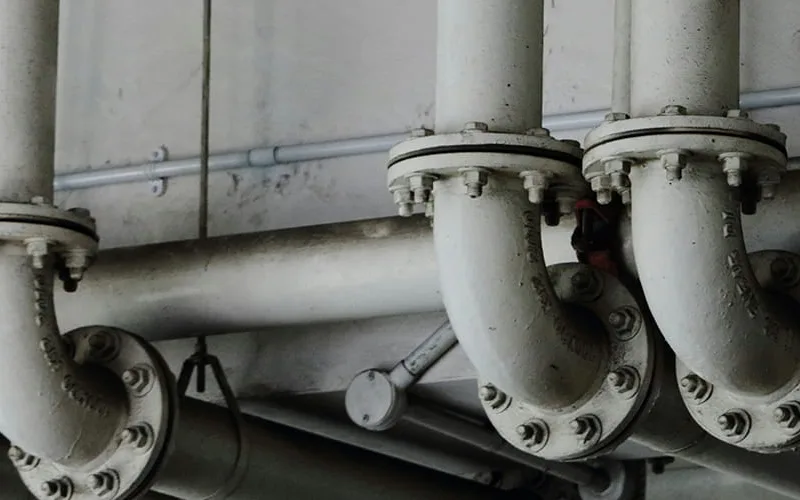


Small Compressors and Hot Inlet Air
Three of the five trades on this page run on reciprocating compressors, and most small piston units have no aftercooler: the air leaves the head at 180 to 200°F and reaches the dryer little cooler if the pipe is short. A standard refrigerated dryer is rated for 100°F inlet air and loses a third of its capacity at 120°F, so on that duty it is either the high-inlet-temperature type, the HTR Series at 180°F and the HRHT Series at 200°F, or a standard dryer fed through a receiver large enough to cool the air first.
The high-inlet dryers deliver a 50°F pressure dew point, class 6, rather than the 38°F of the standard line. In a shop or building held at 65 to 75°F that is still 15 to 25°F of margin, and it is the honest figure to design to. Where a lower dew point is needed, the receiver-then-standard-dryer route gives 38°F.
Where Refrigerated Drying Stops
A refrigerated dryer cannot go below about 35 to 38°F without freezing its own condensate, and that fixes its limits. Pneumatic control mains that cross an unheated attic or feed rooftop units in a northern winter need a class 2 dew point of -40°F. Hospital medical air under NFPA 99 must be dried below the frost point at line pressure with an alarm at 35°F, which puts the duplex medical-air plant on desiccant dryers. Laboratory purge gas for spectrometers and dry-box air are the same story.
Everywhere else in these buildings, which is most of the air, the refrigerated dryer is the right tool: shop tools, dental handpieces, textile looms, pick-and-place machines and the utility air that runs sterilizers and building controls. The refrigerated versus desiccant page draws the line in detail, and the dew point and ISO classes page explains the class numbers used in the table above.
Compressor, Flow, Dew Point and Dryer by Trade
Typical figures for one shop, mill, building or practice. Refrigerated dew points are pressure dew points at 100 psig.
| APPLICATION | TYPICAL COMPRESSOR | FLOW TO DRY | DEW POINT NEEDED | DRYER THAT FITS |
| Woodworking | 5 to 10 hp piston, or a 15 to 50 hp screw in a cabinet plant | 20–230 SCFM | 38°F class 4; the 50°F class 6 of a high-inlet dryer is fine for a shop at 65°F | High-inlet-temperature (HTR, HRHT) on a piston unit; 5 to 50 and 65 to 250 SCFM on a screw |
| Textiles | 100 to 500 hp of rotary screws, often several | 450–2,500 SCFM | 38°F class 4; oil class 1–2 for air-jet looms | 1,600 to 4,200 SCFM non-cycling; 2,500 to 12,500 SCFM cycling |
| HVAC controls | 1 to 5 hp duplex piston in a mechanical room | 5–20 SCFM | 38°F class 4 indoors; class 2 desiccant where lines cross unheated space | 5 to 50 SCFM non-cycling with a 0.01 micron filter and carbon stage |
| Medical & dental | 1 to 5 hp oil-free piston (dental); 7.5 to 30 hp for support air | 5–40 SCFM | 38°F class 4 for dental and utility air; NFPA 99 medical air is desiccant-dried below 32°F | 5 to 50 SCFM non-cycling with fine filtration |
| Electronics & labs | 5 to 30 hp oil-free scroll | 15–120 SCFM | 38°F class 4, oil class 1; class 2 desiccant for purge and dry-box air | 5 to 50 SCFM and 20 to 250 SCFM cycling |
Facilities and trades air drying questions
If the tank sits between the compressor and the dryer and the compressor runs a light duty, the air cools enough in the tank for a standard 7 to 50 SCFM dryer. If it runs hard or the dryer is close-coupled to the head, use an HTR or HRHT Series high-inlet-temperature dryer rated for 180 or 200°F air.
No. Oil-free machines still shed wear particles and pull in whatever the room air carries, so the 0.01 micron afterfilter stays. What you can usually skip is the activated carbon stage, unless the intake air itself carries hydrocarbon vapor from a parking garage or a nearby process.
Not for the piped medical-air system under NFPA 99, which requires drying below the frost point and an alarm at 35°F; those plants use desiccant dryers. Refrigerated dryers serve the rest of a hospital's air: laboratory bench air, maintenance shop air, sterile-processing utility air and pneumatic building controls.
A 15 to 25 SCFM non-cycling dryer draws roughly 0.2 to 0.3 kW and runs continuously, about the same as a household refrigerator. Below 50 SCFM the cycling premium rarely pays back, which is why the small non-cycling HPRB Series and DXR Series are the usual choice for shops, offices and practices.
Yes, if it has air to breathe. An air-cooled dryer rejects heat through its condenser and needs a few inches of clearance and a room that stays under about 110°F; a closet with no ventilation warms until the dryer trips. Wall brackets and the 1701 bypass valve suit the smallest units in tight spaces.