
1-805-484-2992
Quotes - Engineering - SalesMaintenance That Keeps a Refrigerated Dryer at Its Rating
A refrigerated dryer has almost nothing to service: a sealed refrigeration circuit, a fan, a drain and the filters around it. What it has instead are four things that drift, and each takes capacity away quietly until the dew point climbs on a hot afternoon. A condenser matted with dust runs hot and loses the capacity a hot room would take. A drain that sticks floods the separator. A filter element past its differential throttles the compressor or lets oil through. And a dew point nobody measures is a dew point nobody knows.
None of this is a service program. It is a monthly walk past the dryer with a flashlight, a rag and an instrument, and it is how a dryer sized correctly on day one is still at 38°F in year ten.
Condenser, fan and room
The air-cooled condenser is the part that goes wrong most often, because it is a fine-finned coil standing in the dustiest room in the plant. As the fins load up, the refrigerant condenses at a higher pressure, the compressor delivers less cooling, and on a hot day the high-pressure switch trips. The symptom is a dew point that rises with the room temperature and a dryer that cuts out in July. Blow the fins out from the inside with low-pressure air monthly, weekly in a woodworking or textile plant, and check that the fan turns freely and the intake is clear.
While there, read the room: a compressor added since the dryer was installed, a louver blocked, or an exhaust fan that has stopped all raise the ambient the dryer was sized for. The ambient page shows what each 10°F costs.
Drains, filters and the dew point check
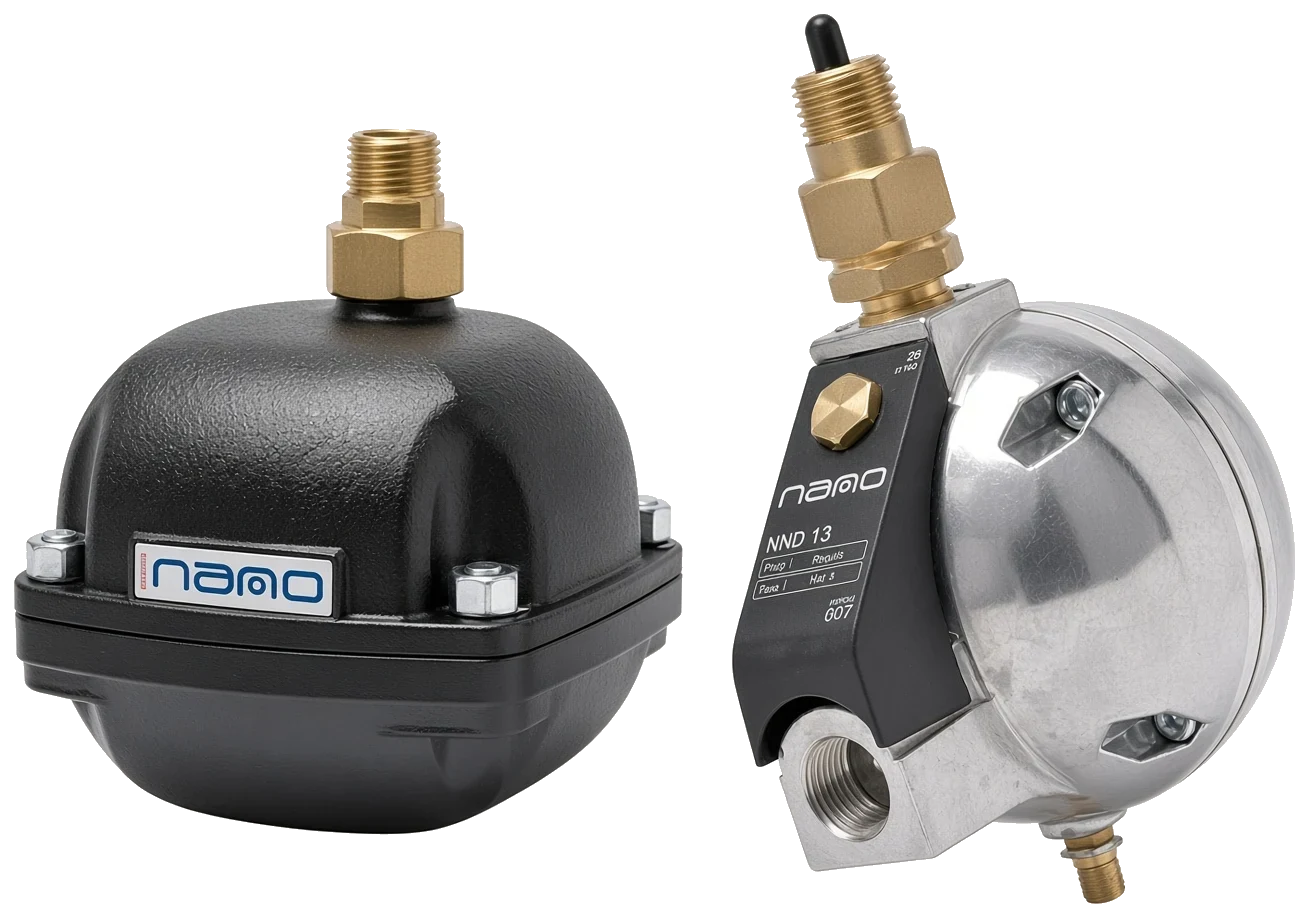
Test every drain weekly: the test button on a timed drain, the test function on a dryer controller, or a glance at the sight glass on a float drain. Clean the strainers quarterly. Read the differential indicators on the prefilter and afterfilter and change elements at the series limit or at twelve months; the filter page lists the limits by series. Exercise the bypass valves at each element change so they still turn when they are needed.
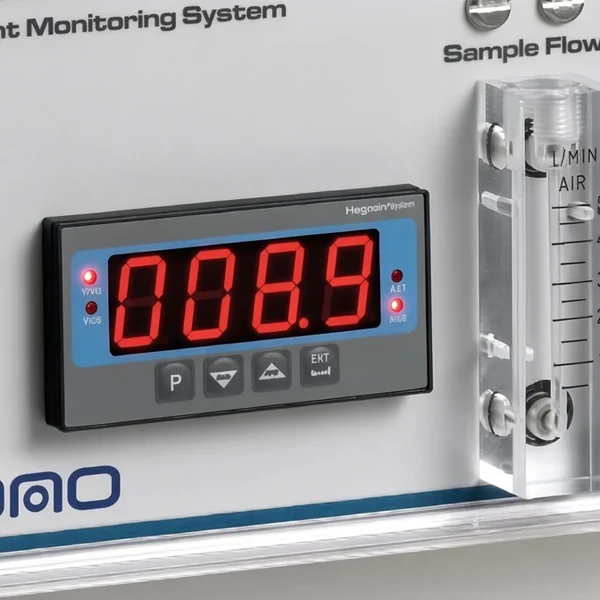
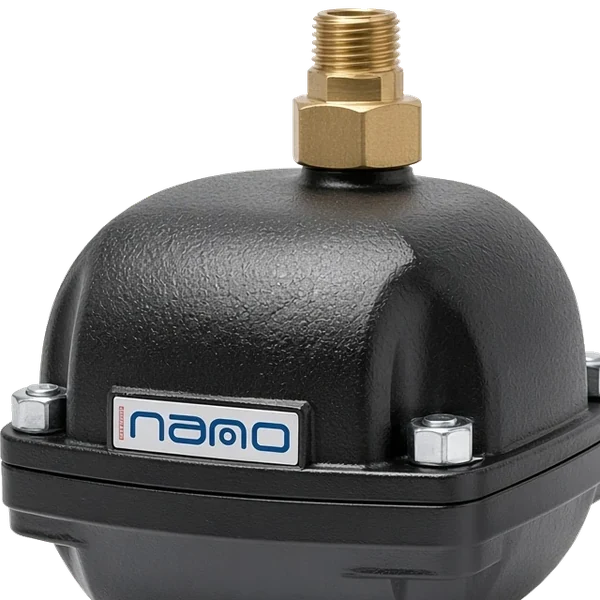
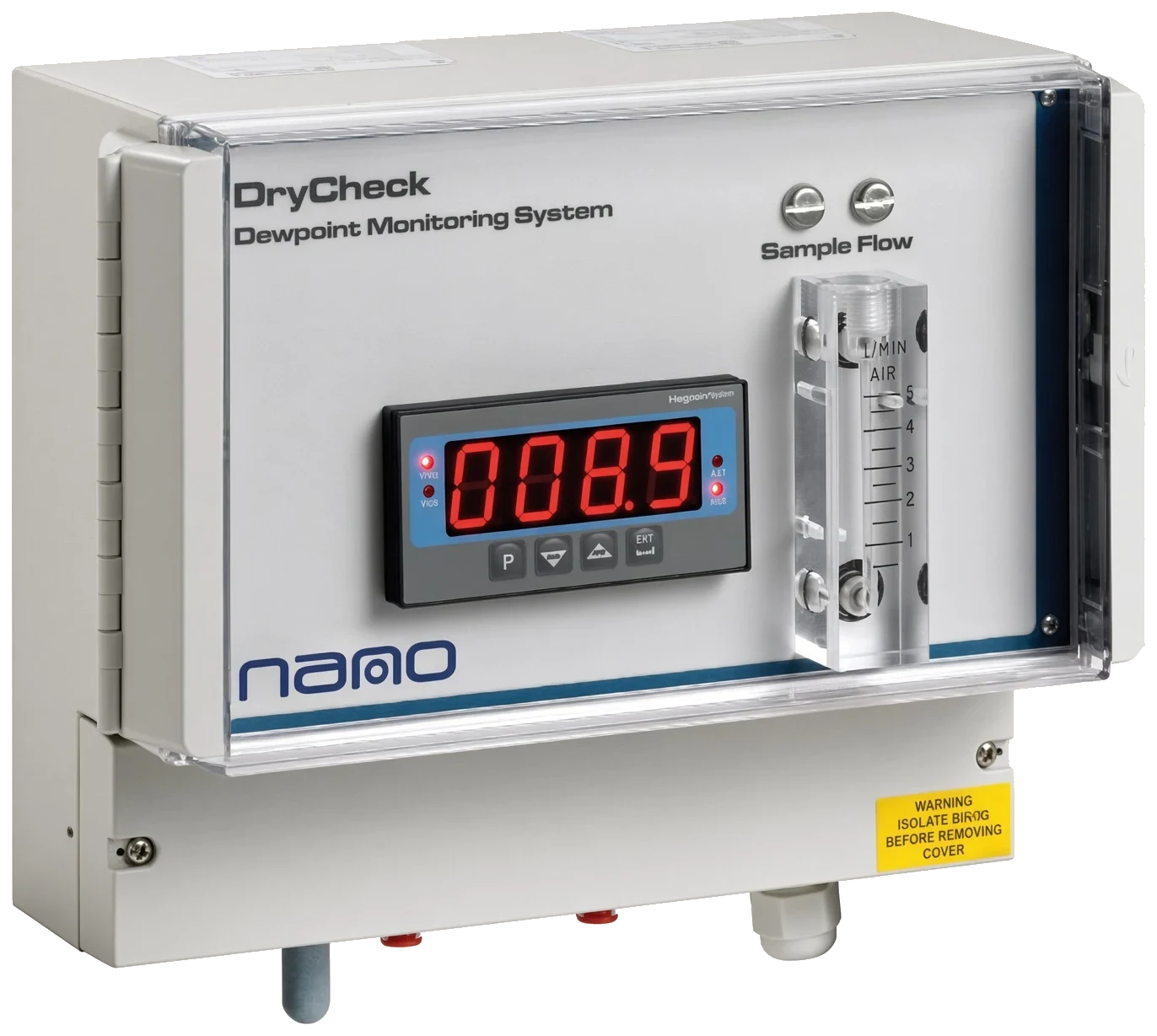
Then measure the dew point. Many dryers display a dew point, but on most it is a temperature sensor in the exchanger standing in for the real thing. A PDM dew point monitor samples the outlet air through a quick-connect fitting and reads the pressure dew point directly, so a monthly reading, or a wall-mounted unit with its alarm wired to the plant, tells you whether the 38°F on the nameplate is still true.
Parts that keep the rating
Worked example: a 250 SCFM dryer reading 48°F in July
Finding the lost ten degrees in twenty minutes
- Compressor unchanged since the sizing, so the load is not the cause
- Room 108°F against 95°F in spring; condenser fins matted with lint from the line next door
- Fins blown out from the inside, louver cleared: dew point back to 40°F within the hour
- Drain tested, filter differentials read, PDM reading logged for next month
Reading the dew point display
What the controller shows and what the monitor measures
- A controller dew point of 36 to 41°F at load is the dryer holding its rating
- Most displays read exchanger temperature, a proxy; an outlet dew point monitor reads the air itself
- A reading that climbs with room temperature points to the condenser; one that climbs with load points to the sizing
- Log the reading monthly; the trend matters more than any one number
The checks that protect the rating
Intervals for a dryer in an ordinary plant room; halve them in a dusty one.
| ITEM | INTERVAL | WHAT IT PROTECTS | SIGN IT IS OVERDUE |
| Condenser fins | Monthly; weekly in dusty plants | Refrigeration capacity | Dew point rises with room temperature; high-pressure trips |
| Fan, intake and room ventilation | Monthly and before summer | Condenser air supply | Fins clean but head pressure still high |
| Drains | Test weekly; strainers quarterly | Separator and filter bowls from flooding | Water downstream with a normal dew point; drain venting air |
| Prefilter element | At the differential limit or 12 months | The dryer's exchanger | Indicator in the red; oil in the dryer separator |
| Afterfilter element | At the differential limit or 12 months | The plant's air quality | Indicator in the red; oil at the point of use |
| Carbon element | 1,000 hours | Class 1 oil | Odor or vapor at the point of use, with no differential rise |
| Dew point reading | Monthly with a PDM, or continuous wall-mounted | Knowing the rating is still met | Any upward trend across three readings |
| Bypass valves | Exercise at each element change | Ability to isolate the dryer | Valve seized when the dryer needs service |
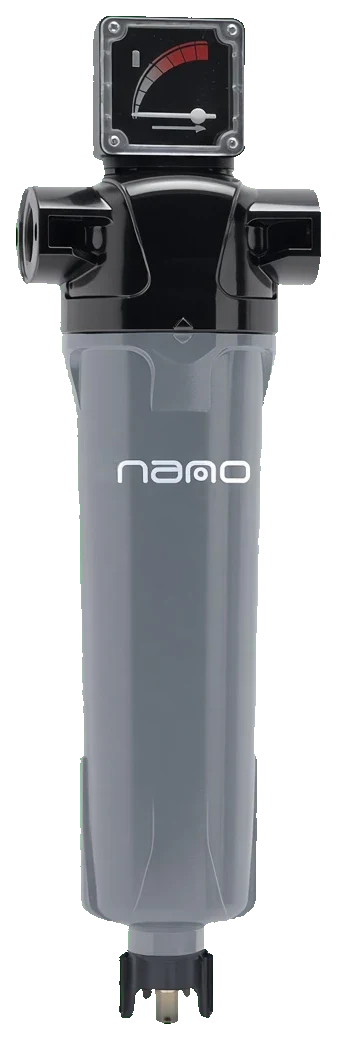
The instrument, the drain and the elements
What each drift means
Dew point rising with the room temperature: condenser fins, fan or ventilation. Dew point rising with the plant's air demand: the dryer is at the edge of its capacity, and the sizing should be checked against what the compressor now delivers. Dew point steady but water downstream: a drain not opening, an afterfilter bowl not draining, a bypass cracked or a wet tie-in after the dryer. Dew point steady and the dryer tripping on high pressure: condenser again, or a room that has crept past 120°F.
Seasonal check before summer
In May, clean the condenser, confirm the exhaust fan runs, test every drain, read every filter differential and take a dew point reading at full load. A dryer that passes that check in May holds its rating through the months when the plant needs it most. A dryer that fails it has three months' warning.
Mistakes in upkeep
Cleaning the condenser once at installation and never again. Turning a timed drain's open time up to cover a blocked strainer. Ignoring a differential indicator in the red because the air still seems fine. Trusting the controller's dew point for years without a reference reading. Running the dryer through a summer with the bypass cracked to keep pressure up, then blaming the dryer for the water. Together they can take a dryer from 38°F to 50°F with nothing mechanically wrong.
Keeping the parts on hand
A spare element for each filter housing, a spare drain of the type fitted, and a dew point monitor shared across the plant's dryers cover every routine item on this page. The GFN, NGF and HF Series pages list the replacement element for every housing, the ND Series covers zero-loss drains, and the PDM monitor is the instrument.
Maintenance questions
Monthly in an ordinary compressor room and weekly where the air carries lint, sawdust or fiber. Blow the fins out from the inside with low-pressure air and check that the fan turns freely. It takes ten minutes and it is the single item that most often restores a lost dew point.
Not necessarily. Read it against the load and the room: 45°F at full load on a 105°F afternoon is a dryer at the edge of its corrected capacity, not a fault. Clean the condenser, confirm the load has not grown, and take a reference reading with a dew point monitor before calling it a failure.
Only crudely. A sight glass on the afterfilter bowl that stays dry and a drop leg at the far end of the header that never collects water are signs the dryer is holding. A PDM monitor is the only reading that means anything against a specification.
No. The circuit is sealed and charged for life, and a dryer that needs refrigerant has a leak that a refrigeration technician should find and repair. Loss of charge shows as a dew point that climbs at every load regardless of the room.
Because summer is when the inlet air, the room and the compressor's load are all at their worst, and a dryer that has lost a little capacity to a dirty condenser or a drain that is slow passes its limit only then. The fix is nearly always cleaning and drains, and occasionally a sizing that was marginal from the start.