
1-805-484-2992
Quotes - Engineering - SalesPlastics & Packaging
Where Water in the Air Lands on the Product
Plastics and packaging plants put compressed air directly against the product more often than any other industry. Blow air fills a PET preform, forming air presses a hot sheet into a chilled mold, ejector air pops a part off a core, and reject jets, air knives and vacuum venturis touch film, labels and cartons all day. Whatever water or oil the air carries ends up on the part or the package: hazed bottles, water-marked trays, ink that will not wet out and solenoid valves that corrode from the inside.
The compressor side is just as varied. A molding shop runs a 50 to 150 hp rotary screw around the clock at a steady load, a packaging line on a 20 hp compressor starts and stops with every batch, and a PET line adds a multi-stage booster delivering 500 to 725 psig blow air. A refrigerated dryer holding a 38°F pressure dew point covers every one of these at line pressure; what changes between them is flow, pressure rating, filtration and whether a cycling dryer earns its price.
- A 38°F pressure dew point (ISO 8573-1 class 4) keeps water out of molds, valves and nozzles in a plant held between 65 and 90°F
- Oil removal to 0.01 micron behind the dryer, with activated carbon added where the air touches food packaging or clear parts
- Blow air at 500 to 725 psig is dried by a dryer rated 680 or 725 psig, never by a 200 psig plant-air unit
Five Applications
Pick the Line You Run
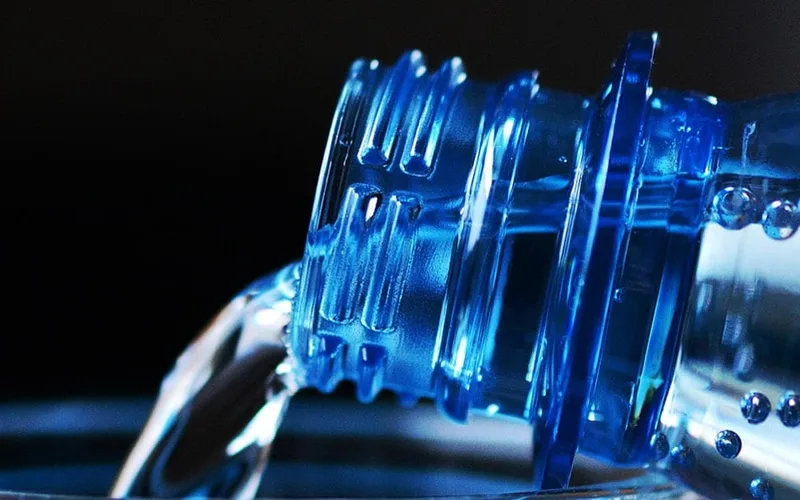
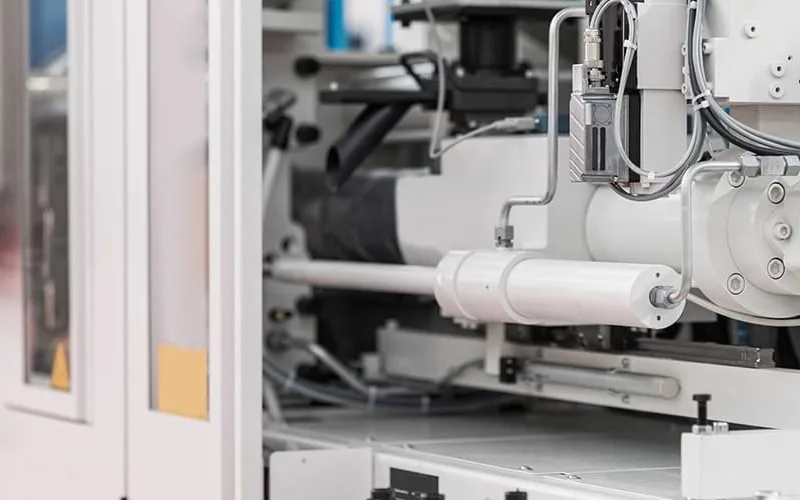
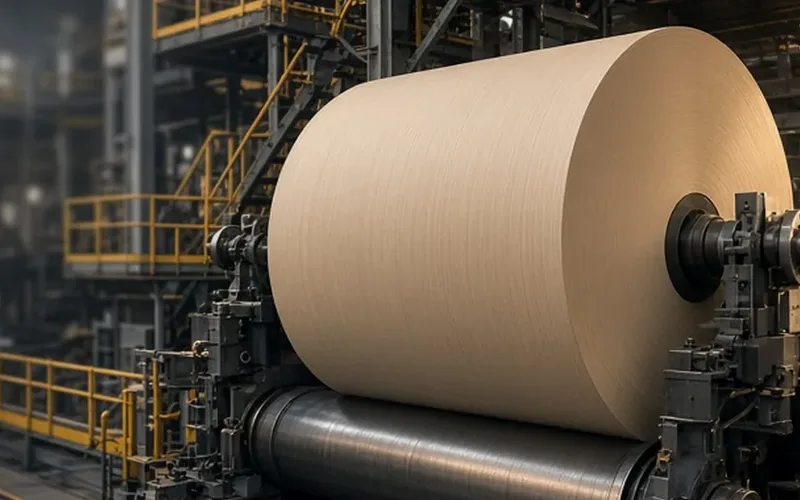
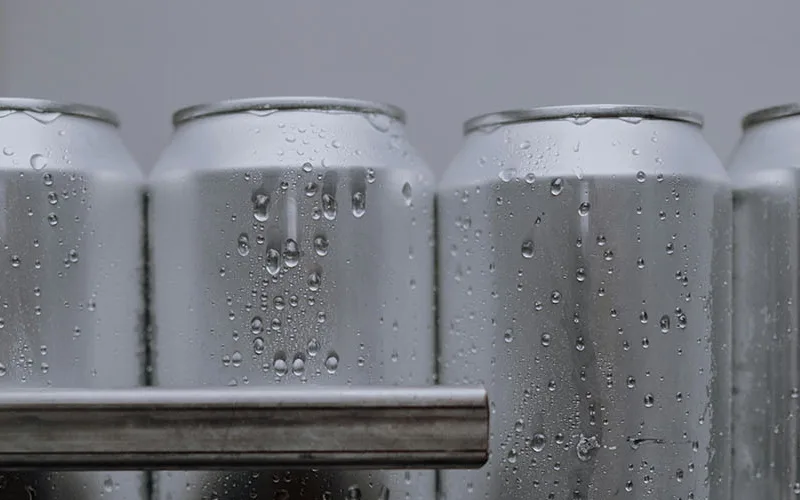
Each page below covers one line: the machines on it that use air, what water and oil do there, the compressor and flow the line typically needs, the dew point and ISO class to specify, where the dryer and the filter pair go, and whether cycling or non-cycling drying suits the duty. The table under the tiles is the short version.
Central Dryer or Point-of-Use
In most of these plants one dryer at the compressor room, downstream of the receiver, is the right answer: it dries the whole header and it is sized once from the compressor delivery. The plant-air dryer for a molding shop on a 100 hp screw is a 450 or 500 SCFM machine, corrected for a compressor room that reaches 105°F in August.
Point-of-use drying makes sense in three cases here. A PET blow molder needs a high-pressure dryer on the booster discharge regardless of what the plant air has. A clean-room molding cell or a food-packaging line that must never see compressor oil gets its own small dryer and filter train off a header that serves dirtier duty elsewhere. And a packaging line at the far end of a warehouse, fed through pipe that runs cold in winter, is better served by a dryer at the line.
Cycling, Non-Cycling and the High-Pressure Case
Extrusion and injection molding hold a steady load for days at a time, and a non-cycling DXR Series dryer sized to the compressor is the lowest-cost way to dry that air. Printing, converting and packaging lines swing between makeready and full run and idle overnight, which is where a thermal-mass TMC Series or a FLXA Series cycling dryer stops its refrigeration compressor and pays its premium back in a year or two of power bills. The trade-off is worked through on the cycling versus non-cycling page.
Blow air at 500 to 725 psig is the exception to all of the above. Air at 580 psig carries roughly a fifth of the water per SCFM that it does at 100 psig, but the heat exchanger and separator must be built for the pressure, and the flow rating is read from the dryer's own 500 or 725 psig table. The HHPR Series (680 psig, 115 to 2,400 SCFM) and the APET Series (725 psig, 45 to 1,000 SCFM) are the two current lines, and the retired HPET Series cross-references size for size to the HHPR.
Compressor Size, Dew Point and Dryer Band by Application
Typical ranges for a single line or a small plant; a multi-line plant adds them up at the compressor room. Flows are at 100 psig except on the PET blow-air row.
| APPLICATION | TYPICAL COMPRESSOR | FLOW TO DRY | DEW POINT NEEDED | DRYER THAT FITS |
| PET blow molding | 100 to 500 hp multi-stage booster, plus a 50 to 200 hp screw for plant air | 200–1,500 SCFM at 500–725 psig | 38°F pressure dew point at blow pressure, class 4 | High-pressure dryers (HHPR, APET); a standard dryer on the plant air |
| Injection molding | 25 to 150 hp rotary screw, three shifts | 100–700 SCFM | 38°F, class 4; oil class 2 for clear and medical parts | 65 to 250 SCFM and 300 to 1,250 SCFM non-cycling |
| Printing & converting | 15 to 75 hp rotary screw, one or two shifts | 65–350 SCFM | 38°F, class 4; oil class 1 with a carbon filter for food packaging | 20 to 250 SCFM and 300 to 1,250 SCFM cycling |
| Packaging lines | 10 to 60 hp screw, or a piston unit on a single line | 40–275 SCFM | 38°F, class 4 | 20 to 250 SCFM cycling; a high-inlet dryer on a piston compressor |
| Extrusion & thermoforming | 25 to 100 hp rotary screw, continuous | 100–450 SCFM | 38°F, class 4; dryer rated for 150 psig or more where forming air is boosted | 65 to 250 SCFM and 300 to 1,250 SCFM non-cycling |
Plastics and packaging air drying questions
For plant air at 100 psig in a building held between 60 and 95°F, yes: a 38°F pressure dew point is 20 to 50°F below anything the air will touch, so nothing condenses inside the machines. Desiccant drying only comes in for lines that run outdoors in winter, for dry boxes and purge air, or where a customer specification names a class 2 dew point.
A dryer built for the pressure: the HHPR Series is rated 680 psig and the APET Series 725 psig, and both publish capacity at blow pressure. A standard 200 psig plant-air dryer is neither rated nor sized for that service, and the low-pressure air that runs the rest of the machine still needs one of its own.
Add the deliveries of the compressors feeding the common header, apply the inlet, ambient and pressure corrections for the compressor room, and take the first dryer size above that figure. Sizing from the machines' nameplates undercounts leaks and blow-off and is the usual reason a dryer runs wet within a year.
Food-contact packaging normally calls for ISO 8573-1 class 1 oil, which a lubricated screw compressor reaches with a 0.01 micron coalescing filter followed by an activated carbon filter, both downstream of the dryer. Clear and medical molded parts want the same 0.01 micron filter to keep oil aerosol off the cavity.
Yes, if both hang off the same header; size it for the combined compressor output rather than the sum of the machine nameplates. Give a thermoformer that pulls forming air in bursts a receiver of its own near the machine so the burst does not starve the dryer and the extruder at the same moment.