
1-805-484-2992
Quotes - Engineering - SalesRefrigerated Air Dryers for Breweries & Wineries
A brewery runs its process on pneumatic valve actuators: the butterfly and mix-proof valves on the brewhouse, the fermenters, the bright tanks and the CIP manifolds all open and close on compressed air, and the keg washer, the canning line, the filter press and the grain handling run on it too. A winery adds the membrane press that inflates against the grapes at crush, the diaphragm pumps that move must and wine, the bottling line and the barrel washer. Water in that air corrodes the springs and pilots inside actuators that live in a 34°F cellar, sticks a keg filler valve mid-cycle, and, where the air reaches the beer or the wine, carries what grew in a wet pipe into the product.
For the brewhouse, the packaging hall and the winery floor, a refrigerated dryer holding a 38°F pressure dew point, ISO 8573-1 class 4, with a coalescing filter is the specification. The cellar is the exception on this page: a cold room at 33 to 38°F is at or below the refrigerated dew point, and a line entering it condenses no matter how well the dryer is working.
A craft brewery with a canning line runs on a 10 to 25 hp screw, 40 to 110 SCFM, and a regional brewery on 30 to 50 hp. A winery's demand peaks at crush, when the membrane press and the pumps can pull 100 SCFM from a compressor that idles for the rest of the year. A 15 hp screw at 65 to 70 SCFM is the 85 SCFM dryer; a 40 hp screw at 175 SCFM is the 200 size.
Both plants run intermittently, with the compressor holding pressure for the cellar valves through long idle hours. That is the cycling dryer's case at 100 SCFM and above; the smaller breweries do well on a non-cycling cabinet dryer whose power draw is too small to matter.
Request a brewery dryer quote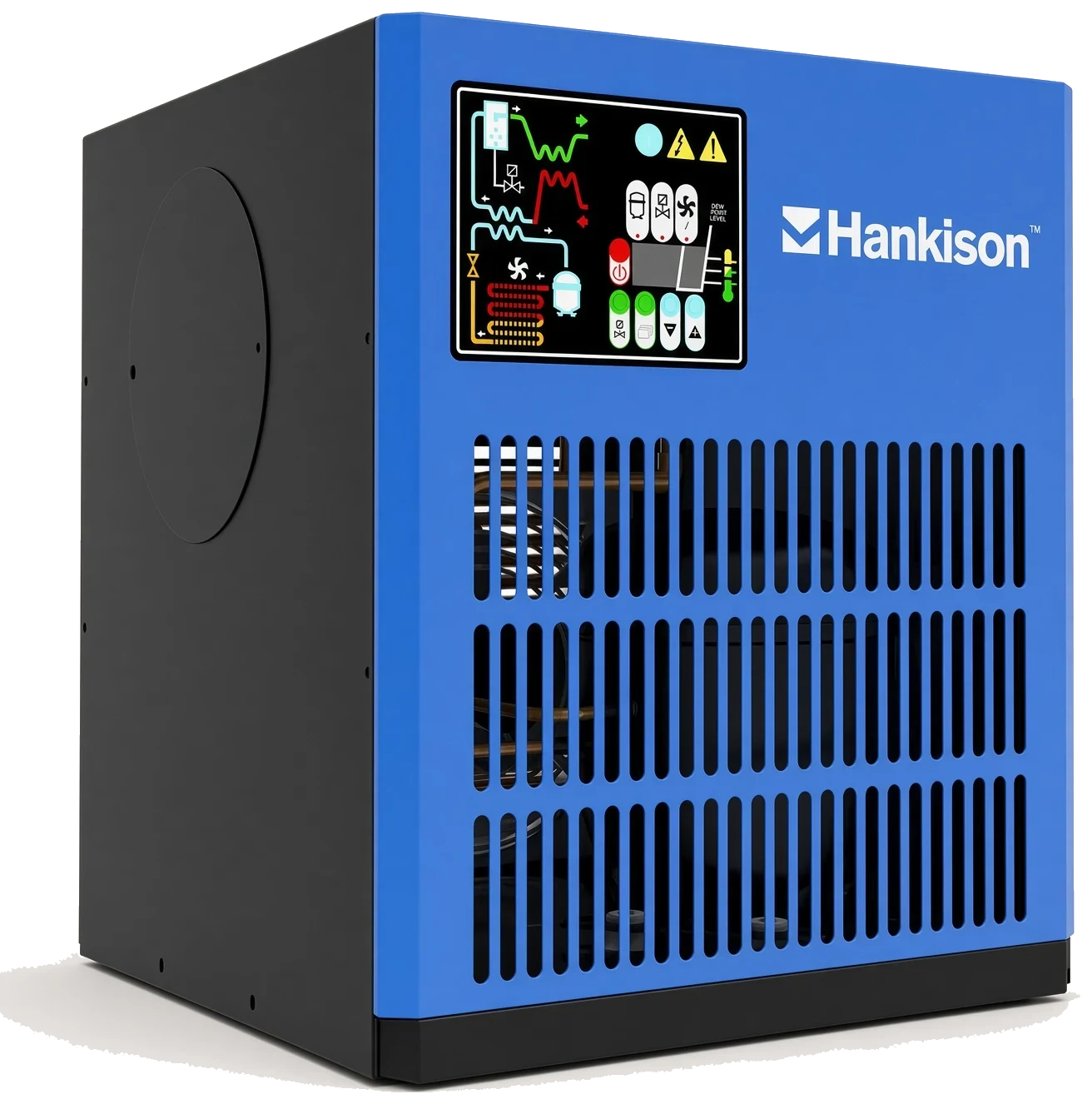
What water does in a brewery
Actuators, kegs and the beer
- Cellar valve actuators corroding from the inside where 38°F air condenses in a 34°F room
- Keg washer and filler valves sticking mid-cycle as condensate washes out the lubricant
- Canning line cylinders and seamer lifters pitting in a wet, washdown environment
- Organisms from a wet pipe reaching the wort or the wine through aeration or sparging air
The air specification for a brewery
Plant air, cellar air and product-contact air
- 38°F pressure dew point, ISO 8573-1 class 4, for the brewhouse, packaging hall and winery floor
- Desiccant stage on the branch that enters the cold cellar, fed by the refrigerated dryer
- Sterile filter, and the desiccant branch, on any air that touches wort, beer or wine
- Coalescing and carbon filters on a lubricated compressor so no oil vapor reaches the tanks
Dryers that fit a brewery or winery
Rated flows at 100 psig with 100°F inlet air. A craft brewery on a 10 to 25 hp screw uses the 50 to 125 SCFM sizes, where the TMC and NXC cycling series rest through the idle hours; a regional brewery or a winery at crush uses 150 to 250 SCFM.
| SERIES | TYPE | FLOW RANGE | MAX INLET | MAX PRESSURE |
| HPRB Series | Non-Cycling | 7 to 50 SCFM | 120°F | 200 psig |
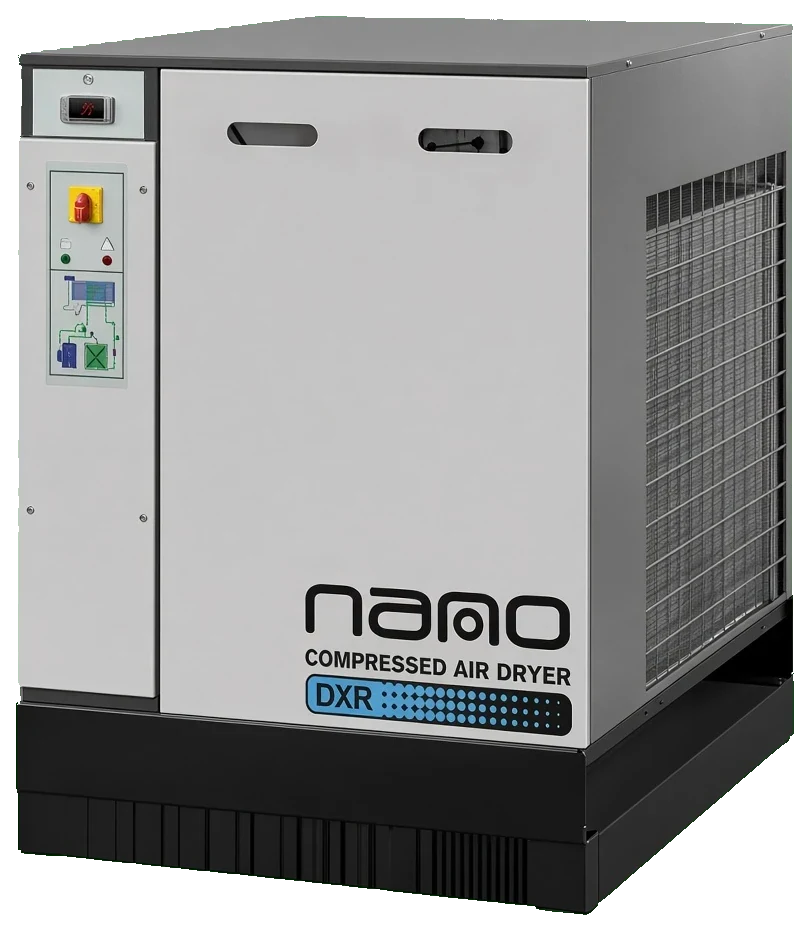
| DXR Series | Non-Cycling | 10 to 4,200 SCFM | 131°F | 203 psig |
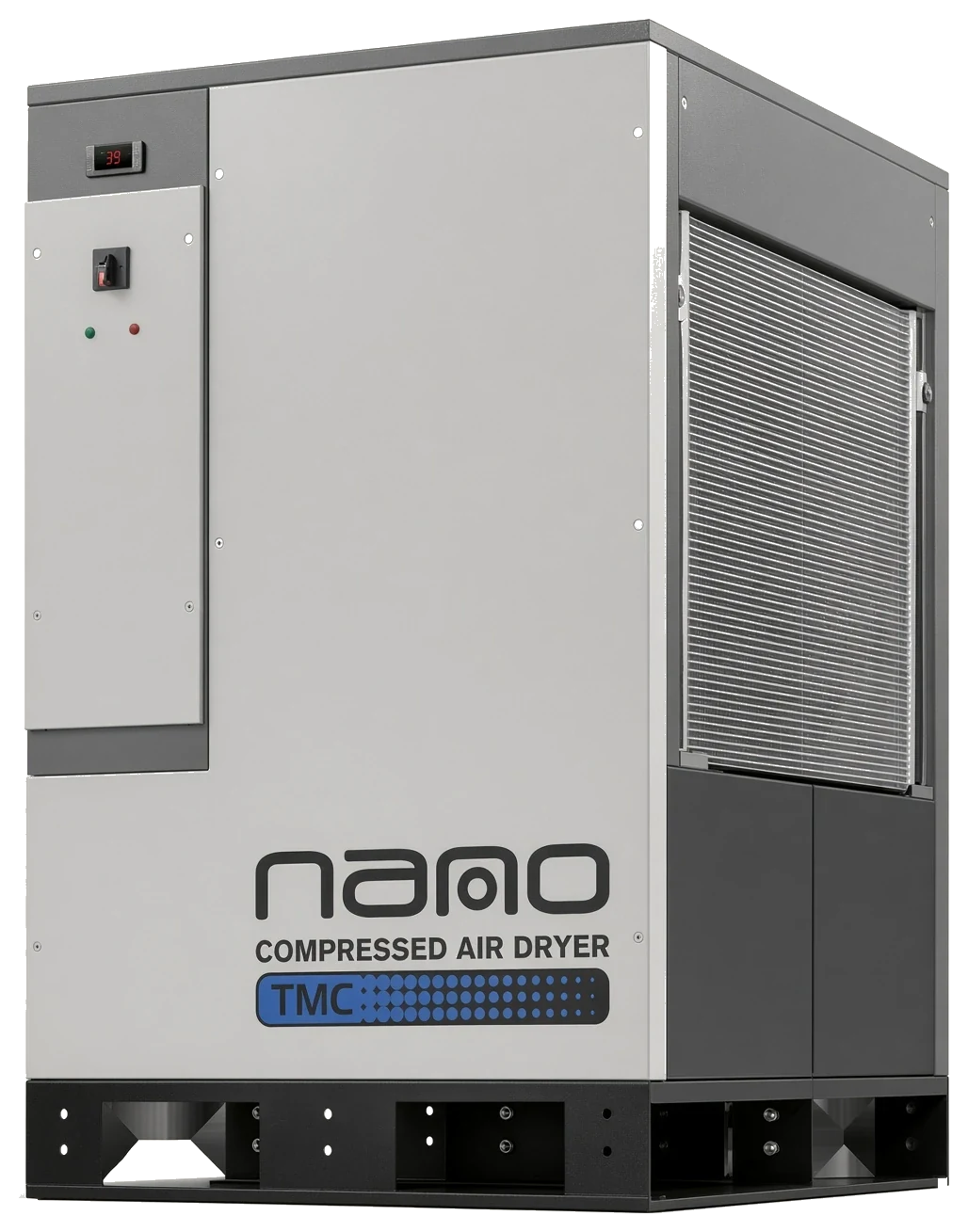
| TMC Series | Thermal Mass Cycling | 30 to 635 SCFM | 140°F | 210 psig |
| NXC Series | Cycling | 20 to 2,000 SCFM | 158°F | 232 psig |
| GFN Series Filters | Compressed Air Filter | 6 to 1,500 SCFM | — | 232 psig |
| HF Series Filters | Compressed Air Filter | 20 to 21,250 SCFM | — | 300 psig |
| ND Series Zero-Loss Drains | Condensate Drain | Call for sizing | — | 290 psig |
| PDM Dew Point Monitor | Dew Point Monitor | Call for sizing | — | 145 psig |
Tell us the compressor, the cellar temperature and whether any air reaches the wort or the wine; we size the plant dryer and the cellar branch.
Two dryers, sized for two jobs
The instinct in a brewery that has found water in its cellar actuators is to replace the refrigerated dryer with a desiccant unit sized for the whole plant. That buys a –40°F dew point for the canning line and the brewhouse, which do not need it, at the cost of purge air or heater power on every cubic foot the compressor makes, and it leaves the desiccant bed doing the bulk drying that a refrigerated dryer does for a fraction of the energy.
The layout that works is the refrigerated dryer on the plant, a desiccant unit on the cellar and product-contact branch sized for those few SCFM, and a sterile filter at the aeration stone. Each dryer does the part of the job it is efficient at.
- Refrigerated dryer sized for the compressor on the plant header
- Desiccant unit sized for the cellar and contact branch only
- Sterile filter at every point where air meets wort or wine
The cellar problem
A cellar at 34°F is colder than a refrigerated dryer's 38°F dew point, so the air line that runs along its ceiling condenses water inside itself and delivers it to every actuator on the tank manifold. The dryer is not at fault; the pipe is simply colder than the air's dew point. The fix is a small desiccant dryer on the cellar branch, sized for the cellar's 5 to 20 SCFM of actuator air, fed by the refrigerated dryer so it sees a tenth of the water load. Everything outside the cellar stays on the refrigerated dryer. The refrigerated versus desiccant page explains how the two dryers share the work.
Where the dryer and filters go
Compressor, receiver, prefilter, dryer, coalescer, carbon filter, header, then a stainless drop and a filter-regulator at each valve panel. The dryer belongs in the compressor room, not the cellar, and not the brewhouse where it would breathe steam. The filter placement page shows the stages and the drains between them.
Cycling or non-cycling for a brewery
A brewery's air demand is a brew day, a canning day and long stretches of cellar valves clicking. The compressor spends most of its hours holding pressure at a fraction of its output, and above about 100 SCFM a cycling dryer such as the TMC stops its refrigeration compressor through those hours. Below that, a non-cycling HPRB or small DXR draws so little that the difference never pays. A winery is the same case with a seasonal shape: a cycling dryer sized for crush idles cheaply for the other ten months.
Air that touches the product
Wort aeration, sparging and any blow-down that enters a tank puts air in contact with the beer or wine, and the food-grade codes treat it as class 2.2.1: a –40°F dew point, oil to 0.01 mg per cubic meter and a sterile filter at the point of use. That air comes from the desiccant branch through a 0.2 micron sterile filter, never straight from the plant header. A membrane press bladder is not contact air, but its exhaust and its leaks are near the must, so it runs on the dried, filtered plant air.
Brewery and winery air questions
Because the cellar is at 34°F and the air's dew point is 38°F, so the line condenses inside the cold room. Feed the cellar branch from a small desiccant dryer after the refrigerated dryer, or route the line through warm space and drop into the cellar from above with a drain leg at the door.
A 20 hp screw delivers 85 to 90 SCFM, which is the 105 SCFM dryer at a normal compressor room temperature and the 125 size in a hot one. If the brewery runs one shift and idles overnight, the TMC cycling dryer in that size cuts dryer power by more than half.
It needs the contact-air class: a –40°F dew point from a desiccant stage, oil to 0.01 mg per cubic meter and a 0.2 micron sterile filter at the aeration stone. Take it from the same desiccant branch that feeds the cellar, sized for both, and keep the plant air on the refrigerated dryer.
Size for crush. A 40 hp compressor that runs the press and the pumps for eight weeks needs a 200 SCFM dryer for those weeks, and the same dryer runs the bottling line and the tank valves cheaply for the rest of the year, especially a cycling model that rests at low load.
Only if it has no aftercooler. A piston compressor discharging 180°F air needs a high-inlet-temperature dryer or a cooling run of pipe ahead of a standard unit; a screw with its own aftercooler delivers 110°F air that a standard cabinet dryer handles.
More on brewery air
Refrigerated versus desiccant dryers
Where the 38°F line falls, what a desiccant stage costs to run, and how the two dryers work together on a cold-room branch.
Learn More
Food Packaging
Compressed air drying for form-fill-seal, tray sealing and reject blasts: contact and non-contact classes, chilled halls and dryer sizes.
Learn More
Bottling & Canning
Compressed air drying for fillers, cappers, seamers and rinsers: machine air at 38 degrees, rinser air with a sterile filter, hot halls.
Learn More