
1-805-484-2992
Quotes - Engineering - SalesWhat a receiver-mounted dryer has to live with
The compressor's heat, the tank's water and the plant's surges
A dryer on the tank sits a foot from the compressor's cooling-air discharge, takes air that the receiver has already cooled and partly dried, and, because it is downstream of storage, can see more flow than the compressor delivers whenever the plant draws the tank down. Sizing starts with the compressor and ends with those three facts.
5 hp piston on 60 gal
- 17 to 20 SCFM delivered
- Dryer 25 SCFM standard or 25 high-inlet
- Wall bracket beside the tank, not on it
7.5 to 10 hp screw on 80 to 120 gal
- 32 to 46 SCFM delivered
- Dryer 42 to 50 SCFM
- Mounts on the tank platform behind the compressor
15 to 20 hp screw on 120 gal
- 65 to 92 SCFM delivered
- Dryer 85 to 105 SCFM
- Own bracket or floor stand beside the tank
25 to 30 hp screw on 240 gal
- 108 to 138 SCFM delivered
- Dryer 125 to 150 SCFM
- Floor-standing next to the receiver
Compressor package to dryer size and mounting
Delivered flow for screws at 4.3 to 4.6 SCFM per hp and pistons at 3.5 to 4. Dryer sizes at the rating point with the air already cooled in the receiver; the hot column applies the 0.88 factor for a dryer breathing the compressor's own warm exhaust at 110°F.
| PACKAGE | DELIVERED FLOW | DRYER SIZE AT 100°F | DRYER SIZE IN COMPRESSOR EXHAUST (110°F) | DRYER BAND |
| 5 hp piston, 60 gal tank | 17 to 20 SCFM | 20 to 25 SCFM | 25 to 32 SCFM | 5 to 50 SCFM |
| 7.5 hp screw, 80 gal tank | 32 to 35 SCFM | 42 SCFM | 50 SCFM | 5 to 50 SCFM |
| 10 hp screw, 120 gal tank | 43 to 46 SCFM | 50 SCFM | 55 to 65 SCFM | 5 to 50 SCFM |
| 15 hp screw, 120 gal tank | 65 to 69 SCFM | 75 to 85 SCFM | 85 to 90 SCFM | 65 to 250 SCFM |
| 20 hp screw, 120 gal tank | 86 to 92 SCFM | 100 to 105 SCFM | 105 to 110 SCFM | 20 to 250 SCFM cycling |
| 30 hp screw, 240 gal tank | 129 to 138 SCFM | 150 SCFM | 165 to 185 SCFM | 65 to 250 SCFM |
Compact dryers for tank-mounted screw packages
The 7 to 50 SCFM cabinet units and the direct-expansion line from 10 SCFM up are built for this: 115 V, 3/8 to 1 in NPT, 45 to 150 lb, with a footprint that fits the platform a tank-mounted package leaves behind the compressor. The glycol thermal-mass cycling units from 30 SCFM suit a package that idles between shifts.
- HPRB Series: Current small non-cycling dryer, 7 to 50 SCFM, with low-GWP R513A refrigerant, a 3-in-1 heat exchanger and a built-in separator on the larger sizes.
- DXR Series: Direct-expansion non-cycling dryer in 27 sizes from 10 to 4,200 SCFM; the widest single range on the site, with a full data sheet behind every model.
- TMC Series: Thermal-mass cycling dryer from 30 to 635 SCFM; stores cold in a thermal mass so the refrigeration compressor rests when air demand drops.
Piston packages, hot tanks and the bypass that goes with them
A piston compressor on its receiver with no aftercooler hands the dryer hot air, and the 25 to 125 SCFM high-inlet-temperature units take it straight from the tank outlet. The single-body bypass valve and wall-mount bracket kits are the hardware that hangs a small dryer beside the tank rather than on it.
- HRHT Series: Current high-inlet-temperature dryer, 25 to 100 SCFM, rated for 200°F inlet air from reciprocating compressors with no aftercooler.
- HTR Series: High-temperature direct-expansion dryer, 25 to 125 SCFM, for 180°F inlet air from piston compressors on shop and service-bay duty.
- 1701 Bypass Valves & Mounting Brackets: Single-body bypass valve for dryers and filters to 35 SCFM, plus wall-mount bracket kits for small dryers and filter housings.
Mounting a dryer on or beside the receiver
The tank is a wet receiver whether the package calls it that or not, and the dryer belongs at its outlet with three things kept in mind: heat, vibration and surge.
Heat first. A tank-mounted screw blows its cooler exhaust across the platform where the dryer sits, and a dryer breathing 110 to 120°F air loses 12 to 25 percent of its capacity and runs its condenser near its high-pressure limit all summer. Turn the dryer so its condenser inlet faces away from the exhaust, or move it to a wall bracket beside the tank; a piston compressor's vibration is the other reason to prefer the wall.
Surge is the subtle one. With the dryer downstream of the receiver, a plant demand that draws the tank down pulls air through the dryer faster than the compressor makes it, and a dryer sized exactly to the compressor is overrun for the length of the surge. Either size the dryer 10 to 20 percent above compressor output or add a dry receiver after it so the surge is served from dried storage. Fit a zero-loss automatic drain on the tank and route the dryer and filter drains to the same point.
A 10 hp screw on a 120 gallon tank is the 50 SCFM dryer beside the tank; the same dryer bolted to the platform in the compressor's exhaust needs to be the 65.
Size a dryer for my tank-mounted package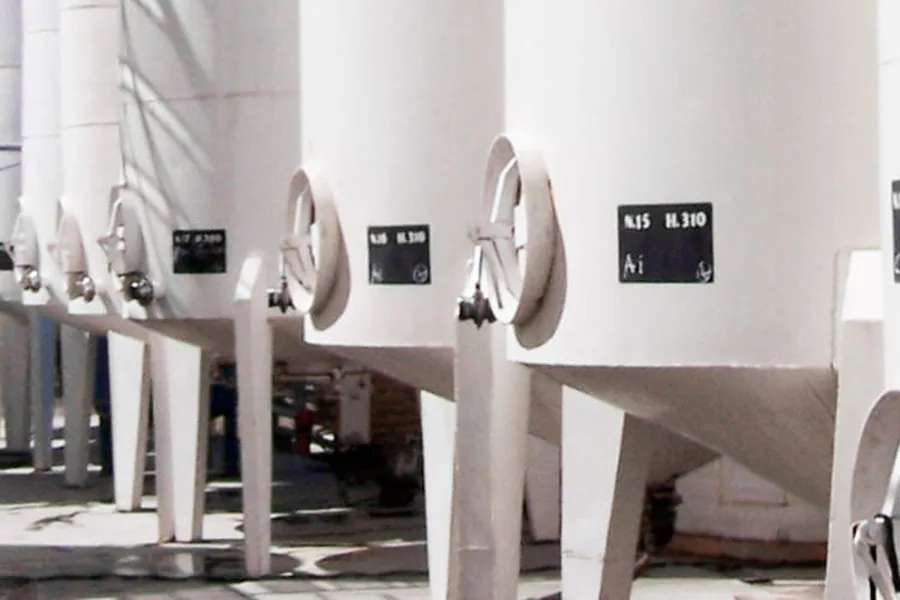



Receiver-mounted dryer questions
On a screw package with a platform, yes, as long as the condenser inlet faces away from the compressor's cooling-air discharge and the piping to the tank outlet has a bypass. On a piston package the tank vibrates, and a wall bracket beside it is kinder to the dryer's refrigeration circuit.
Both, ideally. The wet receiver ahead of the dryer drops water and smooths the compressor's load steps; the dry receiver after the dryer stores dried air so a plant surge does not pull air through the dryer above its rating. A package with one tank has a wet receiver; a second tank after the dryer is the upgrade.
Packaged dryers are usually matched to the compressor at 100°F ambient and nameplate output. Check the dryer's rating against the compressor's delivered SCFM, then against the temperature on the platform on a summer afternoon; a 50 SCFM dryer on a 46 SCFM compressor in a 110°F exhaust stream is short by 15 percent.
The dryer needs the 0.88 ambient factor and probably the 0.80 inlet factor too, since the aftercooler is working in the same hot air, so a 10 hp package moves from the 50 SCFM dryer to the 65. Ventilating the mezzanine is cheaper than the larger dryer if it can be done.
A zero-loss automatic drain on the tank, which catches most of the water; the dryer's own drain, which is built in on current models; and a drain on each filter bowl. Pipe them all to one discharge point through an oil-water separator if the compressor is lubricated.