
1-805-484-2992
Quotes - Engineering - SalesThe four numbers and what each one does
Every dryer on this site is rated in SCFM at 100 psig inlet pressure, 100°F inlet air and 100°F ambient, holding a 38°F pressure dew point. That is the rating point. Run the same dryer at a hotter inlet, a hotter room or a lower pressure and it carries less air before the dew point climbs; run it at higher pressure and it carries more. Sizing is the arithmetic that moves the compressor's flow to the rating point so it can be compared with the model table.
The method is the same for every technology and every size. Take the delivered flow, look up one factor for each condition, multiply the factors together, and divide the flow by the product. The answer is the rating-point SCFM the dryer must carry, and the model to buy is the first one at or above it. The factors below are the ones used throughout these pages.
- Flow: rotary screw 4 to 5 SCFM per hp, piston 3.5 to 4 SCFM per hp, or the delivered SCFM from the compressor data sheet
- Inlet temperature: 100°F factor 1.00; 110°F 0.80; 120°F 0.65; 130°F 0.55
- Ambient temperature: 100°F factor 1.00; 110°F 0.88; 120°F 0.75
- Operating pressure: 60 psig 0.80; 80 psig 0.92; 100 psig 1.00; 125 psig 1.08; 150 psig 1.15
The sizing topics
One page for the flow and one for each correction
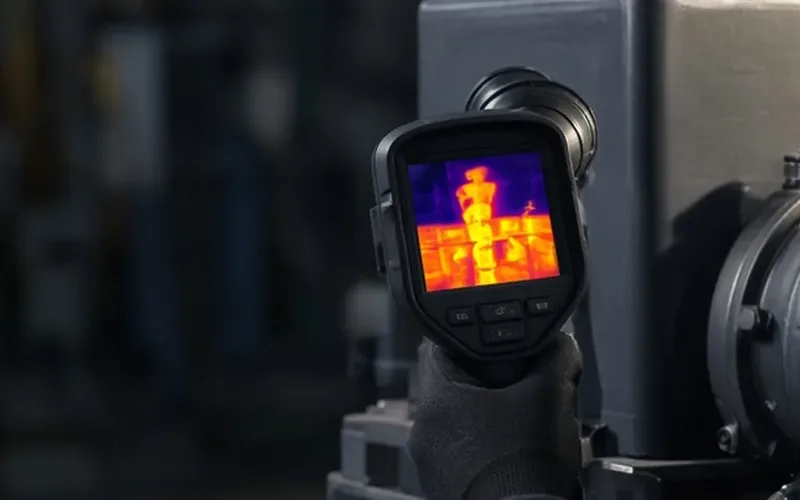
Flow & SCFM: The flow to size for is what the compressor delivers when it loads, converted to standard cubic feet per minute. Horsepower rules of thumb, ACFM against SCFM and a four-step worked example.
Inlet Temperature: Warm air carries more water, so inlet temperature is the correction that moves a sizing the most. Aftercooler approach, the factors from 100 to 130°F and the 180 to 200°F piston-compressor case.
Operating Pressure: Denser air at higher pressure is easier to dry, and thin air at 60 psig is harder. The factors from 60 to 150 psig, working pressure limits and the 680 psig and 6,000 psig series.
Ambient Conditions: An air-cooled condenser can only reject heat to air cooler than itself. Factors for 110 and 120°F rooms, minimum ambient limits, ventilation and when to specify water cooling.
A complete sizing, start to finish
A 40 hp rotary screw with a data-sheet delivery of 175 SCFM at 125 psig feeds a plant whose compressor room reaches 110°F in August. The package aftercooler leaves the discharge air about 10°F above the room, so the dryer inlet sees 120°F. The three factors are 0.65 for the inlet, 0.88 for the room and 1.08 for the pressure; their product is 0.618. Divide 175 by 0.618 and the rating-point duty is 283 SCFM. In the non-cycling DXR Series that is the 325 SCFM model; in the cycling FLXA Series it is the 300. Sized on the nameplate alone the same plant would have bought a 185 SCFM dryer and been 35 percent short every summer afternoon.
What the correction buys
None of this changes the air the compressor makes; it changes how much heat the dryer must pull out of it. Water content roughly doubles for every 20°F of inlet temperature, the condenser needs a temperature difference to reject heat, and low-pressure air moves faster through the exchanger with more water per cubic foot. Each factor is a measurement of one of those effects, and dividing by their product is how the rating catches up with the plant.
Undersized, oversized and just right
An undersized dryer does not fail loudly. The dew point drifts up from 38°F to 50°F as the load passes capacity, liquid appears at the first cold spot downstream, and the complaint arrives from the paint line or the CNC cell rather than the compressor room. Oversizing by one frame costs money up front and, on a non-cycling unit, adds nothing afterwards; on a cycling unit the extra thermal mass is harmless. The right answer is the corrected duty plus about 10 percent, which covers a compressor running slightly over nameplate and an aftercooler that is due for cleaning.
When the numbers are not on the nameplate
Older compressors lose their data sheets. Use the horsepower rule, measure the inlet air with a thermometer well after the receiver on a hot afternoon, read the pressure from the gauge at the dryer, not the compressor, and take the room temperature at head height beside the dryer's condenser intake. If any one of those is a guess, say so when you ask for a quote and we will size to the worse case rather than the better one.
Sizing questions
All three, multiplied together. They measure different effects: the inlet factor is about water content and heat load, the ambient factor about condenser capacity, the pressure factor about density and velocity. A hot room with a hot inlet compounds, which is why a 40 hp compressor can need a 325 SCFM dryer.
Measure the room and the inlet on the hottest afternoon you can find. Most compressor rooms run 10 to 20°F above the rest of the plant, and an aftercooler delivers air 10 to 20°F above that, so assuming 100°F is optimistic in most of the country. A single reading with a probe thermometer settles it.
Go up. A dryer at 105 percent of capacity loses its dew point, and the model sizes on this site step by 15 to 30 percent, so the next size is never far away. Rounding down is the single most common sizing mistake we see on replacement enquiries.
No. A cycling dryer must still carry the compressor's full output when it loads, so the corrected duty is the same number. The difference is what happens between loads, when a cycling dryer stops its refrigeration compressor and a non-cycling dryer keeps running.
Yes. Send the compressor horsepower or delivered SCFM, the line pressure, the room temperature in summer and whether the compressor has an aftercooler, and we return the corrected duty and the model in each series that carries it. Call 1-805-484-2992 between 8am and 5pm or use the quote form.