
1-805-484-2992
Quotes - Engineering - SalesRefrigerated Air Dryers for Car Wash Systems
A car wash uses compressed air for control and chemistry rather than for tools: the cylinders that raise and lower brushes, mitters and wraps, the air-operated diaphragm pumps that meter soap, wax and tire shine, the foam generators that mix air into the chemical, the pneumatic valves on the water manifolds, the gate arms and door operators, and the roller-up mechanism on the conveyor. All of it lives in the wettest, most humid building in town, and the compressor breathes that same air. Water in the lines sticks cylinders mid-stroke so a brush hangs over a car, makes diaphragm pumps ice up at their exhaust and lose prime, collapses the foam that the customer is paying for, and corrodes every fitting in the equipment room.
A refrigerated dryer holding a 38°F pressure dew point, ISO 8573-1 class 4, keeps the equipment room side of the system dry. The bay side is the problem in winter: air lines that run into an unheated bay or outdoors to a gate arm sit below 38°F and condense, so those runs are heat-traced, drained at their low points or fed from a small desiccant unit.
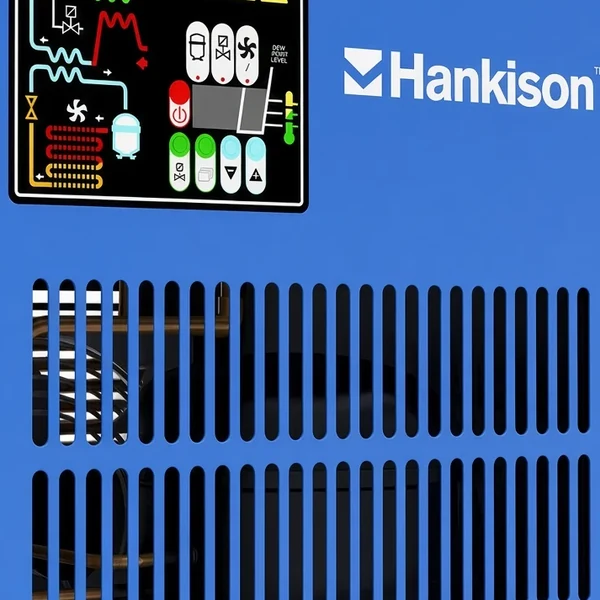
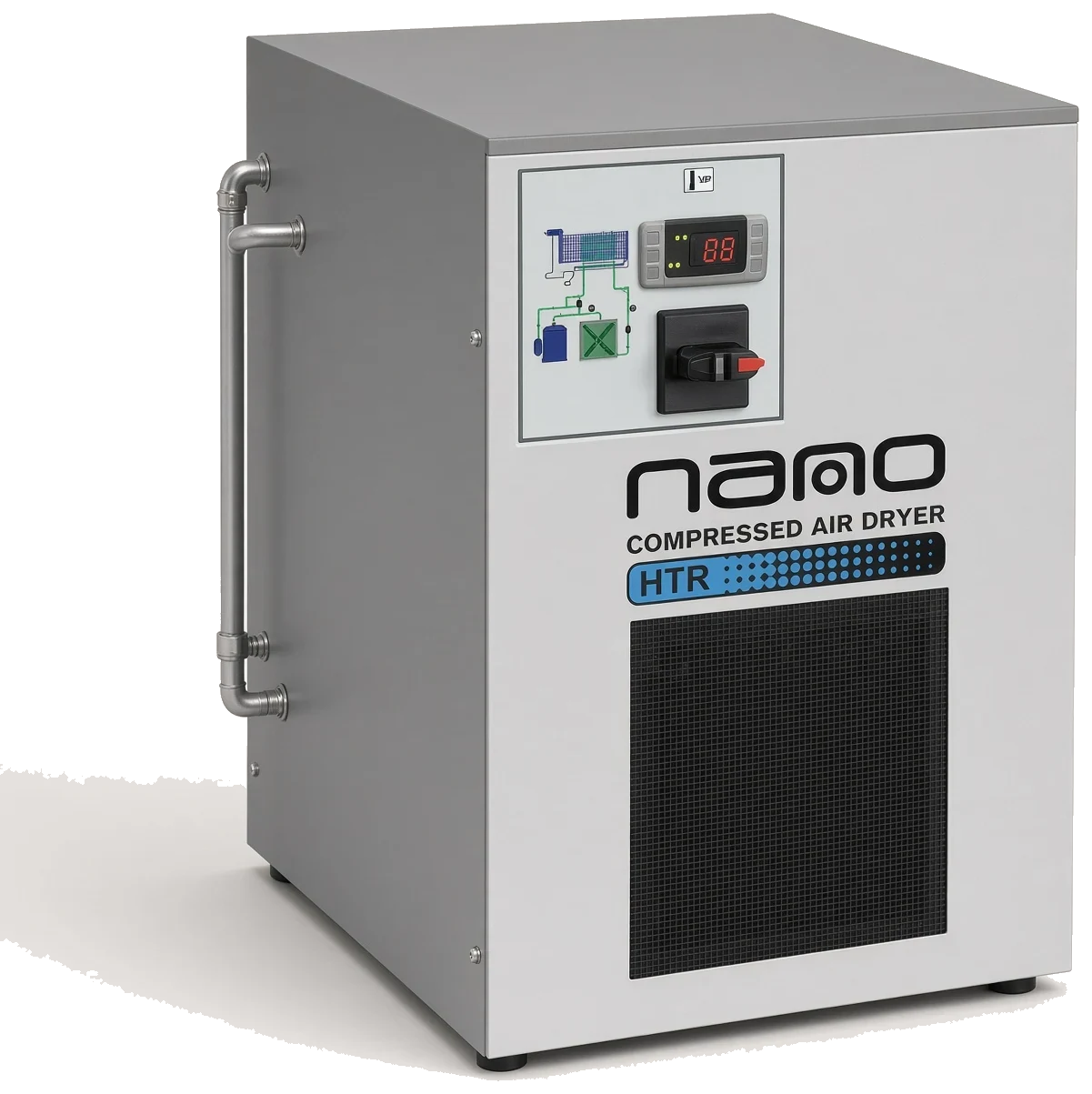
A tunnel wash runs on a 5 to 15 hp compressor, 20 to 60 SCFM, and an in-bay automatic on 5 hp. Many are piston machines with no aftercooler that discharge 180°F air into an 85°F equipment room, and on those the HRHT or HTR high-inlet-temperature dryer is the right first choice. A 10 hp screw with an aftercooler takes a standard 42 or 50 SCFM cabinet dryer.
Humidity in the equipment room is the sizing surprise. A 10 hp compressor breathing 90°F air at 80 percent humidity pulls in close to four gallons of water a shift, most of which the tank and dryer have to drain, so the drains are sized and automatic and the dryer is chosen with the room's summer temperature in mind.
Request a car wash dryer quote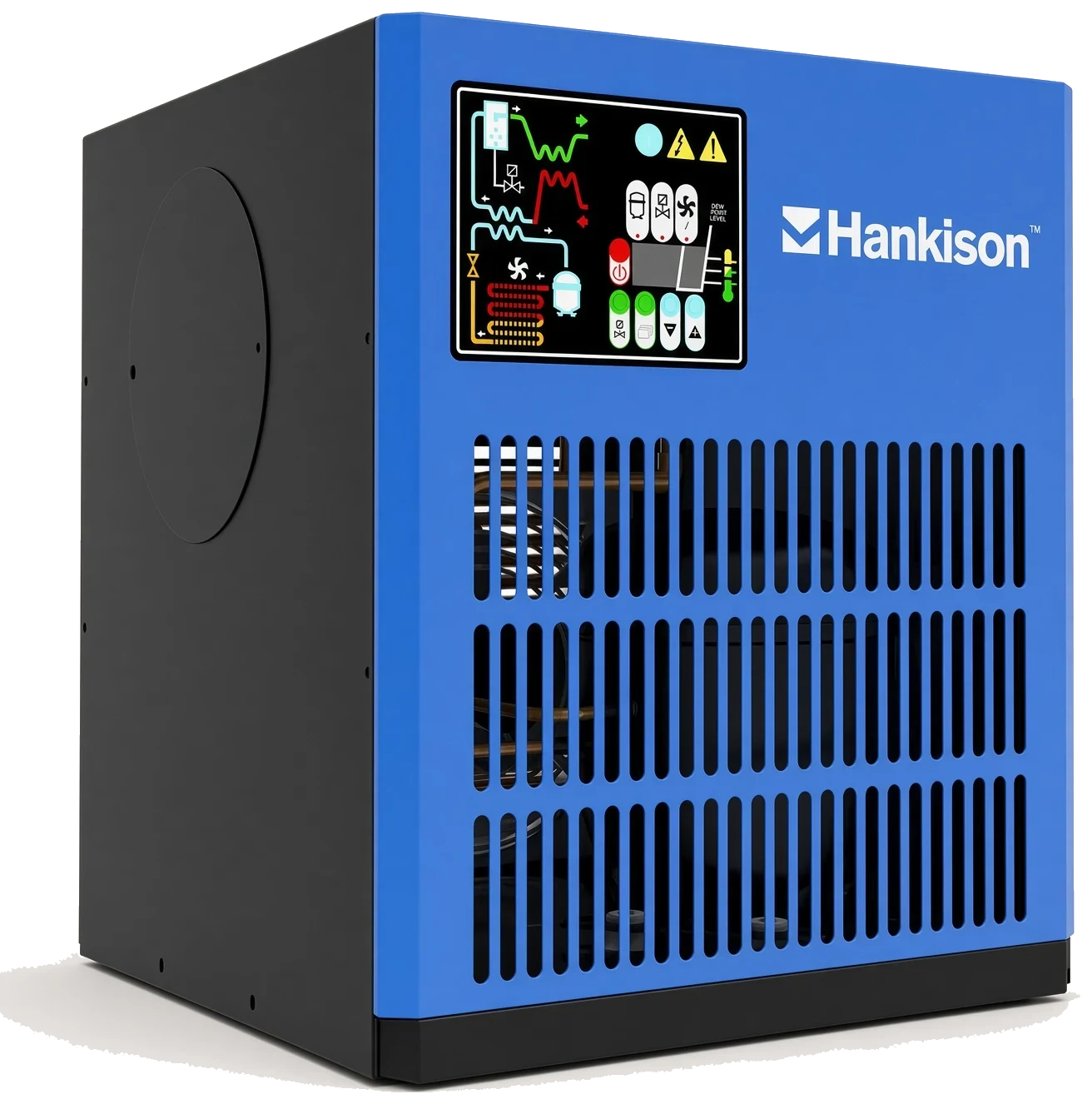
What water does in a car wash
Cylinders, pumps and foam
- Brush and wrap cylinders sticking mid-stroke as condensate washes out the lubricant
- Diaphragm pumps icing at the exhaust muffler and losing prime on soap and wax
- Foam collapsing and dosing drifting as water dilutes the air-chemical mix
- Fittings, solenoids and gate arm cylinders corroding in the humid equipment room
The air specification for a wash
Dry in the room, protected in the bay
- 38°F pressure dew point, ISO 8573-1 class 4, from a dryer sized for the room's summer temperature
- High-inlet-temperature dryer where the compressor is a piston machine without an aftercooler
- Automatic drains on tank, dryer and filters, because a humid room makes gallons of condensate
- Bay and outdoor lines heat-traced or drained at low points, with a desiccant unit where they freeze
Dryers that fit a car wash
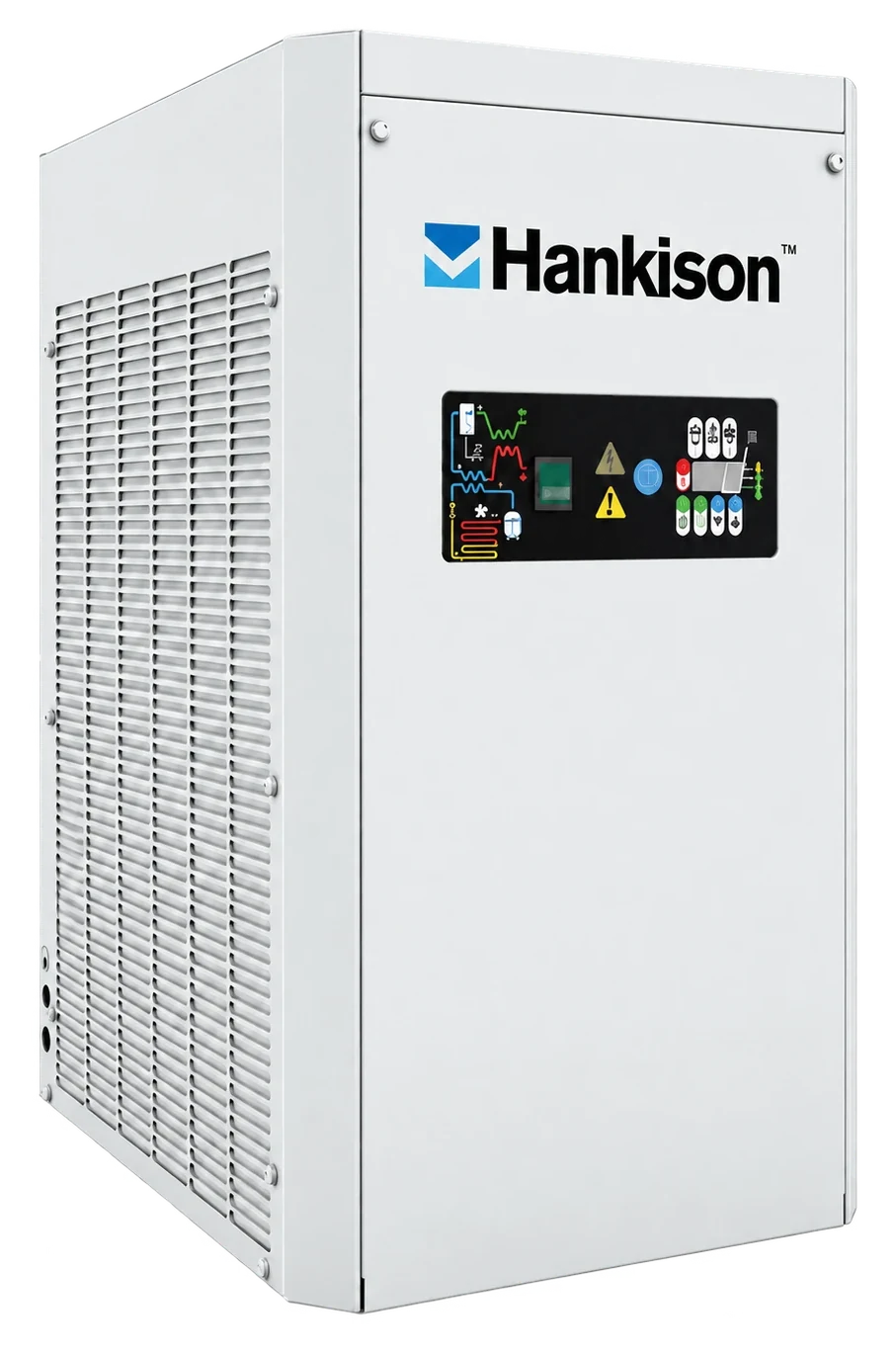
Flows are rated at 100 psig and 100°F inlet, except the HRHT and HTR series at 200 and 180°F inlet. A 5 to 10 hp compressor sits in the 25 to 50 SCFM sizes; a large tunnel on a 15 hp screw uses 65 to 85 SCFM. Timed and zero-loss drains handle the condensate.
| SERIES | TYPE | FLOW RANGE | MAX INLET | MAX PRESSURE |
| HPRB Series | Non-Cycling | 7 to 50 SCFM | 120°F | 200 psig |
| HRHT Series | High Inlet Temperature | 25 to 100 SCFM | 200°F | — |
| HTR Series | High Inlet Temperature | 25 to 125 SCFM | 180°F | 232 psig |
| DXR Series | Non-Cycling | 10 to 4,200 SCFM | 131°F | 203 psig |
| TMC Series | Thermal Mass Cycling | 30 to 635 SCFM | 140°F | 210 psig |
| GFN Series Filters | Compressed Air Filter | 6 to 1,500 SCFM | — | 232 psig |
| ND Series Zero-Loss Drains | Condensate Drain | Call for sizing | — | 290 psig |
| NETD, NPTD & NHPTD Timed Drains | Condensate Drain | Call for sizing | — | 6,000 psig |
Tell us the compressor, whether it has an aftercooler, the equipment room temperature and where the bay lines run; we size the dryer and the drains.
The equipment room is the enemy of the compressor
Everything that makes a wash work makes life hard for its air system: the hot water heater and the pumps warm the room, the open drains and the spray keep the humidity near saturation, and the chemicals in the air corrode aluminum and copper. A compressor in that room inhales the humidity and turns it into condensate, and an air-cooled dryer in that room works against an ambient well above its 100°F rating on a summer afternoon.
The fixes are ordinary: a ducted intake from a cooler space, the dryer mounted high and clear of the wash-down zone, automatic drains at every low point, and a dryer size chosen for the room's hottest hour, not its average.
- Ducted compressor intake from a drier space
- Dryer mounted high, clear of spray and with airflow at the condenser
- Automatic drains on tank, separator, dryer and filters
Where the dryer goes
Tank, prefilter, dryer, afterfilter, then the header to the tunnel. Mount the dryer on the equipment room wall above the wash-down line, out of the spray from the pump manifolds, with room around the condenser for air to move; an air-cooled dryer in a 95°F room next to a running boiler keeps about 88 percent of its rating, and one boxed into a corner keeps less. Take every line to the bay off the top of the header, and end each run in a drain leg at its lowest point with a drain that opens on its own. The ambient conditions page gives the corrections for a hot room.
Freezing bays and outdoor lines
Air dried to 38°F is dry inside the equipment room and wet in a bay at 20°F, because the line itself is colder than the dew point. A gate arm cylinder or a door operator on an outdoor run fills with water and then with ice. Heat-trace and insulate those runs, drain them at the low point, or feed them from a small desiccant dryer that takes the dew point below the coldest night; the refrigerated versus desiccant page shows where the line falls.
Cycling or non-cycling for a wash
A wash pulls air in bursts as each car passes and then idles, and at 25 to 50 SCFM that pattern does not justify a cycling dryer: the non-cycling cabinet units and the high-inlet-temperature dryers draw a few hundred watts, and the difference would take decades to recover. A large tunnel on a 15 to 25 hp screw, running long hours on weekends and idle midweek, is the size where the cycling TMC begins to pay back. The bigger saving in most washes is a zero-loss drain in place of a timer that vents air all night.
Diaphragm pumps and icing
An air-operated diaphragm pump expands its exhaust air to atmosphere through a muffler, and the exhaust can be 50°F colder than the supply. Any moisture in the supply freezes in the muffler, the pump slows, then stalls, and the wax or soap stops. Dry supply air is the cure, but the pumps also want the 0.01 micron afterfilter behind the dryer, because oil in the air swells the diaphragms and shortens their life.
Car wash air questions
The pump's exhaust air expands from 80 psig to atmosphere and drops 40 to 50°F on the way, so a muffler in a 75°F room can be below freezing inside. Any water in the supply air freezes there. Dry the air to 38°F, and the exhaust has nothing left to freeze.
A 7.5 hp piston delivers 25 to 30 SCFM at 180°F, so a 35 SCFM high-inlet-temperature dryer that accepts the hot air directly. A standard cabinet dryer only works there if an aftercooler or a long cooling run of pipe brings the air under 120°F first.
A 10 hp compressor breathing 90°F air at 80 percent humidity takes in close to four gallons of water per eight hours, and the tank, separator and dryer condense almost all of it. That volume is why every low point needs an automatic drain, and why a timer drain set for a dry winter day floods in July.
Yes, and it helps. Ducting the intake to a cooler, drier space cuts the water the system has to drain and the temperature the dryer has to work against. Keep the duct short and large, and filter it, because the compressor still has to breathe freely.
Only for lines that run below freezing: an outdoor gate arm, a door operator on an open bay, a pay station. The equipment room and the heated tunnel are served by the refrigerated dryer; a small desiccant unit on the cold branch is cheaper than taking the whole wash to –40°F.
More on car wash air
Condensate drains for a wet system
Timer, float and zero-loss drains compared, and how to size them for the gallons a humid equipment room produces.
Learn More
Paint Spraying
Compressed air drying for spray guns and paint lines: why fisheyes and blushing start at the compressor, and the dryer and filters to fix it.
Learn More
Body Shops
Compressed air drying for collision repair: sanders, spray guns, frame racks and piston compressors, and the dryer that handles hot tank air.
Learn More