
1-805-484-2992
Quotes - Engineering - SalesDew Point and ISO 8573-1 Air Quality Classes
ISO 8573-1:2010 describes compressed air purity with three numbers in a fixed order: particles, water and oil. A specification of 2:4:2 means class 2 particles, class 4 water and class 2 oil. The water class is a pressure dew point, the temperature at which water condenses out of the air at line pressure, and a refrigerated dryer at its 38°F rating meets class 4. The particle and oil classes are met by the filters around the dryer, not by the dryer itself.
Most purity problems on plant air are specification problems: a class written stricter than the process needs, or a dew point quoted at atmospheric pressure when the dryer is rated at line pressure.
Pressure dew point against atmospheric dew point
Dew point depends on pressure. Air at a 38°F pressure dew point at 100 psig, let down to atmosphere, has a dew point of roughly minus 5°F, because the water vapor is spread through seven times the volume; a minus 40°F pressure dew point corresponds to roughly minus 70°F atmospheric. Every dryer on this site and every ISO 8573-1 water class is a pressure dew point, so a requirement written as an atmospheric dew point must be converted before it is compared with either.
The practical test is simpler than the conversion: water condenses in a line only where the pipe is colder than the pressure dew point of the air in it. At 38°F that means nowhere inside a heated building.
Particles and oil: the filters set those classes
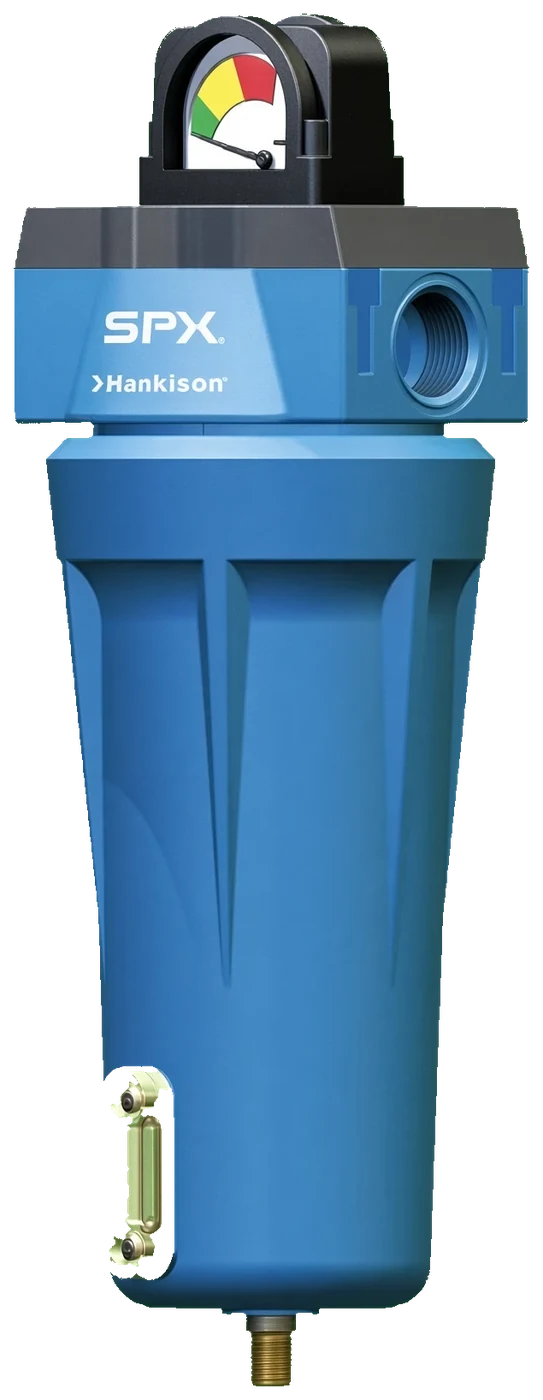
Particle classes count solids per cubic meter in three size ranges, and oil classes limit total oil, aerosol plus vapor, in milligrams per cubic meter: class 1 is 0.01 mg or less, class 2 is 0.1, class 3 is 1 and class 4 is 5. A 1 micron prefilter such as the GFN M1 grade takes oil to class 3, a 0.01 micron coalescing afterfilter such as the GFN M01 grade takes it to class 2, and an activated carbon stage after the coalescer takes the remaining vapor to class 1.
The same 0.01 micron afterfilter normally delivers class 1 or 2 particles, provided it sits after the dryer where the air is coldest and the aerosols are easiest to catch. The filter placement page sets out the order.
Worked example: a CNC cell specified 2:4:2
Turning a purity class into equipment
- Class 4 water: a refrigerated dryer at its 38°F rating, sized on the corrected duty
- Class 2 oil: a 0.01 micron coalescing afterfilter after the dryer, with a 1 micron prefilter ahead of it
- Class 2 particles: met by the same 0.01 micron afterfilter
- Had the spec read 2:4:1, an activated carbon filter would follow the coalescer
Reading a purity specification
Three digits, always in the same order
- First digit particles, second water, third oil: 1:4:1 is not the same air as 4:1:1
- A water class is a pressure dew point; convert any atmospheric figure first
- Class 0 is not zero: it is a limit the buyer writes, stricter than class 1
- A dash or X means no limit is placed on that contaminant
ISO 8573-1:2010 purity classes
Water as pressure dew point, particles as the count in the 1 to 5 micron range per cubic meter, and oil as total aerosol, liquid and vapor. Classes 1 to 5 particles also carry limits in the smaller size ranges.
| CLASS | WATER, PRESSURE DEW POINT | PARTICLES, 1 TO 5 MICRON PER m3 | OIL, mg PER m3 | HOW IT IS MET |
| 1 | Minus 94°F (minus 70°C) or lower | 10 or fewer | 0.01 or less | Desiccant dryer; 0.01 micron coalescer plus activated carbon |
| 2 | Minus 40°F or lower | 100 or fewer | 0.1 or less | Desiccant dryer; 0.01 micron coalescer |
| 3 | Minus 4°F (minus 20°C) or lower | 1,000 or fewer | 1 or less | Desiccant dryer; 1 micron filter |
| 4 | 37.4°F (3°C) or lower | 10,000 or fewer | 5 or less | Refrigerated dryer at its 38°F rating; separator and 1 micron filter |
| 5 | 44.6°F (7°C) or lower | 100,000 or fewer | No class (X above 5) | Refrigerated dryer; cycling models rated 41°F |
| 6 | 50°F (10°C) or lower | By mass, 5 mg per m3 or less | — | High inlet temperature dryers, HRHT and HTR Series |
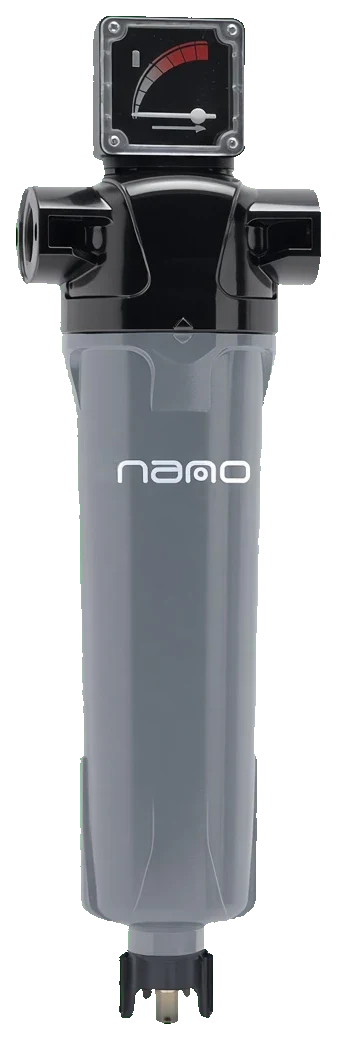
Instruments and filters that set the class
Writing a class the system can meet
Start from the driest, cleanest point of use and write the class for that, not for the whole plant. Class 4 water covers every indoor duty; class 2 or 3 is a desiccant dryer. Class 2 oil is the normal target for tools, machines and paint, and class 1 is for food contact, pharmaceutical and electronics duties where vapor matters. Class 2 particles follows from the afterfilter. A body shop written as 1:2:1 has specified a desiccant dryer and three filters where a refrigerated dryer and two filters would do.
Verifying it
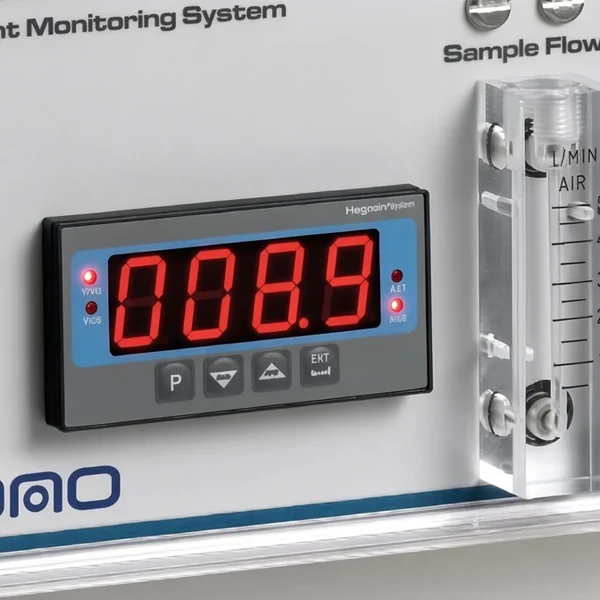
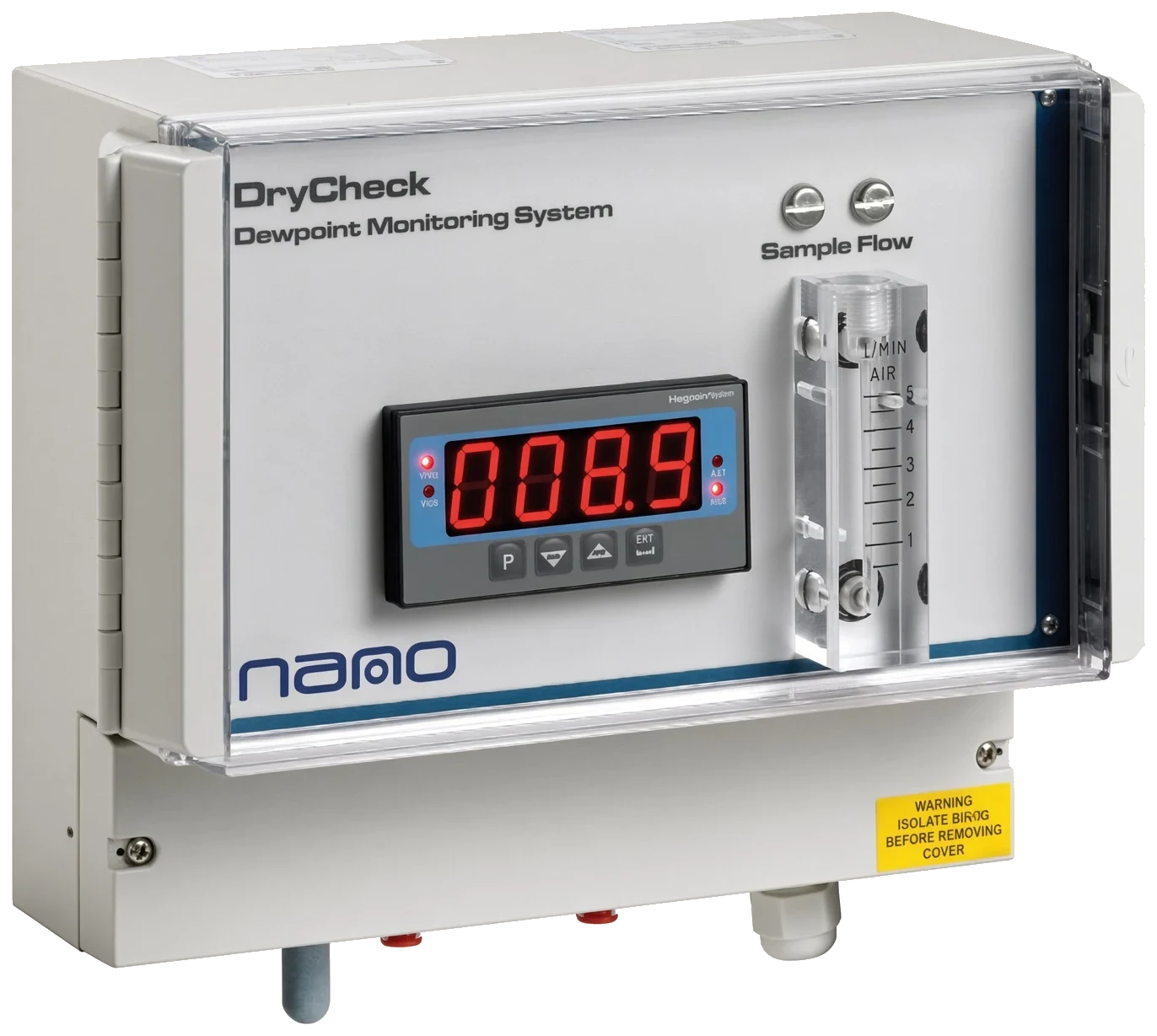
A dew point instrument at the dryer outlet is the only proof of the water class. The PDM monitor samples through a quick-connect fitting, reads pressure dew point from plus 68 down to minus 148°F, and can be carried between dryers or wall-mounted with its alarm contacts wired to a PLC. Oil and particle classes are verified by sampling to the ISO 8573 test methods where a written class has to be certified.
Mistakes in specification
Quoting an atmospheric dew point as if it were a pressure dew point, which makes a 38°F dryer look like it fails a spec it comfortably meets. Reading the class digits in the wrong order. Expecting the dryer to deliver an oil class, when oil removal is entirely the filters' work. Asking for class 0 without writing its limit. Specifying a lower water class than the process needs, which buys a desiccant dryer and its purge air for nothing.
What a refrigerated system delivers
A refrigerated dryer at its rating with a 1 micron prefilter and a 0.01 micron afterfilter delivers class 4 water and class 2 oil, with particles at class 1 or 2, which the standard would write as 2:4:2 or better. The high inlet temperature dryers deliver class 6 water at 50°F, and a few cycling models are rated class 5 at 41°F. Adding an activated carbon stage after the afterfilter moves the oil to class 1 for food and pharmaceutical duties. Anything below class 4 water comes from a desiccant dryer, and we say so and help source it.
Dew point and purity class questions
That the air will not condense water in any line warmer than about 38°F, which is every line inside a heated building. Tools, cylinders, valves, spray guns and machine spindles all run on class 4 air without trouble, provided the oil is filtered out separately.
No. Expanded to atmosphere, air dried to 38°F at 100 psig has a dew point near minus 5°F, so it is considerably drier than a 38°F atmospheric figure suggests. Always check which one a specification means before deciding a refrigerated dryer cannot meet it.
Class 4 water from the dryer, class 2 oil from a 0.01 micron coalescing afterfilter, and class 1 or 2 particles from the same filter, so 2:4:2 or better. An activated carbon stage after the coalescer takes the oil to class 1.
A 1 micron prefilter, a 0.01 micron coalescer after the dryer and then an activated carbon filter for the vapor the coalescer cannot catch. The carbon element is kept below its 122°F limit and changed on hours rather than pressure drop, since it loads up without any rise in differential.
A class the buyer defines, tighter than class 1, written into the specification with its own numerical limit. It is not a claim of zero contamination, and an unqualified class 0 on a purchase order means nothing until the limit is stated.