
1-805-484-2992
Quotes - Engineering - SalesAir-Cooled vs Water-Cooled Refrigerated Dryers
Every refrigerated dryer has to put the heat it takes out of the compressed air somewhere, together with the heat its own compressor adds. An air-cooled unit blows it into the room through a finned condenser and a fan; a water-cooled unit passes it to condenser water and sends it to the cooling tower. The refrigeration circuit, the exchanger and the dew point are the same either way. What changes is the rating basis, 100°F room air against 85°F entering water, the running cost, and what the dryer does to the room.
Below about 600 SCFM the question rarely arises, because only air-cooled builds are offered and a ventilated room is the answer to a hot one. From 600 SCFM up, several series come both ways.
How each rejects its heat
Air-cooled: the condenser is rated at 100°F ambient, loses 12 percent of capacity at 110°F and 25 percent at 120°F, and needs clear intake and discharge and a room that can carry the heat away. It is the simpler installation, with nothing to plumb. Water-cooled: the refrigerant condenses against water in a shell-and-tube or brazed-plate condenser, and the head pressure is set by the water temperature rather than the room, so a 115°F compressor room costs nothing in capacity.
Water also condenses the refrigerant at a lower pressure than hot air does, which is why the water-cooled build of a series draws less power: on the VDR Series the difference is roughly a third at the same flow.
Condenser water: temperature, quantity and quality
The rating assumes 85°F entering water at the flow on the data sheet. Tower water at 90 to 95°F in late summer derates the unit a little, as a hot room derates an air-cooled one, and chilled water buys nothing a tower cannot. Once-through city water works but is expensive and often not permitted for cooling; a tower or a closed glycol loop is the normal source. Every water-cooled unit carries a water-regulating valve that throttles the flow to hold head pressure, so water use falls with the load.
Water quality decides the condenser life. Hardness scales it, suspended solids block a brazed-plate condenser, and chlorides attack it, so a strainer ahead of the unit and a tower water treatment program are part of the installation. Where the water is poor, say so, and we select a series with a cleanable shell-and-tube condenser.
Worked example: 3,000 SCFM central plant, 108°F room
Same duty, two builds, one size apart
- Air-cooled at 108°F ambient: factor 0.88, duty 3,000 / 0.88 = 3,409 SCFM; the 3,500 SCFM size
- Water-cooled on 85°F tower water: no ambient factor, duty 3,000 SCFM; the 3,000 SCFM size
- Air-cooled adds the dryer's whole heat rejection to a room already at 108°F
- Water-cooled build also draws less power at the same flow
Reading a water-cooled rating
What the data sheet asks of the water
- Capacity is rated at 85°F entering condenser water
- Water flow in gallons per minute and the pressure drop across the condenser
- Water connection size, for example 2-1/2 in NPT on the HES Series
- A water-regulating valve holds head pressure and cuts water use at part load
Series by cooling method
Air-cooled units are rated at 100°F ambient and water-cooled units at 85°F entering water; both at 100 psig and 100°F inlet air.
| SERIES | AIR-COOLED SIZES | WATER-COOLED SIZES | NOTE |
| FLXA | 75 to 2,000 SCFM, -A models | 800 to 2,000 SCFM, -W models | Phase-change thermal-mass cycling |
| AES | 600 to 10,000 SCFM, A models | 600 to 10,000 SCFM, W models | Digital scroll; W models share the A ratings |
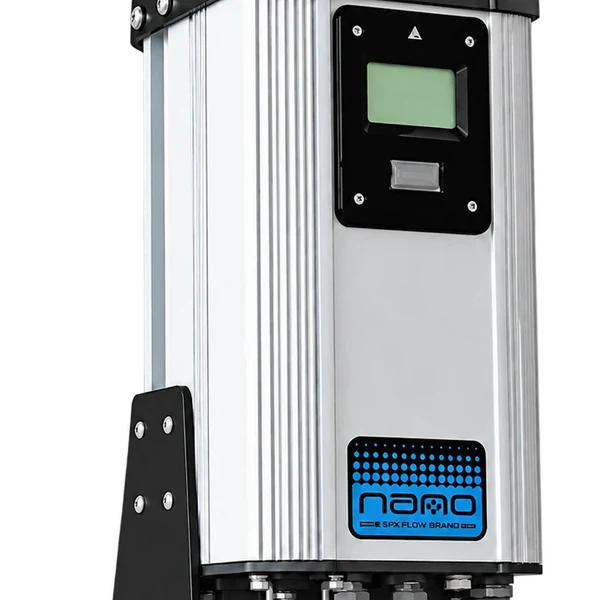
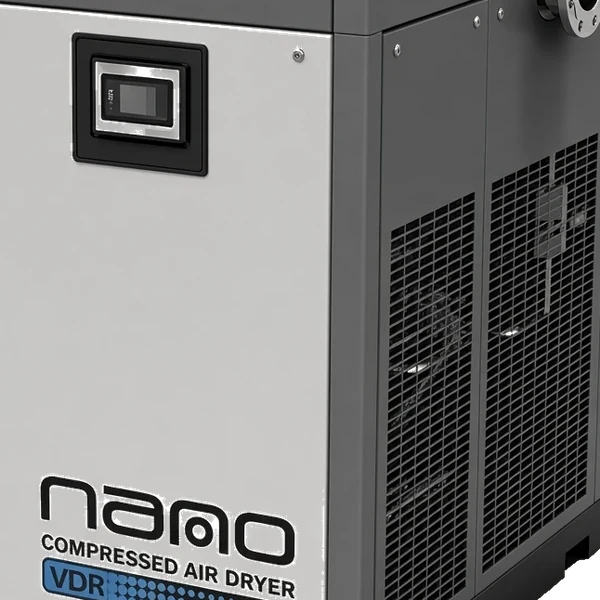
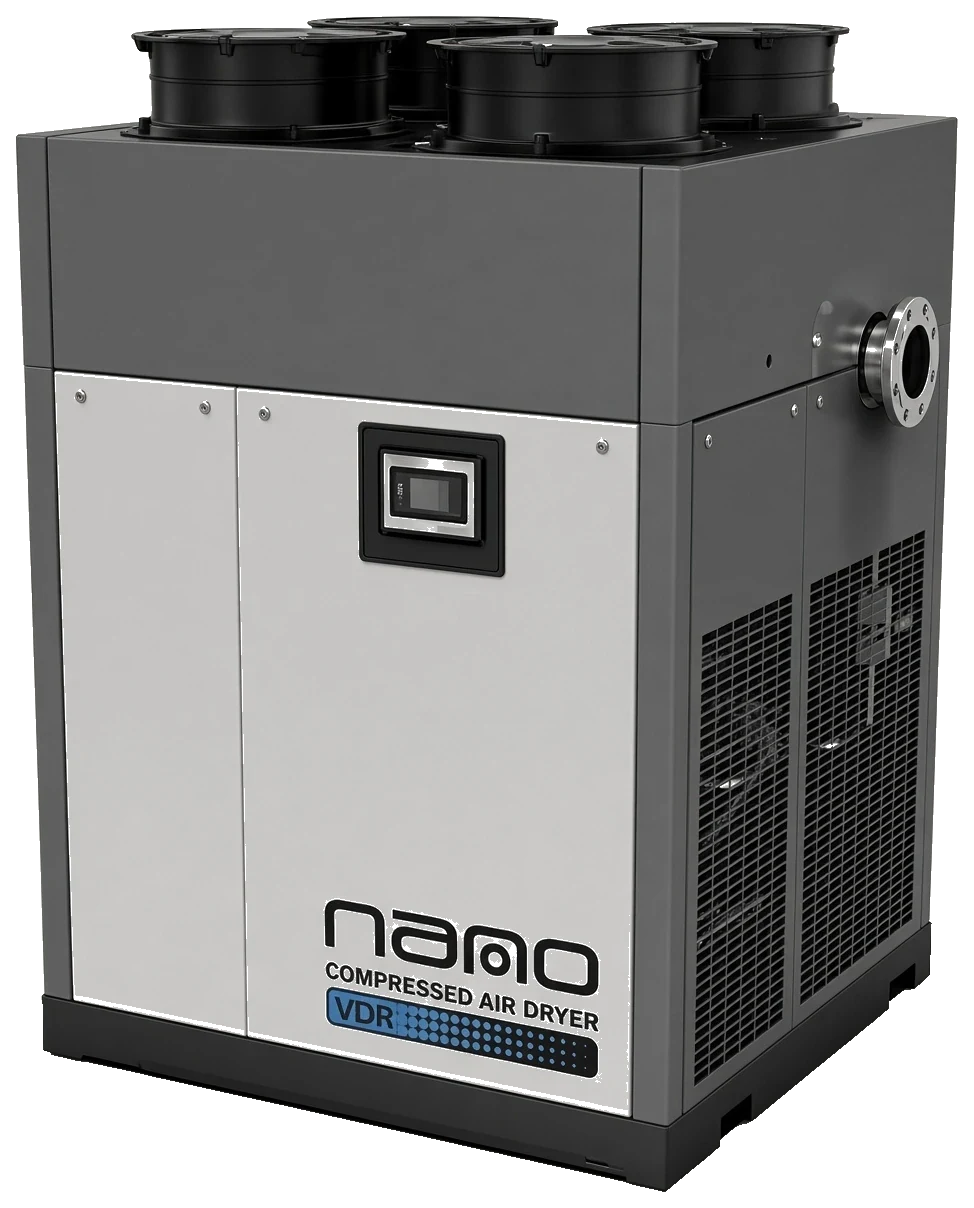
| VDR | 2,600 to 8,450 SCFM, A models | 2,600 to 8,450 SCFM, W models | Variable speed; W build draws about a third less power |
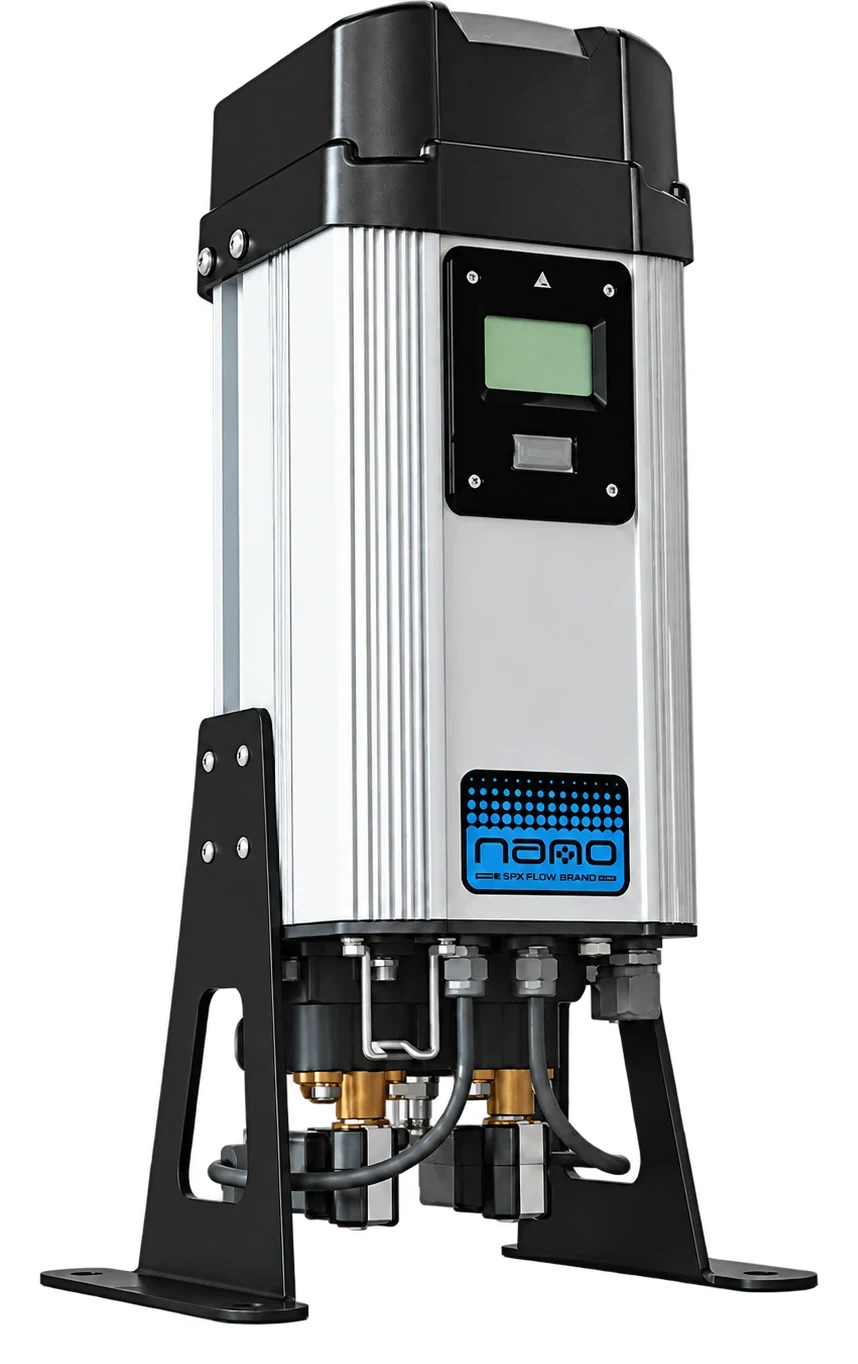
| HES | 2,500 and 3,000 SCFM single cabinet | 3,750 to 12,500 SCFM modular | Digital scroll; 2-1/2 in NPT water connections |
| FLX | — | 3,000 to 12,000 SCFM | Skids of paired 1,500 and 2,000 SCFM modules |
| DXR | 10 to 4,200 SCFM | — | Non-cycling; ventilate the room |
| HPRplus | 2,500 and 3,000 SCFM | — | Non-cycling central plant units |
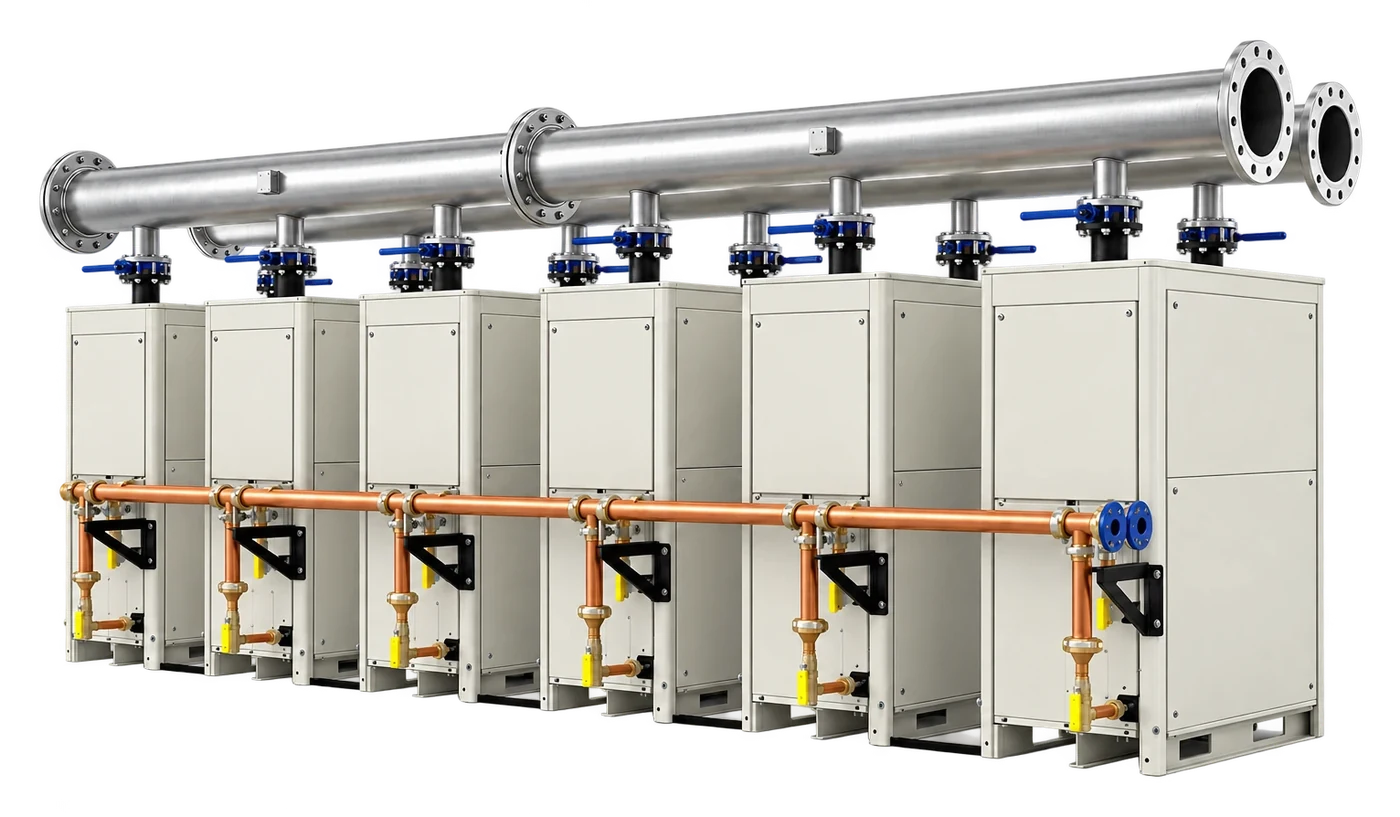
Dryers offered water-cooled
Choosing between them
Start with the room. If it can be ventilated to within 10°F of outdoor air and stays under 100°F on most summer days, an air-cooled dryer sized with the ambient factor is the simpler and cheaper installation. If the room cannot be ventilated, already sits above 110°F, or holds a central plant whose heat rejection would overwhelm any exhaust fan, and tower water is on hand, the water-cooled build is the better machine: it holds its rating regardless of the room and draws less power. Where there is no tower, ducting the air-cooled condenser or fitting a larger exhaust fan is usually cheaper than building a water system for the dryer alone.
Compressor-room heat
An air-cooled dryer rejects the refrigeration load plus its motor power into the room, on top of what the compressor and aftercooler already reject. In a small room that heat raises the ambient the compressor's own cooler and the dryer's own condenser are breathing, and both derate. A water-cooled dryer takes its share of that heat out of the room altogether, which is often the deciding reason.
Mistakes
Sizing a water-cooled unit on 85°F water when the tower delivers 95°F in August. Feeding it untreated well water and losing the condenser to scale in two years. Piping the condenser water without a strainer or isolation valves. Installing an air-cooled dryer in a closed room and ducting nothing. And forgetting that a water-cooled dryer still has a minimum room temperature for its controls and drain.
The water-cooled series
The FLXA Series is water-cooled from 800 to 2,000 SCFM, the AES Series across its whole 600 to 10,000 SCFM range, and the VDR Series from 2,600 to 8,450 SCFM. The HES Series modular systems from 3,750 to 12,500 SCFM and the FLX Series skids from 3,000 to 12,000 SCFM are water-cooled only. The DXR and HPRplus Series are air-cooled throughout.
Air-cooled and water-cooled questions
It depends on the size and on the water temperature, and the figure is on each model's data sheet as gallons per minute at 85°F. We supply it with every water-cooled quote along with the pressure drop, so the tower and the piping can be checked before the order.
Mechanically yes, and some small installations do, but once-through cooling water is costly and many municipalities prohibit it. A cooling tower, a closed loop with a dry cooler, or process water already circulating in the plant are the usual sources.
At a slightly reduced capacity, in the same way a 110°F room reduces an air-cooled unit. Tell us the summer water temperature and we size the water-cooled unit to it rather than to the 85°F rating point.
Water-cooled, at the dryer. Its refrigerant condenses at a lower pressure so the compressor draws less, and the room ventilation load falls too. Against that stands the tower's own fan and pump power and its water treatment, which is why the choice is usually made on the room rather than on the kilowatts.
It removes the capacity correction for a hot room, not the operating limits. The controls, the drain and the exchanger still need the room above the series minimum, and the unit should not stand where it can freeze in winter.