
1-805-484-2992
Quotes - Engineering - SalesSix things the installation has to get right
The order of equipment matters more than any single component. Air leaves the compressor hot and saturated, sheds most of its water in the aftercooler and receiver, has the remaining liquid and the compressor oil taken out by a separator and a 1 micron prefilter, is dried to 38°F, and then passes a 0.01 micron afterfilter that removes the oil aerosol the cold air has just condensed. Put the afterfilter ahead of the dryer and it sees warm air and misses the oil; put the dryer ahead of the receiver and it sees every load surge and all the bulk water at once.
Around that train go the valves and drains that let it be serviced and let the water out. A bypass keeps the plant running while a filter element is changed; a drain on every collection point keeps the separator bowls from filling and overflowing into the dry line. The four topic pages below cover each part, and the checklist here is the short version.
- Order: compressor, aftercooler, receiver, separator or 1 micron prefilter, dryer, 0.01 micron afterfilter, carbon filter if needed, header
- Bypass: three valves around the dryer, or the 1701 single-body valve on dryers to 35 SCFM; isolation valves either side of each filter
- Drains: zero-loss or float drains on the receiver, separator, prefilter, dryer and afterfilter; each piped separately to an oil-water separator
- Filters: 1 micron prefilter before, 0.01 micron afterfilter after, elements changed on differential pressure or once a year
- Room: condenser intake and discharge clear, ambient between the series minimum and 100°F, exhaust fan sized for the compressor's heat
- Downstream: no wet tie-ins, no regulators ahead of the dryer, no second compressor joining the header after it
The installation topics
Piping, drains, filters and the checks that keep the rating
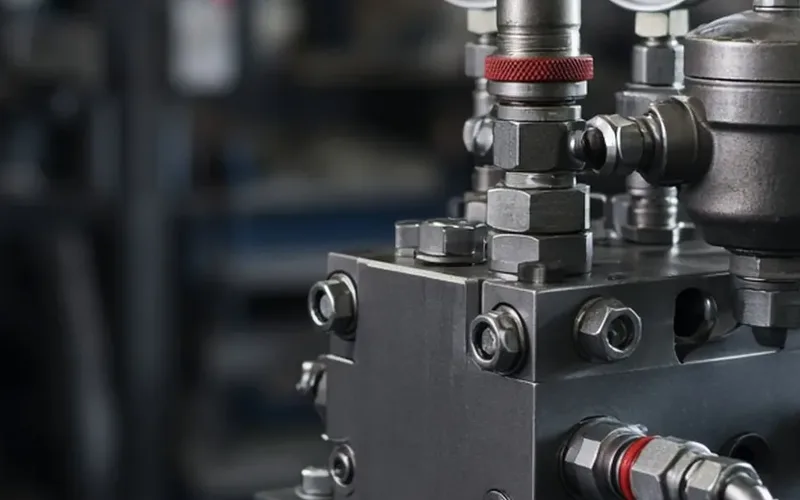
Piping & Bypass: Where the dryer goes in the line from compressor to header, why the receiver comes first, how to arrange a three-valve or single-body bypass, pipe sizing, and why nothing wet may join the air after the dryer.
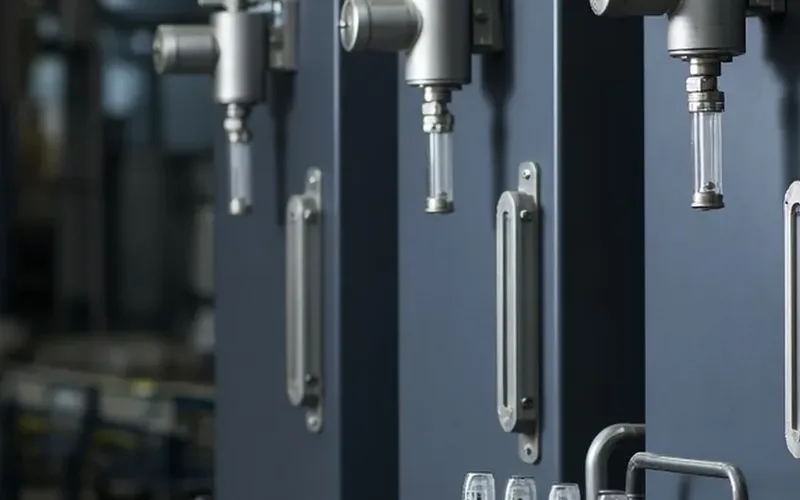
Condensate Drains: Timed solenoid drains against zero-loss and float drains, how much condensate each point produces, where each drain type belongs, and how to pipe the discharge to an oil-water separator.
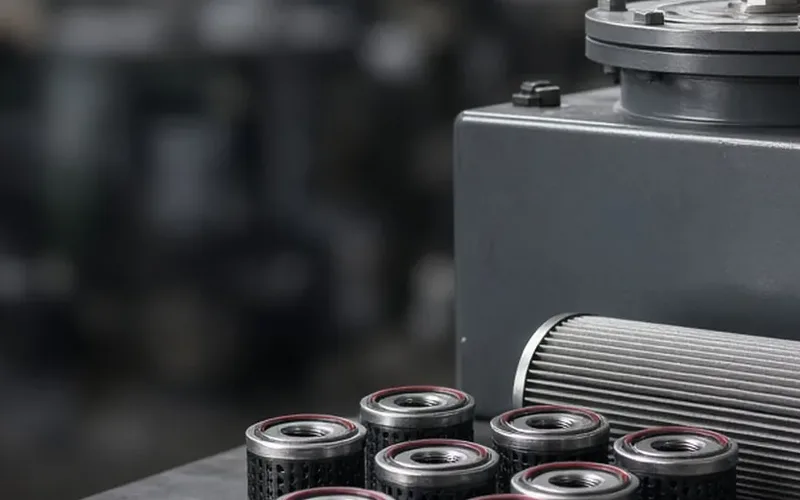
Filter Placement: The 1 micron prefilter and the 0.01 micron afterfilter, the element grades of the GFN, NGF and HF Series, the 450°F GHTN filter for piston compressors, and changing elements on pressure drop.

Maintenance: The handful of checks that keep a dryer at its rating: condenser fins, drain operation, filter differential and a dew point reading with a portable monitor, and what each drift means.
Location and the room
The dryer stands after the receiver, as close to it as the piping allows, on a level floor with the clearance the installation drawing gives for the condenser intake and discharge and for pulling the filter bowls. It needs the room to stay between the series minimum, 34 to 45°F depending on the model, and the 100°F rating point on most days, with an exhaust fan and a low louver doing the work in summer. It should not stand in the compressor's exhaust stream, in the path of a loading door in winter, or outdoors without an enclosure.
Power and startup
Small dryers to 150 SCFM are 115 V single-phase and plug in; larger units are 230 V single-phase or 460 V three-phase on a dedicated circuit. On first start, power the dryer with the bypass open and the outlet valve closed, let the refrigeration circuit reach temperature, then bring the air on slowly. Check the drain discharges, watch the dew point display settle toward 38°F, and read the differential gauges on both filters so there is a clean baseline to compare against later.
The first week
Most installation faults show up in the first few days. A drain that never discharges means its strainer is blocked or its supply line is pinched. A dew point that settles at 45°F rather than 38°F points to a partially open bypass, a compressor delivering more than the sizing assumed, or a hot corner of the room. Water at a point of use that the dryer serves points to a wet tie-in downstream, a bypass left cracked, or an afterfilter bowl that is not draining. Each is a ten-minute check, and each is cheaper to find now than in August.
What we check on a quote
Before we confirm a model we ask how the dryer will be piped: whether there is a receiver ahead of it, whether the compressor has an aftercooler, where the filters will go and what the room does in summer. Where the answers show an installation problem, we say so with the quote rather than sell a larger dryer to cover it. Call 1-805-484-2992 between 8am and 5pm or use the quote form and include a sketch of the piping if there is one.
Installation questions
After. The receiver smooths the flow the dryer sees, drops out bulk condensate and cools the air a little, so the dryer works on a steady, cleaner stream. A dryer piped before the receiver takes the compressor's full surge on every load cycle and passes water on the peaks.
Yes, unless the plant can be shut down for every filter change and service. Three valves and a tee cost a fraction of a lost shift, and on dryers to 35 SCFM the single-body 1701 valve does the job in one fitting. Label the valves so nobody leaves the bypass cracked open.
Only inside an enclosure that keeps it above the series minimum ambient in winter and shaded in summer, with the drain line protected from freezing. An unprotected outdoor dryer ices its exchanger in January and trips on high pressure in July, and neither is a warranty matter.
Any pipefitter or mechanical contractor, following the installation drawing we supply with the dryer. Dryers to 150 SCFM are plug-in units with NPT connections that a maintenance technician can fit in an afternoon; larger flanged units are a contractor's job. We answer questions during the work by phone.
The afterfilter installed ahead of the dryer, where it does little, followed closely by no bypass and a timed drain set once and forgotten. All three leave the plant with a dryer that meets its rating and a header that still carries water and oil.