
1-805-484-2992
Quotes - Engineering - SalesReplacing an Existing Refrigerated Air Dryer
Five of the series on this site are the previous generation: the HPR, HPRN, FLEX, HITN and HPET Series. Each still has its own page and part numbers, so an old unit can be identified, and each has a current successor that carries the same flows with a newer refrigerant, a lighter cabinet and in some sizes a different pipe connection. Replacing one is a matter of reading the nameplate, naming the successor, and checking three things that may have changed since the original was bought.
Where the old dryer is another make entirely, the same method applies through its rated flow; the cross-reference page covers that case.
Reading the old nameplate
The model number carries the series and usually the flow: HPRN250-4 is a 250 SCFM non-cycling unit on 460 V, FLX4.5 a 450 SCFM cycling unit, HITN50 a 50 SCFM high inlet temperature unit, HPET-1.0 a 300 SCFM high-pressure unit whose number is its refrigeration horsepower. Beside it are the rated flow and its conditions, which for these series are the same 100 psig, 100°F and 100°F point used across this site, then the maximum working pressure, the voltage and phase, the refrigerant, and the serial number, which dates the unit.
The connection size is on the drawing rather than the plate, and it is the item most often missed: the successor may be one pipe size different, and reducers are easier to order with the dryer than to find on the day it arrives.
The successors, size for size
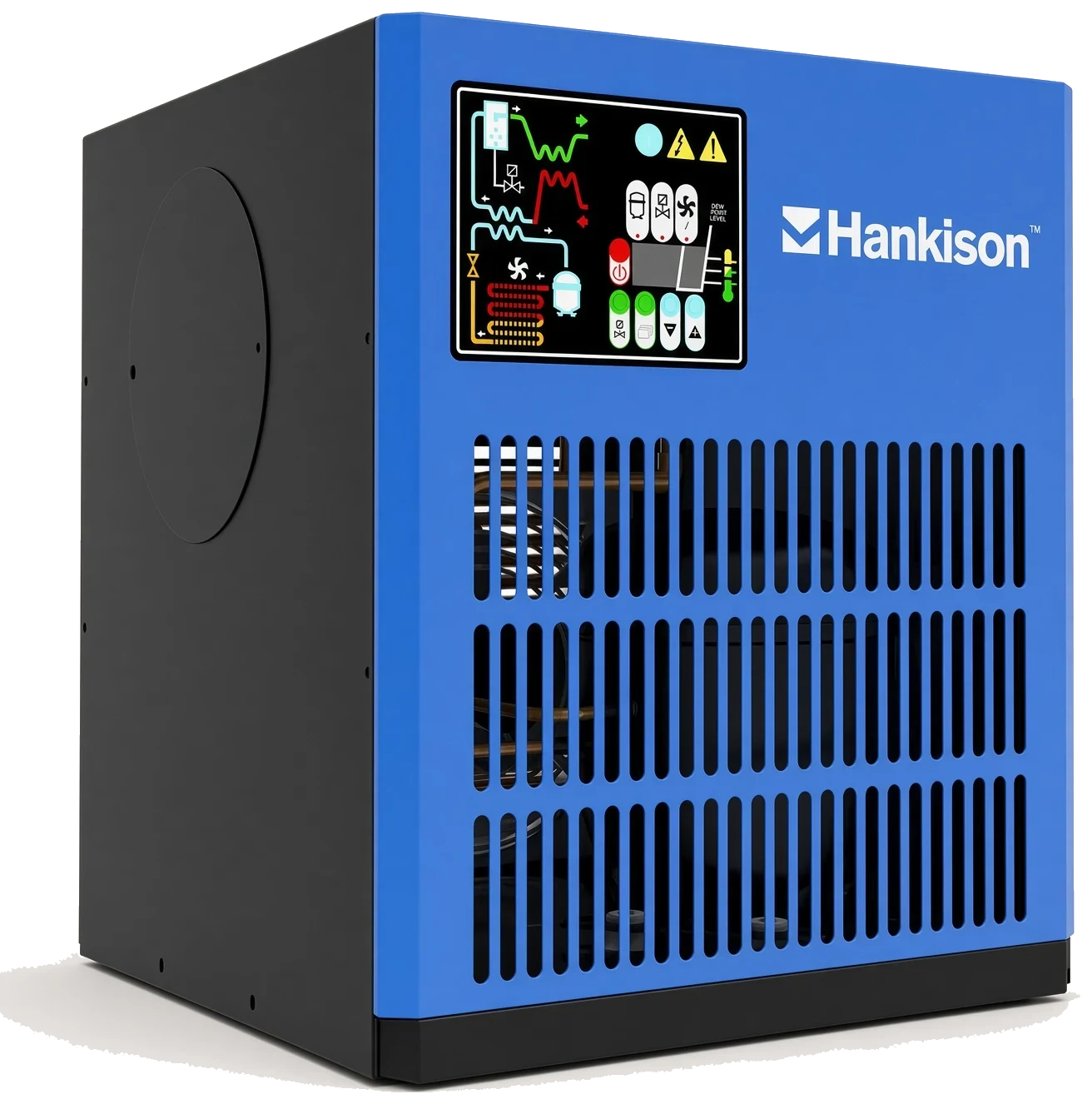
The HPR Series small cabinet dryers are replaced by the HPRB Series at the same flows, 7 to 50 SCFM. The FLEX Series is replaced by the FLXA Series under the same model numbering, so an FLX4.5 becomes an FLXA4.5-A. The HITN Series is replaced by the HRHT Series, rated for 200°F rather than 180°F inlet air, with the HTR Series covering the 125 SCFM size. The HPET Series is replaced by the HHPR Series at 680 psig, with the APET Series covering 725 psig duties and the smallest sizes.
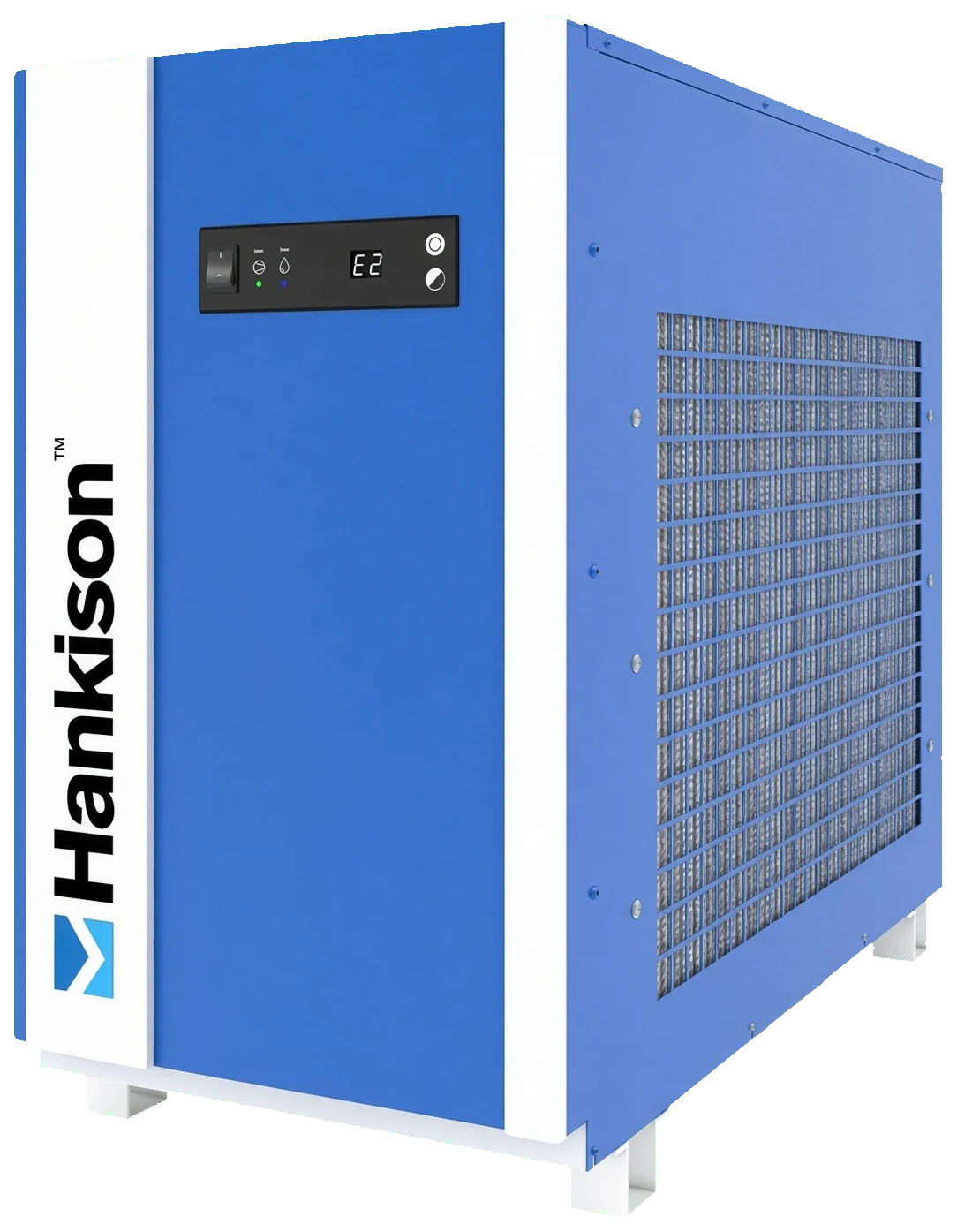
The HPRN Series has no single successor. Its 75 to 1,200 SCFM range is covered flow for flow by the non-cycling DXR Series, which is the like-for-like replacement, or by the FLXA Series where the plant now runs the hours that make a cycling dryer pay.
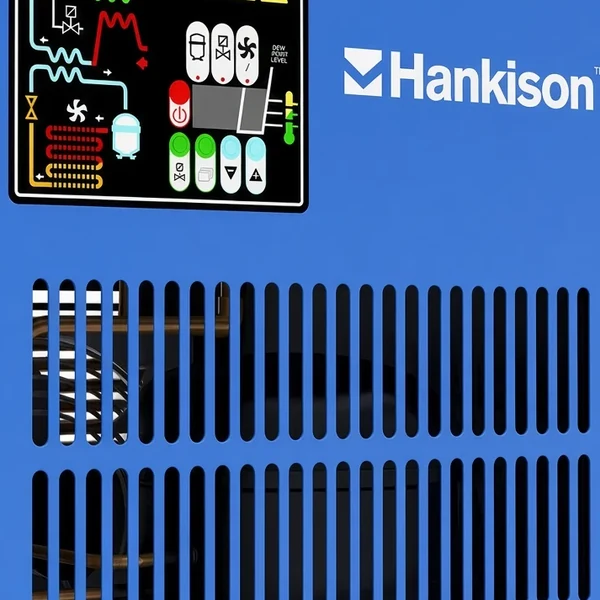
Worked example: replacing an HPRN250-4
Same flow, one pipe size smaller
- Old unit: 250 SCFM non-cycling, 2 in NPT, 460/3/60, 30 x 17 x 36 in, 205 lb
- Plant unchanged: 50 hp screw in a ventilated room, one shift
- Like for like: DXR 0250 NA, 250 SCFM, 1-1/2 in FNPT, 460/3/60, 36 x 23 x 24 in, 185 lb, with two 2 in to 1-1/2 in reducers
- Had the plant added a second shift: FLXA3.1-A, 300 SCFM cycling, 2 in NPT, no reducers
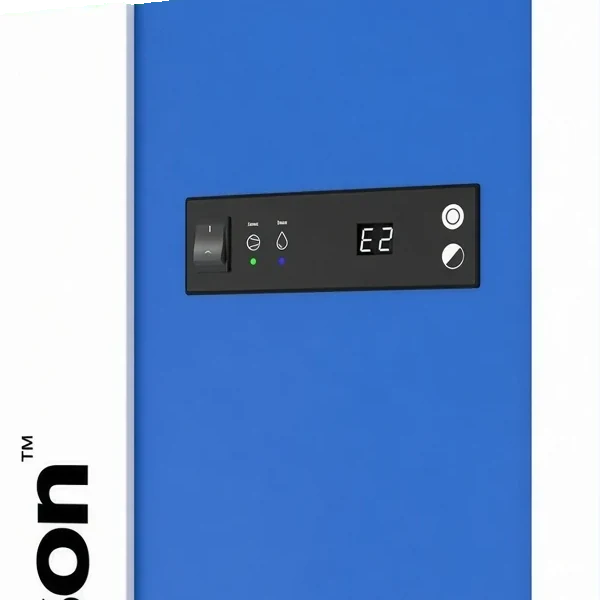
Reading the nameplate
Six lines that identify the replacement
- Model number: series and, on most lines, the rated SCFM
- Rated flow and rating conditions; maximum working pressure
- Voltage, phase and frequency; refrigerant type
- Serial number for the age, and the connection size from the drawing
Retired series and their successors
Flow for flow, with the changes to watch for when the new unit is piped in.
| RETIRED SERIES | SUCCESSOR | WHAT CHANGES | EXAMPLE |
| HPR, 5 to 50 SCFM | HPRB, 7 to 50 SCFM | 3/8 in tube and 3/4 in NPT become 3/8 in MNPT and 1/2 in FNPT; R513A; lighter cabinet | HPR25 to HPRB25-A |
| HPRN, 75 to 1,200 SCFM | DXR, non-cycling, or FLXA, cycling | Pipe size differs by one step on several models; 4 in flanges become 3 in MNPT on 1,000 and 1,200 SCFM | HPRN250-4 to DXR 0250 NA |
| FLEX, 75 to 2,000 SCFM | FLXA, same model numbers with -A or -W | Same connections through 1,250 SCFM; 1,500 and 2,000 SCFM move from 4 in to 6 in flanges | FLX4.5 to FLXA4.5-A |
| HITN, 20 to 125 SCFM at 180°F | HRHT, 25 to 100 SCFM at 200°F; HTR at 125 SCFM | 3/4 in and 1 in NPT become 3/4 in MNPT or FNPT and 1 in FNPT; zero-loss drain fitted | HITN50 to HRHT60A |
| HPET, 30 to 3,000 SCFM at 725 psig | HHPR, 115 to 2,410 SCFM at 680 psig; APET, 45 to 1,000 SCFM at 725 psig | Confirm the system pressure against 680 psig; Class 300 flanges from 750 SCFM on the HHPR | HPET-0.5 to HHPR-200 or APET-200 |
Successors to the retired series
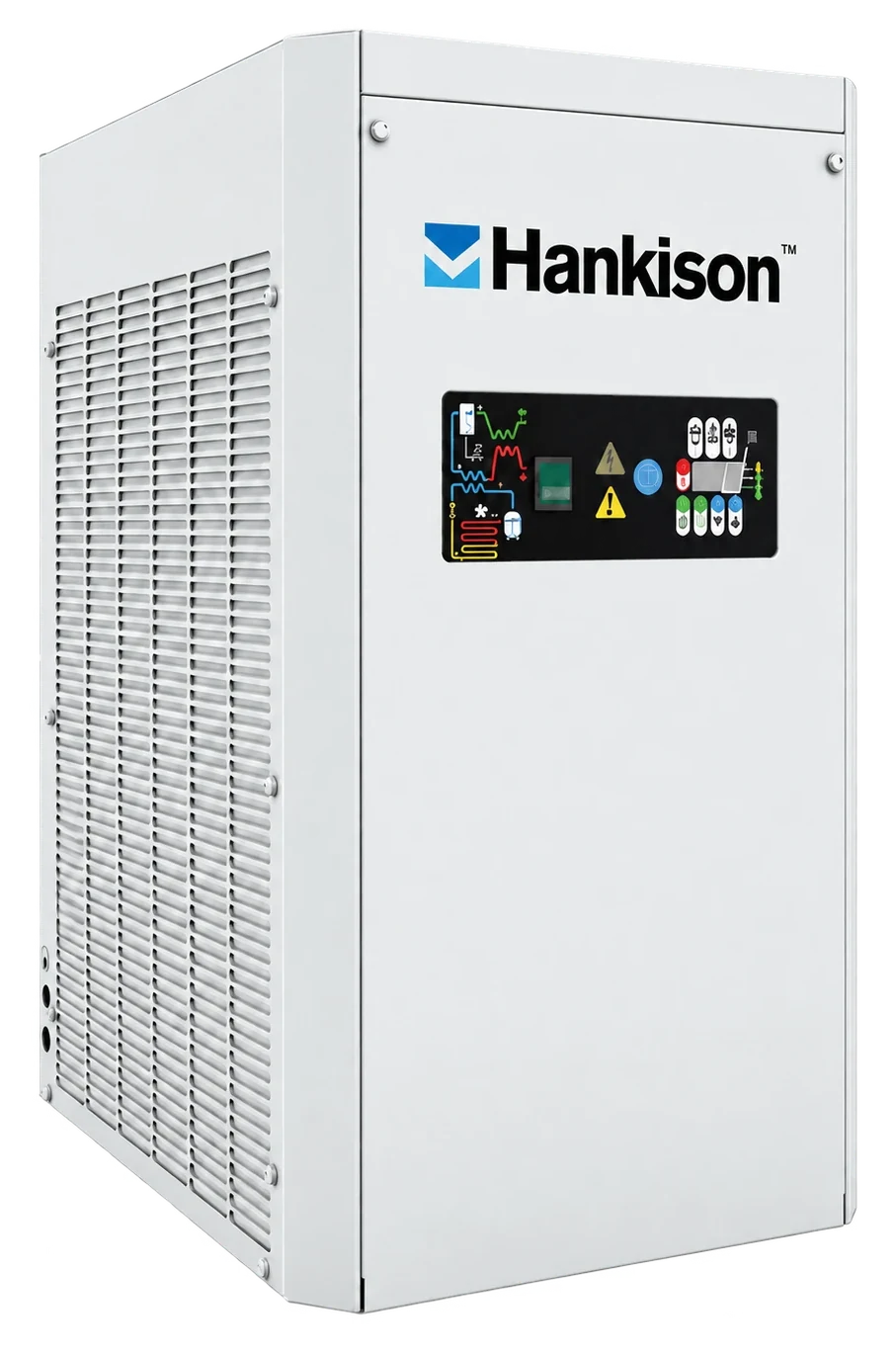
Three things to check before ordering
First, the compressor: if it has been replaced or a second one added, the delivered flow is not what the old dryer was sized for. Second, the room: a compressor room that has gained a machine since the dryer went in is hotter, and the ambient factor moves the sizing. Third, the hours: a plant that has grown from one shift to two has become a cycling duty. If all three are unchanged, the successor at the same rated flow is the order. If any has changed, size again on the sizing pages and treat the old rating as the floor.
Connections and footprint
Small cabinet dryers moved from 3/8 in tube and 3/4 in NPT on the HPR Series to 3/8 in MNPT and 1/2 in FNPT on the HPRB Series. The HPRN to DXR cross changes the pipe size on several models, up or down by one step, and swaps the 4 in flanges of the HPRN1000 and HPRN1200 for 3 in MNPT on the DXR 1050 and 1250. The FLXA 1,500 and 2,000 SCFM sizes moved from 4 in to 6 in flanges and stand taller than the FLEX units they replace.
Mistakes in replacement
Ordering the old rated flow when the plant has grown. Ordering a high-pressure HHPR unit for a 725 psig system its 680 psig rating does not cover, when the APET Series does. Matching an HITN at 180°F when the compressor's aftercooler has since failed and the air arrives hotter still. Assuming the successor's pipe size is the same. And replacing a dryer that was undersized from the start with one exactly as undersized, because it was the same number.
Refrigerants, voltage and power
The current series use R513A, R454C, R410A or R404A in place of the R-134a and R-407C of the retired lines; none of it affects the installation, since the circuits are sealed and charged. Voltages match size for size: 115 V single-phase on the small cabinets, 460 V three-phase from about 200 SCFM, with 230 V single-phase on several mid sizes. Power draw is generally equal or lower, and on a cycling replacement it falls with the load.
Questions about replacing an old dryer
Not in practice. Both are ISO 8573-1 class 4 air, and no indoor plant line notices three degrees of dew point. Compare the rated SCFM at the same 100 psig, 100°F and 100°F point and size on that.
The bypass, if the valves still turn and the pipe size suits the new connection. The filters, if they are the right grades and sized to the compressor, with fresh elements. Old timed drains are worth swapping for zero-loss units while the dryer is out.
Reduce, with a pair of concentric reducers at the dryer, as long as the main is at least the size of the new connection. Re-pipe only where the old main was already undersized, which a pressure gauge either side of the dryer will show.
No. The circuit arrives sealed and charged, needs no refrigerant on site, and the newer refrigerants have lower global warming potential, which is why the series changed. Service technicians need the correct gauges, and the type is on the nameplate.
Usually, and often with room to spare, since the current cabinets are more compact at most sizes. The exceptions are the 1,500 and 2,000 SCFM FLXA units, which are taller than the FLEX units they replace. Dimensions are on every part-number page and on the quote.