
1-805-484-2992
Quotes - Engineering - SalesRefrigerated Air Dryers for Paint Spraying
A spray gun atomizes whatever arrives in the air line along with the paint. Water shows up as fisheyes and craters where a droplet stopped the coating from wetting the surface, as blushing when moisture condenses into a fast-evaporating lacquer and turns it milky, and as blisters that lift a week later. Compressor oil does the same and is harder to trace, because a few parts per million of vapor that no coalescer catches is enough to crater a clearcoat. The rest of the booth is affected too: pressure pots, diaphragm pumps, agitators, gun washers and the air-driven flash-off blowers that a waterborne booth runs between coats.
The specification that stops all of it is a 38°F pressure dew point, ISO 8573-1 class 4, from a refrigerated dryer at the compressor, followed at the booth wall by a three-stage filter: a 0.01 micron coalescer, an activated carbon element for oil vapor and a final particulate stage. That takes the air to oil class 1 at the gun, which is what paint makers mean by clean, dry air.
An HVLP gun draws 10 to 15 SCFM while the trigger is pulled and a conventional gun 8 to 12, but a waterborne booth adds 20 to 40 SCFM per flash-off blower, so a two-booth body shop that used to run on a 7.5 hp compressor now needs 15 to 25 hp. A 25 hp screw at 105 to 110 SCFM is the 125 SCFM dryer; an industrial paint line on a 50 hp screw is the 250 SCFM size.
Many booth compressors are piston machines without an aftercooler, discharging 180 to 200°F air. Those shops take the whole supply through a high-inlet-temperature dryer for the tools, then run the booth branch through a standard 38°F dryer once the air has cooled, or fit a small dedicated dryer at the booth.
Request a paint booth dryer quote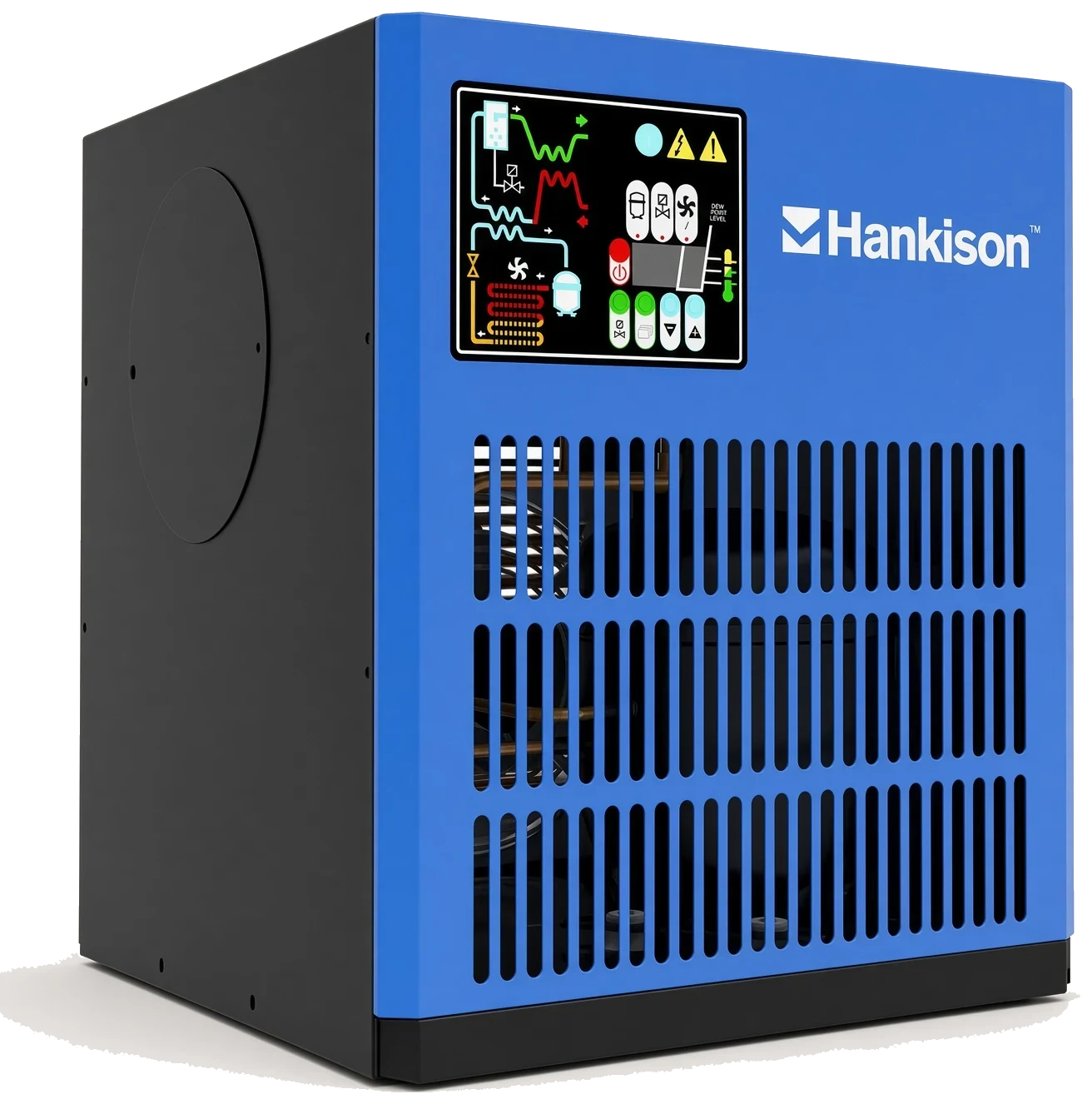
What water and oil do in the finish
The defects, and where they come from
- Fisheyes and craters where a droplet of water or oil stops the coating wetting the panel
- Blushing, the milky haze that moisture leaves in a fast-drying solvent lacquer
- Blisters and adhesion failure days later where water was trapped under the film
- Contaminated pressure pots and diaphragm pumps that carry the problem into the next job
The air specification for spraying
Dryer at the compressor, three stages at the booth
- 38°F pressure dew point, ISO 8573-1 class 4, from a refrigerated dryer sized for the compressor
- 0.01 micron coalescer, activated carbon and a final particulate filter at the booth wall for oil class 1
- High-inlet-temperature dryer or an aftercooler where the compressor is a piston machine
- Regulator at the gun, not at the compressor, so the cap pressure holds while the sander runs
Dryers that fit a spray booth
Rated flows at 100 psig, 100°F inlet. Body shop booths on a 7.5 to 25 hp compressor use the 25 to 125 SCFM sizes; industrial paint lines on 30 to 50 hp screws use 150 to 250 SCFM. The HRHT and HTR series take 180 to 200°F air from a piston compressor.
| SERIES | TYPE | FLOW RANGE | MAX INLET | MAX PRESSURE |
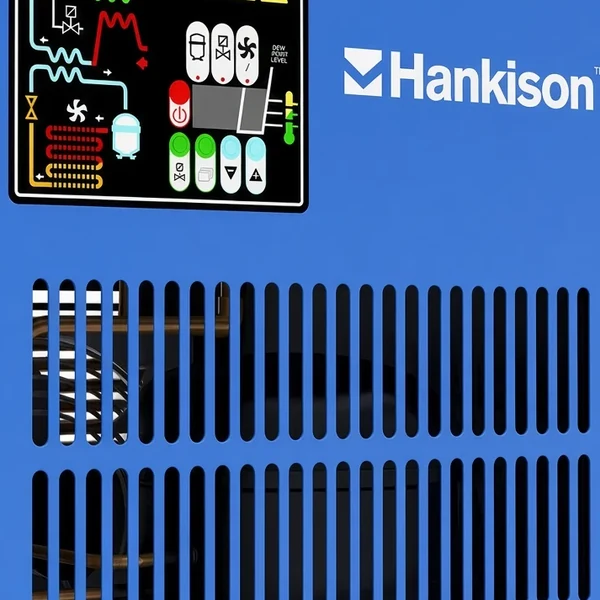
| HPRB Series | Non-Cycling | 7 to 50 SCFM | 120°F | 200 psig |
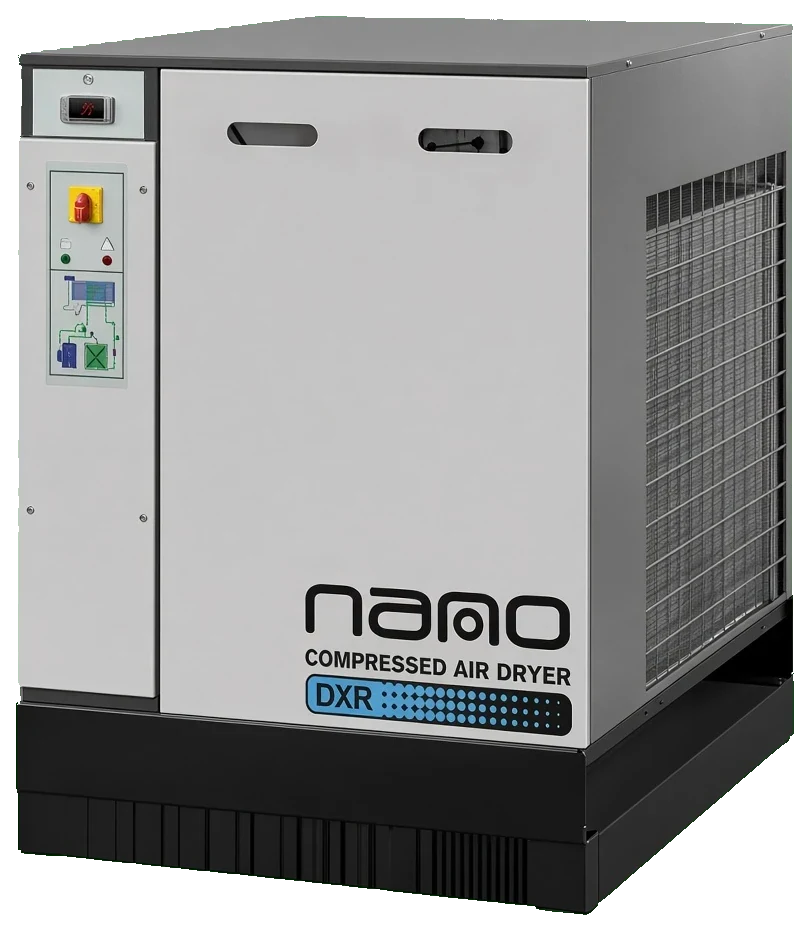
| DXR Series | Non-Cycling | 10 to 4,200 SCFM | 131°F | 203 psig |
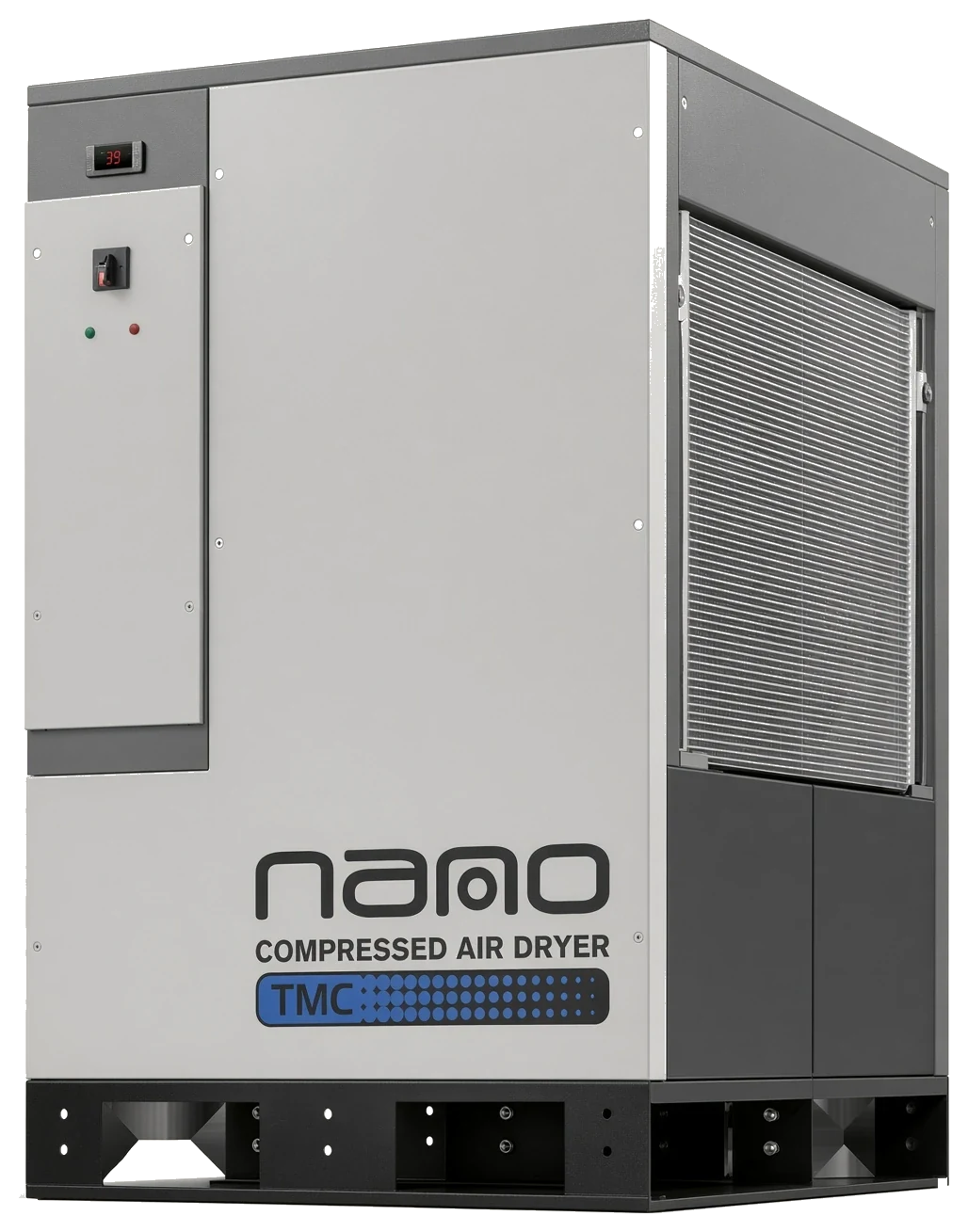
| TMC Series | Thermal Mass Cycling | 30 to 635 SCFM | 140°F | 210 psig |
| HRHT Series | High Inlet Temperature | 25 to 100 SCFM | 200°F | — |
| HTR Series | High Inlet Temperature | 25 to 125 SCFM | 180°F | 232 psig |
| GFN Series Filters | Compressed Air Filter | 6 to 1,500 SCFM | — | 232 psig |
| NGF Series Filters | Compressed Air Filter | 20 to 1,500 SCFM | — | 250 psig |
| HF Series Filters | Compressed Air Filter | 20 to 21,250 SCFM | — | 300 psig |
Tell us the compressor, whether the booth sprays waterborne, and how far the booth is from the compressor room; we size the dryer and the three-stage filter together.
The three-stage filter is not the dryer
A booth wall filter with a coalescer, a carbon element and a particulate stage is essential and also the most common thing to be asked to do a job it cannot. A coalescer removes liquid; it does nothing about water vapor, which passes straight through and condenses in the hose or the gun body when the air expands at the cap. A shop with the filter and no dryer drains water from the bowl every morning and still gets fisheyes on humid afternoons.
Put the refrigerated dryer at the compressor so the vapor is gone before the header, and let the booth filter do what it is for: the last few feet, and the oil vapor. A carbon element that sees dry air lasts its full rated hours; one that sees wet air is spent in weeks.
- Dryer at the compressor, three stages at the booth
- Carbon elements changed on hours, not on pressure drop
- Booth branch on its own line from the header
Where the dryer and filters go
Compressor, aftercooler or receiver, prefilter, dryer, then the header to the booth, with the three-stage filter on the booth wall and a regulator at the gun. The dryer belongs in the compressor room, not the booth: booth air is hot, and overspray on a condenser coil takes a dryer's capacity down within a season. The distance between the two is not a problem as long as the header does not pass through an unheated space, because dry air stays dry until it meets something colder than 38°F. The filter placement page shows the order of the stages.
Waterborne booths
Waterborne basecoats are less sensitive to a trace of moisture than solvent lacquers, but they need more air: flash-off between coats is done with air-driven blowers or venturi nozzles that draw 20 to 40 SCFM each and run for minutes at a time. Shops that switched to waterborne without resizing the compressor find the dryer overloaded on every flash-off, with the dew point climbing exactly when the next coat is about to go on. Size the compressor and the dryer for the blowers, not the guns.
Cycling or non-cycling for a paint shop
A booth sprays for twenty minutes and bakes for forty, so the compressor idles for most of the day. Below about 100 SCFM that does not matter; the HPRB and small DXR non-cycling dryers draw a few hundred watts and the difference is not worth chasing. A paint line on a 30 to 50 hp screw is another matter: a cycling dryer such as the TMC stops its refrigeration compressor between jobs and cuts dryer power by more than half over a week of booth cycles.
Piston compressors and hot air
An 80-gallon two-stage piston compressor with no aftercooler discharges at 180 to 200°F. A standard dryer rated for 100°F air keeps 55 percent of its capacity at 130°F and nothing useful above that, so the shop that pipes a small dryer straight off the tank gets water at the gun and blames the dryer. The high-inlet-temperature dryers take that air directly and hold 50°F; the booth branch then passes through a standard dryer for its 38°F, or the shop adds an aftercooler and runs one 38°F dryer for everything.
Spray booth air questions
Oil vapor. A coalescing filter removes liquid oil and aerosol, but compressor lubricant also travels as vapor, and a few parts per million is enough to crater a clearcoat. The activated carbon stage at the booth wall removes the vapor; change it on hours, not on pressure drop, because it gives no warning when it is spent.
Not for spraying inside a heated shop. A 38°F dew point is below the temperature of the booth, the lines and the panel, so nothing condenses. A desiccant stage is only called for where a specification asks for class 3 or better, or where the air line runs outdoors between the compressor room and the booth in winter.
Size it for the compressor, which on a waterborne shop is usually 15 to 25 hp: a 15 hp screw at 65 to 70 SCFM takes the 85 SCFM dryer, a 25 hp screw the 125. A piston compressor of the same horsepower delivers about 20 percent less air but at 180°F, which points to the high-inlet-temperature series.
Yes. One dryer at the compressor room holding 38°F serves the whole shop; the booth branch simply gets the three-stage filter at its wall and the tool drops do not. Give the booth its own line from the header so a DA sander on the same drop does not pull the gun's pressure down mid-panel.
It can share the dryer, but breathing air has its own requirements: a dedicated filter package with carbon monoxide monitoring and a regulated supply that meets the breathing-air grade. The process dryer and booth filters are not a breathing-air system on their own.
More on air for painting
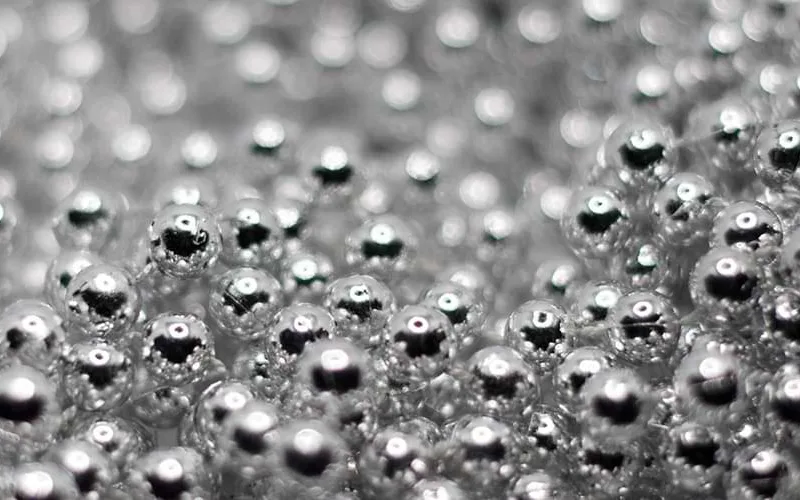
Point-of-use dryers for a paint booth
When a dedicated dryer at the booth makes sense, how to size it for the guns and blowers, and the filters that go with it.
Learn More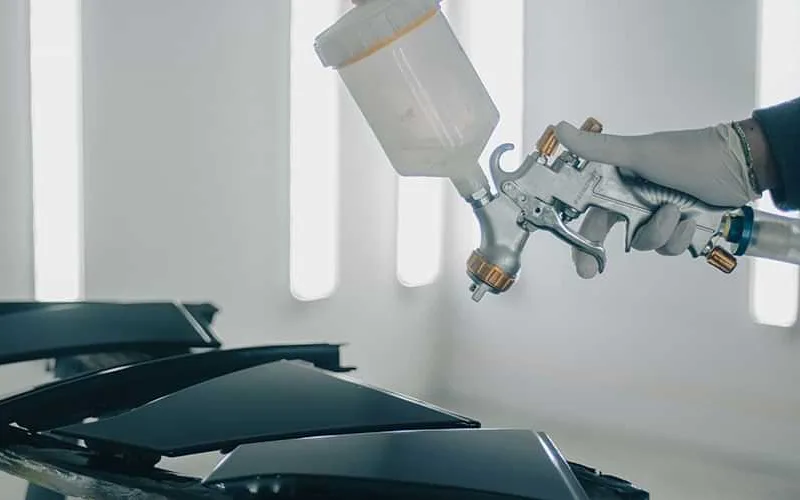
Body Shops
Compressed air drying for collision repair: sanders, spray guns, frame racks and piston compressors, and the dryer that handles hot tank air.
Learn More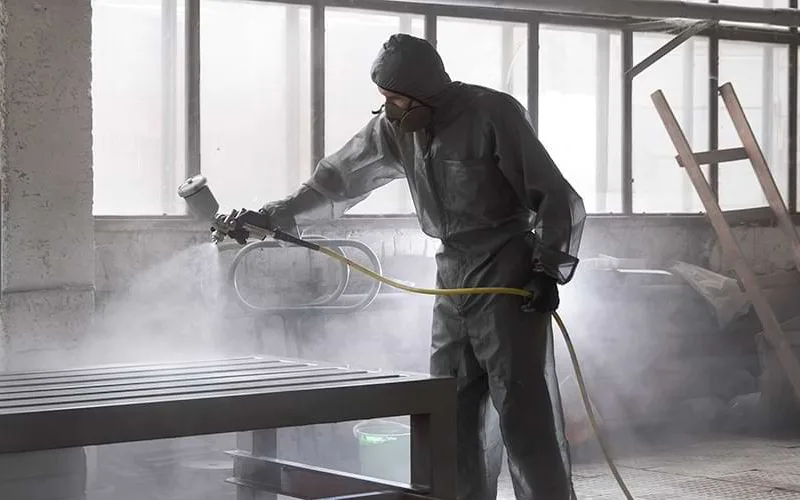
Powder Coating
Compressed air for powder coating: hoppers, guns and blow-off, the dew point and oil limits the gun makers set, and dryers that meet them.
Learn More