
1-805-484-2992
Quotes - Engineering - SalesCycling vs Non-Cycling Refrigerated Air Dryers
Both kinds of dryer are sized the same way and both deliver a 38°F dew point at full load. The difference is what they do for the many hours a plant runs below full load. A non-cycling dryer keeps its refrigeration compressor running whatever the air flow and dumps the unneeded cooling through a hot-gas bypass valve, so it draws its nameplate power at 20 percent load as surely as at 100. A cycling dryer stores cold in a glycol loop, a phase-change material or the exchanger mass, and switches its compressor off until that store warms up.
That single difference decides the running cost. The rest of this page puts kilowatt-hours on it for a 500 SCFM dryer across four duty profiles.
How each technology behaves at part load
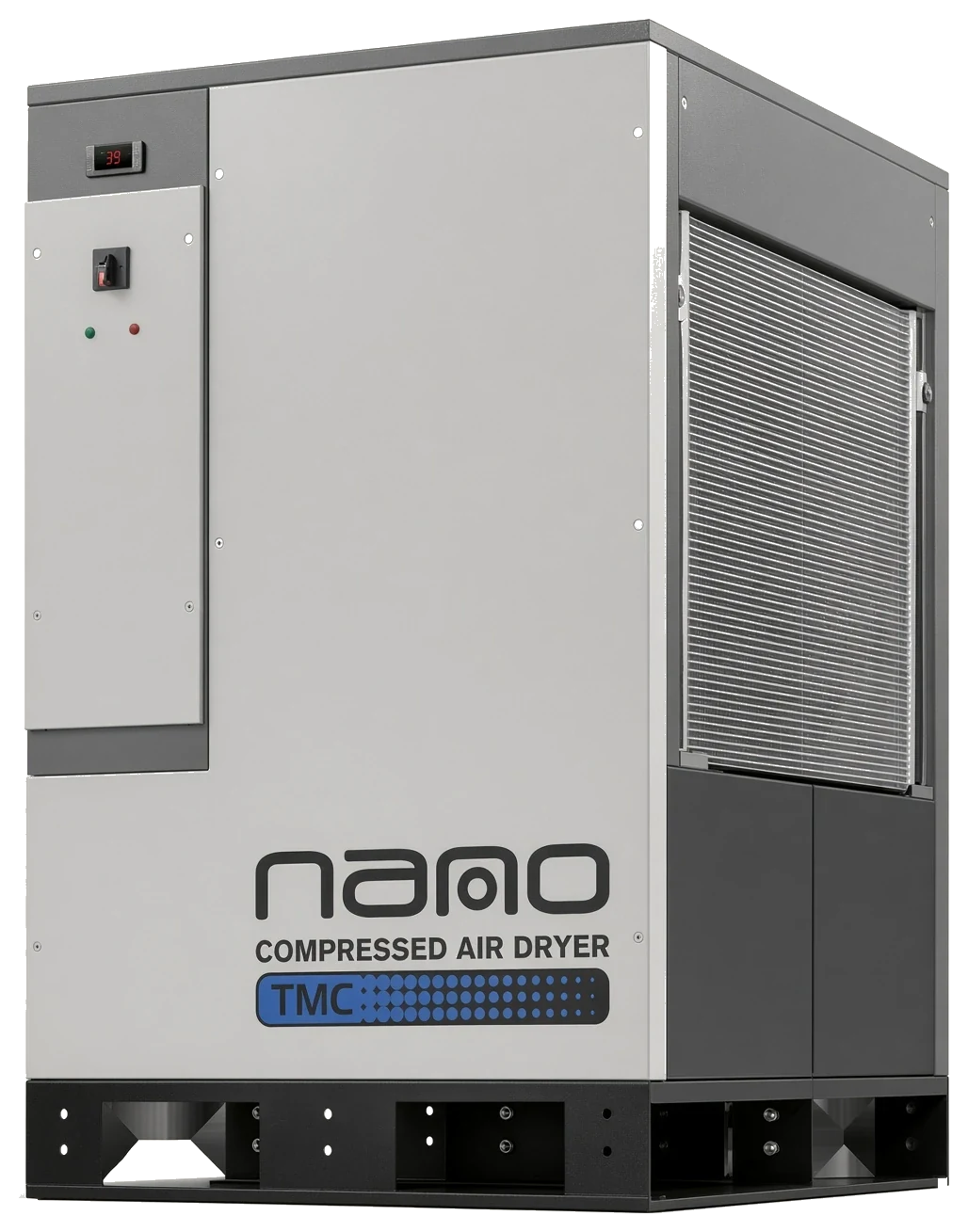
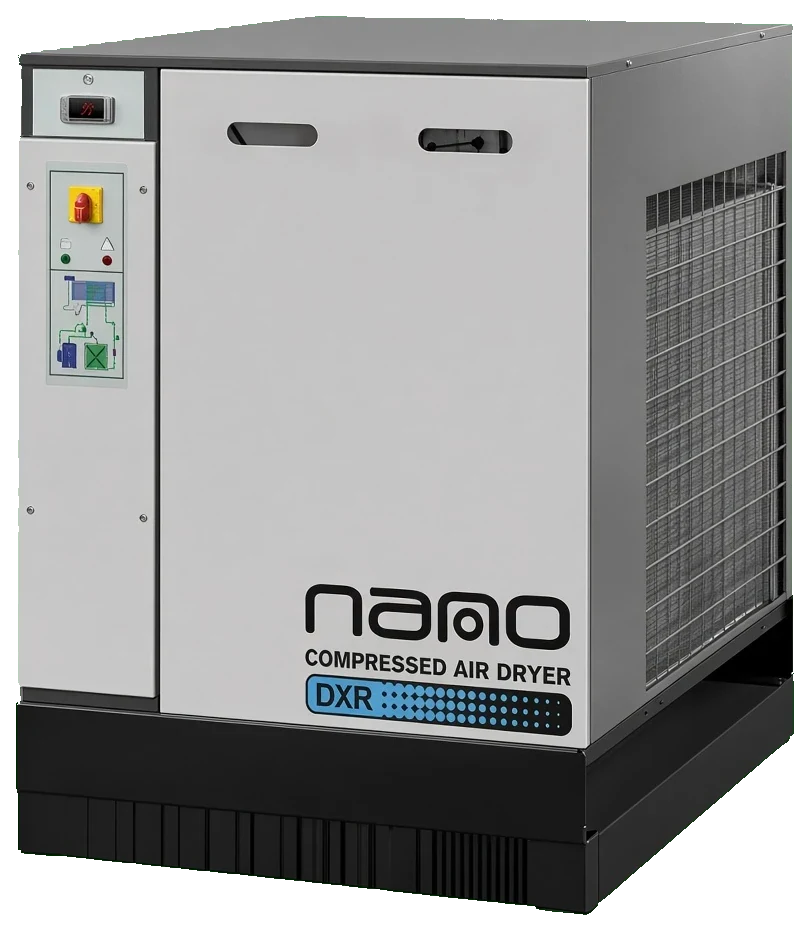
Non-cycling: the DXR Series, the HPRB Series and the large HPRplus units. Power is flat, the dew point is the steadiest of any type, and the machine has the fewest parts and the lowest price. Thermal-mass cycling: the TMC Series with a glycol loop, the FLXA Series with a phase-change reservoir and the NXC Series with a dry mass. The compressor rests whenever the store is cold and power tracks the air load, which is where the published figure of up to 80 percent savings at part load comes from.
Digital scroll: the AES Series from 600 SCFM and the HES Series from 2,500 SCFM, whose compressor modulates from 0 to 100 percent instead of stopping and starting. Variable speed: the VDR Series from 2,600 SCFM, with inverter-driven compressors that follow the load continuously. Both suit central plants where the load moves all day and the dew point must not wander.
Where the payback comes from
A cycling dryer costs more than a non-cycling dryer of the same capacity, and at full load around the clock it saves nothing, because the compressor never gets to rest. The saving is the product of the dryer's full-load kilowatts, the hours it is powered, and how far below full load the plant sits during those hours. A plant that leaves the air system up all year but draws real air for 4,000 hours is the ideal case, and there the cycling dryer cuts its own power by more than half.
Payback is the price premium divided by the annual saving at your electricity rate. We quote both machines on every enquiry above 100 SCFM, and we say when the non-cycling unit is the better buy.
Worked example: 500 SCFM, two shifts, five days
Dryer powered all year, compressor loaded 4,160 hours
- Non-cycling DXR 0500 NA draws 3.2 kW for 8,760 hours: about 28,000 kWh a year
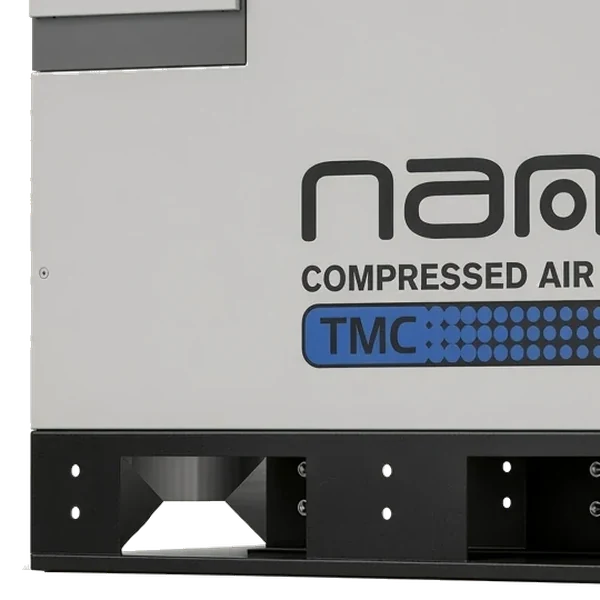
- Thermal-mass TMC 0510 N draws 3.7 kW at full load, averaging about 35 percent of it across the year: about 11,300 kWh
- Saving about 16,700 kWh, roughly 2,000 dollars a year at 12 cents per kWh
- Same 500 SCFM plant loaded 100 percent around the clock: saving nil
Reading a cycling dryer's data sheet
What the rating, the kW and the savings claim each mean
- SCFM is rated at the same 100 psig, 100°F, 100°F point as a non-cycling dryer
- The kW figure is full-load draw; part-load draw falls with the air load
- Savings of up to 80 percent apply at low load, not at full load
- Dew point is class 4 to 5: it moves a few degrees across each cycle
Annual dryer power by duty profile, 500 SCFM class
Non-cycling taken as the 3.2 kW DXR 0500 NA at its nameplate draw whenever powered; cycling taken as the 3.7 kW TMC 0510 N drawing in proportion to the average air load. Figures are rounded estimates for comparison, not guarantees.
| DUTY PROFILE | HOURS POWERED | AVERAGE AIR LOAD | NON-CYCLING | CYCLING | SAVING |
| Three shifts, seven days, compressor loaded flat out | 8,760 | 100 percent | 28,000 kWh | 32,400 kWh | none: non-cycling is the right machine |
| Three shifts, weekends idle, dryer left powered | 8,760 | 60 percent | 28,000 kWh | 19,400 kWh | 8,600 kWh, 31 percent |
| Two shifts, five days, dryer left powered | 8,760 | 35 percent | 28,000 kWh | 11,300 kWh | 16,700 kWh, 60 percent |
| One shift, dryer switched off with the compressor | 2,080 | 50 percent | 6,700 kWh | 3,800 kWh | 2,900 kWh, 43 percent |
Thermal-mass, digital-scroll and non-cycling dryers
Choosing by duty profile
Write down the hours the dryer is powered each year and, honestly, the average fraction of the compressor's output the plant uses during them. Under 60 percent average load, or any profile that leaves the dryer powered through nights and weekends, favors cycling. A plant loaded 90 percent or more whenever it is running is a non-cycling duty, and the cheaper machine is also the right one. To 2,000 SCFM the thermal-mass units are the usual cycling choice; from 600 SCFM the digital-scroll AES Series competes, and above 2,500 SCFM the AES, HES and VDR Series are the options.
The hot-gas bypass valve
A non-cycling dryer would freeze its own condensate at low load if the evaporator kept getting colder, so a hot-gas bypass valve feeds hot refrigerant back to the evaporator inlet to hold it just above 32°F. It is a reliable, simple control, and it is also the reason the compressor never stops: the cooling is made and then thrown away rather than not made at all.
Mistakes in the comparison
Comparing full-load kilowatts, which favors the non-cycling dryer, when the plant never runs at full load. Assuming the savings claim applies at every load. Forgetting the hours the compressor merely idles, when a non-cycling unit is still drawing its full rate. Buying a cycling dryer for a compressor that runs flat out on three shifts. And sizing a cycling dryer smaller because it stores cold: the store covers minutes, not the next load cycle, so the corrected duty stands.
Dew point across the cycle
A thermal-mass dryer lets the store warm a few degrees before the compressor restarts, so the outlet dew point drifts between roughly 35 and 45°F, which ISO 8573-1 counts as class 4 to 5 and which no tool, cylinder or paint gun will notice. Digital-scroll and variable-speed units modulate rather than stop and hold within a degree or two. Where a process is sensitive to a 10°F swing, say so and we select the AES or VDR Series or a non-cycling unit.
Cycling and non-cycling questions
No. At a steady full load the cycling dryer's compressor runs almost continuously, its full-load draw is a little higher than a non-cycling unit of the same size, and the premium is never recovered. Buy the non-cycling dryer and spend the difference on a good afterfilter.
The choice is between the digital-scroll AES and HES Series, the variable-speed VDR Series and the water-cooled FLX modules, all of which cover 3,000 SCFM. Digital scroll and variable speed give the tightest dew point and the smoothest power curve; the FLX skid gives module redundancy. Send the load profile and the room conditions and we compare them on running cost.
No. The stored cold covers the seconds between the compressor stopping and restarting, not a sustained load, so the dryer must still carry the compressor's full corrected output. Size it exactly as a non-cycling unit and let the control system deliver the savings.
Often. Many utilities list cycling and variable-speed refrigerated dryers as qualifying energy measures, and the thermal-mass TMC Series is frequently rebated. We can supply the data-sheet kW figures a rebate application asks for; the utility decides eligibility.