
1-805-484-2992
Quotes - Engineering - SalesAutomotive & Finishing
Where Water Shows Up in the Finish
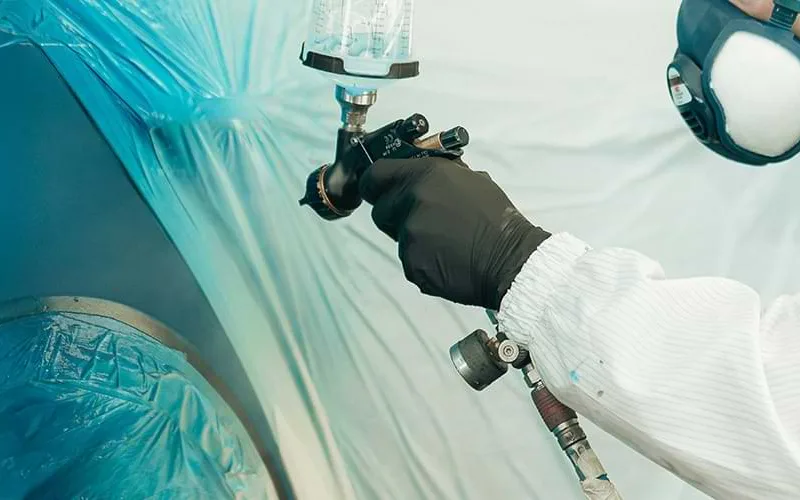
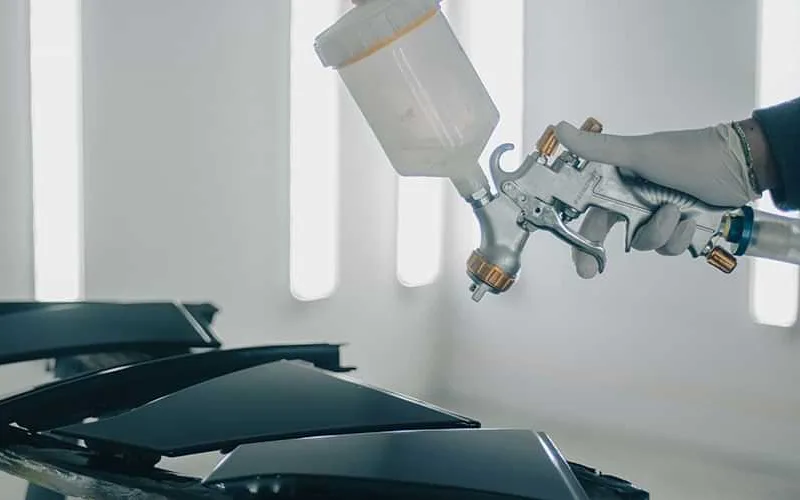
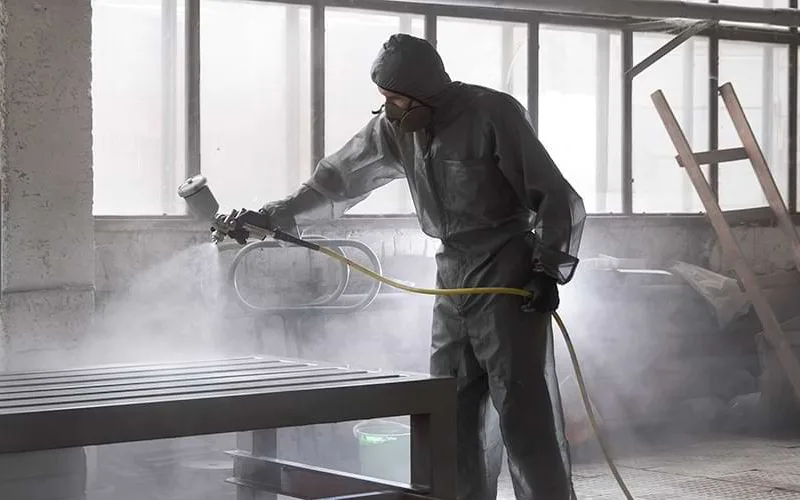
Finishing is the one place where wet compressed air leaves a mark a customer can see. A droplet through a spray gun is a fisheye in the clearcoat; humid air in a powder hopper is a clump that spits from the gun; water from an impact wrench is rust on a wheel stud and a wet spot on the customer's floor mat. The compressors behind these shops are small, 5 to 50 hp, and many of them are piston machines with no aftercooler that discharge 180 to 200°F air, so the dryer has to be chosen for the inlet temperature as much as for the flow. A 38°F pressure dew point, ISO 8573-1 class 4, is the target for every booth, hopper and bay on these pages; the filters behind the dryer set the oil class the finish needs.
- Piston compressor with no aftercooler: a high-inlet-temperature dryer rated for 180 to 200°F air, or an aftercooler ahead of a standard dryer
- Paint and powder: 38°F dew point, 0.01 micron coalescer and an activated carbon filter at the booth for oil vapor
- Small shops to 50 SCFM: non-cycling cabinet dryers; finishing lines above 100 SCFM with swinging demand: cycling dryers
Five Applications
Pick the Page for Your Shop
Each page below covers the air-using equipment in that shop, what water and oil do to the work, the compressor size and flow behind it, the dew point and ISO class the finish needs, where the dryer and filters go, and the series that fit. Most finishing duties land on the HPRB and DXR non-cycling series, the HRHT and HTR high-inlet-temperature dryers for piston compressors, the TMC and NXC cycling series on larger lines, and the GFN and NGF filters with activated carbon elements for the booth.


Hot Inlet Air From Small Compressors
The 80-gallon two-stage piston compressor that runs most body shops, tire shops and car washes has no aftercooler. Its discharge is 180 to 200°F, and a standard refrigerated dryer rated for 100°F inlet air loses more than half its capacity at that temperature; at 130°F the correction is already 0.55, and above that the dryer simply cannot condense fast enough. The answer is either a high-inlet-temperature dryer built to take 180 or 200°F air directly, or 30 ft of pipe and a receiver between compressor and dryer to bring the air down before a standard unit sees it.
The high-inlet-temperature dryers deliver a 50°F pressure dew point at their rated 180 to 200°F inlet, ISO 8573-1 class 6, which is dry enough for tools, lifts and tire inflation in a heated shop. The paint booth branch wants 38°F, so the shops that spray take the booth line through a standard dryer after the air has cooled, or through a small dedicated dryer at the booth with a three-stage filter behind it.
Series That Carry Finishing Duty
Shops to 50 SCFM on a cooled supply: the HPRB non-cycling cabinet dryers and the smallest DXR sizes. Piston compressors with no aftercooler: the HRHT series to 100 SCFM at 200°F inlet and the HTR series to 125 SCFM at 180°F, both 115 V plug-in units with a built-in separator and zero-loss drain. Paint lines and powder booths on a 25 to 50 hp screw: the DXR non-cycling series or the TMC and NXC cycling series where the booth runs intermittently. All of them are on the refrigerated dryers page.
Around the dryer: GFN and NGF prefilter and afterfilter pairs, with an activated carbon element at the booth so that no oil vapor reaches the gun; the GHTN high-temperature filter ahead of a high-inlet-temperature dryer; the 1701 single-body bypass on dryers to 35 SCFM; and pneumatic or electronic zero-loss drains so that a shop compressor that idles between customers does not vent air through a timer all night. The accessories page lists them by dryer size.
Typical Range Across Automotive and Finishing Shops
Starting points, not limits. Piston compressor flows are at 100 to 175 psig; a compressor without an aftercooler sends the dryer 180 to 200°F air and needs the high-inlet-temperature series.
| APPLICATION | TYPICAL COMPRESSOR | DELIVERED FLOW | DEW POINT NEEDED | DRYER BAND THAT FITS |
| Paint spraying | 10–50 hp screw or piston | 40–230 SCFM | 38°F class 4; oil class 1 at the gun with a carbon filter | 65–250 SCFM |
| Body shops | 5–15 hp piston; 7.5–20 hp screw | 20–90 SCFM | 38°F class 4 for the booth; class 6 acceptable for tools | 5–50 SCFM, high inlet temperature |
| Powder coating | 10–50 hp rotary screw | 40–230 SCFM | 38°F class 4 or lower per the gun maker; oil under 0.1 ppm | 20–250 SCFM cycling |
| Tire & service bays | 5–10 hp two-stage piston | 17–40 SCFM | 38 to 50°F, class 4 to 6 | high inlet temperature, 5–50 SCFM |
| Car wash systems | 5–15 hp piston or screw | 20–60 SCFM | 38°F class 4; heat-traced lines into freezing bays | 5–50 SCFM, 65–250 SCFM |
Finishing shop air questions
Because the compressor has no aftercooler and is sending it 180°F air, and a standard dryer is rated at 100°F. Above about 130°F the dryer's capacity halves, and at 180°F it cannot hold a dew point at all. Fit a high-inlet-temperature dryer rated for the discharge temperature, or cool the air in a receiver and 30 ft of pipe first.
For tools, lifts, tire changers and car wash equipment in a heated shop, yes: nothing in the shop is colder than 50°F, so nothing condenses. For a paint booth, take the booth branch through a standard dryer holding 38°F, with the three-stage filter behind it, because the air expands and cools as it leaves the gun.
Oil and water in the air far more often than the paint. A trace of compressor lubricant, silicone or moisture atomized with the coating stops it wetting the surface and leaves a crater. A 38°F dryer, a 0.01 micron coalescer and an activated carbon filter at the booth remove all three.
Rarely. Below 50 SCFM a non-cycling cabinet dryer draws a few hundred watts and the saving from cycling would never pay for the difference. A powder line or paint shop on a 30 to 50 hp screw that runs intermittently is where a cycling dryer starts to pay back, because the refrigeration compressor rests between jobs.
After the receiver, in the compressor room, with the filters on the shop side and a bypass around the dryer. A receiver-mounted compressor makes that easy: the receiver outlet feeds the dryer, and the dryer outlet feeds the header. Keep the dryer out of the booth room, where the ambient is hot and the overspray fouls its condenser.